Loading...
Done
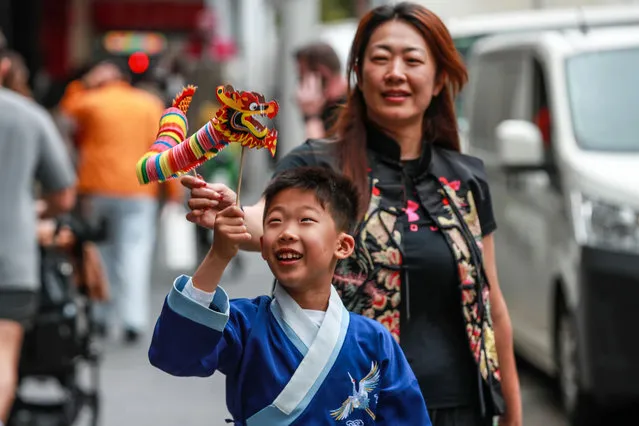
A boy plays with a dragon-shaped puppet as he walks with his parent at Sydney CBD ahead of the Lunar New Year on February 09, 2024 in Sydney, Australia. Lunar New Year, also known as Chinese New Year, is celebrated around the world, and the Year of the Wood Dragon in 2024 is associated with growth, progress, and abundance, as wood represents vitality and creativity, while the dragon symbolizes success, intelligence, and honor. (Photo by Roni Bintang/Getty Images)

A boy plays with a dragon-shaped puppet as he walks with his parent at Sydney CBD ahead of the Lunar New Year on February 09, 2024 in Sydney, Australia. Lunar New Year, also known as Chinese New Year, is celebrated around the world, and the Year of the Wood Dragon in 2024 is associated with growth, progress, and abundance, as wood represents vitality and creativity, while the dragon symbolizes success, intelligence, and honor. (Photo by Roni Bintang/Getty Images)
Details
22 Mar 2024 06:16:00
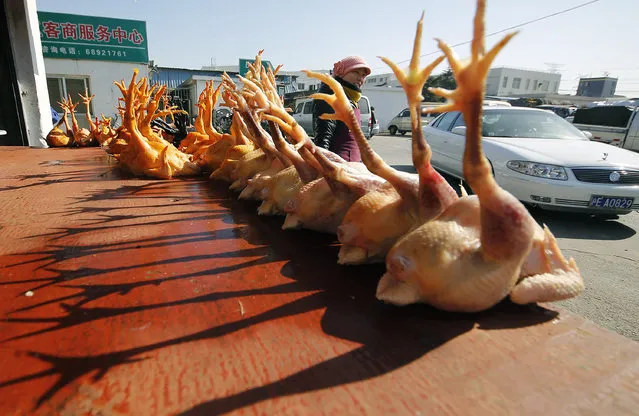
In this Tuesday January 21, 2014, file photo, slaughtered chickens are displayed for sale at a wholesale poultry market in Shanghai. The Chinese government on Tuesday, June 1, 2021, says a 41-year-old man has contracted what might be the world’s first human case of the H10N3 strain of bird flu, but the risk of large-scale spread is low. (Photo by AP Photo/File)

In this Tuesday January 21, 2014, file photo, slaughtered chickens are displayed for sale at a wholesale poultry market in Shanghai. The Chinese government on Tuesday, June 1, 2021, says a 41-year-old man has contracted what might be the w0orld’s first human case of the H10N3 strain of bird flu, but the risk of large-scale spread is low. (Photo by AP Photo/File)
Details
17 Jul 2021 08:51:00
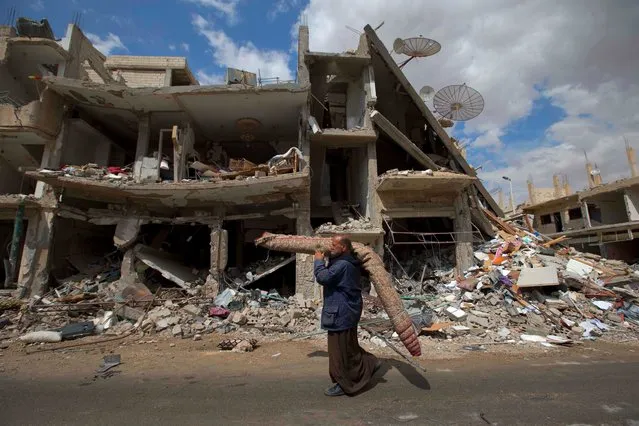
In this picture taken Thursday, April 14, 2016, a Syrian man carries a carpet as walk through a devastated part of the town of Palmyra as families load their belongings onto a bus in the central Homs province, Syria. (Photo by Hassan Ammar/AP Photo)

In this picture taken Thursday, April 14, 2016, a Syrian man carries a carpet as walk through a devastated part of the town of Palmyra as families load their belongings onto a bus in the central Homs province, Syria. Thousands of residents of this ancient town who fled Islamic State rule are returning briefly to check on their homes and salvage what they can – some carpets, blankets, a fridge or a few family mementos. There is no water or electricity in the town, and it will be at least few months before anyone can return to stay. (Photo by Hassan Ammar/AP Photo)
Details
16 Apr 2016 12:27:00
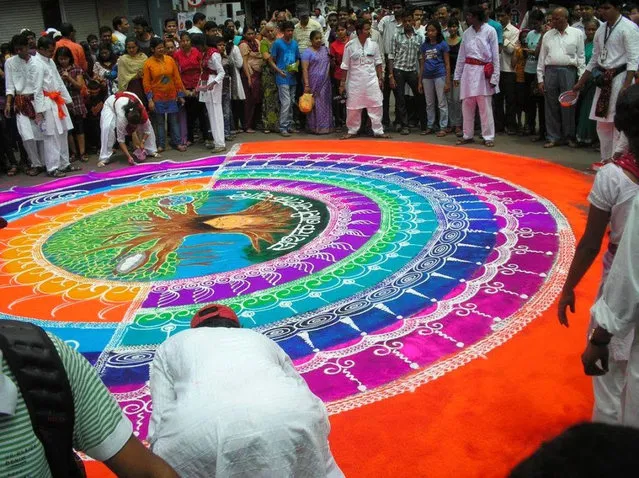
Rangoli Folk Art From India

Rangoli, also known as kolam or Muggu, is a folk art from India in which patterns are created on the floor in living rooms or courtyards using materials such as colored rice, dry flour, colored sand or flower petals. It is usually made during Diwali, Onam, Pongal and other Indian festivals. They are meant to be sacred welcoming areas for the Hindu deities. The ancient symbols have been passed down through the ages, from each generation to the next, keeping both the art form and the tradition alive. Similar practices are followed in different Indian states: in Tamil Nadu, there is Kolam in Tamil Nadu; Mandana in Rajasthan; Chaookpurna in Chhattisgarh; Alpana in West Bengal; Aripana in Bihar; Chowk pujan in Uttar Pradesh; Muggu in Andhra Pradesh and others.
Details
16 Jun 2014 10:37:00
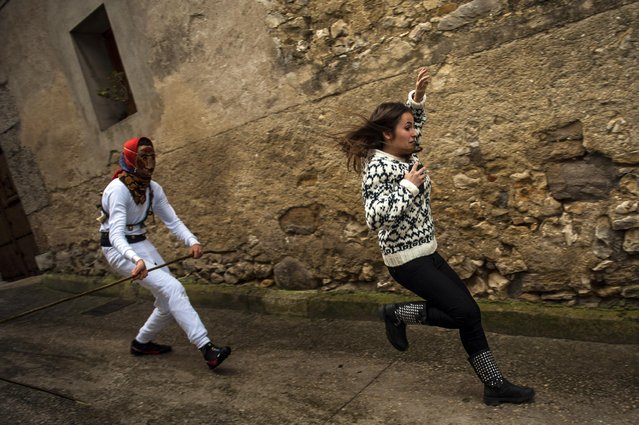
In this photo taken on Sunday, February 15, 2015 a girl runs away from a “Mamuxarro” during the carnival, in the small town of Unanu, northern Spain. While Rio de Janeiro may boast the world’s most famous carnival, the festive period of masquerades and wild and colorful costumes that precedes the Christian religious season of Lent is also a permanent and popular fixture for celebration in Spain and Portugal, with each country having its own strange and unique way of doing it. (Photo by Alvaro Barrientos/AP Photo)

In this photo taken on Sunday, February 15, 2015 a girl runs away from a “Mamuxarro” during the carnival, in the small town of Unanu, northern Spain. In the northern Spanish ancient village of Unamu, people dress up as “Mamuxarro”, folkloric figures in white with a red sash and a metal mask to cover their faces as they pursue townsfolk with sticks. According to custom, their “victims” (usually young women) must kneel and kiss the mamuxarro’s knee after he makes the sign of the cross on their forehead. (Photo by Alvaro Barrientos/AP Photo)
Details
22 Feb 2015 10:51:00
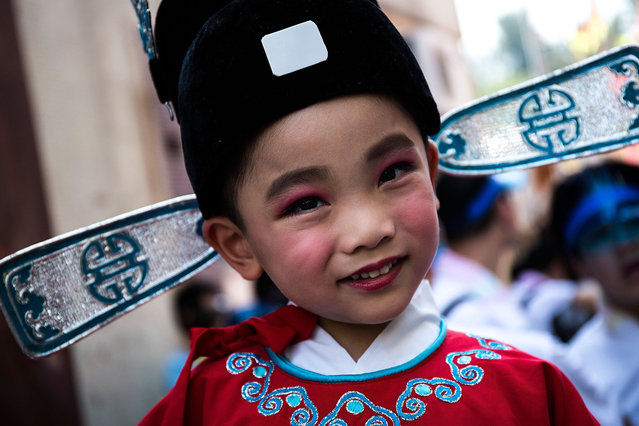
A child parades on a float during the Bun Festival on May 25, 2015 in Hong Kong, Hong Kong. One of Hong Kong's most colourful cultural celebration event, Cheung Chau Bun Festival, will be staged on 25 May 2015 (Monday) till 26 May 2015 midnight (Tuesday). This festival has over 100 years of history. (Photo by Lam Yik Fei/Getty Images)

A child parades on a float during the Bun Festival on May 25, 2015 in Hong Kong, Hong Kong. One of Hong Kong's most colourful cultural celebration event, Cheung Chau Bun Festival, will be staged on 25 May 2015 (Monday) till 26 May 2015 midnight (Tuesday). This festival has over 100 years of history. Every year, thousands of people descend upon the tiny island for The Piu Sik (Floating Colours) Parade, Lucky Bun (Ping On Bun) and The Bun Scrambling Competition, the ancient custom during the festival. (Photo by Lam Yik Fei/Getty Images)
Details
26 May 2015 10:54:00
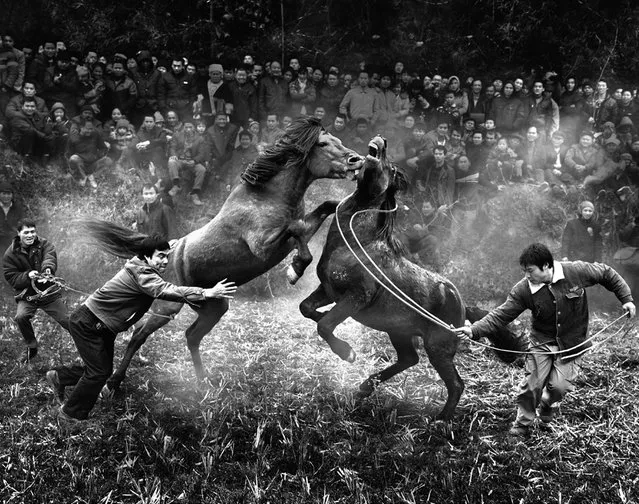
Horse Fighting In China

It’s a tradition that dates back hundreds of years, where two stallions fight over a female to ring the Chinese new year. And when it’s the Year of the Horse, the fights are considered to be even more significant. They’re held in small villages across southern China and have been condemned by animal rights groups, including Hong-Kong based Animals Asia. But those who participate in the events defend the fights and insist they take care of the animals.
Details
02 Apr 2014 23:59:00
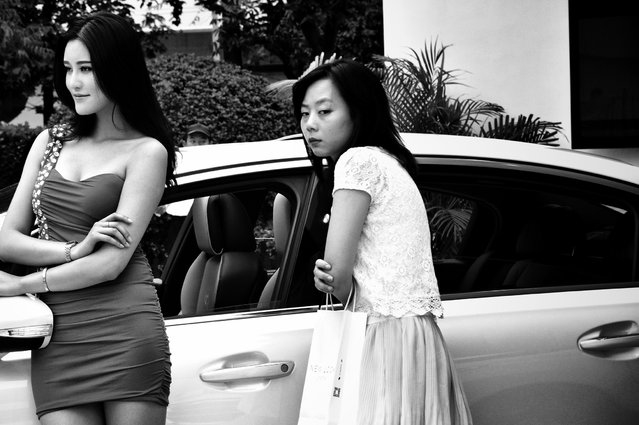
“Shanghai Tian Wai №26, 2014”. This series was an attempt to document an ever-changing city and the things it loses, as working-class neighbourhoods give way to ever-more modern urban development. (Photo by Liu Tao/The Guardian)

This 2014 series Shanghai Tian Wa saw Chinese photographer Liu Tao train his lens on two distinct districts in Shanghai. Here: “Shanghai Tian Wai №26, 2014”. (Photo by Liu Tao/The Guardian)
Details
25 May 2018 00:01:00