Loading...
Done
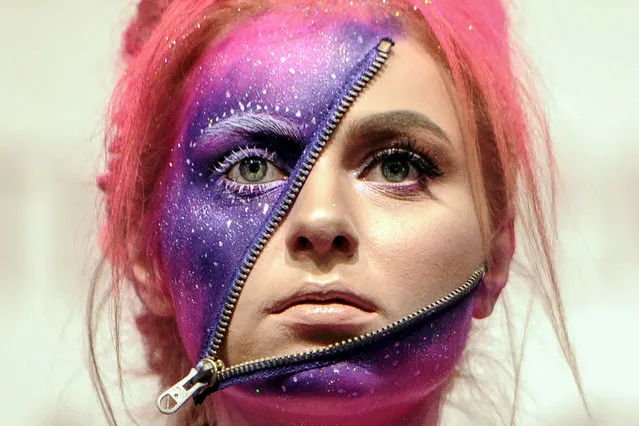
A model presents a creation during a hair styling competition in Minsk on November 9, 2017. (Photo by Sergei Gapon/AFP Photo)

A model presents a creation during a hair styling competition in Minsk, Belarus on November 9, 2017. (Photo by Sergei Gapon/AFP Photo)
Details
10 Nov 2017 09:20:00
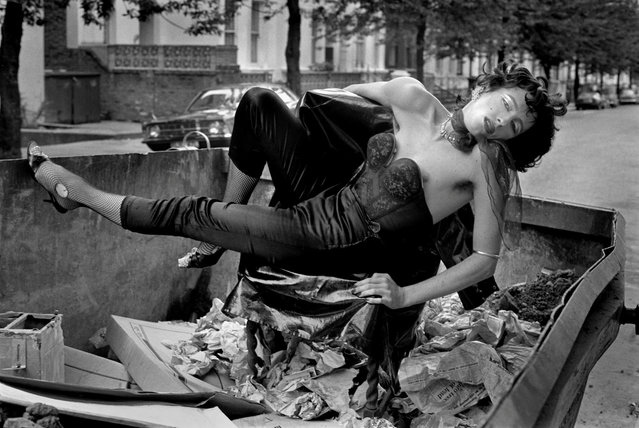
“A very delicate person, beneath the flamboyance”. Jasper, Ladbroke Grove, 1977. “In the 1970s, Australia was rather cut off. I’d always wanted to live abroad, so I moved to Rome and then London. I was an art historian, but started studying photography part-time. I was interested in the demi-monde culture and began mixing in all sorts of circles. Jasper was a rather wonderful character. He was from Sydney, but he was living downstairs from me in Ladbroke Grove, in a flat rented to some gay friends. It was fairly eclectic. Jasper was always playing around with clothes and makeup. If he was looking particularly wonderful, I might get out my lights and take a shot. Or he might put makeup on me. He wasn’t always in drag, but he was permanently in diva mode, dependably louche, funny and naughty. I think all that comes across in the image. He was actually a very delicate person, though, beneath the wit and flamboyance. Jasper floated through London all too briefly. His real name was Peter MacMahon, but to us he was only ever Jasper Havoc, an alter ego he’d created while part of a transvestite troupe called Sylvia and the Synthetics. They were legendary in Sydney gay culture. On this day, we’d been taking some pictures inside and had gone out into the streets to fool around some more. Jasper was wearing a corset and fishnets ensemble, with other bits and pieces, and we joked about him being trashy as he lay in the skip. We just took the shot for ourselves. It wasn’t done with any publication in mind, or anything else. This was way before the internet and people didn’t share images. If you dressed up, it was just for that moment”. (Photo by Jane England)

“A very delicate person, beneath the flamboyance”. Jasper, Ladbroke Grove, 1977. “In the 1970s, Australia was rather cut off. I’d always wanted to live abroad, so I moved to Rome and then London. I was an art historian, but started studying photography part-time. I was interested in the demi-monde culture and began mixing in all sorts of circles. Jasper was a rather wonderful character...”. (Photo by Jane England)
Details
26 Jun 2017 09:04:00
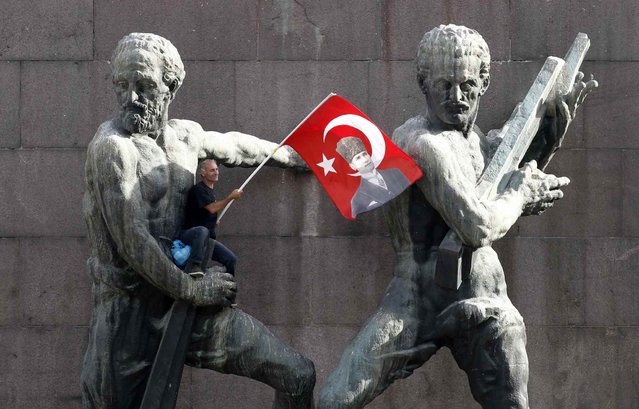
A demonstrator waves Turkey's national flag as he sits on a monument during a protest against Turkey's Prime Minister Tayyip Erdogan and his ruling AK Party in central Ankara June 2, 2013. (Photo by Umit Bektas/Reuters)

A demonstrator waves Turkey's national flag as he sits on a monument during a protest against Turkey's Prime Minister Tayyip Erdogan and his ruling AK Party in central Ankara June 2, 2013. Erdogan accused Turkey's main secular opposition party on Sunday of stirring a wave of anti-government protests, as tens of thousands regrouped in Istanbul and Ankara after a lull and trouble flared again in the capital. Police used tear gas on protesters in Ankara but the clashes were relatively minor compared with major violence in Turkey's biggest cities on the previous two days. (Photo by Umit Bektas/Reuters)
Details
03 Jun 2013 12:23:00
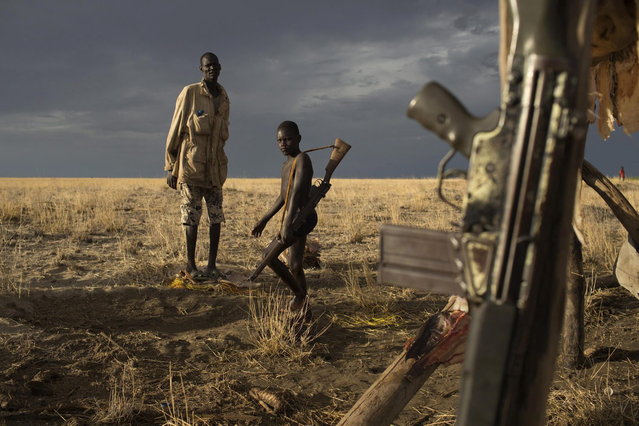
A Turkana man and a boy carrying a gun look on as a G3 battle rifle hangs from a structure used to dry fish at a fishing camp on the shores of Lake Turkana, some kilometres from Todonyang near the Kenya-Ethiopia border in northwestern Kenya October 12, 2013. (Photo by Siegfried Modola/Reuters)

A Turkana man and a boy carrying a gun look on as a G3 battle rifle hangs from a structure used to dry fish at a fishing camp on the shores of Lake Turkana, some kilometres from Todonyang near the Kenya-Ethiopia border in northwestern Kenya October 12, 2013The Turkana are traditionally nomadic pastoralists, but they have seen the pasture that they need to feed their herds suffer from recurring droughts and many have turned to fishing. However, Lake Turkana is overfished, and scarcity of food and pastureland is fuelling long-standing conflict with Ethiopian indigenous Dhaasanac, who have seen grazing grounds squeezed by large-scale government agricultural schemes in southern Ethiopia. The Dhaasanac now venture ever deeper into Kenyan territory in search of fish and grass, clashing with neighbours. Fighting between the communities has a long history, but the conflict has become ever more fatal as automatic weapons from other regional conflicts seep into the area. While the Turkana region is short of basics like grass and ground-water, it contains other resources including oil reserves and massive, newly discovered underground aquifers. (Photo by Siegfried Modola/Reuters)
Details
05 Dec 2013 12:08:00
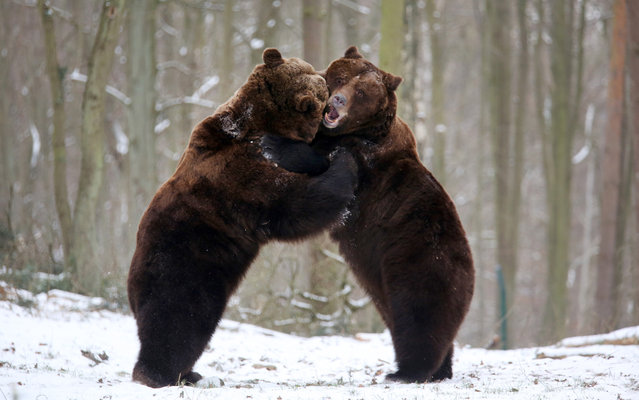
Swedish brown bears “Fred” and “Frode” play in the snow on January 30, 2014 at the Natur- und Umweltpark (NUP) animal park in Guestrow, northeastern Germany. Despite of icy temperatures, the bear brothers took a break from their winter rest. (Photo by Bernd Wuestneck/AFP Photo/DPA)

Swedish brown bears “Fred” and “Frode” play in the snow on January 30, 2014 at the Natur- und Umweltpark (NUP) animal park in Guestrow, northeastern Germany. Despite of icy temperatures, the bear brothers took a break from their winter rest. (Photo by Bernd Wuestneck/AFP Photo/DPA)
Details
01 Feb 2014 13:50:00
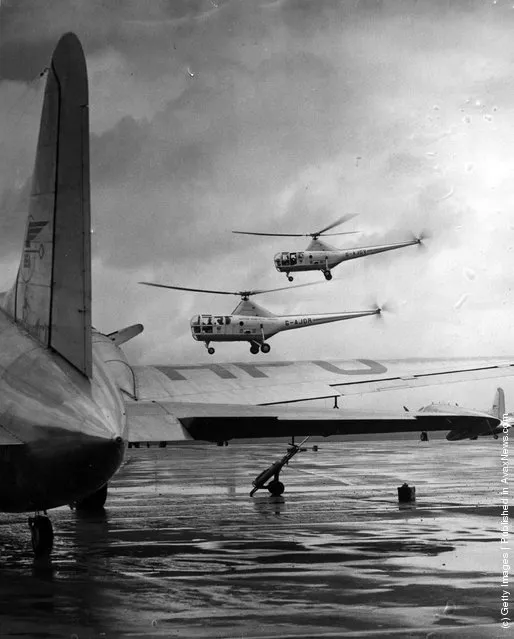
Sikorsky H-5 helicopters

“Igor Sikorsky (May 25, 1889 – October 26, 1972), born Igor Ivanovich Sikorsky was a Russian American pioneer of aviation in both helicopters and fixed-wing aircraft. He designed and flew the world's first multi-engine fixed-wing aircraft, the Russky Vityaz in 1913, and the first airliner, Ilya Muromets, in 1914. After immigrating to the United States in 1919, Sikorsky founded the Sikorsky Aircraft Corporation in 1923, and developed the first of Pan American Airways' ocean-conquering flying boats in the 1930s. In 1939 Sikorsky designed and flew the Vought-Sikorsky VS-300, the first viable American helicopter, which pioneered the rotor configuration used by most helicopters today. Sikorsky would modify the design into the Sikorsky R-4, which became the world's first mass-produced helicopter in 1942”. – Wikipedia

Photo: Westland Sikorsky H-5's, used by British European Airways Helicopters, which fly between London and Birmingham. The Sikorsky H-5, (aka R-5, S-51, HO3S-1, or Horse) (R-5 until 1948; company designation VS-327) is a helicopter built by Sikorsky Aircraft Corporation, formerly used by the United States Air Force, and its predecessor, the United States Army Air Forces, as well as the United States Navy and United States Coast Guard (with the designations HO2S and HO3S). (Photo by Harrison /Topical Press Agency/Getty Images). 22nd May 1951
Details
06 Sep 2011 10:18:00
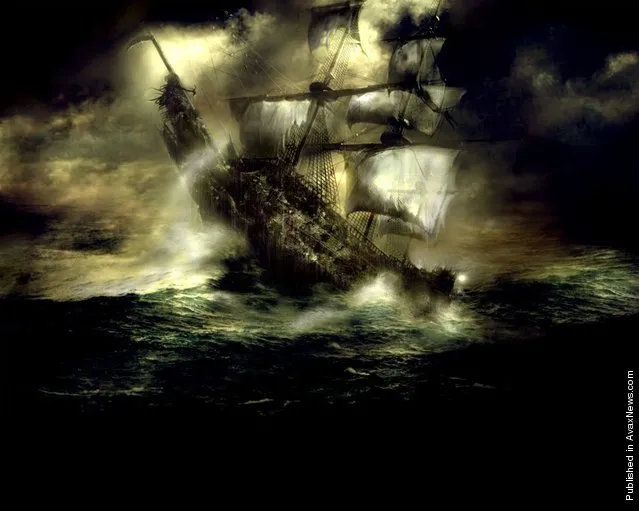
Ocean voyage

Do you think that history is a science? Well, not exactly. First, and foremost, history is the state's “legend of wars”, it’s official regalia. Of course, public historians are not interested in scientific truth – quite the opposite. In this respect, any attempt to present a state’s history as altruistic and benevolent as possible is welcomed and encouraged – as opposed to any revisionism attempts that may be more accurate. In this matter, Chinese have surpassed us all – they revised in highly creative manner (but rather shamelessly) the technology already invented by Europeans, a process that resulted in oldest state on the planet. Here is an interesting paradox: ask any sinologist about the Middle Kingdom during second century B.C., and he will describe it to you in such a vivid manner as if he has been living there all his life – but as soon as you will ask him to describe Chinese history in the 19-20th centuries… let's say, his eagerness will be greatly diminished. However, we will discuss China in a different article, and in the meantime we will try to understand how exactly historic “legend of wars” is formed and functions – based on a specific and well-known example. A great example is Ferdinand Magellan's first voyage around the world.
Details
14 Nov 2011 09:11:00


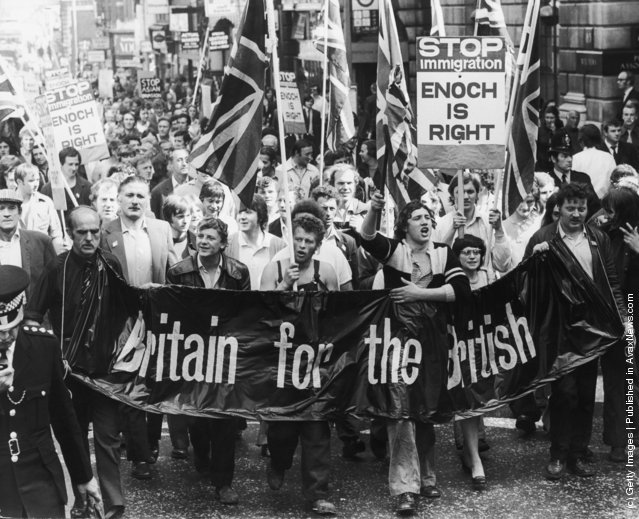
Smithfield meat porters march on the Home Office, bearing a petition which calls for an end to all immigration into Britain, 25th August 1972. (Photo by Keystone/Hulton Archive/Getty Images)
Details
14 Apr 2011 08:42:00