Loading...
Done
A sick California sea lion with possible domoic acid poisoning is rescued to be evaluated by volunteers from CIMWI (Channel Islands Marine & Wildlife Institute) in Santa Barbara, California, on March 25, 2025. Over a hundred sea lions, dolphins and other marine mammals, including birds, have been sickened by domoic acid poisoning from algal blooms in Southern California since February, US media reported. (Photo by David Swanson/AFP Photo)

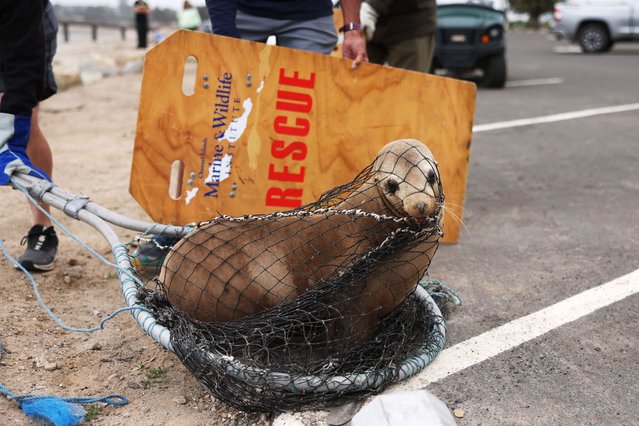
A sick California sea lion with possible domoic acid poisoning is rescued to be evaluated by volunteers from CIMWI (Channel Islands Marine & Wildlife Institute) in Santa Barbara, California, on March 25, 2025. Over a hundred sea lions, dolphins and other marine mammals, including birds, have been sickened by domoic acid poisoning from algal blooms in Southern California since February, US media reported. (Photo by David Swanson/AFP Photo)
Details
02 Apr 2025 04:29:00
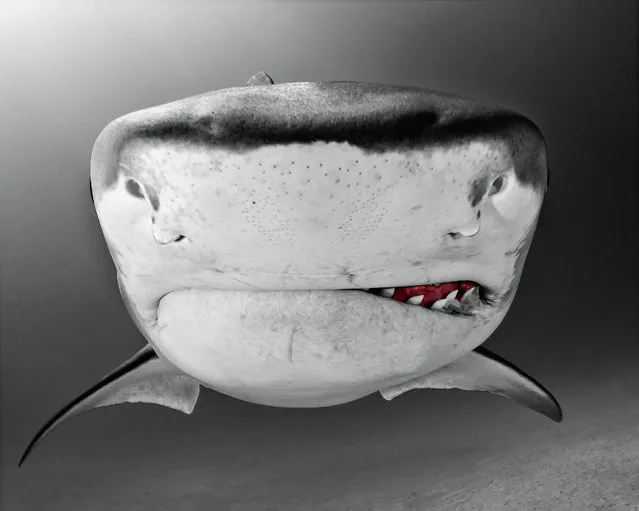
Todd Bretl specializes in underwater photography, and is able to capture striking photos of aquatic life big and small. His photos of sharks are particularly striking; though he rarely faces hostility from the animals, he tries not to spend too much time looking through his viewfinder and many shots are framed by educated guesses and impeccable timing. (Photo by Todd Bretl)

Todd Bretl specializes in underwater photography, and is able to capture striking photos of aquatic life big and small. His photos of sharks are particularly striking; though he rarely faces hostility from the animals, he tries not to spend too much time looking through his viewfinder and many shots are framed by educated guesses and impeccable timing. What follows are photographs taken over the past several years on trips to the Bahamas and Isla Guadalupe, an island off the coast of the Baja California peninsula in Mexico. (Photo by Todd Bretl)
Details
01 Aug 2014 12:35:00
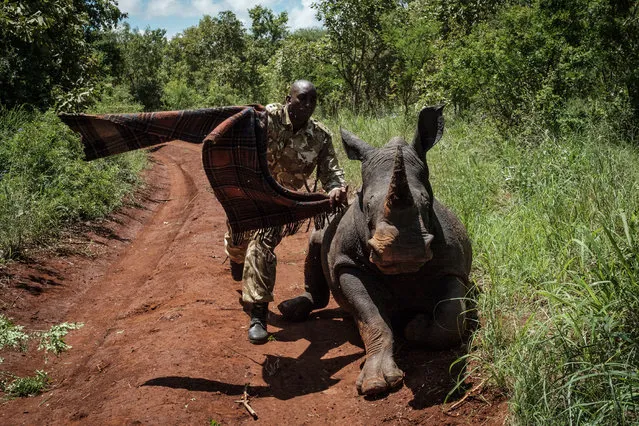
A ranger of Kenya Wildlife Services (KWS) tries to cover the eyes of 2.5-year-old female Southern white rhino, Elia, to calm down after being shot a tranquilizer from a helicopter during Kenya Wildlife Services (KWS) rhino ear notching exercise for identification at Meru National Park, 350 km from Nairobi, Kenya, on April 5, 2018. (Photo by Yasuyoshi Chiba/AFP Photo)

A ranger of Kenya Wildlife Services (KWS) tries to cover the eyes of 2.5-year-old female Southern white rhino, Elia, to calm down after being shot a tranquilizer from a helicopter during Kenya Wildlife Services (KWS) rhino ear notching exercise for identification at Meru National Park, 350 km from Nairobi, Kenya, on April 5, 2018. (Photo by Yasuyoshi Chiba/AFP Photo)
Details
07 Apr 2018 09:37:00
Kids jump off the breakwater into the ocean ahead the Fourth of July holiday in Gloucester, Massachusetts, U.S., July 3, 2023. (Photo by Brian Snyder/Reuters)

Kids jump off the breakwater into the ocean ahead the Fourth of July holiday in Gloucester, Massachusetts, U.S., July 3, 2023. (Photo by Brian Snyder/Reuters)
Details
10 Jul 2023 03:58:00
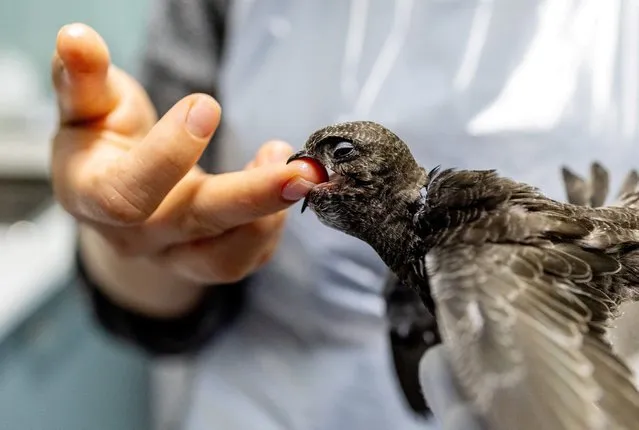
A volunteer feeds a swift chick after it was found on the ground during a heatwave and given to the Centre Ornithologique de Readaptation in Genthod near Geneva, Switzerland on July 25, 2023. (Photo by Denis Balibouse/Reuters)

A volunteer feeds a swift chick after it was found on the ground during a heatwave and given to the Centre Ornithologique de Readaptation in Genthod near Geneva, Switzerland on July 25, 2023. (Photo by Denis Balibouse/Reuters)
Details
06 Aug 2023 04:09:00
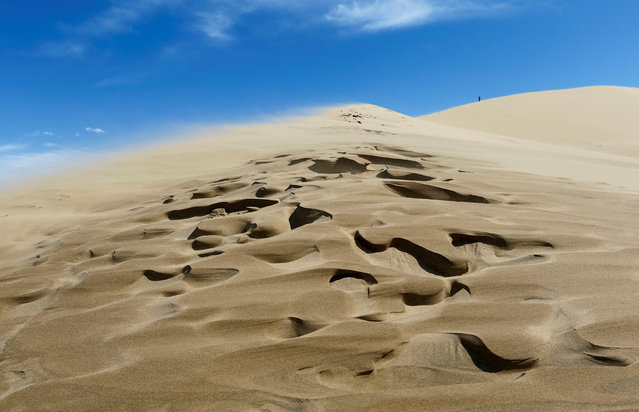
A tourist stands at an edge of the singing sand, the 150-metre-high by three-kilometre-long dune that generates a low-pitched, organ-like rumble in dry weather, in Altyn-Emel national park in Almaty region, Kazakhstan, May 12, 2016. (Photo by Shamil Zhumatov/Reuters)

A tourist stands at an edge of the singing sand, the 150-metre-high by three-kilometre-long dune that generates a low-pitched, organ-like rumble in dry weather, in Altyn-Emel national park in Almaty region, Kazakhstan, May 12, 2016. (Photo by Shamil Zhumatov/Reuters)
Details
18 Jun 2016 13:20:00
Japanese Macaque monkeys soak in the warmth of mountain hotsprings at Jigokudani Monkey Park, in Yamanouchi, central Japan, 19 January 2014. The Japanese Macaques (Macaca fuscata), also referred to as Snow Monkeys, live freely in this area that is covered by snow one third of the year. (Photo by Kimimasa Mayama/EPA)

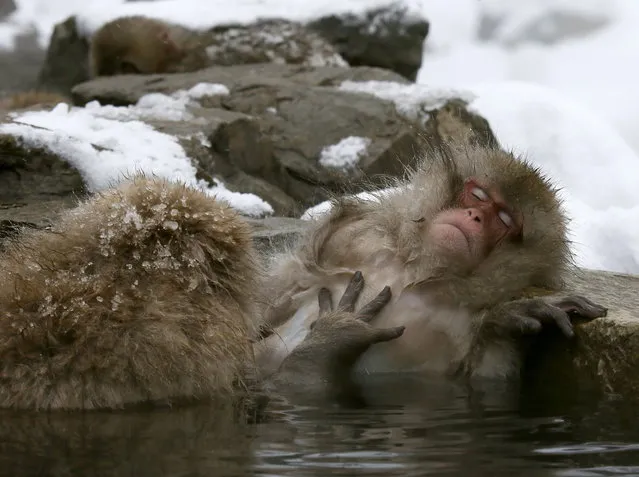
Japanese Macaque monkeys soak in the warmth of mountain hotsprings at Jigokudani Monkey Park, in Yamanouchi, central Japan, 19 January 2014. The Japanese Macaques (Macaca fuscata), also referred to as Snow Monkeys, live freely in this area that is covered by snow one third of the year. Jigokudani is the only known place in the world where monkeys bathe in natural hot springs. As a habit, they come down from the mountains where they spend the night and bath during the day. (Photo by Kimimasa Mayama/EPA)
Details
21 Jan 2014 11:36:00
A common kingfisher sits on a branch of a tree after catching an insect in Allahabad, India, Sunday, July 9, 2017. The common kingfisher is a highly territorial bird that has to eat nearly sixty percent of its bodyweight every day. (Photo by Rajesh Kumar Singh/AP Photo)

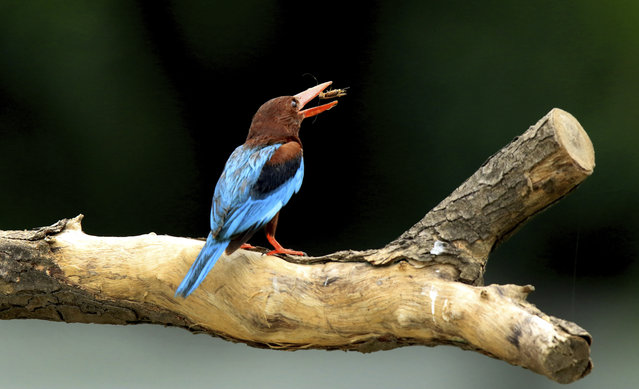
A common kingfisher sits on a branch of a tree after catching an insect in Allahabad, India, Sunday, July 9, 2017. The common kingfisher is a highly territorial bird that has to eat nearly sixty percent of its bodyweight every day. (Photo by Rajesh Kumar Singh/AP Photo)
Details
16 Jul 2017 07:52:00