People wearing face masks to help curb the spread of the coronavirus wait to walk across a traffic intersection in Osaka, western Japan, Thursday, November 26, 2020. (Photo by Hiro Komae/AP Photo)
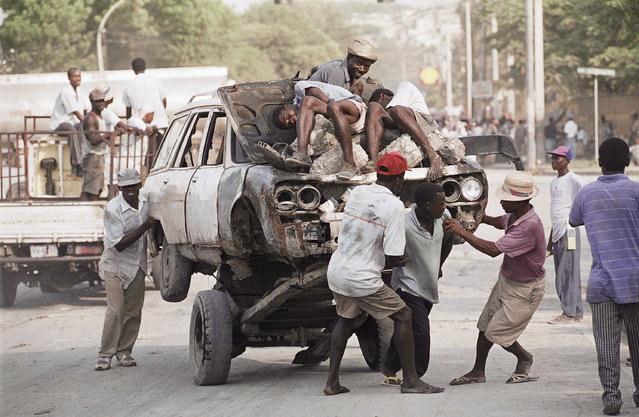
Haitians pull a car atop a pushcart in Port-au-Prince, October 11, 1994. The price of gasoline has fallen to about $6 US per gallon since U.S. forces occupied Haiti. Before, gasoline had cost as much as $10 U.S. per gallon. (Photo by Eric Draper/AP Photo)
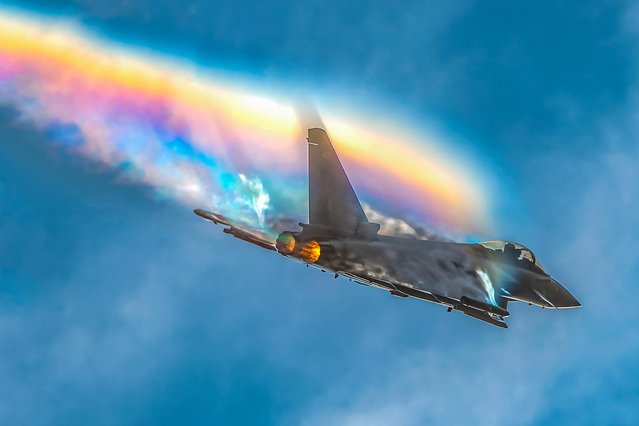
A Typhoon jet flown by Flt Lt Jim Peterson practising over RAF Coningsby in the East Lindsey district of Lincolnshire, England on September 27, 2019 producing a rainbow effect over the plane. The rainbow is made of crystalized or frozen water vapor that reflect and refract sunlight, causing the rainbow effect. (Photo by Claire Hartley/Bav Media)
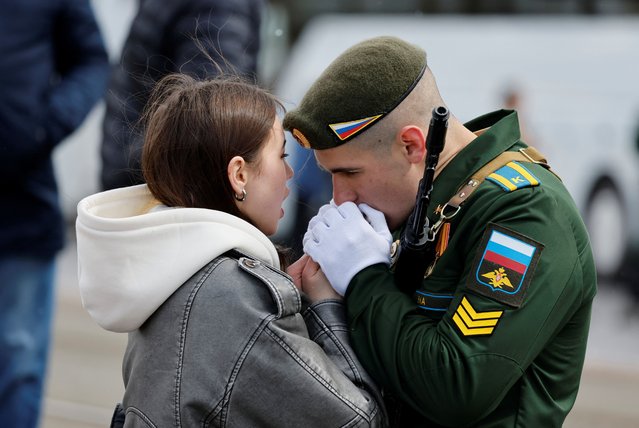
A Russian service member stands next to an acquaintance during preparations ahead of the Victory Day parade in Moscow, Russia on May 9, 2024. (Photo by Maxim Shemetov/Reuters)
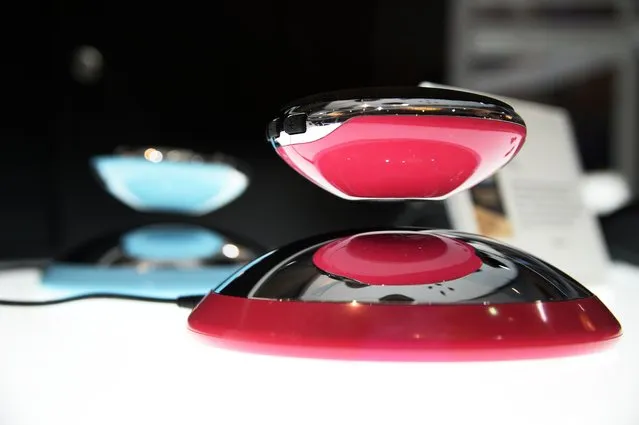
The Air2 (Air Squared) floating Bluetooth speaker from Axxess CE is displayed at CES Unveiled, the opening event for the media preview days at the 2015 Consumer Electronics Show, January 4, 2015 in Las Vegas, Nevada. The speaker which levitates over its own base is one of the winners for the CES Innovation Awards and is patent pending. (Photo by Robyn Beck/AFP Photo)
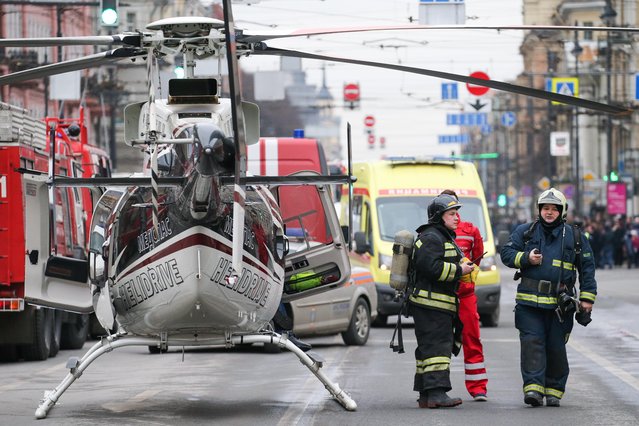
Fire fighters, emergency service vehicles and a helicopter in Moskovsky Prospekt at the entrance to Tekhnologichesky Institut station of the St Petersburg metro in the aftermath of an explosion which occurred in a train at 14:40 Moscow timeon April 3, 2017. (Photo by Peter Kovalev/TASS)
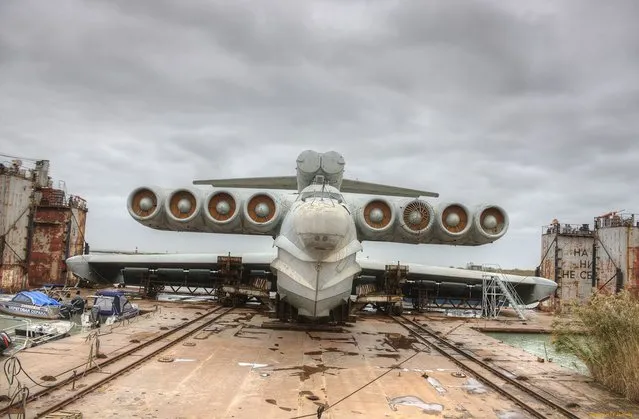
“The Lun-class ekranoplan (NATO reporting name Duck) was a ground effect vehicle (GEV) designed by Rostislav Evgenievich Alexeev and used by the Soviet and Russian navies from 1987 until sometime in the late 1990s. It “flew” using the lift generated by the ground effect of its large wings when close to the surface of the water – about four metres or less. Although they might look similar and/or have related technical characteristics, ekranoplans like the Lun are not aircraft, seaplanes, hovercraft, or hydrofoils – ground effect is a separate technology altogether. The International Maritime Organization classifies these vehicles as maritime ships. The name Lun comes from the Russian for harrier”. – Wikipedia (Photo by Igor113)
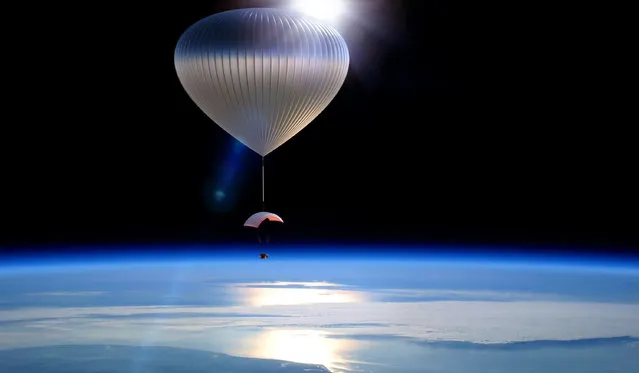
This undated image provided by World View shows World View capsule and balloon spacecraft that will rise to 100,000 feet above Earth for passengers to see the curvature of the planet and the blackness of space. Space tourism companies are employing designs including winged vehicles, vertical rockets with capsules and high-altitude balloons. While developers envision ultimately taking people to orbiting habitats, the moon or beyond, the immediate future involves short flights into or near the lowest reaches of space without going into orbit. (Photo by World View via AP Photo)