Loading...
Done
A man assists two young hostages who managed to escape from the school building after special forces entered the school in Beslan, North Ossetia, Friday 03 September 2004. Streams of hostages fled the besieged school in Beslan in southern Russia Friday amid intensive shooting and a series of powerful explosions that signalled a bloody end to the three-day stand-off with terrorists. (Photo by Yuri Kochetkov/EPA)

On September 1, 2004, Chechen militants stormed an elementary school in the town of Beslan in the Russian republic of North Ossetia. They took 1,100 teachers, children, and their relatives hostage, demanding the withdrawal of federal forces from Chechnya as a condition for their release. On September 3, 2004, Russian security forces stormed the building, resulting in a battle in which more than 330 hostages died, including 186 children. Here: A man assists two young hostages who managed to escape from the school building after special forces entered the school in Beslan, North Ossetia, Friday 03 September 2004. (Photo by Yuri Kochetkov/EPA)
Details
25 Sep 2017 06:41:00
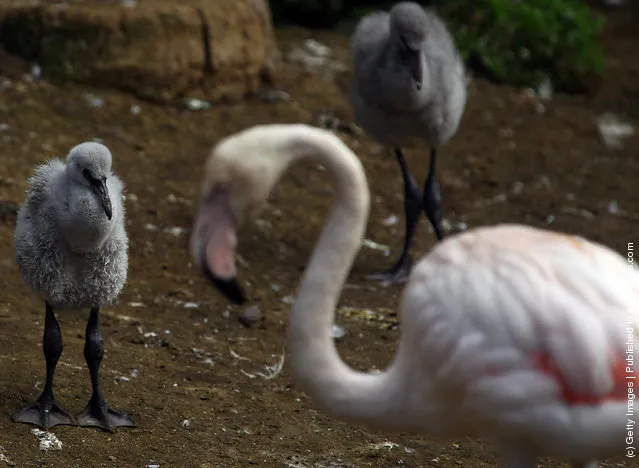
Baby Flamingoes

One of the nine baby flamingos born at Bristol Zoo stands with the adults as they feed together on August 19, 2011 in Bristol, England. Nine flamingo chicks have hatched at Bristol Zoo Gardens in the last three months – the biggest number the Zoo has ever had. The chicks, which are Greater Flamingoes from Africa and southern Europe and range in age from four weeks to three months old, take the Zoo's total flock to 38 birds. (Photo by Matt Cardy/Getty Images)
Details
21 Aug 2011 11:09:00
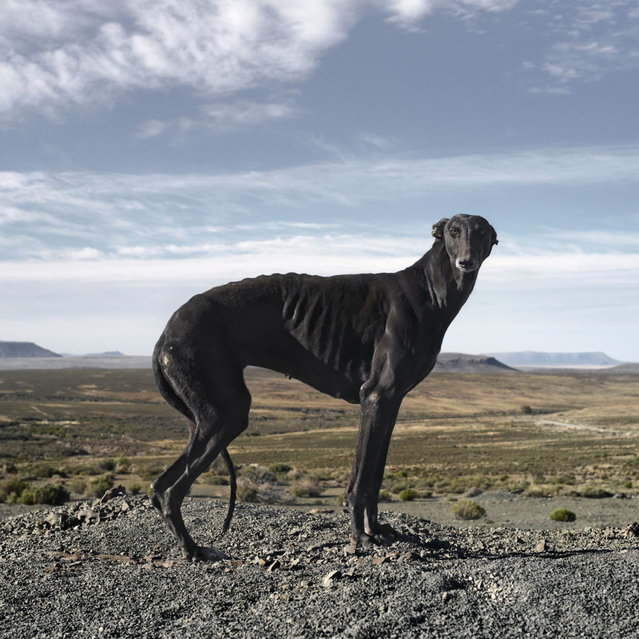
Africanis 18. Murraysburg, Western Cape, May 10, 2010. (Photo by Daniel Naudé)

“The Africanis is a landrace of South African dogs. It is believed to be of ancient origin, directly descended from hounds and pariah dogs of ancient Africa, introduced into the Nile Valley from the Levant. The Swahili name for the breed is umbwa wa ki-shenzi meaning common or mongrel or “traditional dog”. Africanis is also an umbrella name for all the aboriginal dogs in southern Africa”. – Wikipedia. Photo: Africanis 18. Murraysburg, Western Cape, May 10, 2010. (Photo by Daniel Naudé)
Details
19 May 2013 11:51:00
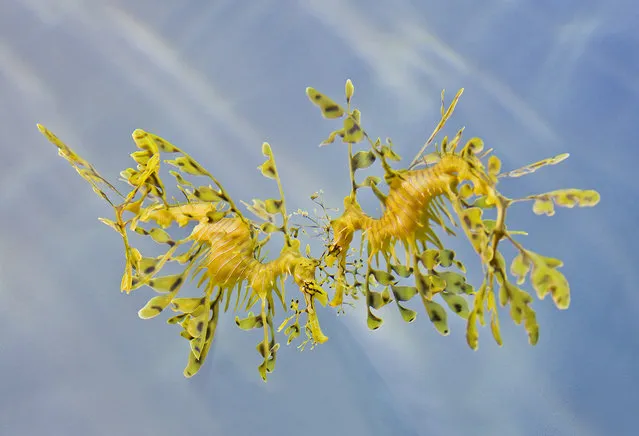
Leafy sea dragon

The leafy seadragon or Glauert's seadragon, Phycodurus eques, is a marine fish in the family Syngnathidae, which also includes the seahorses. It is the only member of the genus Phycodurus. It is found along the southern and western coasts of Australia. The name is derived from the appearance, with long leaf-like protrusions coming from all over the body. These protrusions are not used for propulsion; they serve only as camouflage. The leafy seadragon propels itself by means of a pectoral fin on the ridge of its neck and a dorsal fin on its back closer to the tail end. These small fins are almost completely transparent and difficult to see as they undulate minutely to move the creature sedately through the water, completing the illusion of floating seaweed.
Details
05 Sep 2012 08:51:00
A rocket, similar to the Al-Qassam rockets used against Israeli is prepared for launch

“The Qassam rocket is a simple steel artillery rocket developed and deployed by the Izz ad-Din al-Qassam Brigades, the military arm of Hamas. Three models have been produced and used between 2001 and 2011”. – Wikipedia

Photo: A rocket, similar to the Al-Qassam rockets used against Israeli is prepared for launch as new members of the Islamic Jihad fighters show their skills as they attend a military show in the former Israeli jewish settlement of Atsmona September 26, 2008 in Rafah, southern of Gaza Strip. (Photo by Abid Katib/Getty Images)
Details
29 Nov 2011 09:33:00
World Bodypainting Festival 2014. Photographed July 4th in Poertschach am Woerthersee, Austria July 4, 2014. (Photo by Jan Hetfleisch/Getty Images)

The World Bodypainting Festival held from July 4 to 6 at Lake Worthersee in Austria's southern Carinthia province included artists from around the world, drawing visitors to the “Mecca of Bodypainting”, according to the World Bodypainting Association. Photo: World Bodypainting Festival 2014. Photographed July 4th in Poertschach am Woerthersee, Austria July 4, 2014. (Photo by Jan Hetfleisch/Getty Images)
Details
08 Jul 2014 14:18:00
McMurdo Station Antarctic

McMurdo Station is a U.S. Antarctic research centre located on the southern tip of Ross Island, which is in the New Zealand-claimed Ross Dependency on the shore of McMurdo Sound in Antarctica. It is operated by the United States through the United States Antarctic Program, a branch of the National Science Foundation. The station is the largest community in Antarctica, capable of supporting up to 1,258 residents, and serves as the United States Antarctic science facility. All personnel and cargo going to or coming from Amundsen–Scott South Pole Station first pass through McMurdo.
Details
05 Sep 2013 10:18:00
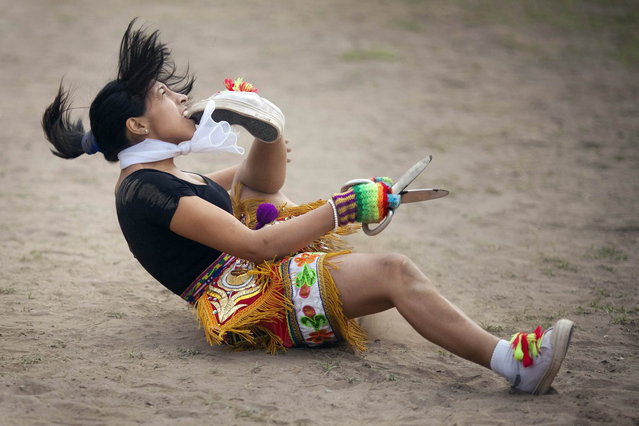
A "scissors" dancer grabs her shoe with her mouth while performing in a national scissors dance competition in the outskirts of Lima December 1, 2013. (Photo by Enrique Castro-Mendivil/Reuters)

A “scissors” dancer grabs her shoe with her mouth while performing in a national scissors dance competition in the outskirts of Lima December 1, 2013. The Danza de las tijeras, or scissors dance, is a traditional dance from the Peruvian southern region of the Andes, in which two or more performers take turns dancing while accompanied with music from a harp and a violin. Dancers would display various skills and moves, which include cutting the air with the use of a scissors. (Photo by Enrique Castro-Mendivil/Reuters)
Details
03 Dec 2013 11:43:00