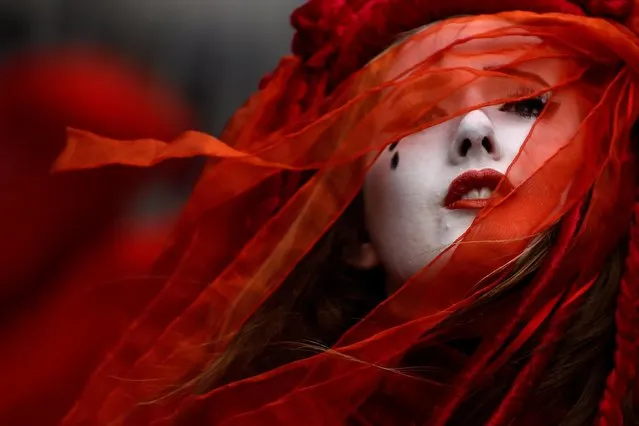
A member of Extinction Rebellion Red Rebel Brigade protests against fracking gas outside Government Buildings in Dublin, Ireland on March 23, 2021. (Photo by Clodagh Kilcoyne/Reuters)
Humanoid robots perform at the World Robot Conference 2023 in Beijing, capital of China on August 16, 2023. The World Robot Conference 2023 opened here Wednesday, showcasing cutting-edge achievements and the latest robot industry exhibits. (Photo by Wang Yuguo/Xinhua/Alamy Live News)
Heidi Klum attends the Heidi Klum's 16th Annual Halloween Party sponsored by GSN's Hellevator And SVEDKA Vodka At LAVO New York on October 31, 2015 in New York City. (Photo by Mike Coppola/Getty Images for Heidi Klum)
Year of the Rabbit celebration's in Dublin, Ireland on January 29, 2023: Wang Zhi Ning during her Peking Opera Solo performance. (Photo by Nick Bradshaw/The Irish Times)
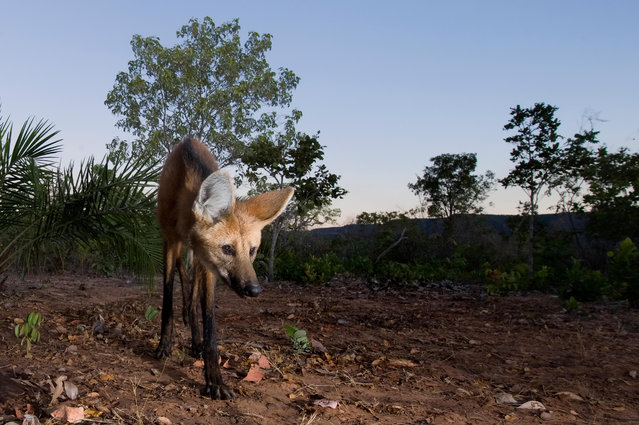
Global wildlife populations will decline by 67% by 2020 unless urgent action is taken to reduce human impact on species and ecosystems, warns the biennial Living Planet Index report from WWF (World Wide Fund for Nature) and ZSL (Zoological Society of London). From elephants to eels, here are some of the wildlife populations most affected by human activity. Here: The maned wolf is among the large mammals in the Brazilian Cerrado that are threatened by the increasing conversion of grasslands into farmland for grazing and growing crops. (Photo by Ben Cranke/Nature Picture Library/Alamy Stock Photo)