Loading...
Done
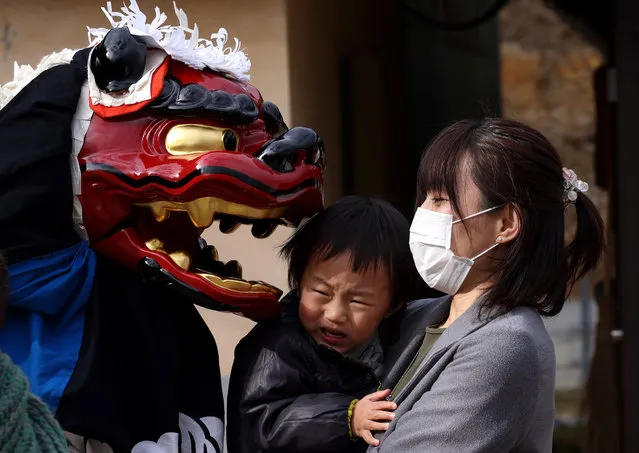
A performer wearing a lion mask performs the Ise Daikagura lion dance at the remote village of Yamanawa on February 08, 2021 in Ryuo, Japan. Ise Daikagura is a group of traditional Lion Dance performers who pray in front of farmers houses and businesses for good grain harvests and disease-free lives. Performers play sacred music using drums and flutes with two lion mask dancers. A lion mask is considered a symbol of God, who enters the house and performs in front of the Shinto God, a statue placed inside the house, mostly in the kitchen. These prayers are called “Kamodo Barai”. After the prayers, they are gifted with money, rice, sake and Japanese sweets from the householders. A group can travel for more than one hundred days to thousands of households and businesses throughout rural-villages in western Japan, and pray to those who are unable to visit the country’s most sacred shrine, the Grand Ise Shrine in Mie Prefecture. The group started its performance in the Edo era between 1603 to 1868 according to Japanese history. The Japanese government designated it as an important folk cultural national property in 1981. (Photo by Buddhika Weerasinghe/Getty Images)

A performer wearing a lion mask performs the Ise Daikagura lion dance at the remote village of Yamanawa on February 08, 2021 in Ryuo, Japan. Ise Daikagura is a group of traditional Lion Dance performers who pray in front of farmers houses and businesses for good grain harvests and disease-free lives. (Photo by Buddhika Weerasinghe/Getty Images)
Details
18 Feb 2021 09:27:00
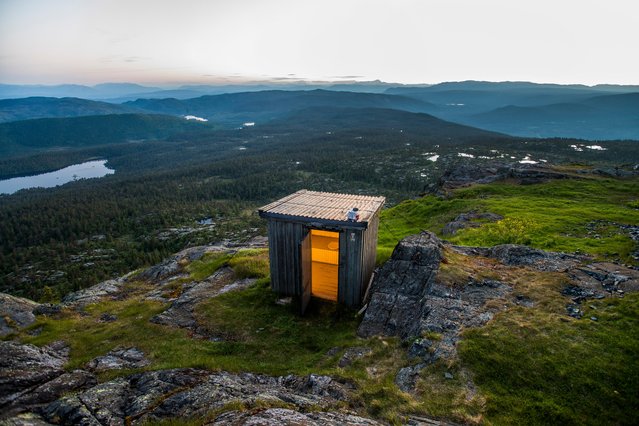
This restroom on the rubbly flanks of Jonsknuten in Norway looks up at the peak of the 904m mountain. Yu have to leave the door open to enjoy the view but the chances of being disturbed are minimal. (Photo by Olaf Menz/Lonely Planet)

This restroom on the rubbly flanks of Jonsknuten in Norway looks up at the peak of the 904m mountain. Yu have to leave the door open to enjoy the view but the chances of being disturbed are minimal. (Photo by Olaf Menz/Lonely Planet)
Details
13 Apr 2016 09:00:00
Smoke rises from the sauna as Eda Veeroja walks past with birch twigs at Mooska farm near the village of Haanja December 20, 2014. Smoke saunas are usually built without chimney and have a stove that rest on boulders where firewood is burnt until the room heats up. When the smoke is gone and the room reaches the right temperature, people sit inside and whisk each other with birch twigs. (Photo by Ints Kalnins/Reuters)

Smoke rises from the sauna as Eda Veeroja walks past with birch twigs at Mooska farm near the village of Haanja December 20, 2014. Smoke saunas are usually built without chimney and have a stove that rest on boulders where firewood is burnt until the room heats up. When the smoke is gone and the room reaches the right temperature, people sit inside and whisk each other with birch twigs. The tradition of the smoke sauna in Voromaa vicinity, in the south of Estonia, is enlisted in the UNESCO representative list of the intangible cultural heritage of humanity. (Photo by Ints Kalnins/Reuters)
Details
25 Dec 2014 13:37:00
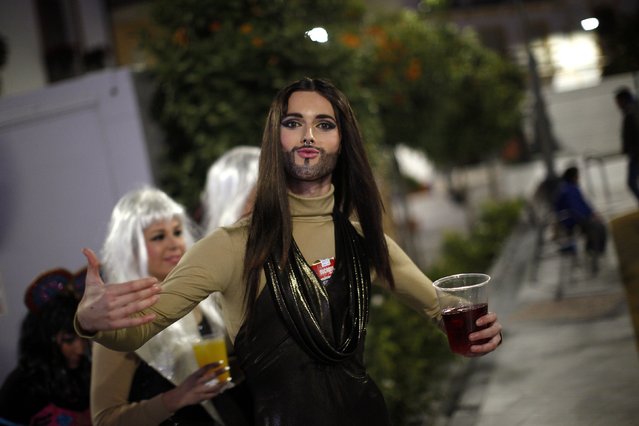
A reveller dressed up as Austrian drag queen and 2014 Eurovision song contest winner Conchita Wurst takes part in New Year's celebrations in Coin, near Malaga, southern Spain, early January 1, 2015. Villagers and revellers dressed up in funny costumes to take part in the New Year's celebration. (Photo by Jon Nazca/Reuters)

A reveller dressed up as Austrian drag queen and 2014 Eurovision song contest winner Conchita Wurst takes part in New Year's celebrations in Coin, near Malaga, southern Spain, early January 1, 2015. Villagers and revellers dressed up in funny costumes to take part in the New Year's celebration. (Photo by Jon Nazca/Reuters)
Details
02 Jan 2015 12:19:00
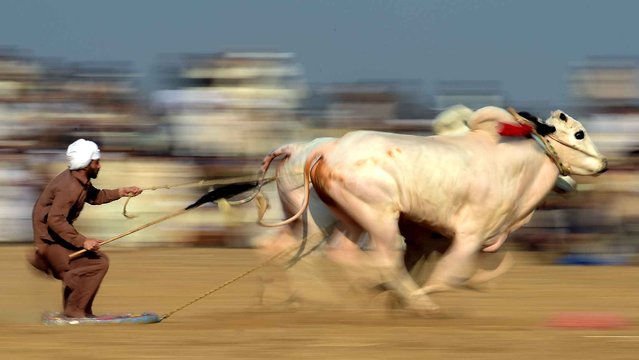
A Pakistani farmer guides his bulls as he competes in a traditional bull race in Khunda village in the northwestern district of Attock, some 80 kilometers from Islamabad on January 3, 2015. Tens of thousands of people gather whenever there is a bull race held in Pakistan which are usually the highlight of festivals organized in rural areas of the Asian country, and attract lots of spectators due to their thrilling nature. (Photo by Aamir Qureshi/AFP Photo)

A Pakistani farmer guides his bulls as he competes in a traditional bull race in Khunda village in the northwestern district of Attock, some 80 kilometers from Islamabad on January 3, 2015. Tens of thousands of people gather whenever there is a bull race held in Pakistan which are usually the highlight of festivals organized in rural areas of the Asian country, and attract lots of spectators due to their thrilling nature. The traditional competition attracts landlords and farmers from all around the province where the race is held, and they all bring their fastest and strongest bulls in hopes of gaining a reputation. (Photo by Aamir Qureshi/AFP Photo)
Details
10 Jan 2015 12:58:00
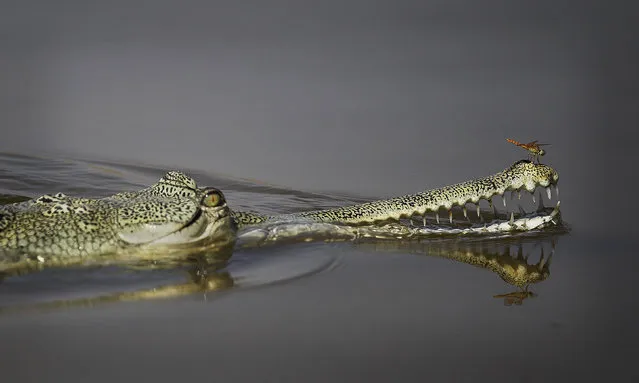
In this photo taken Wednesday, April 30, 2014, a dragonfly sits on the nose of a Gharial, rare crocodile-like creatures, in the River Chambal near Bhopepura village in the northern Indian state of Uttar Pradesh. The narrow 250-mile stretch of the Chambal is a place of crocodiles and jackals, of river dolphins and the occasional wolf. Hundreds of species of birds, storks, geese, babblers, larks, falcons and so many more, nest along the river. (Photo by Altaf Qadri/AP Photo)

In this photo taken Wednesday, April 30, 2014, a dragonfly sits on the nose of a Gharial, rare crocodile-like creatures, in the River Chambal near Bhopepura village in the northern Indian state of Uttar Pradesh. The narrow 250-mile stretch of the Chambal is a place of crocodiles and jackals, of river dolphins and the occasional wolf. Hundreds of species of birds, storks, geese, babblers, larks, falcons and so many more, nest along the river. Endangered birds lay small speckled eggs in tiny pits they dig in the sandbars. Gharials, rare crocodile-like creatures that look like they swaggered out of the Mesozoic Era, are commonplace here and nowhere else. (Photo by Altaf Qadri/AP Photo)
Details
23 Feb 2015 12:55:00
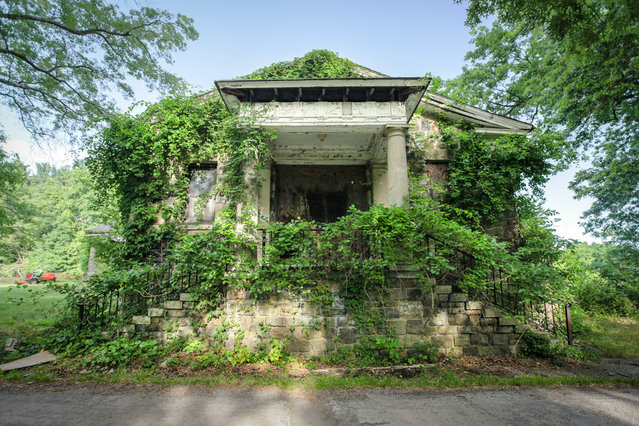
Letchworth Village is located just an hour's drive from NYC in Thiells, NY.  It was founded in 1912 to house the city's developmentally disabled as a ”state institution for the epileptic and feeble-minded”. (Photo by Will Ellis)

From Manhattan and Brooklyn's trendiest neighborhoods to the far-flung edges of theouter boroughs, Will Ellis has spent the last three years photographing and researching the lost and lonely corners of the United States' most populous city. His photo book Abandoned NYC is packed with 150 color images of sixteen of New York's most beautiful and mysterious abandoned spaces, paired with detailed essays on the fascinating history of these forgotten sites. Here: Letchworth Village is located just an hour's drive from NYC in Thiells, NY. It was founded in 1912 to house the city's developmentally disabled as a ”state institution for the epileptic and feeble-minded”. (Photo by Will Ellis)
Details
31 Mar 2015 12:31:00
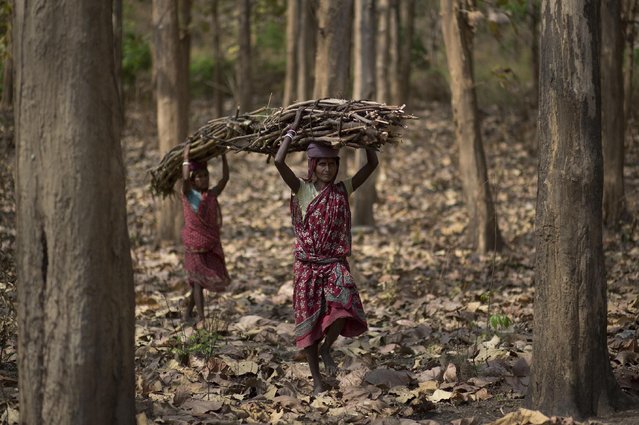
In this Tuesday, March 31, 2015 photo, Indian women walk carrying firewood they collected from a forest at Gobhali village on the outskirts of Gauhati, India. Every evening, hundreds of millions of Indian women hover over crude stoves making dinner for their families. They feed the flames with polluting fuels like kerosene or cow dung, and breathe the acrid smoke wafting from the fires. (Photo by Anupam Nath/AP Photo)

In this Tuesday, March 31, 2015 photo, Indian women walk carrying firewood they collected from a forest at Gobhali village on the outskirts of Gauhati, India. Every evening, hundreds of millions of Indian women hover over crude stoves making dinner for their families. They feed the flames with polluting fuels like kerosene or cow dung, and breathe the acrid smoke wafting from the fires. (Photo by Anupam Nath/AP Photo)
Details
16 Apr 2015 12:29:00