Loading...
Done
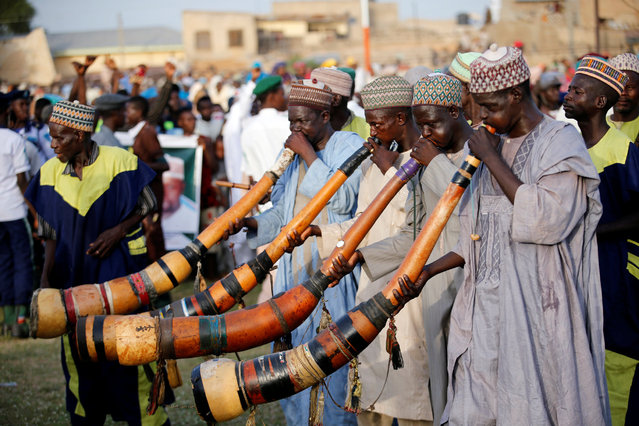
Traditional trumpeters perform during the durbar festival on the second day of Eid-al-Fitr celebrations in Nigeria's northern city of Kano, July 7, 2016. (Photo by Akintunde Akinleye/Reuters)

Traditional trumpeters perform during the durbar festival on the second day of Eid-al-Fitr celebrations in Nigeria's northern city of Kano, July 7, 2016. The Durbar festival begins with prayers, followed by a parade of the Emir and his entourage on horses, accompanied by music players, and ending at the Emir's palace. The Durbar festival had been in hausaland for more than 500 years. It was introduced by sarki muhammadu rumfa of kano in the late 14th century, as a way of demonstrating military power and skills before going to war. The festival is also an opportunity for local leaders to pay homage to emir throughout the jahi cheering. (Photo by Akintunde Akinleye/Reuters)
Details
09 Jul 2016 09:35:00
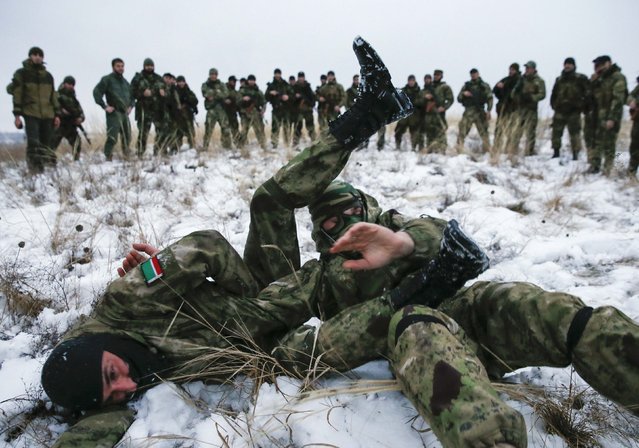
Pro-Russian separatists from the Chechen “Death” battalion take part in a training exercise in the territory controlled by the self-proclaimed Donetsk People's Republic, eastern Ukraine, December 8, 2014. Chanting “Allahu Akbar” (God is greatest), dozens of armed men in camouflage uniforms from Russia's republic of Chechnya train in snow in a camp in the rebel-held east Ukraine. (Photo by Maxim Shemetov/Reuters)

Pro-Russian separatists from the Chechen “Death” battalion take part in a training exercise in the territory controlled by the self-proclaimed Donetsk People's Republic, eastern Ukraine, December 8, 2014. Chanting “Allahu Akbar” (God is greatest), dozens of armed men in camouflage uniforms from Russia's republic of Chechnya train in snow in a camp in the rebel-held east Ukraine. They say their “Death” unit fighting Ukrainian forces has 300 people, mostly former state security troops in the mainly-Muslim region where Moscow waged two wars against Islamic insurgents and which is now run by a Kremlin-backed strongman. (Photo by Maxim Shemetov/Reuters)
Details
11 Dec 2014 13:58:00
A 17 year old girl lays dead next to her doll after she and her friend were killed by unknown motorcycle-riding gunmen, in an alley in Manila, Philippines early October 26, 2016. According to the police, a sign on a cardboard reading “Tulak ka, hayop ka”, which translates to “You are a (drug) pusher, you are an animal” was found with the body of girl's friend. (Photo by Damir Sagolj/Reuters)

Damir Sagolj has won Reuters photojournalist of the year for his 2016 work, which included documenting the deadly Philippine drug war and the North Korea congress. Here: A 17 year old girl lays dead next to her doll after she and her friend were killed by unknown motorcycle-riding gunmen, in an alley in Manila, Philippines early October 26, 2016. According to the police, a sign on a cardboard reading “Tulak ka, hayop ka”, which translates to “You are a (drug) pusher, you are an animal” was found with the body of girl's friend. (Photo by Damir Sagolj/Reuters)
Details
06 Mar 2017 00:03:00
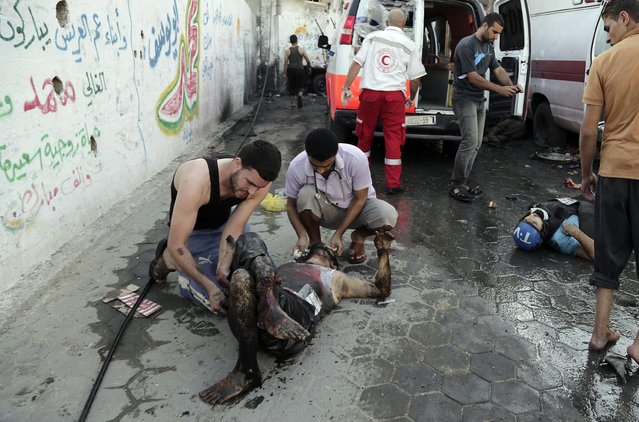
In this July 30, 2014 photo, neighbors help gravely injured Mohammed al-Selek, 39, wounded by an Israeli mortar strike as he lays next to the body of Palestinian journalist Rami Reyan who was killed, in the Shijaiyah neighborhood of the northern Gaza Strip. Al-Selek's life changed forever last July 30, when the shells slammed into his home killing all his three children, his father and six other relatives. (Photo by Adel Hana/AP Photo)

In this July 30, 2014 photo, neighbors help gravely injured Mohammed al-Selek, 39, wounded by an Israeli mortar strike as he lays next to the body of Palestinian journalist Rami Reyan who was killed, in the Shijaiyah neighborhood of the northern Gaza Strip. Al-Selek's life changed forever last July 30, when the shells slammed into his home killing all his three children, his father and six other relatives. A year later, al-Selek, who lost his leg during the airstrike, still struggles to recover and come to terms with his family's loss in the 50-day Israel-Hamas war. (Photo by Adel Hana/AP Photo)
Details
07 Jul 2015 11:28:00
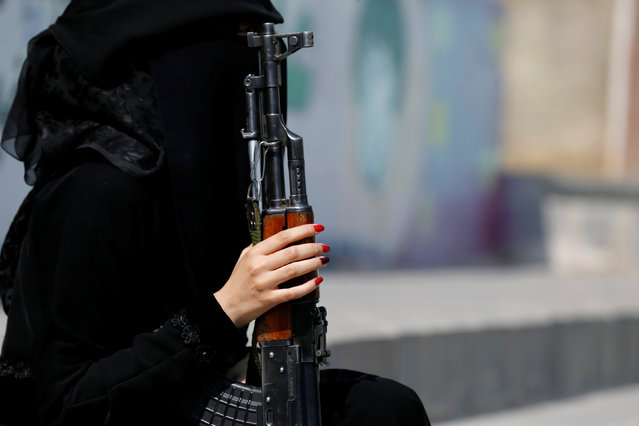
A woman loyal to the Houthi movement holds a rifle as she takes part in a parade to show support to the movement in Sanaa, Yemen September 6, 2016. Dressed in the head to toe garments which obscured their faces, the female fighters brandished machine guns, rocket launchers and grenades. The women also wore hats as they showed support for the Shiite Houthi rebels. The Saudi-led Arab coalition launched a military campaign against the Houthis and their allies in March 2015. It was after the rebels closed in on Gulf-backed President Abedrabbo Mansour Hadi in his southern refuge of Aden, forcing him into exile. The female protesters have pledged to remain supportive and do whatever they can to back the ongoing resistance against the kingdom. Yemen is in the grip of its most severe crisis in years, and is on the brink of civil war. (Photo by Khaled Abdullah/Reuters)

A woman loyal to the Houthi movement holds a rifle as she takes part in a parade to show support to the movement in Sanaa, Yemen September 6, 2016. The Saudi-led Arab coalition launched a military campaign against the Huthis and their allies in March 2015, after the rebels closed in on Gulf-backed President Abedrabbo Mansour Hadi in his southern refuge of Aden, forcing him into exile. (Photo by Khaled Abdullah/Reuters)
Details
07 Sep 2016 10:24:00
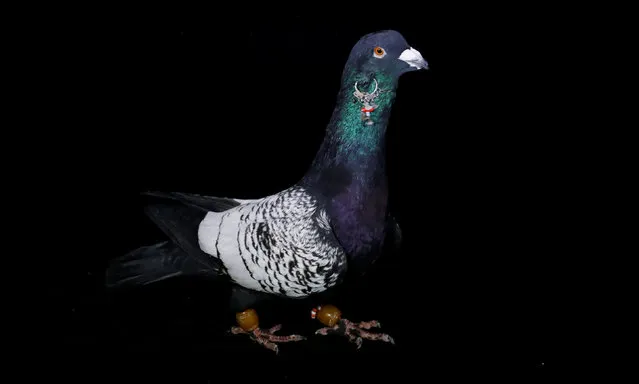
A pigeon, known as Siyah Kinifirli, with an approximate market value of 1000 Turkish Lira ($263), bred by 23-year-old Ismail Ozbek, is pictured in Sanliurfa, Turkey, December 23, 2016. As night-time approaches in Sanliurfa, southeastern Turkey, most of the alleyways of the city's old bazaar are emptying out of buyers and vendors, except for one. The bustle of daytime trading has died down, but on this little street, a stream of men carry cardboard boxes filled with pigeons to a cluster of three teahouses. Here, they sell the birds at Sanliurfa's famed auctions to a dedicated band of pigeon keepers and breeders, a pastime that has been thriving for hundreds of years across the region and over the nearby border into war-torn Syria. In a country where the minimum wage is about 1,400 Liras ($367) a month, enthusiasts regularly easily spend hundreds of dollars for one bird. “I once sold a pair of pigeons for 35,000 Turkish Lira”, says auctioneer Imam Dildas. “This is a passion, a hobby you cannot quit. I've been known to sell the fridge and my wife's gold bracelets to pay for pigeons”. (Photo by Umit Bektas/Reuters)

A pigeon, known as Siyah Kinifirli, with an approximate market value of 1000 Turkish Lira ($263), bred by 23-year-old Ismail Ozbek, is pictured in Sanliurfa, Turkey, December 23, 2016. As night-time approaches in Sanliurfa, southeastern Turkey, most of the alleyways of the city's old bazaar are emptying out of buyers and vendors, except for one. (Photo by Umit Bektas/Reuters)
Details
17 Jan 2017 12:05:00
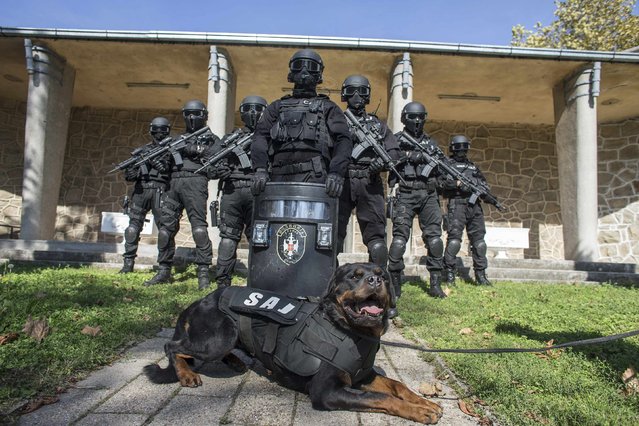
Serbian police officers of the Special Anti-Terrorist Unit pose for a picture in their base outside Belgrade October 8, 2014. (Photo by Marko Djurica/Reuters)

Serbian police officers of the Special Anti-Terrorist Unit pose for a picture in their base outside Belgrade October 8, 2014. When the killing of an unarmed black teenager by a white policeman in Ferguson, Missouri, in August sparked sometimes violent protests, the response of police in camouflage gear and armoured vehicles wielding stun grenades and assault rifles seemed more like a combat operation than a public order measure. Some U.S. police departments have recently acquired U.S. military-surplus hardware from wars abroad, but there are many law enforcers around the world whose rules of engagement also allow the use of lethal force with relatively few restrictions. But for every regulation that gives police wide scope to use firearms, there is another code that sharply limits their use. In Serbia, police may use measures ranging from batons to special vehicles, water cannon and tear gas on groups of people who have gathered illegally and are behaving in a way that is violent or could cause violence, but they may use firearms only when life is endangered. (Photo by Marko Djurica/Reuters)
Details
27 Nov 2014 14:53:00
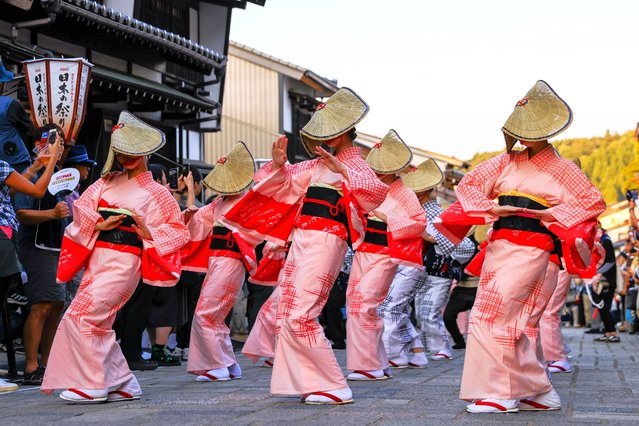
Women wearing braided straw hats dance as the Owara Kaze-no-Bon dance festival begins on September 1, 2025 in Toyama, Japan. The festival, believed to have more than 300 years history, continues till September 3. (Photo by The Asahi Shimbun via Getty Images)

Women wearing braided straw hats dance as the Owara Kaze-no-Bon dance festival begins on September 1, 2025 in Toyama, Japan. The festival, believed to have more than 300 years history, continues till September 3. (Photo by The Asahi Shimbun via Getty Images)
Details
20 Sep 2025 03:35:00