Loading...
Done
Kenyan photographer and art director Barbara Minishi (L) takes pictures of her room mate and fashion stylist Wambui Thimba (R) wearing a creation by a Kenyan fashion designer on the rooftop of their apartment in Nairobi, Kenya, on June 1, 2020. After their scheduled works was cancelled due to the spread of the COVID-19 coronavirus, Minishi and Thimba have started their own project called “the Kenya Fashion & Style Diary in 21 days” to showcase a Kenyan fashion brand everyday for 3 weeks on social networking services since May 22, 2020 by only shooting at their apartment. (Photo by Yasuyoshi Chiba/AFP Photo)

Kenyan photographer and art director Barbara Minishi (L) takes pictures of her room mate and fashion stylist Wambui Thimba (R) wearing a creation by a Kenyan fashion designer on the rooftop of their apartment in Nairobi, Kenya, on June 1, 2020. After their scheduled works was cancelled due to the spread of the COVID-19 coronavirus, Minishi and Thimba have started their own project called “the Kenya Fashion & Style Diary in 21 days” to showcase a Kenyan fashion brand everyday for 3 weeks on social networking services since May 22, 2020 by only shooting at their apartment. (Photo by Yasuyoshi Chiba/AFP Photo)
Details
03 Jul 2020 00:05:00
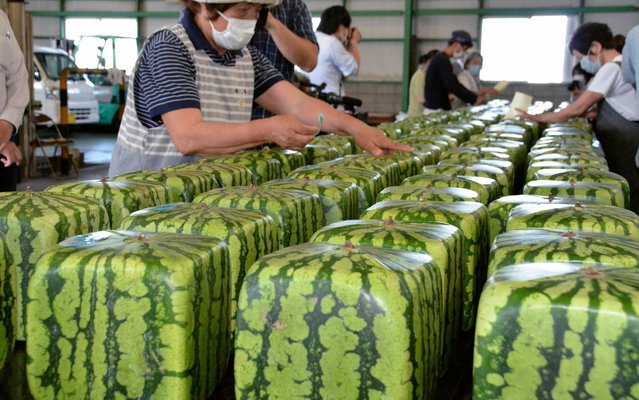
Japan Agricultural Cooperation Kagawa employees arrange cubic watermelons to be shipped within the country, in Zentsuji city, Kagawa prefecture, western Japan, Wednesday, June 24, 2020. The about 18x18x18-centimeter (7x7x7-inch) square watermelons, grown in transparent square containers, will be sold for about 10,000 yen ($94) each. (Photo ny Maiko Hirai/Kyodo News via AP Photo)

Japan Agricultural Cooperation Kagawa employees arrange cubic watermelons to be shipped within the country, in Zentsuji city, Kagawa prefecture, western Japan, Wednesday, June 24, 2020. The about 18x18x18-centimeter (7x7x7-inch) square watermelons, grown in transparent square containers, will be sold for about 10,000 yen ($94) each. (Photo ny Maiko Hirai/Kyodo News via AP Photo)
Details
08 Jul 2020 00:05:00
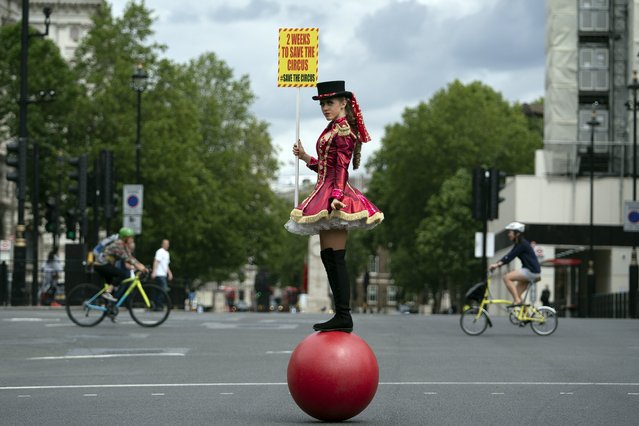
Circus performer from the Association of Circus Proprietors on Whitehall, London, Britain, 07 July 2020. The association handed a petition to Downing Street to ask British Prime Minister Boris Johnson to allow circuses to reopen. (Photo by Will Oliver/EPA/EFE)

Circus performer from the Association of Circus Proprietors on Whitehall, London, Britain, 07 July 2020. The association handed a petition to Downing Street to ask British Prime Minister Boris Johnson to allow circuses to reopen. (Photo by Will Oliver/EPA/EFE)
Details
09 Jul 2020 00:07:00
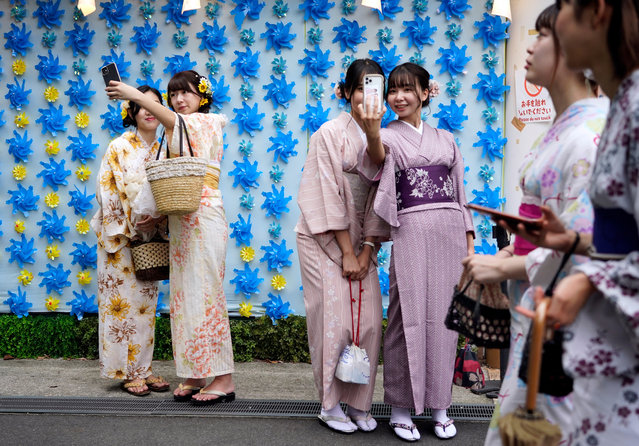
Japanese women wearing “yukata” casual summer kimono take selfies at Asakusa district in Tokyo, Japan, 13 September 2020. Asakusa is one of Tokyo's most-visited areas and is usually crowded with tourists. In Japan, the numbers of visitors from abroad fell by 99.9 percent from a year earlier in July due to the ban for entries of foreign visitors amid the coronavirus pandemic. (Photo by Franck Robichon/EPA/EFE)

Japanese women wearing “yukata” casual summer kimono take selfies at Asakusa district in Tokyo, Japan, 13 September 2020. Asakusa is one of Tokyo's most-visited areas and is usually crowded with tourists. In Japan, the numbers of visitors from abroad fell by 99.9 percent from a year earlier in July due to the ban for entries of foreign visitors amid the coronavirus pandemic. (Photo by Franck Robichon/EPA/EFE)
Details
24 Sep 2020 00:01:00
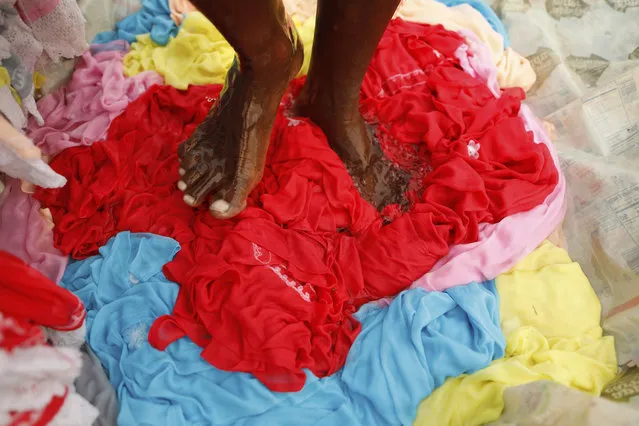
A dhobi, or a washerman washes cloths on the banks of the River Gomti in Lucknow, India, Saturday, September 12, 2020. Dhobis are traditional laundry workers who wash clothes by hand and dry them in the sun, an occupation which has been in existence for generations. Most cities in India have a Dhobi Ghat, or washermen's area, where the city's pile of clothes is laundered. This practice is still popular in India, despite of modern technology. Around 1,000 families work in Lucknow's Dhobi Ghat. However, in light of the novel coronavirus, their wages have decreased drastically. With each family earning around US$100-200 per month. (Photo by Rajesh Kumar Singh/AP Photo)

A dhobi, or a washerman washes cloths on the banks of the River Gomti in Lucknow, India, Saturday, September 12, 2020. Dhobis are traditional laundry workers who wash clothes by hand and dry them in the sun, an occupation which has been in existence for generations. Most cities in India have a Dhobi Ghat, or washermen's area, where the city's pile of clothes is laundered. This practice is still popular in India, despite of modern technology. Around 1,000 families work in Lucknow's Dhobi Ghat. However, in light of the novel coronavirus, their wages have decreased drastically. With each family earning around US$100-200 per month. (Photo by Rajesh Kumar Singh/AP Photo)
Details
25 Sep 2020 00:03:00
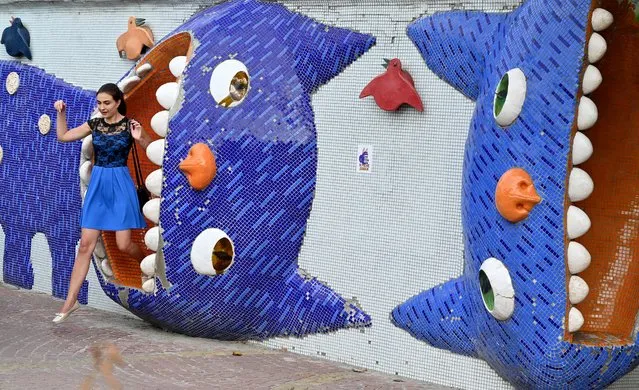
A woman jumps out of a street art object in the center of the Ukrainian capital of Kiev during a warm autumn day on September 25, 2020. (Photo by Sergei Supinsky/AFP Photo)

A woman jumps out of a street art object in the center of the Ukrainian capital of Kiev during a warm autumn day on September 25, 2020. (Photo by Sergei Supinsky/AFP Photo)
Details
09 Oct 2020 00:05:00
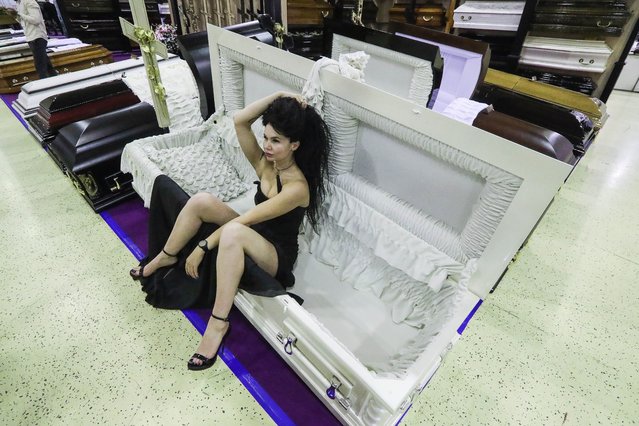
A model takes part in the Necropolis – Tanexpo 2021 international exhibition of funeral accessories, services and commemorative art at Moscow's Expocentre in Moscow, Russia on October 26, 2021. (Photo by Sergei Karpukhin/TASS)

A model takes part in the Necropolis – Tanexpo 2021 international exhibition of funeral accessories, services and commemorative art at Moscow's Expocentre in Moscow, Russia on October 26, 2021. (Photo by Sergei Karpukhin/TASS)
Details
04 Nov 2021 08:39:00
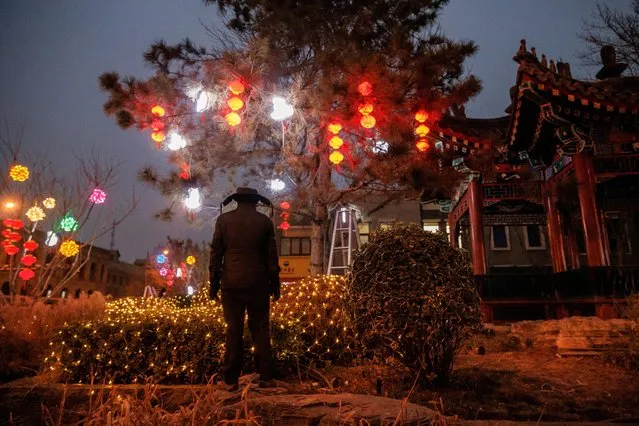
A worker looks at Spring Festival decorations ahead of Chinese Lunar New Year festivities in Beijing, China on January 12, 2023. (Photo by Thomas Peter/Reuters)

A worker looks at Spring Festival decorations ahead of Chinese Lunar New Year festivities in Beijing, China on January 12, 2023. (Photo by Thomas Peter/Reuters)
Details
17 Jan 2023 04:32:00