Loading...
Done
Miss USA Alyssa Campanella arrives at the 2nd Annual American Giving Awards at the Pasadena Civic Auditorium on December 7, 2012 in Pasadena, California. (Photo by Gregg DeGuire/WireImage)

Miss USA Alyssa Campanella arrives at the 2nd Annual American Giving Awards at the Pasadena Civic Auditorium on December 7, 2012 in Pasadena, California. (Photo by Gregg DeGuire/WireImage)
Details
11 Dec 2012 11:53:00
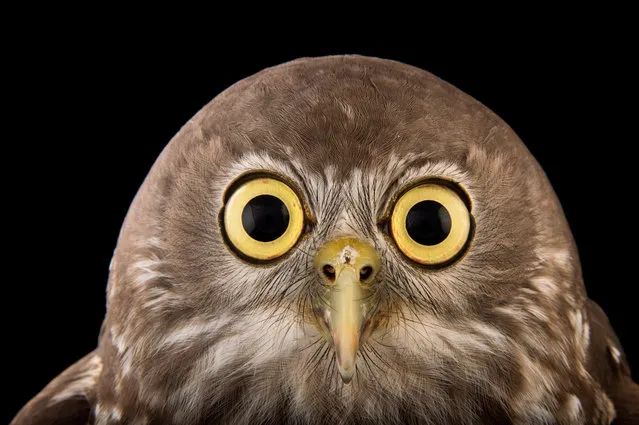
The National Geographic Photo Ark is a travelling exhibition of photographer Joel Sartore’s quest to create a photo archive of biodiversity around the world. So far, Sartore has captured studio portraits of more than 6,000 species – a number that he hopes to double. On 1 July, the ark will open at Melbourne zoo – the first time it has been exhibited in the southern hemisphere. More than 50 portraits will be on display, including many of Australian endangered animals being protected by programs at the zoo itself. These captions have been edited from text supplied by Melbourne zoo. Here: Barking owl. So-named because its call sounds like a barking dog, these birds are native to Australia, Indonesia and Papua New Guinea. In Victoria they are listed as an endangered species, and in 2003 there were estimated to be fewer than 50 breeding pairs. The main threat to the species in Victoria is loss of habitat, especially large trees with hollows in which they can nest and on which many of their prey depend. Apart from a bark, they may utter a chilling scream when they feel threatened. (Photo by Joel Sartore/National Geographic Photo Ark/The Guardian)

The National Geographic Photo Ark is a travelling exhibition of photographer Joel Sartore’s quest to create a photo archive of biodiversity around the world. So far, Sartore has captured studio portraits of more than 6,000 species – a number that he hopes to double. On 1 July, the ark will open at Melbourne zoo – the first time it has been exhibited in the southern hemisphere. More than 50 portraits will be on display, including many of Australian endangered animals being protected by programs at the zoo itself. These captions have been edited from text supplied by Melbourne zoo. Here: Barking owl. (Photo by Joel Sartore/National Geographic Photo Ark/The Guardian)
Details
01 Jul 2017 07:45:00
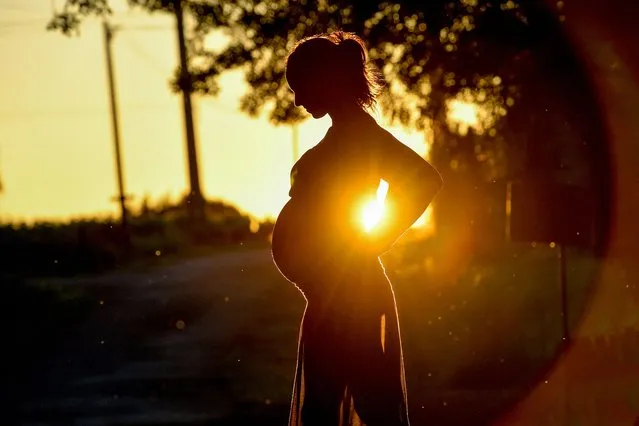
A pregnant woman poses on June 19, 2018 in Vertou, western France. France had an estimated population of 68.4 million by January 1, 2024, representing a further year-on-year increase of 0.3 percent, limited by a marked drop in the birth rate, the INSEE national statistics bureau of France reported on January 16, 2024. In 2023, 678,000 babies were born in France, 6.6 percent fewer than the previous year, the lowest number of births in any year since 1946. Over the same period, there were 631,000 deaths, down 6.5 percent on 2022, a year marked by the consequences of the Covid-19 pandemic and episodes of extreme heat. (Photo by Loic Venance/AFP Photo)


A pregnant woman poses on June 19, 2018 in Vertou, western France. France had an estimated population of 68.4 million by January 1, 2024, representing a further year-on-year increase of 0.3 percent, limited by a marked drop in the birth rate, the INSEE national statistics bureau of France reported on January 16, 2024. In 2023, 678,000 babies were born in France, 6.6 percent fewer than the previous year, the lowest number of births in any year since 1946. Over the same period, there were 631,000 deaths, down 6.5 percent on 2022, a year marked by the consequences of the Covid-19 pandemic and episodes of extreme heat. (Photo by Loic Venance/AFP Photo)
Details
27 Feb 2024 07:29:00
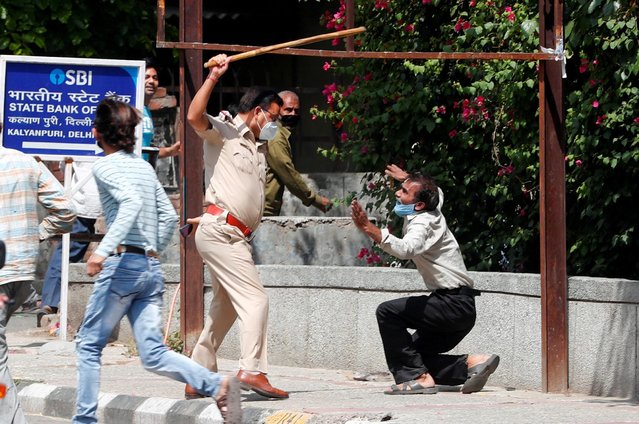
A police officer raises a baton at a man who, according to police, had broken the social distancing rule, outside a wine shop during an extended nationwide lockdown to slow the spread of the coronavirus disease (COVID-19), in New Delhi, India, May 4, 2020. (Photo by Adnan Abidi/Reuters)

A police officer raises a baton at a man who, according to police, had broken the social distancing rule, outside a wine shop during an extended nationwide lockdown to slow the spread of the coronavirus disease (COVID-19), in New Delhi, India, May 4, 2020. (Photo by Adnan Abidi/Reuters)
Details
06 May 2020 00:07:00
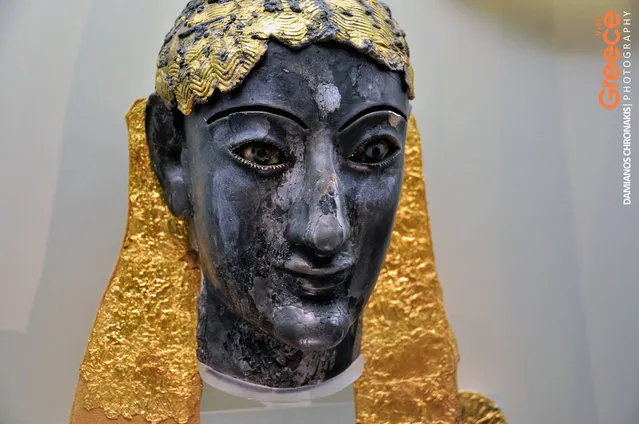
Delfoi Museum

Delfoi Museum by Damianos Chronakis
Details
12 Jun 2012 07:10:00


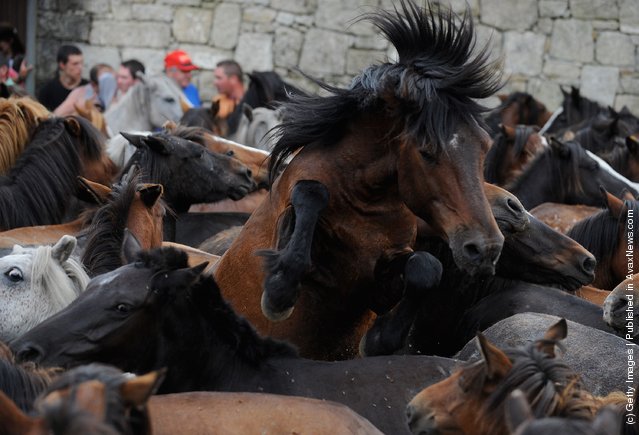
“Rapa das Bestas is the name of an operation that involves cutting the manes of the horses that are performed in the curros (enclosed which retain the horses) held in various locations in Galicia (Spain).

The best known is the Rapa das Bestas of Sabucedo, in the city hall of A Estrada, which lasts three days: the First Saturday, Sunday and Monday in July. In fact, the name given to the celebration (Rapa das Bestas of Sabucedo), while in most places speaking about curros, including curros de Valga, etc”. – Wikipedia

Photo: A wild horse leaps up during the Rapa das Bestas (shearing of the beasts) festival on July 2, 2011 in Sabucedo, Spain. Hundreds of wild horses are rounded up from the mountains and trimmed and marked in the corral. (Photo by Denis Doyle/Getty Images)
Details
03 Jul 2011 12:30:00
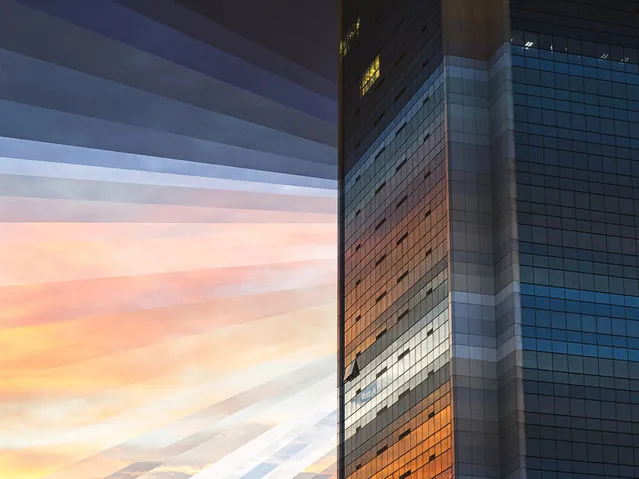
A glass building mirrors the sky in Singapore as the sun goes down over the city. (Photo by Fong Qi Wei/Thoughtful Photography)

Intrigued by photographing time, Singapore-based photographer Fong Qi Wei created single, composite pictures from a sequence of images spanning 2-4 hours. He concentrated on capturing sunrises and sunsets as they evolved over different landscapes, seascapes, and cityscapes. He then digitally stitched the images together to get a snapshot of time passing over the scene for his series “Time is a Dimension”. “Most paintings and photographs are an instance of time”, Wei explained in his artist’s statement. “That’s not the way the world works. We experience a sequence of time, and that’s why a video is somehow more compelling than a freeze frame”. (Photo by Fong Qi Wei/Thoughtful Photography)
Details
19 Aug 2014 10:28:00
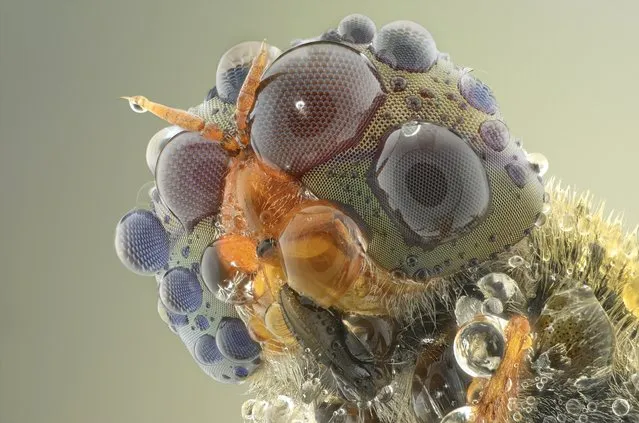
A close-up shot of dews of a soldier fly on August 2014, in Banten, Indonesia. Wildlife photographer takes incredible close-up images of tiny bugs. Yudy Sauw has captured close-up images of creepy crawlies – revealing their disturbing faces. The insects have an assortment bulging eyes and sharp pincers and look grotesque in the face-to-face shots. The miniature-models include a soldier fly, a red ant and a longhorn beetle. (Photo by Yudy Sauw/Barcroft Media)

A close-up shot of dews of a soldier fly on August 2014, in Banten, Indonesia. Wildlife photographer takes incredible close-up images of tiny bugs. Yudy Sauw has captured close-up images of creepy crawlies – revealing their disturbing faces. The insects have an assortment bulging eyes and sharp pincers and look grotesque in the face-to-face shots. The miniature-models include a soldier fly, a red ant and a longhorn beetle. The 33-year-old photographed the bugs at his home studio in Banten, Indonesia, placing them 2-10 centimeters away from the camera. (Photo by Yudy Sauw/Barcroft Media)
Details
22 Aug 2014 12:42:00