Loading...
Done
Mask dancers take part in a parade during the the International Festival of Masquerade Games “Surva” in the town of Pernik, some 30 km from Sofia, Bulgaria, January 31, 2016. (Photo by Vassil Donev/EPA)

Mask dancers take part in a parade during the the International Festival of Masquerade Games “Surva” in the town of Pernik, some 30 km from Sofia, Bulgaria, January 31, 2016. (Photo by Vassil Donev/EPA)
Details
01 Feb 2016 13:31:00
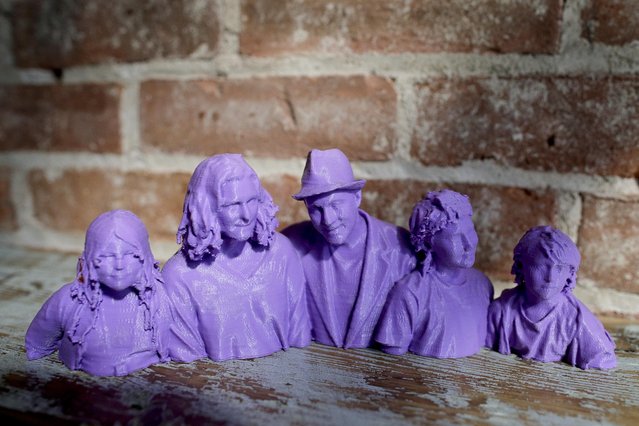
In this August 14, 2014 photo, a plastic bust statue of Kevin Micelli, center, and his family, made by a 3-D scanner and printer, sits on a shelf inside Micelli's coffee shop in New York. Micelli purchased the 3-D scanning and printing services at the Cubo toy store next door to his shop. With the old studio portrait supplanted by the selfie, 3-D scanning services provide a new reason for people to go to a store and stand stock-still in front of a camera. (Photo by Julie Jacobson/AP Photo)

“The advent of digital cameras and smartphones killed the traditional mall portrait studio, but 3-D printing has sparked a new trend. Overloaded with digital photos, statues may be moving in to fulfill our desire for portraits that stand out”. – Peter Svensson via The Associated Press. (Photo by Julie Jacobson/AP Photo)
Details
12 Oct 2014 12:28:00
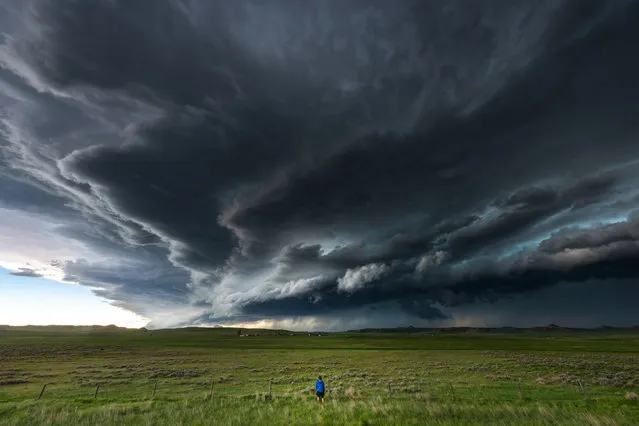
A photographer has weathered some of America's most violent storms to capture these stunning snaps. Storm chaser Mike Mezeul II, 30, has traveled all over the US to shoot the likes of mammoth thunderstorms and surreal cloud patterns. His incredible collection of storm images are the result of more than 15 years of photography and thousands of miles of travel. (Photo by Mike Mezeul II/Caters News)

A photographer has weathered some of America's most violent storms to capture these stunning snaps. Storm chaser Mike Mezeul II, 30, has traveled all over the US to shoot the likes of mammoth thunderstorms and surreal cloud patterns. His incredible collection of storm images are the result of more than 15 years of photography and thousands of miles of travel. Here: Mike waiting for the storm at Cheyenne, Wyoming, June 2014. (Photo by Mike Mezeul II/Caters News)
Details
07 Dec 2014 11:21:00
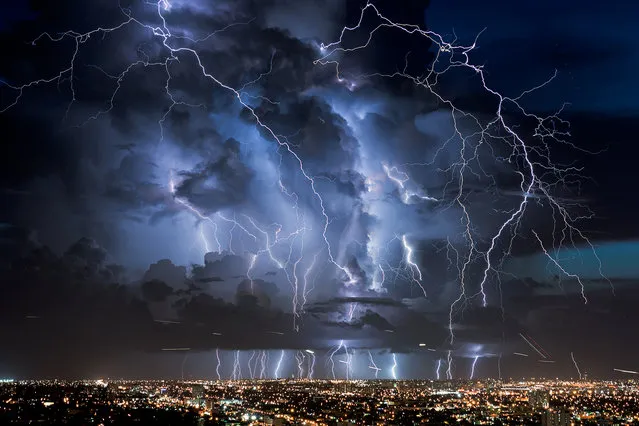
“Everglades lightning”. Miami, 2013. (Photo by lostINmia)

“Everglades lightning”. Miami, 2013. (Photo by lostINmia)
Details
29 Oct 2013 11:08:00
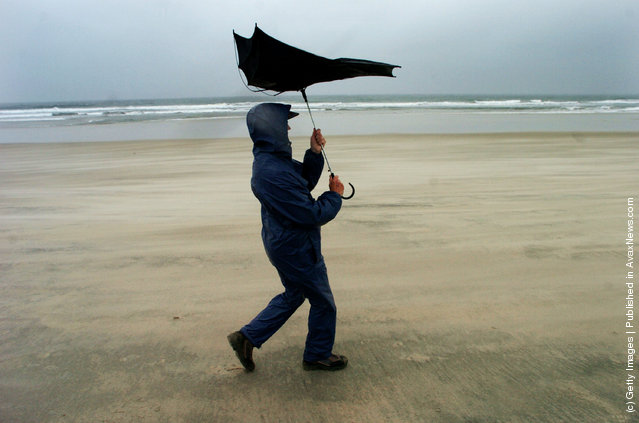
Doris Pennman adjusts her umbrella as she walks along Mission Beach

Doris Pennman adjusts her umbrella as she walks along Mission Beach on January 8, 2005 in San Diego, Califonia. (Photo by Sandy Huffaker/Getty Images)
Details
07 Oct 2011 10:26:00
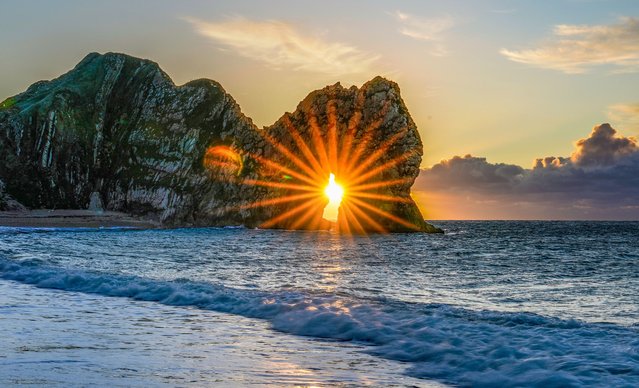
The calm before storm Bert, with the sunrise on November 22, 2024 through Durdle Door in Dorset, UK, the sun beams through the famous rock arch on the Jurassic Coastline, a shot known as “Through the Keyhole”. It only happens from the end of November to early January and not that often as clear skies are needed on the horizon for the sun to shine through. (Photo by Steve Hogan/Picture Exclusive)

The calm before storm Bert, with the sunrise on November 22, 2024 through Durdle Door in Dorset, UK, the sun beams through the famous rock arch on the Jurassic Coastline, a shot known as “Through the Keyhole”. It only happens from the end of November to early January and not that often as clear skies are needed on the horizon for the sun to shine through. (Photo by Steve Hogan/Picture Exclusive)
Details
14 Jan 2025 05:39:00
A girl jumps over a campfire while celebrating Ivan Kupala Night, a traditional Slavic holiday not far from Kiev on July 6, 2013. During the celebration, originating in pagan times, people plait wreaths, jump over fires, and swim naked. (Photo by Sergei Supinsky/AFP Photo)

A girl jumps over a campfire while celebrating Ivan Kupala Night, a traditional Slavic holiday not far from Kiev on July 6, 2013. During the celebration, originating in pagan times, people plait wreaths, jump over fires, and swim naked. (Photo by Sergei Supinsky/AFP Photo)
Details
13 Jul 2013 11:59:00
On August 31, 2012, a long filament of solar material that had been hovering in the sun's atmosphere, the corona, erupted out into space at 4:36 p.m. EDT. The coronal mass ejection, or CME, traveled at over 900 miles per second. The CME did not travel directly toward Earth, but did connect with Earth's magnetic environment, or magnetosphere, causing aurora to appear on the night of Monday, September 3. (Photo by NASA/GSFC/SDO)

On August 31, 2012, a long filament of solar material that had been hovering in the sun's atmosphere, the corona, erupted out into space at 4:36 p.m. EDT. The coronal mass ejection, or CME, traveled at over 900 miles per second. The CME did not travel directly toward Earth, but did connect with Earth's magnetic environment, or magnetosphere, causing aurora to appear on the night of Monday, September 3. (Photo by NASA/GSFC/SDO via The Atlantic)

Details
14 Sep 2012 09:01:00