Loading...
Done
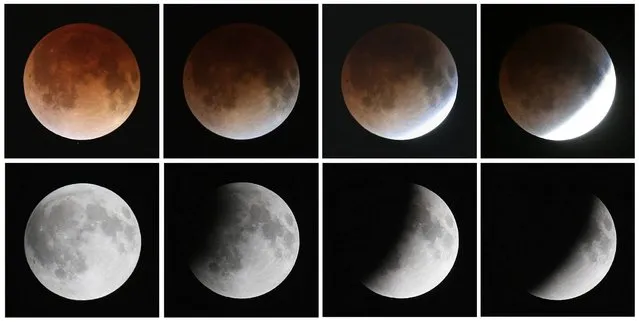
This composite image shows a sequence, from bottom left to top left, of the moon's transition during a total lunar eclipse on April 15, 2014 in Miami, Florida. People in most of north and south America should be able to witness this year's first total lunar eclipse, which will cause a “blood moon” and is the first of four in a rare Tetrad of eclipses over the next two years. (Photo by Joe Raedle/Getty Images)

This composite image shows a sequence, from bottom left to top left, of the moon's transition during a total lunar eclipse on April 15, 2014 in Miami, Florida. People in most of north and south America should be able to witness this year's first total lunar eclipse, which will cause a “blood moon” and is the first of four in a rare Tetrad of eclipses over the next two years. (Photo by Joe Raedle/Getty Images)
Details
15 Apr 2014 14:28:00
Revellers take part in the annual block party known as “Casa Comigo” (Marry Me), during carnival festivities in Sao Paulo, Brazil on February 15, 2020. (Photo by Rahel Patrasso/Reuters)

Revellers take part in the annual block party known as “Casa Comigo” (Marry Me), during carnival festivities in Sao Paulo, Brazil on February 15, 2020. (Photo by Rahel Patrasso/Reuters)
Details
24 Feb 2020 00:05:00
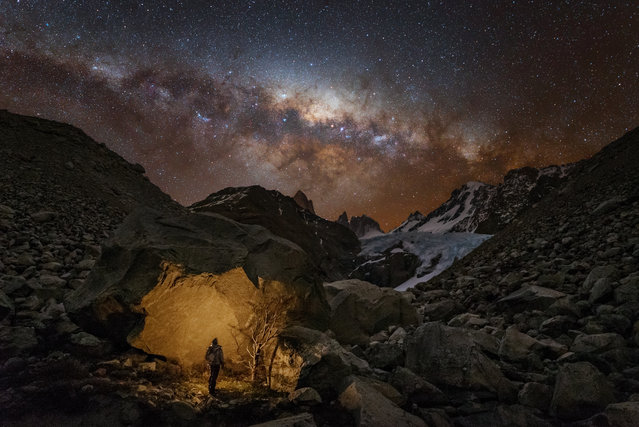
“People and Space”. Winner: Wanderer in Patagonia by Yuri Zvezdny (Russia) A lone stargazer stares up at the stars of our galaxy, the Milky Way, as they stretch across the night sky over the glacier “White Stones” (Piedras Blancas) in the Los Glaciares National Park, Argentina. El Chaltén, Santa Cruz Province, Argentina, 27 September 2016 iOptron Sky-Tracker mount, Sony A7S camera, 18 mm f/2.8 lens, ISO 5000, 30-second exposure Wanderer in Patagonia. (Photo by Yuri Zvezdny/Insight Astronomy Photographer of the Year 2017)

“People and Space”. Winner: Wanderer in Patagonia by Yuri Zvezdny (Russia) A lone stargazer stares up at the stars of our galaxy, the Milky Way, as they stretch across the night sky over the glacier “White Stones” (Piedras Blancas) in the Los Glaciares National Park, Argentina. El Chaltén, Santa Cruz Province, Argentina, 27 September 2016 iOptron Sky-Tracker mount, Sony A7S camera, 18 mm f/2.8 lens, ISO 5000, 30-second exposure Wanderer in Patagonia. (Photo by Yuri Zvezdny/Insight Astronomy Photographer of the Year 2017)
Details
18 Sep 2017 07:09:00
“These Rajasthani sisters were sitting on the staircase inside their house relaxing and enjoy a cup of masala chai”. (Photo by Firdaus Hadzri/National Geographic Travel Photographer of the Year Contest)

“These Rajasthani sisters were sitting on the staircase inside their house relaxing and enjoy a cup of masala chai”. (Photo by Firdaus Hadzri/National Geographic Travel Photographer of the Year Contest)
Details
13 Apr 2018 00:01:00
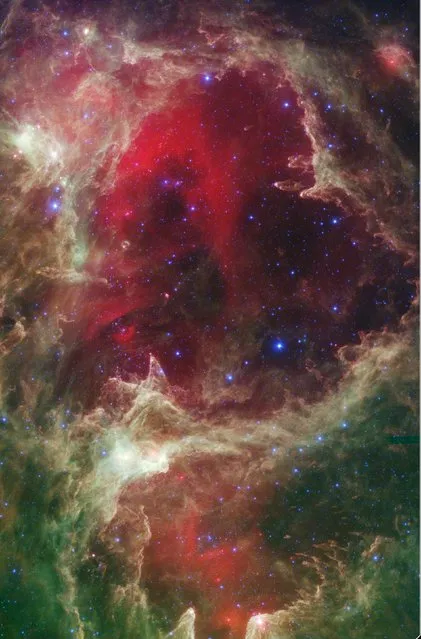
An infrared portrait from NASA's Spitzer Space Telescope which shows generations of stars is seen in this undated NASA handout image released February 14, 2013. In this wispy star-forming region, called W5, the oldest stars can be seen as blue dots in the centers of the two hollow cavities (other blue dots are background and foreground stars not associated with the region). Red shows heated dust that pervades the region's cavities, while green highlights dense clouds. (Photo by NASA/Reuters/JPL-Caltech/Harvard-Smithsonian/Handout)

An infrared portrait from NASA's Spitzer Space Telescope which shows generations of stars is seen in this undated NASA handout image released February 14, 2013. In this wispy star-forming region, called W5, the oldest stars can be seen as blue dots in the centers of the two hollow cavities (other blue dots are background and foreground stars not associated with the region). Red shows heated dust that pervades the region's cavities, while green highlights dense clouds. (Photo by NASA/Reuters/JPL-Caltech/Harvard-Smithsonian/Handout)
Details
03 Mar 2013 08:44:00
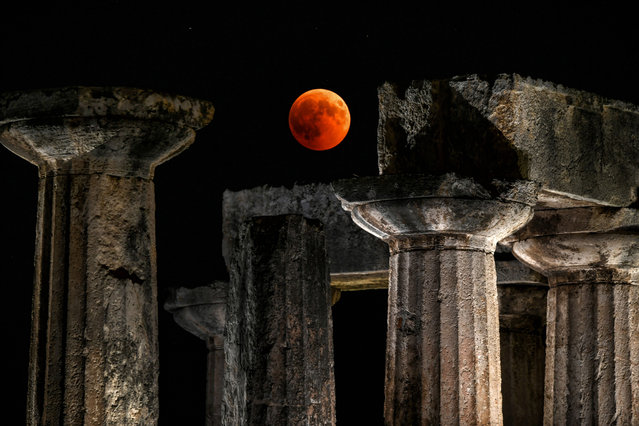
A picture shows the full moon during a “blood moon” eclipse over the temple of Apollo in Corinth on July 27, 2018. The longest “blood moon” eclipse this century began on July 27, coinciding with Mars' closest approach in 15 years to treat skygazers across the globe to a thrilling celestial spectacle. (Photo by Valerie Gache/AFP Photo)

A picture shows the full moon during a “blood moon” eclipse over the temple of Apollo in Corinth on July 27, 2018. The longest “blood moon” eclipse this century began on July 27, coinciding with Mars' closest approach in 15 years to treat skygazers across the globe to a thrilling celestial spectacle. (Photo by Valerie Gache/AFP Photo)
Details
29 Jul 2018 09:47:00
The reflection of a man dressed as Hindu deity of death Yamaraj (R) to raise awareness about the coronavirus is seen on the wing mirror of a vintage car during a government-imposed nationwide lockdown as a preventive measure against the COVID-19 coronavirus, in Kolkata on April 24, 2020. (Photo by Dibyangshu Sarkar/AFP Photo)

The reflection of a man dressed as Hindu deity of death Yamaraj (R) to raise awareness about the coronavirus is seen on the wing mirror of a vintage car during a government-imposed nationwide lockdown as a preventive measure against the COVID-19 coronavirus, in Kolkata on April 24, 2020. (Photo by Dibyangshu Sarkar/AFP Photo)
Details
29 Apr 2020 00:05:00
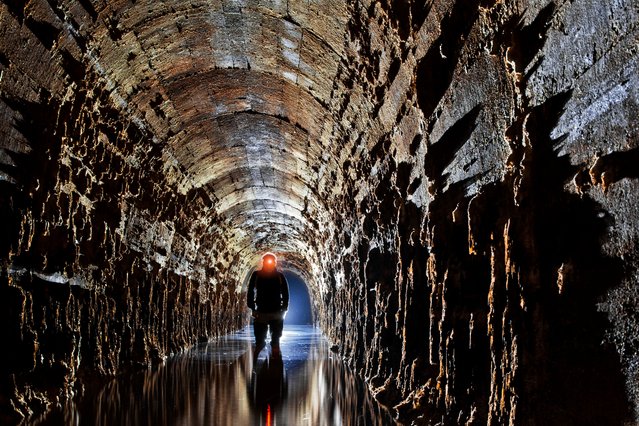
Regenwurmlager, Poland. The Regenwurmlager is an extensive underground fortification area constructed by Germany in 1920s-1940s, now in western Poland, near the city of Międzyrzecz. (Photo by Anna Arinova/Caters News)

Stunning silhouettes under European cities reveal the size and splendor of the continent’s urban foundations. Photographer and content-manager Anna Arinova, 28, from Moscow, captured the awe-inspiring labyrinths in Russia and Germany. Here: Regenwurmlager, Poland. The Regenwurmlager is an extensive underground fortification area constructed by Germany in 1920s-1940s, now in western Poland, near the city of Międzyrzecz. (Photo by Anna Arinova/Caters News)
Details
29 Dec 2016 07:53:00