Loading...
Done
(L-R) Edmea Pereira, 69, Elsa Rodrigues, 61, and Osmidio Conde, 71, take part in their surf class in Santos, Sao Paulo state, Brazil, March 16, 2016. (Photo by Nacho Doce/Reuters)

(L-R) Edmea Pereira, 69, Elsa Rodrigues, 61, and Osmidio Conde, 71, take part in their surf class in Santos, Sao Paulo state, Brazil, March 16, 2016. When work is up, surf is up in Brazil, as a group of retired citizens take to the waves in keep-fit, keep-young sessions at a surf school in the city of Santos. The classes are run for free, three times a week at the Cisco Arana school, which aims to prove that age is just a number. (Photo by Nacho Doce/Reuters)
Details
19 Mar 2016 12:31:00
Sumo wrestlers compete during the annual “Honozumo” ceremonial sumo tournament dedicated to the Yasukuni Shrine in Tokyo, Japan, April 18, 2016. (Photo by Yuya Shino/Reuters)

Sumo wrestlers compete during the annual “Honozumo” ceremonial sumo tournament dedicated to the Yasukuni Shrine in Tokyo, Japan, April 18, 2016. (Photo by Yuya Shino/Reuters)
Details
20 Apr 2016 12:57:00
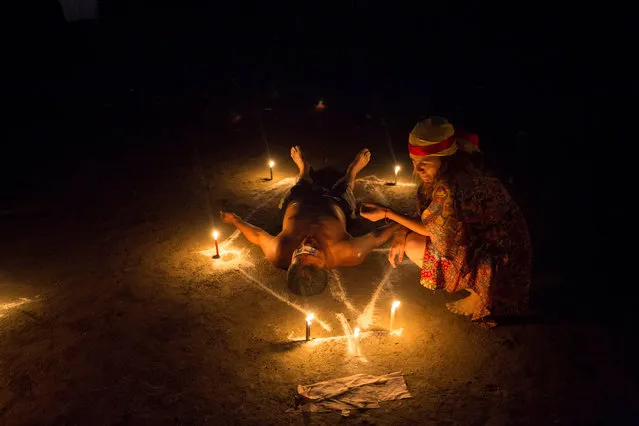
A man lies on the floor during a ritual at the Sorte Mountain on the outskirts of Chivacoa, in the state of Yaracuy, Venezuela October 10, 2015. (Photo by Marco Bello/Reuters)

A man lies on the floor during a ritual at the Sorte Mountain on the outskirts of Chivacoa, in the state of Yaracuy, Venezuela October 10, 2015. One long night every year in a mountainous rainforest in Venezuela, hundreds gather to dance on red-hot embers, enter trance-like states, and worship an ancient goddess known as Maria Lionza. Those who travel to the mountain known as Sorte in central Venezuela are practitioners of a cult that is built on local indigenous traditions. (Photo by Marco Bello/Reuters)
Details
08 Jul 2016 12:19:00
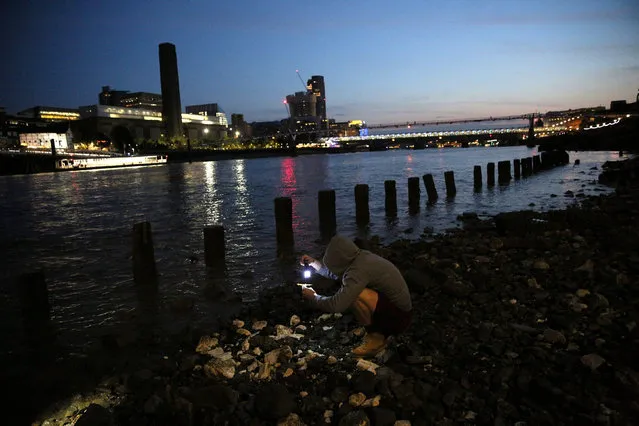
A mudlark uses a torch to look for items on the bank of the River Thames in London, Britain June 06, 2016. Mudlarking is believed to trace its origins to the 18th and 19th century, when scavengers searched the Thames' shores for items to sell. These days, history and archaeology fans are the ones hoping to find old relics such as coins, ceramics, artifacts or everyday items from across centuries. They wait for the low tide and then scour specific areas of exposed shores. "If you're in a field you could be out all day long, with the river you're restricted to about two or three hours," mudlark Nick Stevens said. While many just use the naked eye for their searches, others rely on metal detectors for which a permit from the Port of London Authority is needed. Digging also requires consent. (Photo by Neil Hall/Reuters)

A mudlark uses a torch to look for items on the bank of the River Thames in London, Britain June 06, 2016. Mudlarking is believed to trace its origins to the 18th and 19th century, when scavengers searched the Thames' shores for items to sell. These days, history and archaeology fans are the ones hoping to find old relics such as coins, ceramics, artifacts or everyday items from across centuries. their finds with the Portable Antiquities Scheme. Any item over 300 years old must be recorded. (Photo by Neil Hall/Reuters)
Details
27 Aug 2016 10:43:00
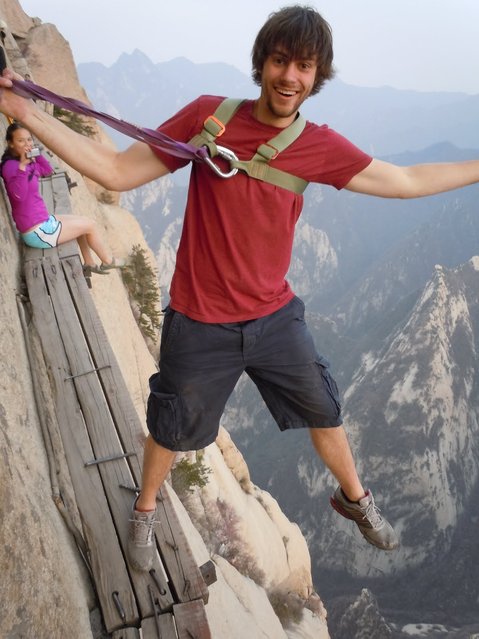
Trip to Xi'an 西安. (Photo by Grant)

“Mount Hua, or Hua Shan, or Xiyue located near the city of Huayin in Shaanxi province, about 120 kilometres (75 mi) east of Xi'an. It is one of China's Five Great Mountains, and has a long history of religious significance. Originally classified as having three peaks, in modern times the mountain is classified as five main peaks, of which the highest is the South Peak at 2,154.9 metres (7,070 ft)”. – Wikipedia

Photo: Trip to Xi'an 西安. (Photo by Grant Robinson)
Details
11 Nov 2012 11:39:00
International Aviation and Space Salon

MAKS – 2011 provides experts and businessmen a rare opportunity to establish contacts at various levels, further development of R&D and production cooperation and search for new business partners.
Details
27 Aug 2011 14:09:00
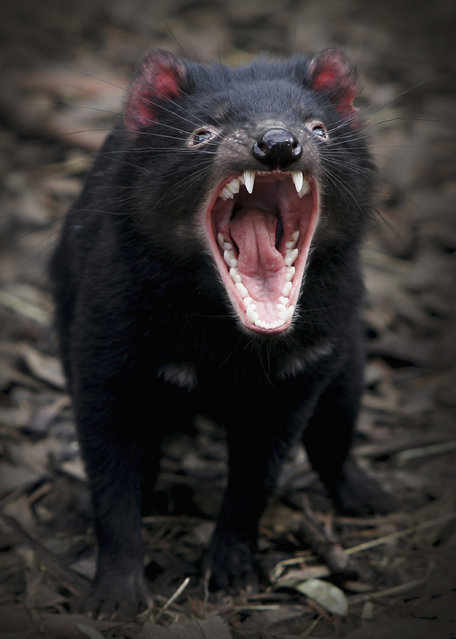
A Tasmanian Devil bears it's teeth at a quarantine facility August 31, 2005 in Hobart, Australia. The Devil, a native marsupial unique to Tasmania, is under threat from Devil Facial Tumor Disease (DFTD) which is decimating numbers throughout Tasmania. (Photo by Ian Waldie/Getty Images)

“The Tasmanian devil (Sarcophilus harrisii) is a carnivorous marsupial of the family Dasyuridae now found in the wild only in the Australian island state of Tasmania. The size of a small dog, it became the largest carnivorous marsupial in the world following the extinction of the thylacine in 1936. It is characterised by its stocky and muscular build, black fur, pungent odour, extremely loud and disturbing screech, keen sense of smell, and ferocity when feeding”. – Wikipedia. Photo: A Tasmanian Devil bears it's teeth at a quarantine facility August 31, 2005 in Hobart, Australia. (Photo by Ian Waldie/Getty Images)
Details
27 Jan 2014 09:45:00
French fashion model Christiane Richard wears a bikini while drinking her morning coffee, 1950. (Photo by Nat Farbman/Time & Life Pictures/Getty Images)

French fashion model Christiane Richard wears a bikini while drinking her morning coffee, 1950. (Photo by Nat Farbman/Time & Life Pictures/Getty Images)
Details
07 Aug 2013 13:44:00