Loading...
Done


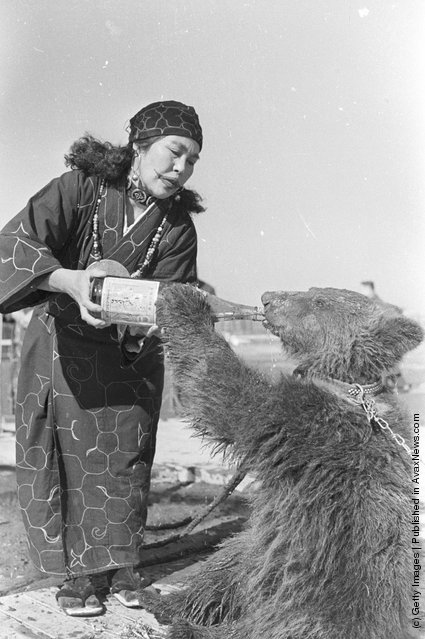
“The Ainu (アイヌ?), also called Aynu, Aino (アイノ), and in historical texts Ezo (蝦夷), are indigenous people or groups in Japan and Russia. Historically they spoke the Ainu language and related varieties and lived in Hokkaidō, the Kuril Islands, and much of Sakhalin. Most of those who identify themselves as Ainu still live in this same region, though the exact number of living Ainu is unknown. This is due to ethnic issues in Japan resulting in those with Ainu backgrounds hiding their identities and confusion over mixed heritages. In Japan, because of intermarriage over many years with Japanese, the concept of a 'pure Ainu' ethnic group is no longer feasible. Official estimates of the population are of around 25,000, while the unofficial number is upwards of 200,000 people”. – Wkipedia

Photo: A captive bear drinking from a large bottle held by an Ainu tribeswoman. (Photo by Evans/Three Lions/Getty Images). Circa 1955
Details
24 Mar 2011 14:01:00
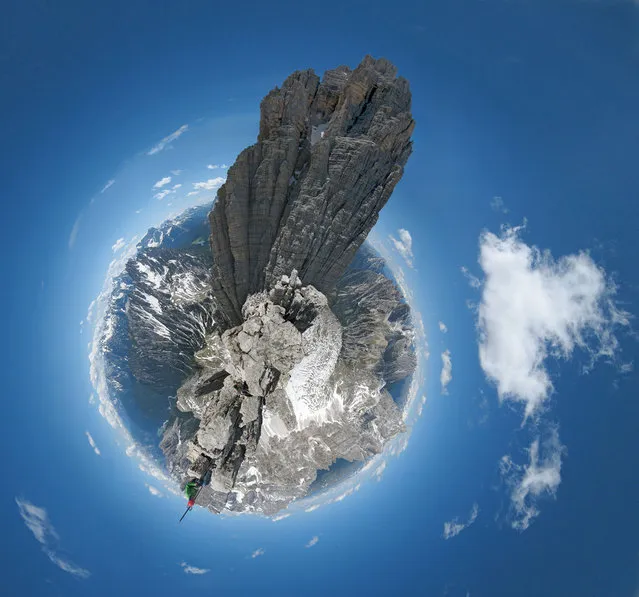
“Taken at the tiny summit of Cima Piccola in the the Tre Cima group in the Dolomites, Italy. The large peak is Cima Grande Some remote peaks have a summit register, and my climbing partner Steve can be seen signing this in the bottom of the picture”. (“Little Planets” Project. Photo and comment by Dan Arkle)

These are the amazing panoramic photographs that look like little planets. They were taken by photographer Dan Arkle, 34, from Sheffield, UK. He said: “On a sharp summit, you feel literally on top of the world, with dramatic views in all directions, including straight down. I tried using conventional photography to capture this feeling, but even with a wide angle lens I couldnt get all the view in the image”. Here: “Taken at the tiny summit of Cima Piccola in the the Tre Cima group in the Dolomites, Italy. The large peak is Cima Grande Some remote peaks have a summit register, and my climbing partner Steve can be seen signing this in the bottom of the picture”. (“Little Planets” Project. Photo and comment by Dan Arkle)
Details
06 Jun 2015 09:52:00
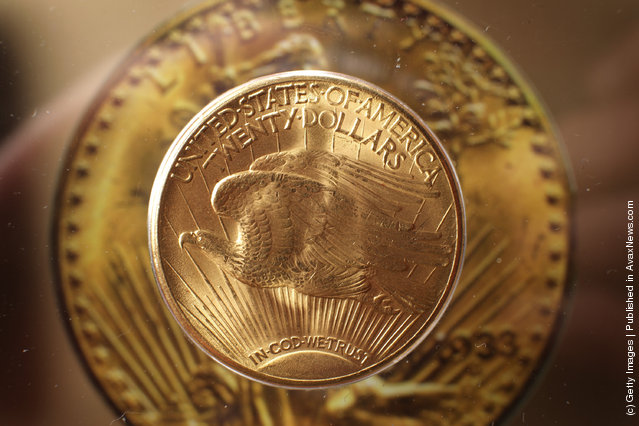
A 'Double Eagle' gold twenty dollar coin

“A Double Eagle is a gold coin of the United States with a denomination of $20. (Its gold content of 0.9675 troy oz was worth $20 at the then official price of $20.67/oz). The coins are made from a 90% gold (0.900 fine = 21.6 kt) and 10% copper alloy”. – Wikipedia

Photo: A “Double Eagle” gold twenty dollar coin is displayed above a catalogue picture showing the reverse side of the coin at Goldsmith's Hall on March 2, 2012 in London, England. Nearly half a million of these coins were originally minted in the midst of the Great Depression in the US. Only 13 are known today after the rest were melted down before they ever left the US Mint, sacrificed as part of a strategy to stabalise the American economy. In 2002 a Double Eagle sold at auction for $7.6 million. (Photo by Peter Macdiarmid/Getty Images)
Details
03 Mar 2012 10:37:00
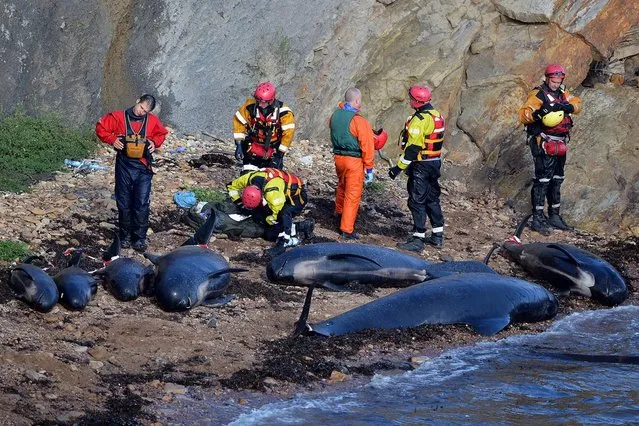
Mass Stranding of Pilot Whales

“Sixteen pilot whales died when they became stranded at Pittenweem, near St Andrews, on Sunday morning, Forth Coastguard said.

The mammals were part of a group of 26, of which 10 were refloated and returned to sea by vets and more than 50 volunteers from the emergency services and British Divers Marine Life Rescue. The whales were kept cool and hydrated with wet blankets and sheets on the shore”. – WalesOnline

Photo: Emergency service personnel walk near beached whales as they continue in their rescue attempt to save a large number of pilot whales who have beached on September 1, 2012 in Pittenweem, Scotland. A number of whales have died after being stranded on the east coast of Scotland between Anstruther and Pittenweem. (Photo by Jeff J. Mitchell)
Details
03 Sep 2012 08:59:00
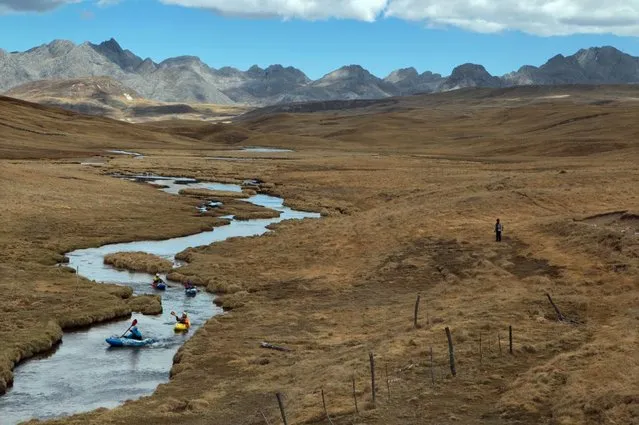
August 19, 2012 – Alpamarca, Peru – Amazon Express white water members Juan Antonio De Ugarte, of Peru, Rafael Ortiz, of Mexico, West Hansen, of the U.S., and Tino Specht, of the U.S., paddle down the Rio Gashan after leaving Lago Acucocha. Lago Acucocha is possibly the dry season source of the Amazon River. (Photo by Erich Schlegel/zReportage via ZUMA Press)

“The Amazon river has a newly discovered source. Completed last year and led by West Hansen and documented by award-winning freelance photographer Erich Schlegel, this is the first expedition to paddle from the furthest source of the earth's largest river to the ocean”. – zReportage. Photo: August 19, 2012 – Alpamarca, Peru – Amazon Express white water members Juan Antonio De Ugarte, of Peru, Rafael Ortiz, of Mexico, West Hansen, of the U.S., and Tino Specht, of the U.S., paddle down the Rio Gashan after leaving Lago Acucocha. Lago Acucocha is possibly the dry season source of the Amazon River. (Photo by Erich Schlegel/zReportage via ZUMA Press)
Details
29 Jul 2013 10:47:00
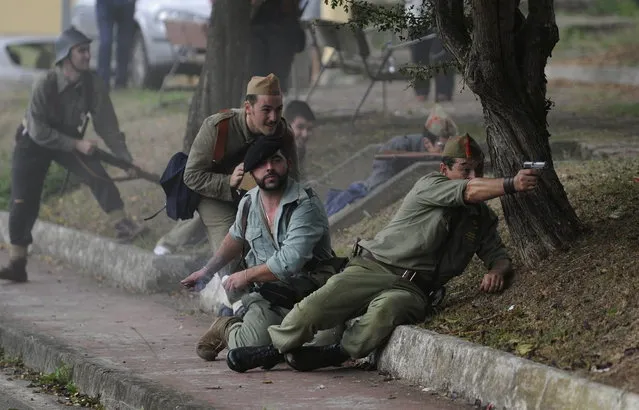
Actors take part in a re-enactment of the "Battle of Areces" that took place during the Spanish Civil War, in Grullos, north of Spain, September 14, 2013. The re-enactment of the historic 1937 battle was organised by the Frente del Nalon Association. (Photo by Eloy Alonso/Reuters)

“The Spanish Civil War (The Crusade among Nationalists, Fourth Carlist War among Carlists, The Rebellion or Uprising among Republicans) was a major conflict fought in Spain from 17 July 1936 to 1 April 1939. An estimated total of 500,000 people lost their lives as a consequence of the War”. – Wikipedia. Photo: Actors take part in a re-enactment of the “Battle of Areces” that took place during the Spanish Civil War, in Grullos, north of Spain, September 14, 2013. The re-enactment of the historic 1937 battle was organised by the Frente del Nalon Association. (Photo by Eloy Alonso/Reuters)
Details
17 Sep 2013 09:06:00
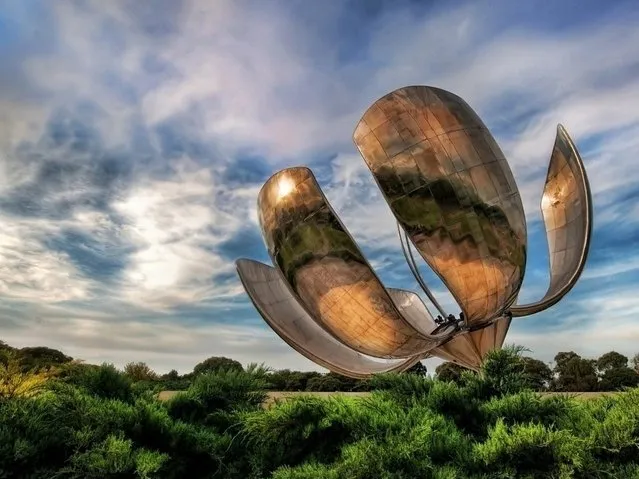
Floralis Generica - Buenos Aires

Floralis Genérica is a sculpture made of steel and aluminum located in Plaza de las Naciones Unidas, Avenida Figueroa Alcorta, Buenos Aires, a gift to the city by the Argentine architect Eduardo Catalano. Catalano once said that the flower "is a synthesis of all the flowers and is both a hope that is reborn every day to open." It was created in 2002. The sculpture moves closing its petals in the evening and opening them in the morning, although this mechanism is currently disabled. The sculpture is located in the center of a park of four acres of wooded boundaries, surrounded by paths that get closer and provide different perspectives of the monument, and placed above a reflecting pool, which apart from fulfilling its aesthetic function, protects it. It represents a large flower made of stainless steel with aluminum skeleton and reinforced concrete, which looks at the sky, extending to it its six petals. Weighs eighteen tons and is 23 meters high.
Details
20 Oct 2013 18:32:00
Corona del Mar High School students Kim Robertson, Pat Auvenshine and Pam Pepin wear “hippie” fashions, 1969. (Photo by Arthur Schatz/Time & Life Pictures/Getty Images)

“By 1969, the fashion choices of tens of millions of young American men and women were as variegated and ever-evolving as the world around them. Cultural transformation was an irresistible force during the Sixties, and across America and around the globe civil rights, women’s and gay liberation, the sexual revolution and, of course, the explosive soundtrack of R&B, soul and rock and roll informed everything from politics to fashion”. – LIFE. Photo: Corona del Mar High School students Kim Robertson, Pat Auvenshine and Pam Pepin wear “hippie” fashions, 1969. (Photo by Arthur Schatz/Time & Life Pictures)
Details
11 Aug 2013 12:43:00