An urban Opossum covered in light snow visits a suburban Chicago deck on December 10, 2025. (Photo by H Rick Bamman/ZUMA Press Wire/Rex Features/Shutterstock)
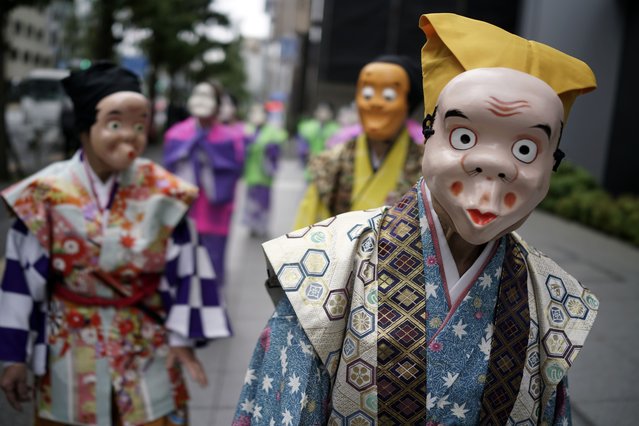
Artists wearing traditional clown masks prepare to march during the annual Shinto festival called the Grand Festival at the Kotohiragu shrine in the Toranomon business district of Tokyo, Thursday, October 10, 2024. (Photo by Eugene Hoshiko/AP Photo)
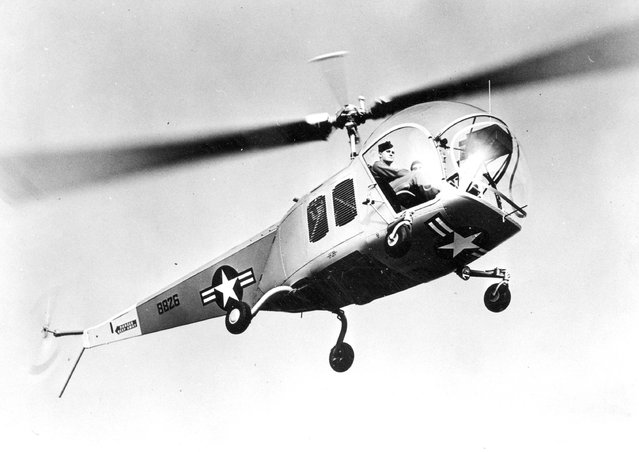
Number 10. BELL H-13 SIOUX was a two-bladed, single engine, light helicopter built by Bell Helicopter. Westland Aircraft manufactured the Sioux under license for the British military as the Sioux AH.1 and HT. In 1947, the United States Air Force ordered the improved Bell Model 47A. Most were designated YR-13 and three winterized versions were designated YR-13A. The United States Army first ordered Bell 47s in 1948 under the designation H-13. These would later receive the name Sioux. The Bell-built H-13 B is seen airborne in this April 29, 1951 photo. The helicopter is equipped with a 173 horsepower engine, cruises at 85 miles per hour, climbs 900 feet in a minute and has a service ceiling of 11,500 feet. (Photo by AP Photo)
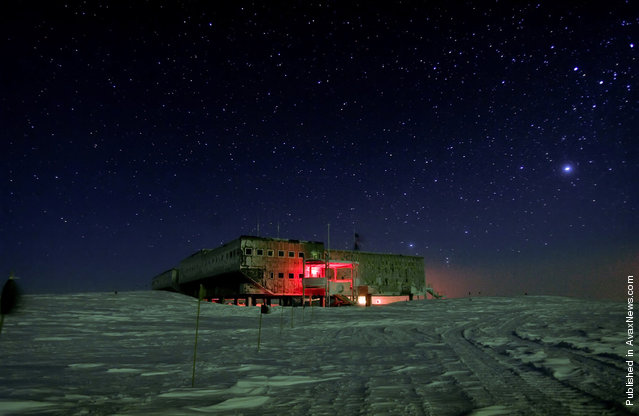
Amundsen-Scott South Pole Station experiences months of darkness. The sun dips below the horizon on March 21, after which follows several weeks of twilight before complete darkness results. Photo taken on June 25, 2009. (National Science Foundation/Jeremy Johnson)
Claudia Gadelha (L) of Brazil fights with Jessica Aguilar of Mexico during their Ultimate Fighting Championship (UFC) match, a professional mixed martial arts (MMA) competition in Rio de Janeiro, Brazil August 1, 2015. (Photo by Ricardo Moraes/Reuters)
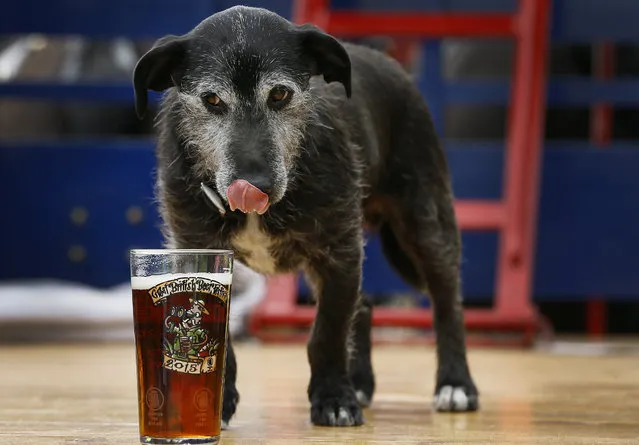
Barny, the Harveys Brewery dog has a sniff of a pint of beer at the Great British Beer Festival, at Olympia in London, Tuesday, August 11, 2015. The five day event is organised by the Campaign for Real Ale (CAMRA), with over 900 real ales, ciders, perries and international beers on offer. (Photo by Kirsty Wigglesworth/AP Photo)
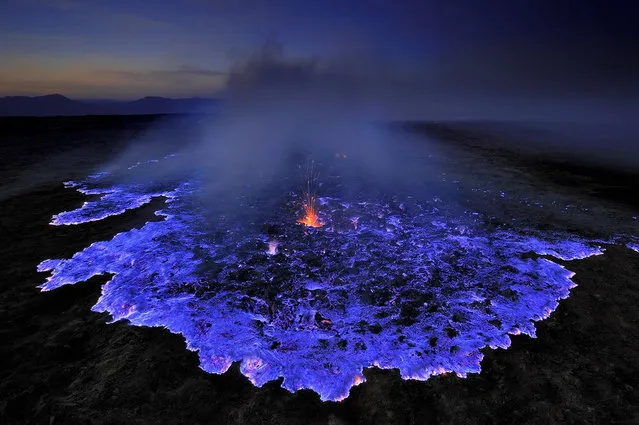
Located in East Java, Indonesia, Kawah Ijen is a volcano is home to the largest acidic crater lake in the world. What turns the waters of the lake in the 1 km caldera its beautiful turquoise color are the highly sulfuric gases emitted from the volcano underneath.