Loading...
Done
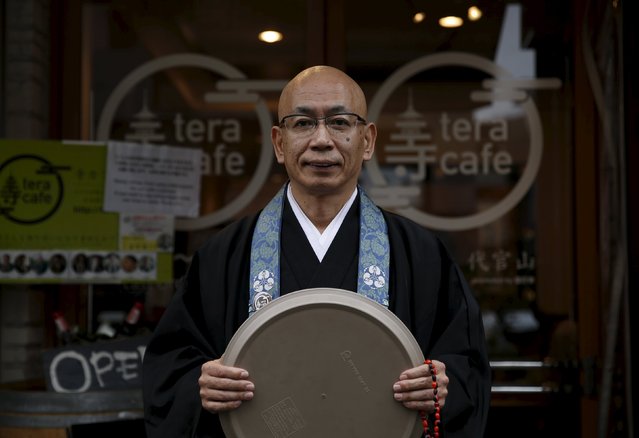
Shokyo Miura, a Buddhist monk and one of the on-site priests, poses for pictures outside Tera Cafe in Tokyo, Japan, April 1, 2016. (Photo by Yuya Shino/Reuters)

Shokyo Miura, a Buddhist monk and one of the on-site priests, poses for pictures outside Tera Cafe in Tokyo, Japan, April 1, 2016. At first glance, the cafe, which also serves alcohol, looks like any other except for an altar next to the countertop bar with a Buddha statue set against a gold backdrop. The menu confirms this is something different. It lists classes for 1,500 yen ($14) in weaving prayer beads, calligraphy with sutras, or lines of scripture, and consultations with a Buddhist priest. (Photo by Yuya Shino/Reuters)
Details
09 Apr 2016 13:21:00
Rabbit Island in Japan

Only after World War II did the secret spill: Ōkunoshima, located in the Inland Sea of Japan between Hiroshima and Shikoku, was the top-secret site for manufacturing chemical warfare. When the factories were closed down, a number of exotic wild rabbits were seen freely roaming the island. They were assumed to have been the test subjects for the chemical weapons, which the military failed to eradicate when the factory was demolished.
Details
17 Feb 2014 12:23:00
Filipino typhoon survivor children, who escaped after their village was attacked by allegedly armed men, wait for social workers in the super typhoon devastated city of Tacloban, Leyte province, Philippines, 13 November 2013. (Photo by Dennis M. Sabangan/EPA)

Filipino typhoon survivor children, who escaped after their village was attacked by allegedly armed men, wait for social workers in the super typhoon devastated city of Tacloban, Leyte province, Philippines, 13 November 2013. Aid workers and relief supplies were being poured into eastern provinces hit by Typhoon Haiyan, which aid agencies and officials estimated has left thousands dead and staggering destruction in its wake. The official death toll in the Philippines from one of the world’s strongest typhoons rose to 1,833, the national disaster relief agency said with many towns still unaccounted for. (Photo by Dennis M. Sabangan/EPA)
Details
14 Nov 2013 12:42:00
Mummies

Dried and shrivelled corpses, some fully clothed and some in coffins, line the wall of a vault of the Pantheon Cemetery on the summit of Cerro del Trozado in Mexico. They were removed from the crypts because of non-payment of cemetery fees. The hot dry air stopped the bodies from rotting. Most of them were placed here between the turn of the century and WW I. (Photo by Three Lions/Getty Images). Circa 1955
Details
29 Aug 2011 13:46:00
Hotel guides jump as they pose for pictures outside the Great Hall of the People during the opening session of the National People's Congress (NPC) in Beijing, China, March 5, 2016. (Photo by Aly Song/Reuters)

Hotel guides jump as they pose for pictures outside the Great Hall of the People during the opening session of the National People's Congress (NPC) in Beijing, China, March 5, 2016. (Photo by Aly Song/Reuters)
Details
06 Mar 2016 09:25:00


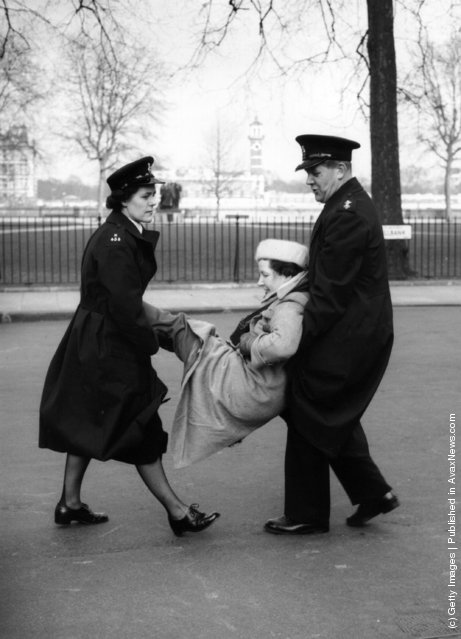
A British policewoman chasing after a group of naked street boys by the Serpentine in Hyde Park, London. (Photo by Reg Speller/Getty Images). 1926
Details
23 Jul 2011 12:43:00
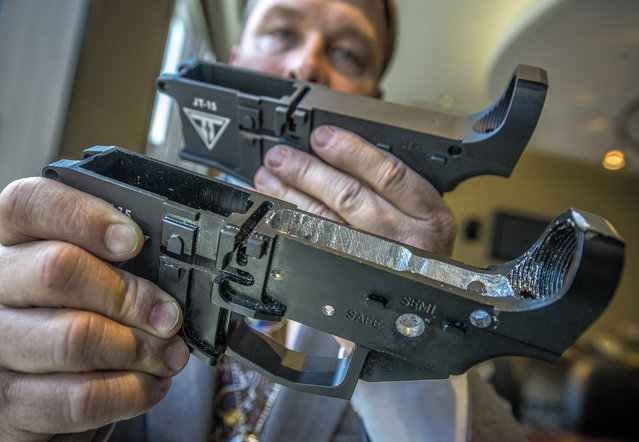
An ATF agent holds a generic unfinished receiver, back, and one that has been machined, front, at an ATF field office, on May, 06, 2014 in Washington, DC. Unfinished receivers can be turned into working automatic weapons that are untraceable. (Photo by Bill O'Leary/The Washington Post)

An unknown number of guns are being built with the mechanisms, causing problems for the police and ATF officials. Photo: An ATF agent holds a generic unfinished receiver, back, and one that has been manufactured, front, at an ATF field office in Washington, on May 06, 2014. The ATF is trying to crack down on the trade in the makeshift guns by targeting shops and individuals who offer to turn the unfinished receivers into functional pieces for firearms. (Photo by Bill O'Leary/The Washington Post)
Details
19 May 2014 09:22:00
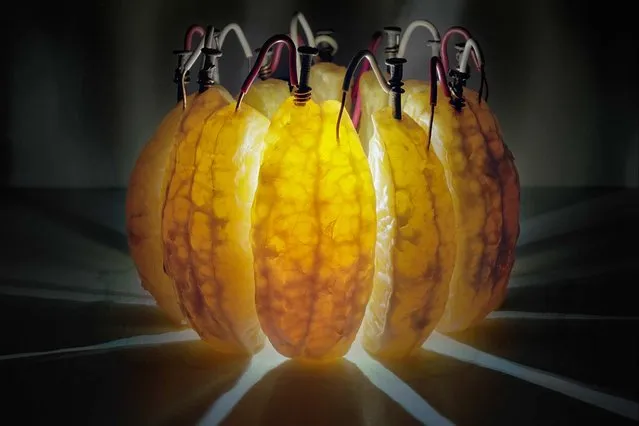
Wedges of an orange generate enough current and electrical juice – 3.5 volts – to power an LED. The fruit’s citric acid helps electrons flow from galvanized nails to copper wire in this 14-hour exposure. This image was published in September’s Visions of Earth, a trio of photos that appear in each issue of National Geographic. (Photo by Caleb Charland/National Geographic)

Wedges of an orange generate enough current and electrical juice – 3.5 volts – to power an LED. The fruit’s citric acid helps electrons flow from galvanized nails to copper wire in this 14-hour exposure. This image was published in September’s Visions of Earth, a trio of photos that appear in each issue of National Geographic. (Photo by Caleb Charland/National Geographic)
Details
06 Jan 2014 12:09:00