Loading...
Done
Kite Aerial By Seeing The World From New Heights

Kite Aerial photography (KAP) is a hobby and a type of photography. A camera is lifted using a kite and is triggered either remotely or automatically to take aerial photographs. The camera rigs can range from the extremely simple, consisting of a trigger mechanism with a disposable camera, to complex apparatus using radio control and digital cameras. On some occasions it can be a good alternative to other forms of aerial photography.
Details
17 Jan 2014 13:22:00
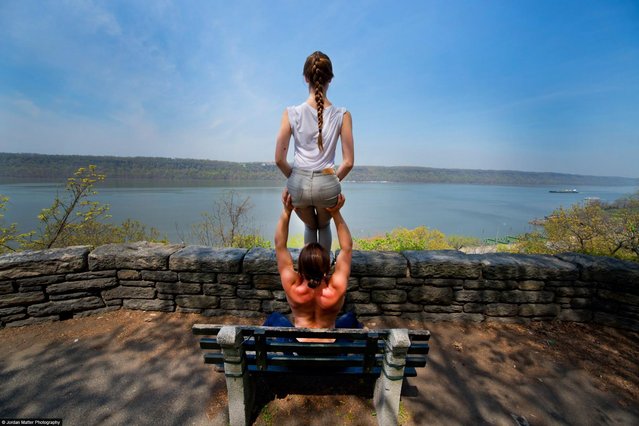
“River View” – Jacob Jonas & Jill Wilson – Acro Yoga Specialists. (Photo by Jordan Matter)

Jordan Matter showcases their athletic prowess in everyday situations such as a martial artist shaving with a samurai sword, an ice hockey goalie shopping and a gymnast balancing from a street sign. Photo: “River View” – Jacob Jonas & Jill Wilson – Acro Yoga Specialists. (Photo by Jordan Matter)
Details
16 Mar 2014 10:50:00
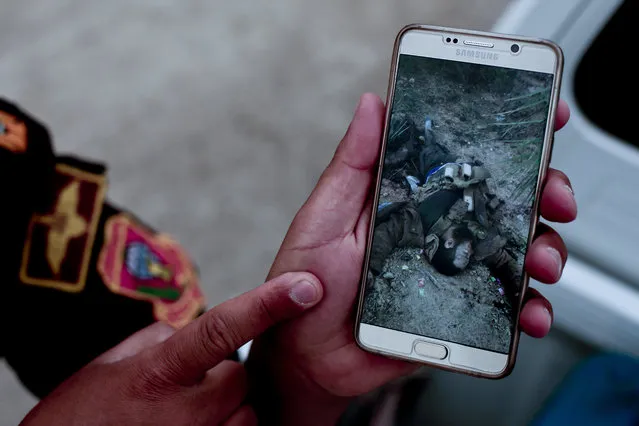
In this March 20, 2016 photo, Maj. Mohammed Hussein, an officer with Iraq's elite counterterrorism forces, shows a photo of a slain Islamic State group militant still wearing in a suicide vest, taken during fighting that freed the city of Ramadi from IS control earlier this year. As they fled, the militants destroyed some buildings and booby-trapped others with explosives, leaving behind an empty prize for government forces retaking the city. (Photo by Maya Alleruzzo/AP Photo)

In this March 20, 2016 photo, Maj. Mohammed Hussein, an officer with Iraq's elite counterterrorism forces, shows a photo of a slain Islamic State group militant still wearing in a suicide vest, taken during fighting that freed the city of Ramadi from IS control earlier this year. As they fled, the militants destroyed some buildings and booby-trapped others with explosives, leaving behind an empty prize for government forces retaking the city. (Photo by Maya Alleruzzo/AP Photo)
Details
05 May 2016 12:57:00
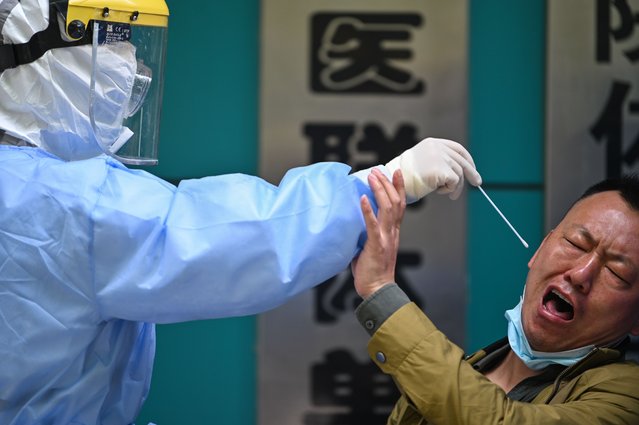
A man being tested for the COVID-19 novel coronavirus reacts as a medical worker takes a swab sample in Wuhan in China's central Hubei province on April 16, 2020. China has largely brought the coronavirus under control within its borders since the outbreak first emerged in the city of Wuhan late last year. (Photo by Hector Retamal/AFP Photo)

A man being tested for the COVID-19 novel coronavirus reacts as a medical worker takes a swab sample in Wuhan in China's central Hubei province on April 16, 2020. China has largely brought the coronavirus under control within its borders since the outbreak first emerged in the city of Wuhan late last year. (Photo by Hector Retamal/AFP Photo)
Details
18 Apr 2020 00:03:00
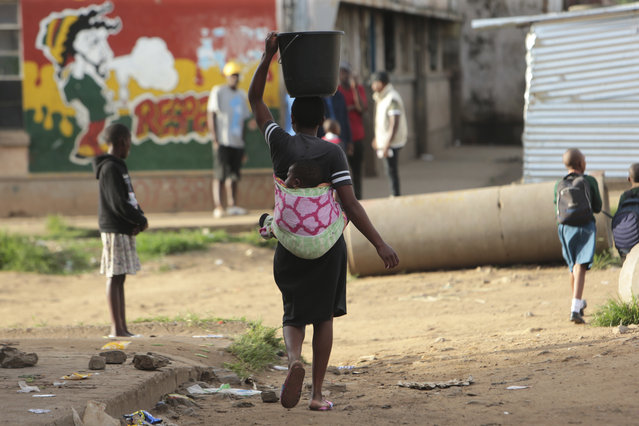
In this Monday, April 6, 2020 photo, a woman carries a her baby and a bucket of water in Harare. Lockdowns imposed to curb the coronavirus’ spread have put millions of women in Africa, Asia and elsewhere out of reach of birth control and other sexual and reproductive health needs. Confined to their homes with husbands and others, they face unwanted pregnancies and little idea of when they can reach the outside world again. (Photo by Tsvangirayi Mukwazhi/AP Photo)

In this Monday, April 6, 2020 photo, a woman carries a her baby and a bucket of water in Harare. Lockdowns imposed to curb the coronavirus’ spread have put millions of women in Africa, Asia and elsewhere out of reach of birth control and other sexual and reproductive health needs. Confined to their homes with husbands and others, they face unwanted pregnancies and little idea of when they can reach the outside world again. (Photo by Tsvangirayi Mukwazhi/AP Photo)
Details
30 May 2020 00:01:00
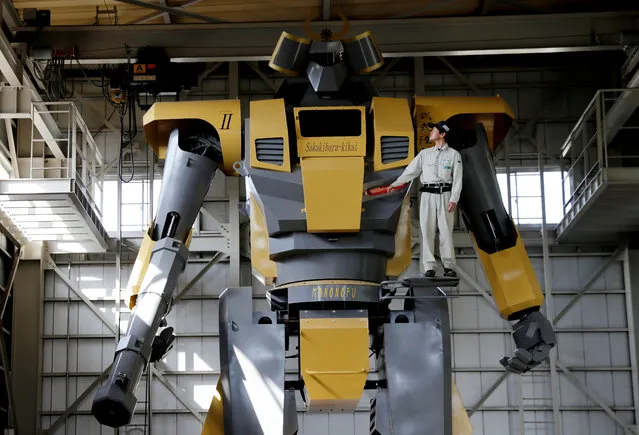
Sakakibara Kikai's engineer Go Sakakibara poses with the bipedal robot Mononofu during its demonstration at its factory in Shinto Village, Gunma Prefecture, Japan on April 12, 2018. Developed at Sakakibara Kikai, a maker of farming machinery, LW-Mononofu is a 28-feet tall, two-legged robot weighing in at more than 7 tonnes. It contains a cockpit with monitors and levers for the pilot to control the robot's arms and legs. (Photo by Kim Kyung-Hoon/Reuters)

Sakakibara Kikai's engineer Go Sakakibara poses with the bipedal robot Mononofu during its demonstration at its factory in Shinto Village, Gunma Prefecture, Japan on April 12, 2018. Developed at Sakakibara Kikai, a maker of farming machinery, LW-Mononofu is a 28-feet tall, two-legged robot weighing in at more than 7 tonnes. It contains a cockpit with monitors and levers for the pilot to control the robot's arms and legs. (Photo by Kim Kyung-Hoon/Reuters)
Details
17 Apr 2018 00:01:00
In this Thursday, July 19, 2018, photo, a Syrian shopkeeper spraying water as waits for customers at the Hamadiyah market, named after the 34th Sultan of the Ottoman Empire Abdul Hamid II, in the Old City of Damascus, Syria. The celebratory mood in government-controlled areas stems from successive military advances in the past year and an impression that President Bashar Assad, with massive support by unwavering allies Russia and Iran, has won the war or at least militarily defeated the opposition trying to topple him. (Photo by Hassan Ammar/AP Photo)

In this Thursday, July 19, 2018, photo, a Syrian shopkeeper spraying water as waits for customers at the Hamadiyah market, named after the 34th Sultan of the Ottoman Empire Abdul Hamid II, in the Old City of Damascus, Syria. The celebratory mood in government-controlled areas stems from successive military advances in the past year and an impression that President Bashar Assad, with massive support by unwavering allies Russia and Iran, has won the war or at least militarily defeated the opposition trying to topple him. (Photo by Hassan Ammar/AP Photo)
Details
13 Aug 2018 00:01:00
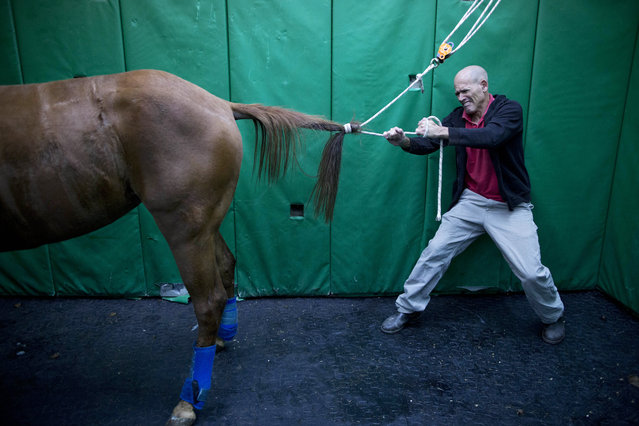
In this Wednesday, December 2, 2015 photo, Dr. Gal Kelmer, head of the department of large animals, unties a horse after its operation at the University's Koret School of Veterinary Medicine in Rishon Lezion, Israel. “Horses have an instinctive response of flight from danger”, Kelmer said. “The minute they wake up they start trying to stand and run, even if they don't have control of their limbs. So then they fall”. (Photo by Oded Balilty/AP Photo)

In this Wednesday, December 2, 2015 photo, Dr. Gal Kelmer, head of the department of large animals, unties a horse after its operation at the University's Koret School of Veterinary Medicine in Rishon Lezion, Israel. “Horses have an instinctive response of flight from danger”, Kelmer said. “The minute they wake up they start trying to stand and run, even if they don't have control of their limbs. So then they fall”. (Photo by Oded Balilty/AP Photo)
Details
15 Dec 2015 08:04:00