Loading...
Done
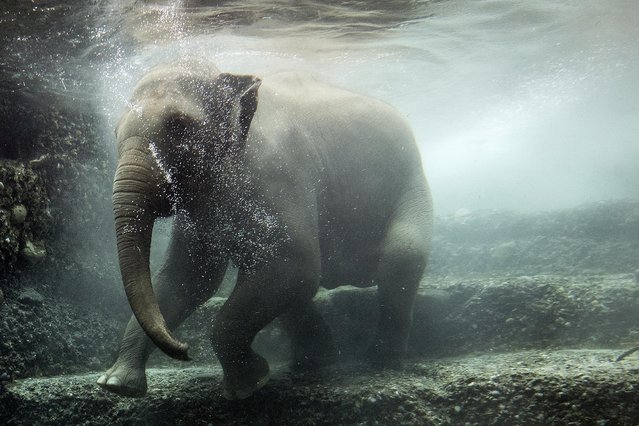
The elephant cow Omysha dives under water in its enclosure at the Zoo in Zurich, Switzerland, Wednesday, February 3, 2021. (Photo by Alexandra Wey/Keystone via AP Photo)

The elephant cow Omysha dives under water in its enclosure at the Zoo in Zurich, Switzerland, Wednesday, February 3, 2021. (Photo by Alexandra Wey/Keystone via AP Photo)
Details
14 Feb 2021 09:33:00
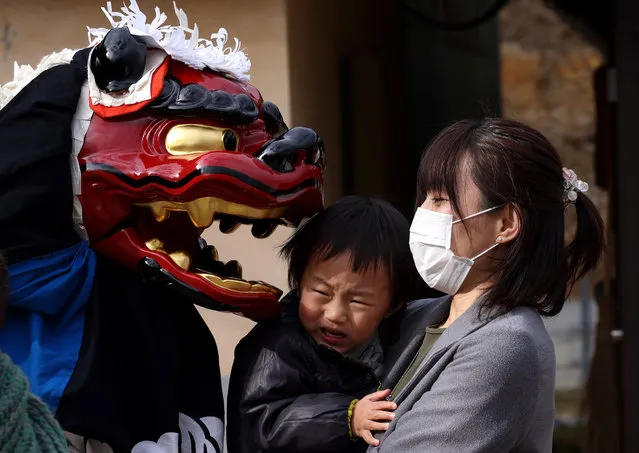
A performer wearing a lion mask performs the Ise Daikagura lion dance at the remote village of Yamanawa on February 08, 2021 in Ryuo, Japan. Ise Daikagura is a group of traditional Lion Dance performers who pray in front of farmers houses and businesses for good grain harvests and disease-free lives. Performers play sacred music using drums and flutes with two lion mask dancers. A lion mask is considered a symbol of God, who enters the house and performs in front of the Shinto God, a statue placed inside the house, mostly in the kitchen. These prayers are called “Kamodo Barai”. After the prayers, they are gifted with money, rice, sake and Japanese sweets from the householders. A group can travel for more than one hundred days to thousands of households and businesses throughout rural-villages in western Japan, and pray to those who are unable to visit the country’s most sacred shrine, the Grand Ise Shrine in Mie Prefecture. The group started its performance in the Edo era between 1603 to 1868 according to Japanese history. The Japanese government designated it as an important folk cultural national property in 1981. (Photo by Buddhika Weerasinghe/Getty Images)

A performer wearing a lion mask performs the Ise Daikagura lion dance at the remote village of Yamanawa on February 08, 2021 in Ryuo, Japan. Ise Daikagura is a group of traditional Lion Dance performers who pray in front of farmers houses and businesses for good grain harvests and disease-free lives. (Photo by Buddhika Weerasinghe/Getty Images)
Details
18 Feb 2021 09:27:00
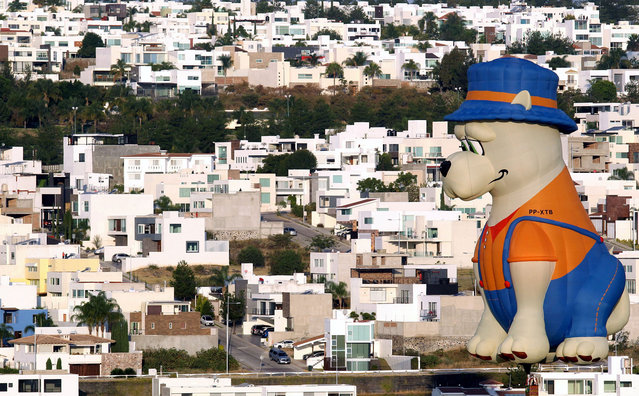
A hot air balloon depicting a dog that participates in the International Hot Air Balloon Festival, flies over Leon, Guanajuato state, Mexico, on November 14, 2020, amid the COVID-19 coronavirus pandemic. The festival, in which 100 air balloons participate, was held without spectators to avoid crowds and prevent contagion. (Photo by Ulises Ruiz/AFP Photo)

A hot air balloon depicting a dog that participates in the International Hot Air Balloon Festival, flies over Leon, Guanajuato state, Mexico, on November 14, 2020, amid the COVID-19 coronavirus pandemic. The festival, in which 100 air balloons participate, was held without spectators to avoid crowds and prevent contagion. (Photo by Ulises Ruiz/AFP Photo)
Details
23 Feb 2021 10:19:00
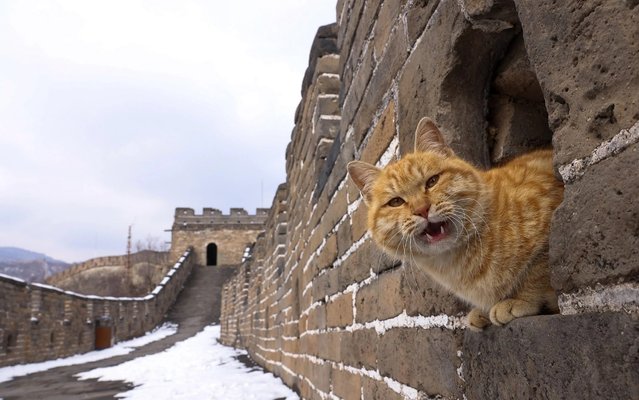
A cat sits on the empty Great Wall on February 23, 2021 in Beijing, China. Affected by the new coronavirus (COVID-19), the number of visitors to Mutianyu Great Wall in 2020 dropped by about 60%. (Photo by Lintao Zhang/Getty Images)

A cat sits on the empty Great Wall on February 23, 2021 in Beijing, China. Affected by the new coronavirus (COVID-19), the number of visitors to Mutianyu Great Wall in 2020 dropped by about 60%. (Photo by Lintao Zhang/Getty Images)
Details
03 Mar 2021 10:00:00
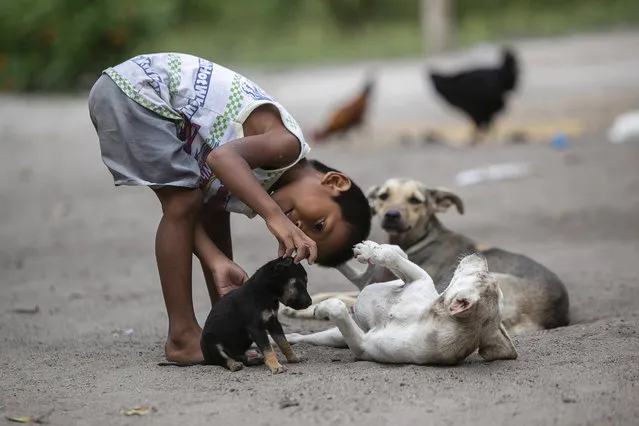
A Guarani boy pets a puppy in the Mata Verde Bonita village, in Marica, Rio de Janeiro state, Brazil, Thursday, February 25, 2020, where healthcare workers are making the rounds with coolers containing doses of China's Sinovac COVID-19 vaccine as part of a mass immunization program aimed at inoculating all of Rio's 16 million residents by the end of the year. (Photo by Bruna Prado/AP Photo)

A Guarani boy pets a puppy in the Mata Verde Bonita village, in Marica, Rio de Janeiro state, Brazil, Thursday, February 25, 2020, where healthcare workers are making the rounds with coolers containing doses of China's Sinovac COVID-19 vaccine as part of a mass immunization program aimed at inoculating all of Rio's 16 million residents by the end of the year. (Photo by Bruna Prado/AP Photo)
Details
25 Mar 2021 09:23:00
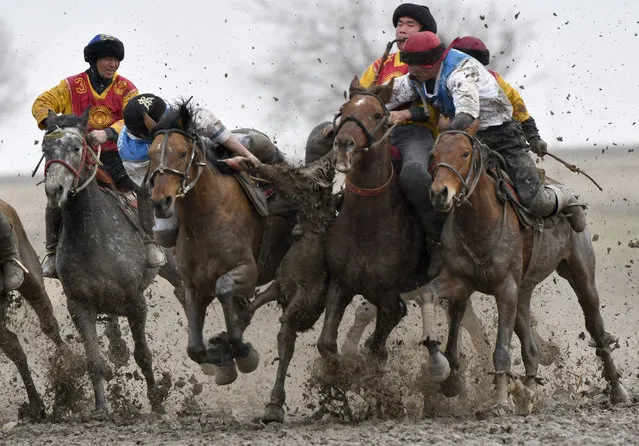
Riders compete during a kok boru, also called ulak tartysh, a traditional game in which players on horseback manoeuvre with a goat's carcass and score by putting it into the opponents' goal outside Sokuluk village, 20 km (12,5 miles) west of Bishkek, Kyrgyzstan, Tuesday, March 30, 2021. (Photo by Vladimir Voronin/AP Photo)

Riders compete during a kok boru, also called ulak tartysh, a traditional game in which players on horseback manoeuvre with a goat's carcass and score by putting it into the opponents' goal outside Sokuluk village, 20 km (12,5 miles) west of Bishkek, Kyrgyzstan, Tuesday, March 30, 2021. (Photo by Vladimir Voronin/AP Photo)
Details
31 Mar 2021 08:46:00
A woman sits in a cell at the Los Angeles County Women's jail in Lynwood, California April 26, 2013. (Photo by Lucy Nicholson/Reuters)

A woman sits in a cell at the Los Angeles County Women's jail in Lynwood, California April 26, 2013. (Photo by Lucy Nicholson/Reuters)
Details
16 Jul 2015 10:46:00
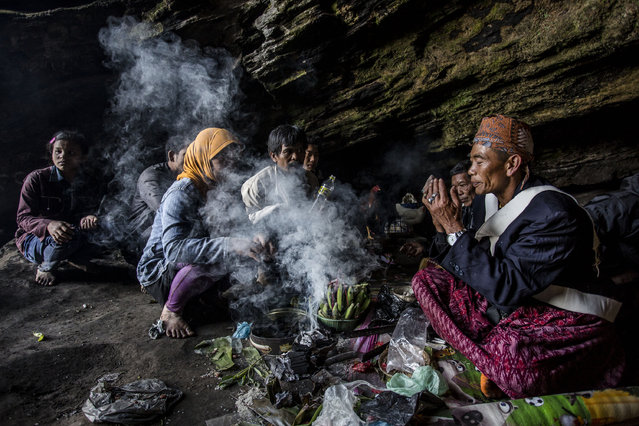
A Tenggerese shaman praying for worshippers at Widodaren cave during the Tenggerese Hindu Yadnya Kasada festival on July 31, 2015 in Probolinggo, East Java, Indonesia. The festival is the main festival of the Tenggerese people and lasts about a month. On the fourteenth day, the Tenggerese make the journey to Mount Bromo to make offerings of rice, fruits, vegetables, flowers and livestock to the mountain gods by throwing them into the volcano's caldera. (Photo by Ulet Ifansasti/Getty Images)

A Tenggerese shaman praying for worshippers at Widodaren cave during the Tenggerese Hindu Yadnya Kasada festival on July 31, 2015 in Probolinggo, East Java, Indonesia. The festival is the main festival of the Tenggerese people and lasts about a month. On the fourteenth day, the Tenggerese make the journey to Mount Bromo to make offerings of rice, fruits, vegetables, flowers and livestock to the mountain gods by throwing them into the volcano's caldera. The origin of the festival lies in the 15th century when a princess named Roro Anteng started the principality of Tengger with her husband Joko Seger, and the childless couple asked the mountain Gods for help in bearing children. The legend says the Gods granted them 24 children but on the provision that the 25th must be tossed into the volcano in sacrifice. The 25th child, Kesuma, was finally sacrificed in this way after initial refusal, and the tradition of throwing sacrifices into the caldera to appease the mountain Gods continues today. (Photo by Ulet Ifansasti/Getty Images)
Details
01 Aug 2015 12:07:00