Loading...
Done
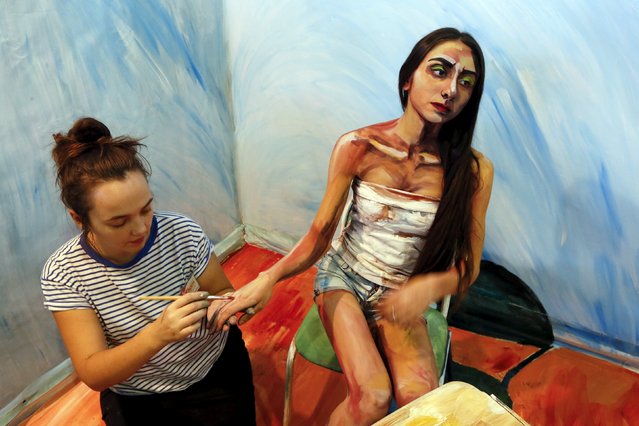
Russian artist Maria Gazanova (L) works on her "The Alive Painting" art work during the Art Krasnoyarsk annual festival in Siberian city of Krasnoyarsk, Russia November 4, 2015. (Photo by Ilya Naymushin/Reuters)

Russian artist Maria Gazanova (L) works on her "The Alive Painting" art work during the Art Krasnoyarsk annual festival in Siberian city of Krasnoyarsk, Russia November 4, 2015. (Photo by Ilya Naymushin/Reuters)
Details
06 Nov 2015 15:07:00
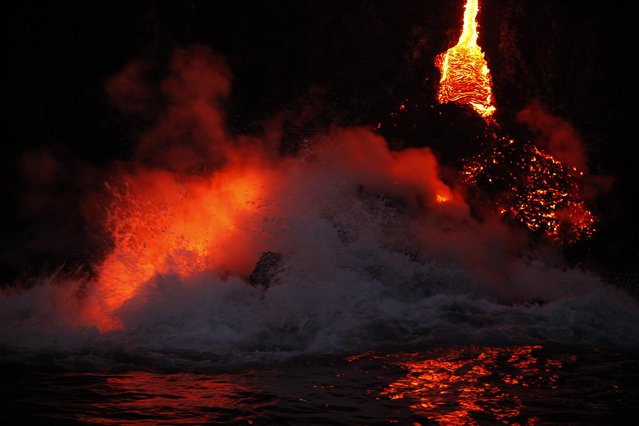
Waves crash over lava as it flows into the ocean near Volcanoes National Park in Kalapana, Hawaii on November 27, 2012. A volcano on Hawaii's largest island is spilling lava into the ocean, creating a rare and spectacular fusion of steam and waves that officials said on Tuesday could attract thrill seeking visitors if it continues. (Photo by Hugh Gentry/Reuters)

Waves crash over lava as it flows into the ocean near Volcanoes National Park in Kalapana, Hawaii on November 27, 2012. A volcano on Hawaii's largest island is spilling lava into the ocean, creating a rare and spectacular fusion of steam and waves that officials said on Tuesday could attract thrill seeking visitors if it continues. (Photo by Hugh Gentry/Reuters)
Details
29 Nov 2012 10:00:00
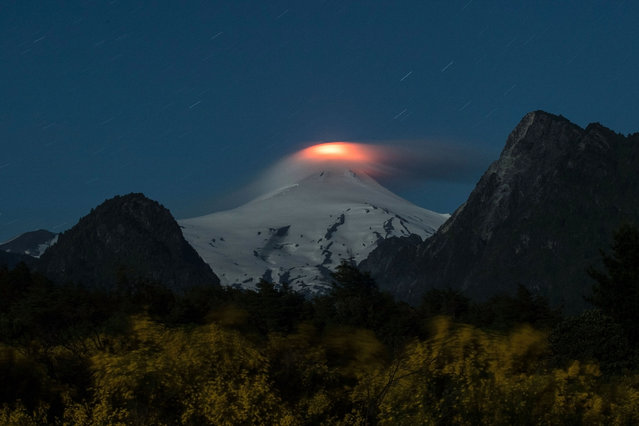
View of the Villarrica volcano taken from Pucon, some 800 kilometres south of Santiago, showing signs of activity on December 06, 2017. (Photo by Christian Miranda/AFP Photo)

View of the Villarrica volcano taken from Pucon, some 800 kilometres south of Santiago, showing signs of activity on December 06, 2017. (Photo by Christian Miranda/AFP Photo)
Details
04 Jun 2019 00:03:00
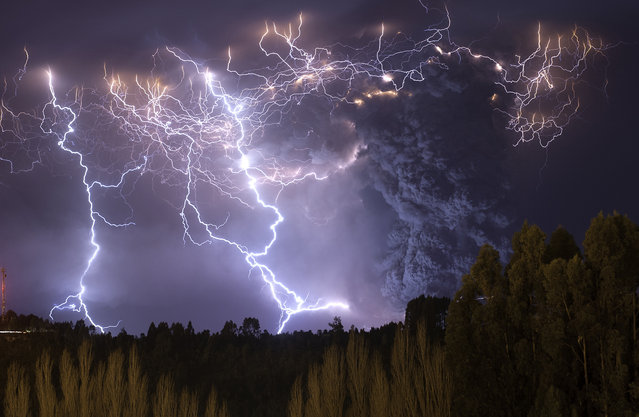
The eruption of Cordon Caulle began on June 4, 2011, located in the Region of Los Rios in Chile. For about 12 months, people and animals became accustomed to living with the daily fall of ash, which also caused problems in the air traffic in South America. The explosions and lightning during first days of the eruption could be seen from hundreds of miles around. This photograph was taken on the second night of eruption from the town of Lago Ranco. (Photo and caption by Francisco Negroni/National Geographic Traveler Photo Contest)

The eruption of Cordon Caulle began on June 4, 2011, located in the Region of Los Rios in Chile. For about 12 months, people and animals became accustomed to living with the daily fall of ash, which also caused problems in the air traffic in South America. The explosions and lightning during first days of the eruption could be seen from hundreds of miles around. This photograph was taken on the second night of eruption from the town of Lago Ranco. (Photo and caption by Francisco Negroni/National Geographic Traveler Photo Contest)

ATTENTION! All pictures are presented in high resolution. To see Hi-Res images – just TWICE click on any picture. In other words, click small picture – opens the BIG picture. Click BIG picture – opens VERY BIG picture.

Details
23 Jun 2013 11:24:00
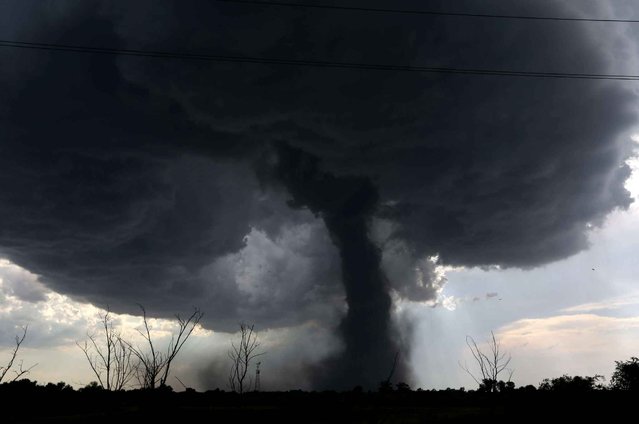
A tornado builds and travels southwest causing damage near Dean Rd. and 82nd Avenue in Hutchinson, Kan. on Monday, July 13, 2015. (Photo by Sandra J. Milburn/The Hutchinson News via AP Photo)

A tornado builds and travels southwest causing damage near Dean Rd. and 82nd Avenue in Hutchinson, Kan. on Monday, July 13, 2015. (Photo by Sandra J. Milburn/The Hutchinson News via AP Photo)
Details
14 Jul 2015 14:06:00
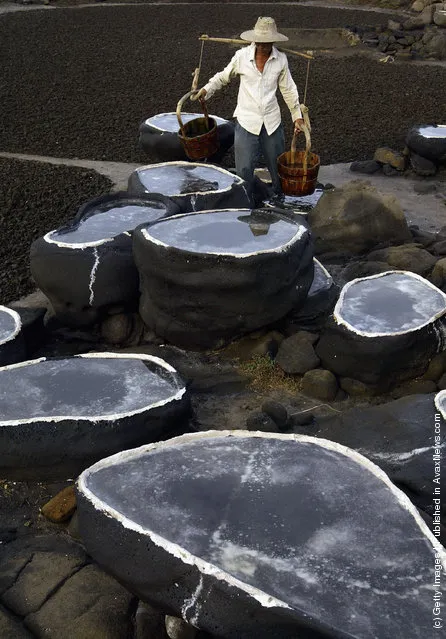
Villagers Evaporate Brine At Ancient Salt Fields

A villager pours brine into troughs at ancient salt fields on May 5, 2005 in Yantian Village on Hainan Island, China. (Photo by China Photos/Getty Images)
Details
03 Dec 2011 13:19:00
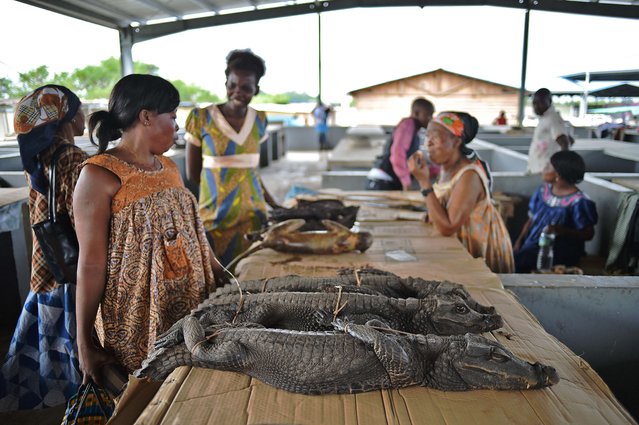
Shoppers walk past crocodiles for sale at a market in Bata on February 3, 2015. Markets in Equatorial Guinea sell a variety of animals including pangolins, monkeys and crocodiles as food. (Photo by Carl De Souza/AFP Photo)

Shoppers walk past crocodiles for sale at a market in Bata on February 3, 2015. Markets in Equatorial Guinea sell a variety of animals including pangolins, monkeys and crocodiles as food. (Photo by Carl De Souza/AFP Photo)
Details
07 Feb 2015 14:33:00
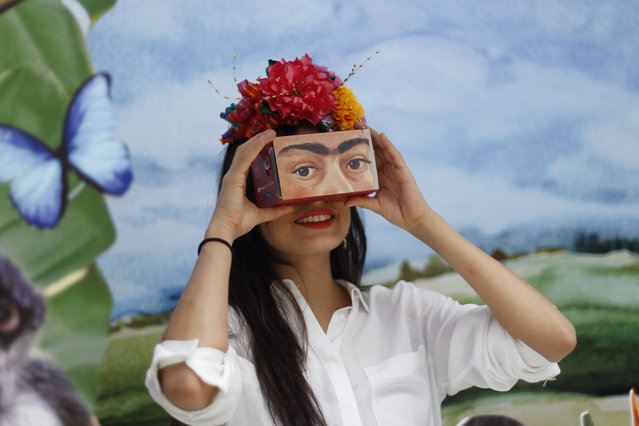
A woman uses a virtual reality (VR) headset to view images by Mexican painter Frida Kahlo in Mexico City, Mexico, 23 May 2018. The technological giant Google launched the “The Faces of Frida”, an interactive digital exhibition that treasures the heartrending work of the Mexican artist to tell her story from different points of view, with attention to the invisible details. (Photo by Sashenka Gutierrez/EPA/EFE)

A woman uses a virtual reality (VR) headset to view images by Mexican painter Frida Kahlo in Mexico City, Mexico, 23 May 2018. The technological giant Google launched the “The Faces of Frida”, an interactive digital exhibition that treasures the heartrending work of the Mexican artist to tell her story from different points of view, with attention to the invisible details. (Photo by Sashenka Gutierrez/EPA/EFE)
Details
27 May 2018 07:02:00