Loading...
Done
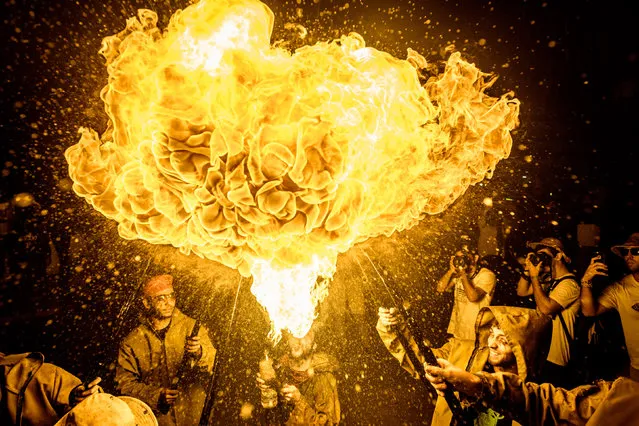
A fire-eater of the “Diables de Terrassa” performs during Sitges' little “Festa Major”, “Santa Tecla” in Sitges, Spain on September 19, 2016. This celebration brings together some of Catalonia’s most emblematic festive traditions. The central axis of the celebrations is the traditional parade, made up of “big-head” carnival figures and characters who dance to music played on different traditional instruments. One of the most popular events is the Correfoc or fire-running, which is also the closing event of the fiesta. The people run and jump over characters dressed up as devils and dragons, carrying fire. (Photo by Matthias Oesterle/ZUMA Press/Splash News)

A fire-eater of the “Diables de Terrassa” performs during Sitges' little “Festa Major”, “Santa Tecla” in Sitges, Spain on September 19, 2016. This celebration brings together some of Catalonia’s most emblematic festive traditions. The central axis of the celebrations is the traditional parade, made up of “big-head” carnival figures and characters who dance to music played on different traditional instruments. One of the most popular events is the Correfoc or fire-running, which is also the closing event of the fiesta. The people run and jump over characters dressed up as devils and dragons, carrying fire. (Photo by Matthias Oesterle/ZUMA Press/Splash News)
Details
20 Sep 2016 09:28:00
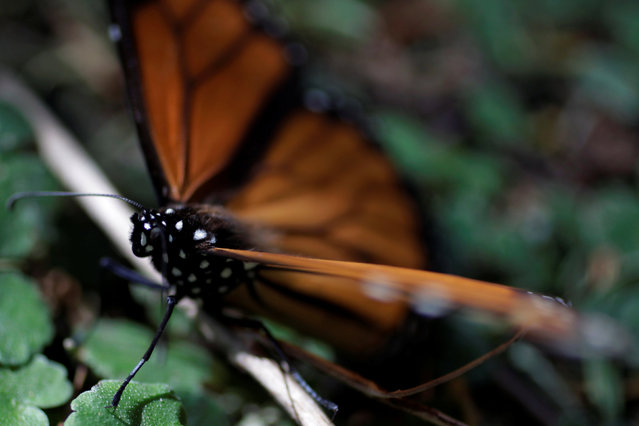
A monarch butterfly rests on the ground at the Sierra Chincua butterfly sanctuary on a mountain in Angangeo, Michoacan November 24, 2016. Angangueo is a town and municipality located in far eastern Michoacán state in central Mexico noted for its history of mining and its location in the Monarch Butterfly Biosphere Reserve. The Monarch Butterfly Biosphere Reserve is a World Heritage Site containing most of the over-wintering sites of the eastern population of the monarch butterfly. The reserve is located in the Trans-Mexican Volcanic Belt pine-oak forests ecoregion on the border of Michoacán and State of Mexico, 100 km (62 miles), northwest of Mexico City. Millions of butterflies arrive in the reserve annually. Butterflies only inhabit a fraction of the 56,000 hectares of the reserve from October–March. (Photo by Carlos Jasso/Reuters)

A monarch butterfly rests on the ground at the Sierra Chincua butterfly sanctuary on a mountain in Angangeo, Michoacan November 24, 2016. Angangueo is a town and municipality located in far eastern Michoacán state in central Mexico noted for its history of mining and its location in the Monarch Butterfly Biosphere Reserve. The Monarch Butterfly Biosphere Reserve is a World Heritage Site containing most of the over-wintering sites of the eastern population of the monarch butterfly. (Photo by Carlos Jasso/Reuters)
Details
26 Nov 2016 10:20:00
US President George W. Bush (R) and Russian President Vladimir Putin wave as the two presidents go for a ride in Putin's 1956 Volga before dinner 08 May 2005 at the his residence outside of Moscow. Bush hailed Russia's “bravery and sacrifice” in defeating Nazism, as he met Putin ahead of ceremonies marking the 60th anniversary of the end of World War II. Bush, who the previous day criticized the decades-long Soviet occupation of central Europe, said he was looking forward to the 09 May ceremony on Moscow's Red Square, to be attended by over 50 national leaders. (Photo by Tim Sloan/AFP Photo)

US President George W. Bush (R) and Russian President Vladimir Putin wave as the two presidents go for a ride in Putin's 1956 Volga before dinner 08 May 2005 at the his residence outside of Moscow. Bush hailed Russia's “bravery and sacrifice” in defeating Nazism, as he met Putin ahead of ceremonies marking the 60th anniversary of the end of World War II. Bush, who the previous day criticized the decades-long Soviet occupation of central Europe, said he was looking forward to the 09 May ceremony on Moscow's Red Square, to be attended by over 50 national leaders. (Photo by Tim Sloan/AFP Photo)
Details
24 Jun 2017 08:10:00
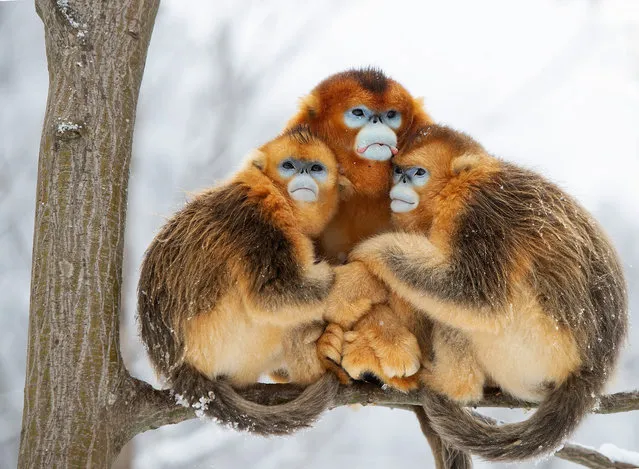
A golden huddle by Minqiang Lu, China. Two females and a male golden snub-nosed monkey huddle together to keep warm in the extreme cold. Threatened by forest loss and fragmentation, this endangered species is confined to central China. Restricted to living high up in the temperate forests, these monkeys – here in the Qinling mountains in Shaanxi province – feed mostly in the trees, on leaves, bark, buds and lichen. In heavy wind and snow, Minqiang walked up the mountain carrying his equipment. He stayed for half an hour in temperatures of –10C opposite the tree where the group was huddled before achieving this eye-level composition. (Photo by Minqiang Lu/Wildlife Photographer of the Year)

A golden huddle by Minqiang Lu, China. Two females and a male golden snub-nosed monkey huddle together to keep warm in the extreme cold. Threatened by forest loss and fragmentation, this endangered species is confined to central China. Restricted to living high up in the temperate forests, these monkeys – here in the Qinling mountains in Shaanxi province – feed mostly in the trees, on leaves, bark, buds and lichen. In heavy wind and snow, Minqiang walked up the mountain carrying his equipment. He stayed for half an hour in temperatures of –10C opposite the tree where the group was huddled before achieving this eye-level composition. (Photo by Minqiang Lu/Wildlife Photographer of the Year)
Details
12 Jan 2023 01:19:00


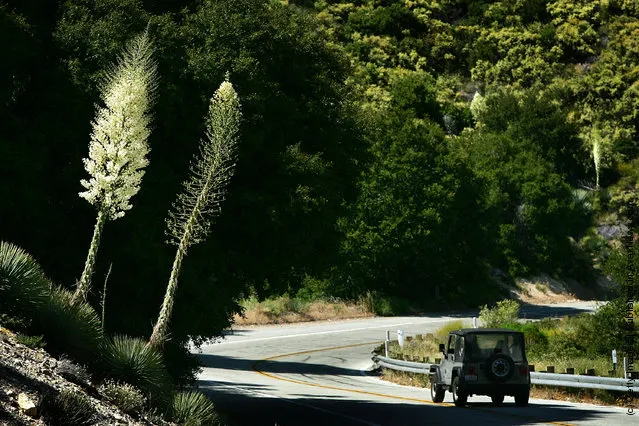
“Yucca is a genus of perennial shrubs and trees in the agave family, Agavaceae. Its 40-50 species are notable for their rosettes of evergreen, tough, sword-shaped leaves and large terminal panicles of white or whitish flowers. They are native to the hot and dry (arid) parts of North America, Central America, South America, and the Caribbean. Early reports of the species were confused with the cassava (Manihot esculenta). Consequently, Linnaeus mistakenly derived the generic name from the Carib word for the latter, yuca. It is also colloquially known in the midwest United States as “Ghosts in the graveyard”, as it is commonly found growing in rural graveyards and when in bloom the flowers appear as an apparition floating.” – Wikipedia

Photo: A yucca standing among flowers bursts forth a very large stalk of flowers as a heavy wildflower bloom on June 21, 2005 in the Angeles National Forest northwest of La Canada, California. (Photo by David McNew/Getty Images)
Details
29 Mar 2011 07:31:00
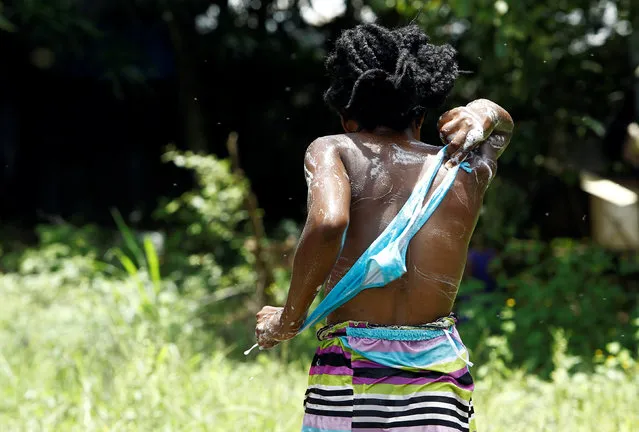
An African migrant stranded in Costa Rica bathes at a makeshift camp at the border between Costa Rica and Nicaragua, in Penas Blancas, Costa Rica, July 14, 2016. (Photo by Juan Carlos Ulate/Reuters)

An African migrant stranded in Costa Rica bathes at a makeshift camp at the border between Costa Rica and Nicaragua, in Penas Blancas, Costa Rica, July 14, 2016. Thousands of African migrants are currently stranded in Costa Rica after they were denied entry into neighbouring Nicaragua, which they have been using as a crossing point in order to reach the United States. According to the Costa Rican Red Cross, most of these people from Africa, Asia and Haiti. It has been reported that many of them paid smugglers to reach Central America. However, when they arrived at the border gates, they were denied entry and were left with nowhere to go. (Photo by Juan Carlos Ulate/Reuters)
Details
16 Jul 2016 08:17:00
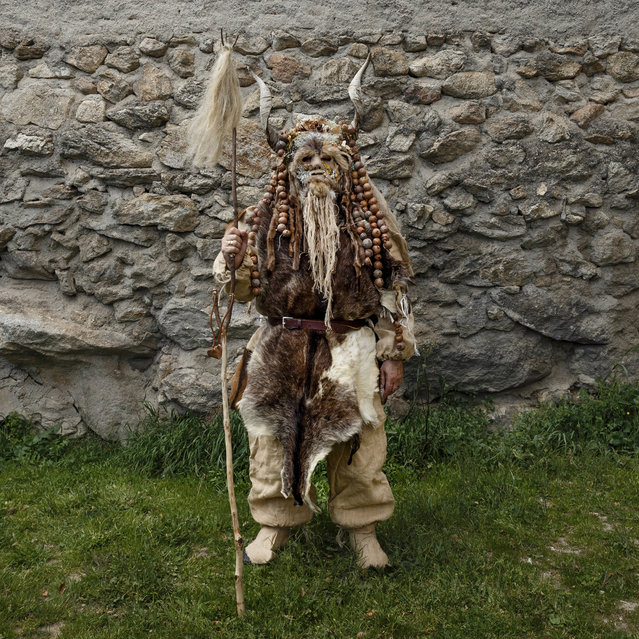
In this April 1, 2017 picture a man dressed as a “Harramacho” a traditional character from the Navalacruz carnival poses for a picture before a traditional Spanish mask gathering in the small village of Casavieja, Spain. (Photo by Daniel Ochoa de Olza/AP Photo)

In this April 1, 2017 picture a man dressed as a “Harramacho” a traditional character from the Navalacruz carnival poses for a picture before a traditional Spanish mask gathering in the small village of Casavieja, Spain. Every spring they come from towns across central and northwestern Spain, clad in elaborate costumes – some as trees, others as bears, still others as monsters who could have emerged from some sort of fever dream. (Photo by Daniel Ochoa de Olza/AP Photo)
Details
10 Apr 2017 08:50:00
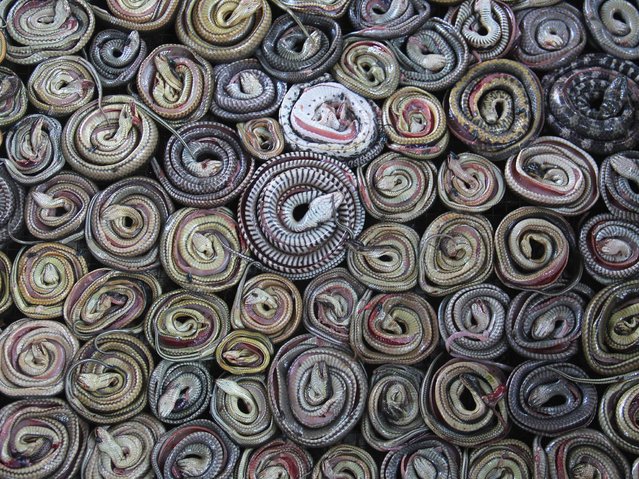
Snakes are collected and rolled before putting into the oven on March 2, 2014 in the village of Kertasura, Cirebon, Indonesia. (Photo by Nurcholis Anhari Lubis/Getty Images)

Snakes are collected and rolled before putting into the oven on March 2, 2014 in the village of Kertasura, Cirebon, Indonesia. At slaughter house snake skins measuring in the hundreds of metres, are sold to bag factories in the West and Central Java provinces on a monthly basis. From snake skin was manufactured into bags, shoes, wallets and belts. The price of a bag made from snake skin costs between 150,000 rupiah ($15 USD) and 300,000 rupiah ($30 USD), depending on its size. When snake skins reach Western fashion houses their price can increase dramatically and sell for up to $4,000 USD. (Photo by Nurcholis Anhari Lubis/Getty Images)
Details
05 Mar 2014 07:31:00