Loading...
Done
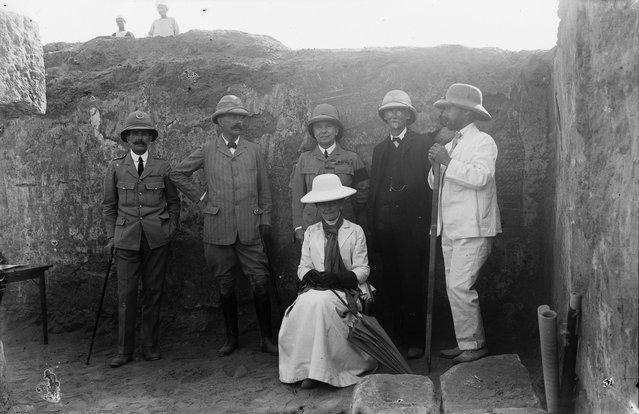
Remarkable discoveries were made, like the decapitated head of a bronze statue of Roman emperor Augustus, sacked from a raid on Roman garrisons further north in Egypt. Here: A group visiting the excavations at Meroë, including (from left) Midwinter Bey, director of Sudan Railways; Lord Kitchener; General Sir Francis Reginald Wingate, Sirdar of the Egyptian Army; Professor Archibald Sayce; John Garstang; and Lady Catherine Wingate, 1911. (Photo by Garstang Museum of Archaeology)

The city of Meroë laid undiscovered for two millennia before British archaeologist John Garstang excavated it in the early 20th century. Garstang took the radical decision to document his discoveries with photography – and immortalised an ancient world. “Meroë: Africa’s Forgotten Empire” is being shown until 14 September at Garstang Museum of Archaeology, Liverpool. Here: A group visiting the excavations at Meroë, including (from left) Midwinter Bey, director of Sudan Railways; Lord Kitchener; General Sir Francis Reginald Wingate, Sirdar of the Egyptian Army; Professor Archibald Sayce; John Garstang; and Lady Catherine Wingate, 1911. (Photo by Garstang Museum of Archaeology)
Details
15 Jun 2016 14:49:00
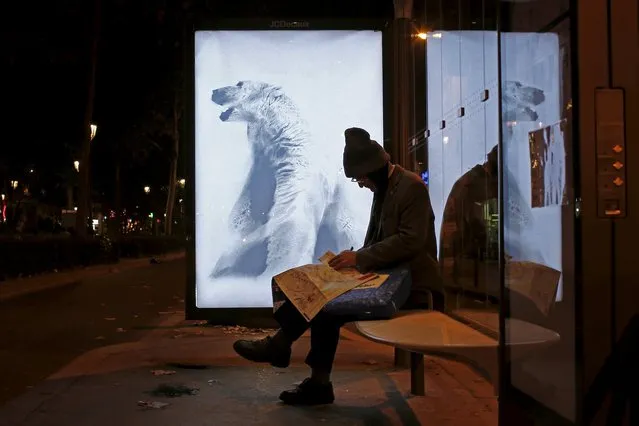
A poster by street artist Aaron Li-Hill as part of the "Brandalism" project is displayed at a bus stop in Paris, France, November 28, 2015, ahead of the United Nations COP21 Climate Change conference in Paris. (Photo by Benoit Tessier/Reuters)

A poster by street artist Aaron Li-Hill as part of the "Brandalism" project is displayed at a bus stop in Paris, France, November 28, 2015, ahead of the United Nations COP21 Climate Change conference in Paris. Brandalism is a revolt against corporate control of the visual realm. Following on in the guerilla art traditions of the 20th Century and taking inspiration from Agitprop, Situationist and Street Art movements, the Brandalism project sees artists from around the world collaborate to challenge the authority and legitimacy of commercial images within public space and within our culture. (Photo by Benoit Tessier/Reuters)
Details
30 Nov 2015 08:03:00
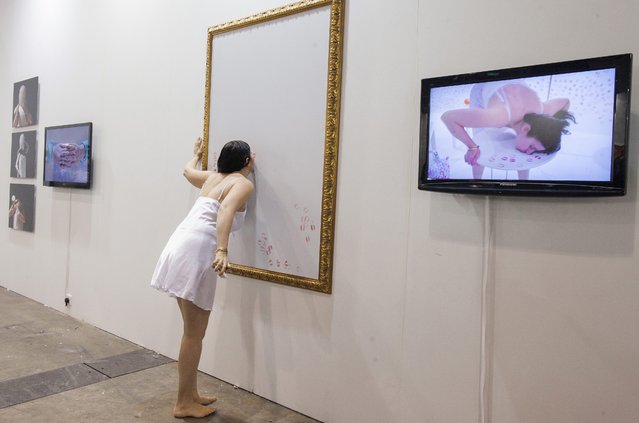
Turkish artist Nezaket Ekici performs a live art performance entitled 'Emotion in Motion' on the first day of Art Basel 2015, Hong Kong, China, 13 March 2015. Art Basel 2015 features 233 galleries from 37 countries and territories. (Photo by Alex Hofford/EPA)

Turkish artist Nezaket Ekici performs a live art performance entitled 'Emotion in Motion' on the first day of Art Basel 2015, Hong Kong, China, 13 March 2015. The Hong Kong show of Art Basel features 233 galleries from 37 countries and territories, presenting works ranging from the Modern period of the early 20th century to the most contemporary artists of today, according to the official press release. (Photo by Alex Hofford/EPA)
Details
18 Mar 2015 11:22:00
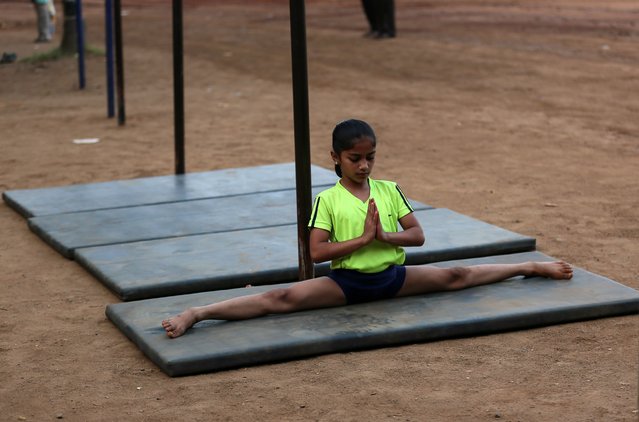
An Indian student warms up during the 44th Samartha Summer Sports Coaching Camp organized by Shree Samarth Vyayam Mandir in Mumbai, India, 25 April 2018. (Photo by Divyakant Solanki/EPA/EFE)

An Indian student warms up during the 44th Samartha Summer Sports Coaching Camp organized by Shree Samarth Vyayam Mandir in Mumbai, India, 25 April 2018. Mallakhamba arose in the western state of Maharashtra centuries ago. It was originally practiced by wrestlers and soldiers as a strength training exercise. (Photo by Divyakant Solanki/EPA/EFE)
Details
02 Jun 2018 00:01:00
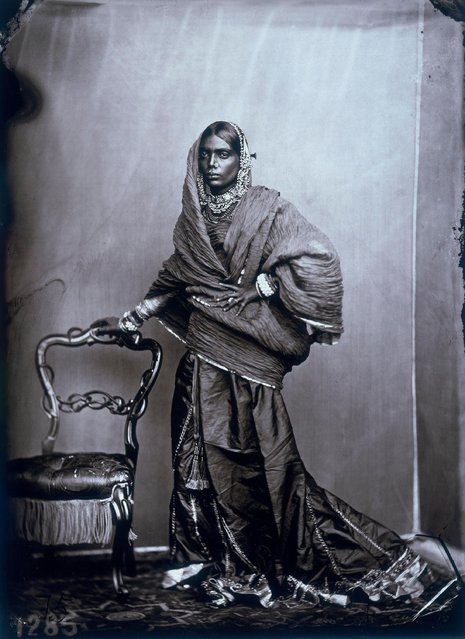
Full portrait of a woman in the harem in the royal palace of Jaipur, India, 1857 – 1865. (Photo by Maharaja Ram Singh III/Alinari via Getty Images)

These images give a rare insight into the life of a 19th Century Indian Maharajah. Maharajah Ram Singh ruled in the famous pink city of Jaipur between 1835 and 1880, and was also a keen photographer. Here: Full portrait of a woman in the harem in the royal palace of Jaipur, India, 1857 – 1865. (Photo by Maharaja Ram Singh III/Alinari via Getty Images)
Details
06 Feb 2017 01:03:00
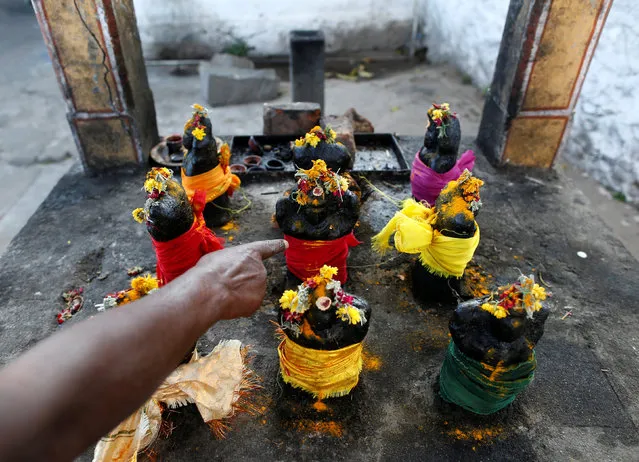
Paramasivan points to the statue of sun god Surya at a temple outside the Kodaikanal Solar Observatory, India, February 5, 2017. (Photo by Danish Siddiqui/Reuters)

Paramasivan points to the statue of sun god Surya at a temple outside the Kodaikanal Solar Observatory, India, February 5, 2017. In the early morning darkness, Devendran P. walks up a hill to a solar observatory in India's southern hill town of Kodaikanal, trudging the same path his father and grandfather walked in a century-old family tradition of studying the sun. (Photo by Danish Siddiqui/Reuters)
Details
24 Feb 2017 00:03:00
Ocean voyage

Do you think that history is a science? Well, not exactly. First, and foremost, history is the state's “legend of wars”, it’s official regalia. Of course, public historians are not interested in scientific truth – quite the opposite. In this respect, any attempt to present a state’s history as altruistic and benevolent as possible is welcomed and encouraged – as opposed to any revisionism attempts that may be more accurate. In this matter, Chinese have surpassed us all – they revised in highly creative manner (but rather shamelessly) the technology already invented by Europeans, a process that resulted in oldest state on the planet. Here is an interesting paradox: ask any sinologist about the Middle Kingdom during second century B.C., and he will describe it to you in such a vivid manner as if he has been living there all his life – but as soon as you will ask him to describe Chinese history in the 19-20th centuries… let's say, his eagerness will be greatly diminished. However, we will discuss China in a different article, and in the meantime we will try to understand how exactly historic “legend of wars” is formed and functions – based on a specific and well-known example. A great example is Ferdinand Magellan's first voyage around the world.
Details
14 Nov 2011 09:11:00
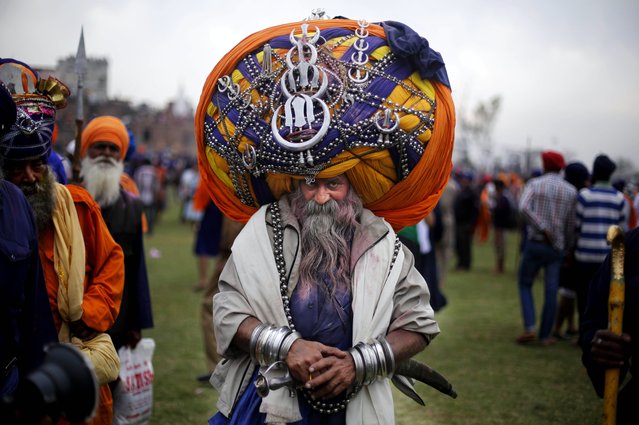
A Sikh warrior, wearing a huge turban attends the annual fair of “Hola Mohalla” in Anandpur Sahib, in the northern Indian state of Punjab, Monday, March 17, 2014. Believers from various parts of northern India collect at the religious fair to celebrate the festival of Holi in a tradition set by the tenth Sikh guru Guru Gobind Singh in the seventeenth century. Nihangs, or Sikh warriors, display their martial skills and attire during the fair, believed to be maintained in the exact tradition as set by the Guru. (Photo by Altaf Qadri/AP Photo)

A Sikh warrior, wearing a huge turban attends the annual fair of “Hola Mohalla” in Anandpur Sahib, in the northern Indian state of Punjab, Monday, March 17, 2014. Believers from various parts of northern India collect at the religious fair to celebrate the festival of Holi in a tradition set by the tenth Sikh guru Guru Gobind Singh in the seventeenth century. Nihangs, or Sikh warriors, display their martial skills and attire during the fair, believed to be maintained in the exact tradition as set by the Guru. (Photo by Altaf Qadri/AP Photo)
Details
22 Mar 2014 13:31:00