Loading...
Done
An urban fox walks alongside the Mall in central London, Britain, November 29, 2016. (Photo by Toby Melville/Reuters)

An urban fox walks alongside the Mall in central London, Britain, November 29, 2016. (Photo by Toby Melville/Reuters)
Details
30 Nov 2016 14:04:00
Fighting Infections (single image) | Fighting Pandemic by Sudipto Das. “It’s exhausting. A tram conductor in Kolkata, India, wears protective clothing from head to toe even in the heat of a summer afternoon. This was when restrictions were easing after India’s first Covid-19 lockdown – public transport was running, but staff were advised to suit up like this. We’ve all grown used to saluting the efforts of healthcare workers, but plenty of other people in public-facing jobs have performed gruelling duties too to keep people safe”. (Photo by Sudipto Das/Wellcome Photography Prize 2021)

Fighting Infections (single image) | Fighting Pandemic by Sudipto Das. “It’s exhausting. A tram conductor in Kolkata, India, wears protective clothing from head to toe even in the heat of a summer afternoon. This was when restrictions were easing after India’s first Covid-19 lockdown – public transport was running, but staff were advised to suit up like this. We’ve all grown used to saluting the efforts of healthcare workers, but plenty of other people in public-facing jobs have performed gruelling duties too to keep people safe”. (Photo by Sudipto Das/Wellcome Photography Prize 2021)
Details
29 Jun 2021 09:49:00
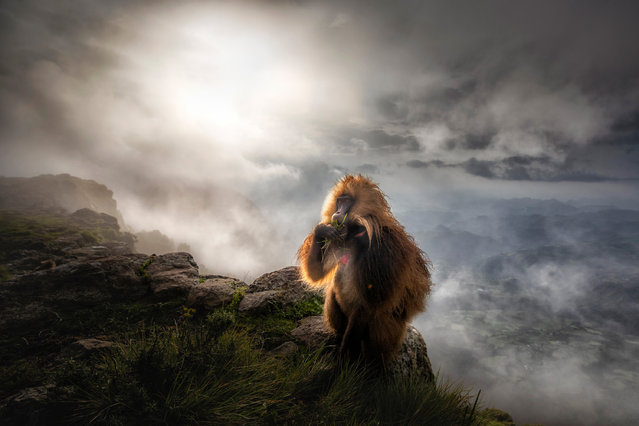
Highly commended, mammals: Gelada after the storm – Marco Gaiotti (Italy). “Gelada baboons are the only monkey species in the world that feed on grasses. They are native to the tableland of Ethiopia. Every morning large family groups wander from their sleeping places in the steep rock face, up to 1,000 metres high, to the feeding grounds at the tablelands. This image clearly depicts their feeding strategy: they pull out bunches of grass, sort the stalks and then lift them to their mouth. This shot was taken towards the end of the rainy season after a heavy storm”. (Photo by Marco Gaiotti/2019 GDT European Wildlife Photographer of the Year)

Highly commended, mammals: Gelada after the storm – Marco Gaiotti (Italy). “Gelada baboons are the only monkey species in the world that feed on grasses. They are native to the tableland of Ethiopia. Every morning large family groups wander from their sleeping places in the steep rock face, up to 1,000 metres high, to the feeding grounds at the tablelands. This image clearly depicts their feeding strategy: they pull out bunches of grass, sort the stalks and then lift them to their mouth. This shot was taken towards the end of the rainy season after a heavy storm”. (Photo by Marco Gaiotti/2019 GDT European Wildlife Photographer of the Year)
Details
31 Oct 2019 00:03:00
Ethnic Miao women in traditional costumes take part in a tug of war as they celebrate the local ethnic Miao's new year at a village in Rongshui Miao Autonomous county, Guangxi Zhuang Autonomous Region, China January 5, 2019. (Photo by Reuters/China Stringer Network)

Ethnic Miao women in traditional costumes take part in a tug of war as they celebrate the local ethnic Miao's new year at a village in Rongshui Miao Autonomous county, Guangxi Zhuang Autonomous Region, China January 5, 2019. (Photo by Reuters/China Stringer Network)
Details
19 Jan 2019 00:01:00
A Los Angeles County Fire helicopter flies over during the “Skirball Fire” which began early morning in Bel-Air, California, USA, 06 December 2017. An outbreak of several fires North of Los Angeles has occurred as one of the strongest Santa Ana winds forecast of the season is ongoing and expected to last several days. (Photo by John Cetrino/EPA/EFE)

A Los Angeles County Fire helicopter flies over during the “Skirball Fire” which began early morning in Bel-Air, California, USA, 06 December 2017. An outbreak of several fires North of Los Angeles has occurred as one of the strongest Santa Ana winds forecast of the season is ongoing and expected to last several days. (Photo by John Cetrino/EPA/EFE)
Details
08 Dec 2017 02:44:00
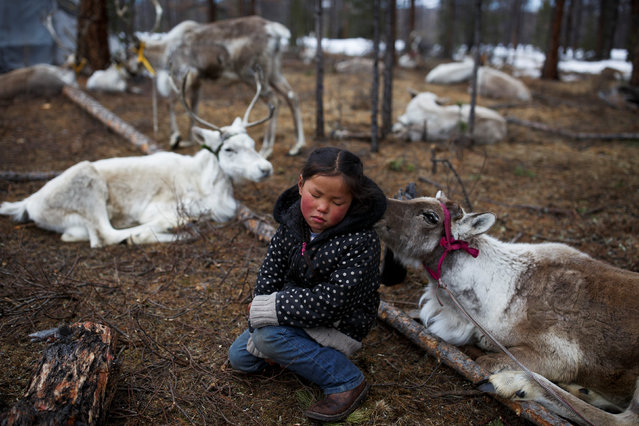
Tsetse, six-year-old daughter of Dukha herder Erdenebat Chuluu, sits among her family's reindeer in a forest near the village of Tsagaannuur, Khovsgol aimag, Mongolia, April 21, 2018. (Photo by Thomas Peter/Reuters)

Tsetse, six-year-old daughter of Dukha herder Erdenebat Chuluu, sits among her family's reindeer in a forest near the village of Tsagaannuur, Khovsgol aimag, Mongolia, April 21, 2018. Nyamaa is an ethnic Darkhad, herders of northern Mongolia who have historically inhabited the steppe that borders the Taiga forests. (Photo by Thomas Peter/Reuters)

Details
26 May 2018 00:03:00
This picture taken on February 1, 2015 shows participants competing in a tofu (beancurd) wrestling competition in Fogang county, south China's Guangdong province. Participants, mostly women, fight it out in an inflatable pool which is filled with nearly two tons of fresh milk and tofu, in a promotion to attract tourists for the upcoming Chinese Lunar New Year holiday. (Photo by AFP Photo/Stringer)

This picture taken on February 1, 2015 shows participants competing in a tofu (beancurd) wrestling competition in Fogang county, south China's Guangdong province. Participants, mostly women, fight it out in an inflatable pool which is filled with nearly two tons of fresh milk and tofu, in a promotion to attract tourists for the upcoming Chinese Lunar New Year holiday. The upcoming Chinese lunar new year of the sheep, which will fall on February 19 this year, marks the biggest festival of the year in China as hundreds of millions of people journey across the country to celebrate the season with their families. (Photo by AFP Photo/Stringer)
Details
07 Feb 2015 14:44:00
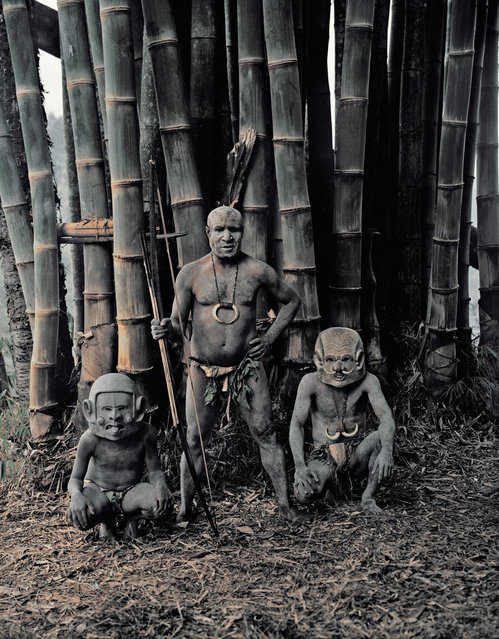
“Asaro from the Eastern Highlands”. The mudmen could not cover their faces with mud because the people of Papua New Guinea thought that the mud from the Asaro river was poisonous. So instead of covering their faces with this alleged poison, they made masks from pebbles that they heated and water from the waterfall, with unusual designs such as long or very short ears either going down to the chin or sticking up at the top, long joined eyebrows attached to the top of the ears, horns and sideways mouths. (Jimmy Nelson)

“Asaro from the Eastern Highlands”. The mudmen could not cover their faces with mud because the people of Papua New Guinea thought that the mud from the Asaro river was poisonous. So instead of covering their faces with this alleged poison, they made masks from pebbles that they heated and water from the waterfall, with unusual designs such as long or very short ears either going down to the chin or sticking up at the top, long joined eyebrows attached to the top of the ears, horns and sideways mouths. (Photo and caption by Jimmy Nelson)
Details
20 Oct 2013 08:54:00