Loading...
Done
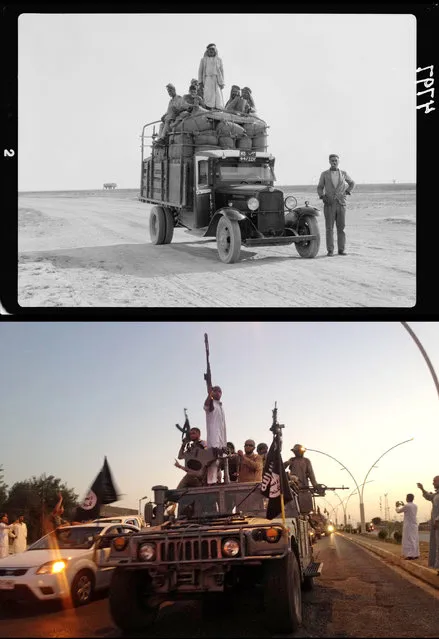
This combination of two photographs shows a 1932 image of men on a lorry on the road to Mosul, northern Iraq, from the Library of Congress, top, and fighters from the Islamic State group parading in a commandeered Iraqi security forces armored vehicle down a main road in Mosul on Monday, June 23, 2014. (Photo by AP Photo)


Iraq's second largest city, Mosul, is locked under the rule of extremists from the Islamic State group trying to purge it of everything they see as contradicting their stark vision of Islam. A trove of photographs now housed at the Library of Congress offers a glimpse of a different Mosul – before wars, insurgency, sectarian strife and now radicals' rule. The scenes were taken in the autumn of 1932 by staff from the American Colony Photo Department during a visit to Iraq at the end of the British mandate. (Photo by AP Photo)
Details
21 Sep 2014 11:13:00
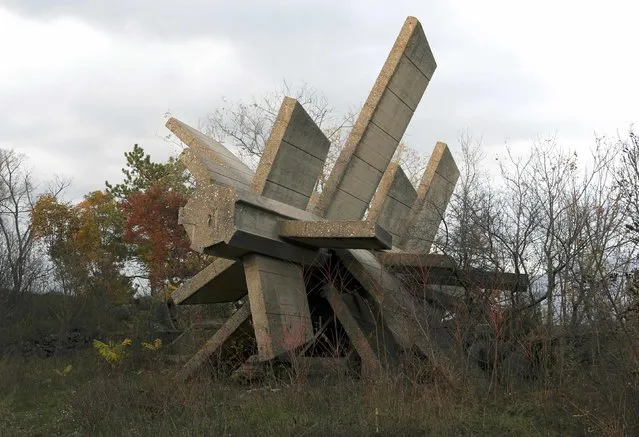
General view of the monument to memory of soldiers who liberated the city of Knin, in Knin, Croatia November 10, 2014. (Photo by Antonio Bronic/Reuters)

General view of the monument to memory of soldiers who liberated the city of Knin – in Knin, Croatia on November 10, 2014. Across the former Yugoslavia stand giant monuments to a state that no longer exists, once visited and celebrated during public holidays such as Republic Day on November 29, marking the creation of socialist Yugoslavia. Many are now neglected or ignored, aging symbols of a joint state forged during World War Two but torn apart by nationalism half a century later. Republic Day is no longer marked in any of the seven independent states that emerged from its ashes. (Photo by Antonio Bronic/Reuters)
Details
01 Dec 2014 14:00:00
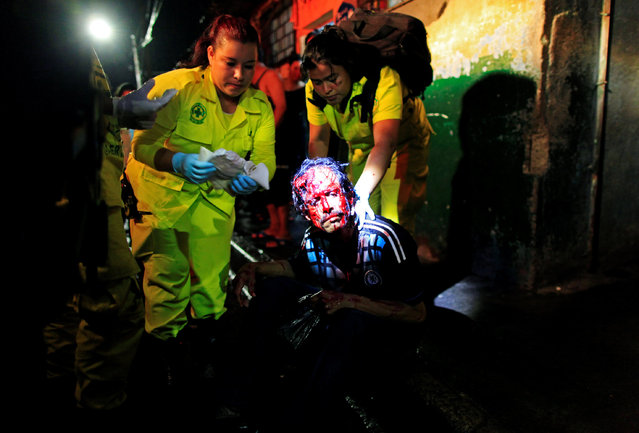
Comandos de Salvamento rescuers Maria Martinez (L) and Ana Chichilla attend to a wounded homeless man in San Salvador, El Salvador July 16, 2016. The man was attacked with a machete by suspected gang members. (Photo by Jose Cabezas/Reuters)

Comandos de Salvamento rescuers Maria Martinez (L) and Ana Chichilla attend to a wounded homeless man in San Salvador, El Salvador July 16, 2016. The man was attacked with a machete by suspected gang members. In 2015, El Salvador registered a record 103 homicides per 100,000 habitants, making it one of the most dangerous countries in the world outside a war zone. But for many young people who have few chances to distance themselves from rivalries between so-called maras in their schools and neighbourhoods, a civil-society organisation called the Comandos de Salvamento, or Rescue Corps, has been a refuge. (Photo by Jose Cabezas/Reuters)
Details
16 Nov 2016 11:10:00
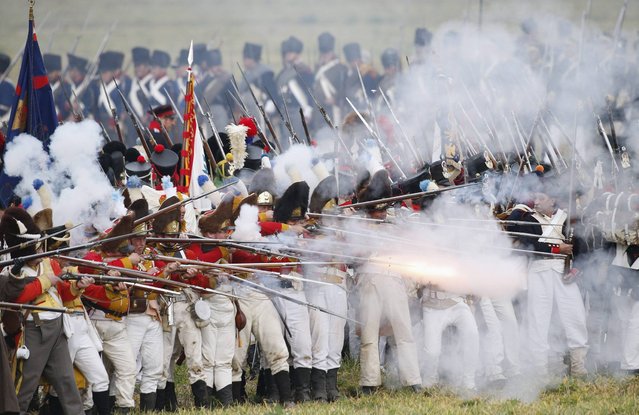
Performers wearing 19th century French military uniforms fire their weapons as they attack Allied forces during a reenactment of the Battle of the Nations, in a field in the village of Markkleeberg near Leipzig October 20, 2013. (Photo by Fabrizio Bensch/Reuters)

Performers wearing 19th century French military uniforms fire their weapons as they attack Allied forces during a reenactment of the Battle of the Nations, in a field in the village of Markkleeberg near Leipzig October 20, 2013. The east German city of Leipzig commemorated the 200th anniversary of the largest battle of the Napoleonic Wars on Sunday by reenacting the Battle of the Nations, with 6,000 military-historic association enthusiasts from all over Europe. The decisive encounter in which tens of thousands of soldiers were killed, took place from October 17-19, 1813, just outside of Leipzig. At the height of the hostilities Napoleon fielded more than 200,000 men against an Allied force of some 360,000 soldiers which included troops from Russia, Austria, Prussia and Sweden. (Photo by Fabrizio Bensch/Reuters)
Details
21 Oct 2013 11:19:00
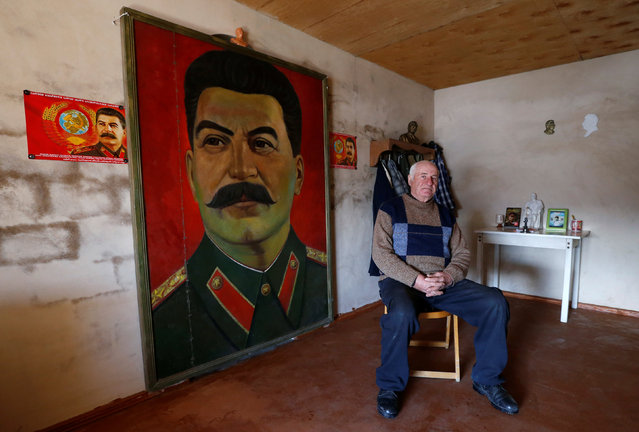
Retired builder Vasili Sidamonidze, 70, poses for a portrait at his home in Gori, Georgia, December 6, 2016. “Unfortunately, Stalin is not popular nowadays. Our people don't respect him. Only we, members of the (Communist) Party, respect him”, Sidamonidze said. “I always try to attend Stalin's birthday anniversaries in Gori. Unfortunately many people don't want to join us even if they live nearby. They look at us from their windows”. Stalin, who was born in Gori in 1878 and died in 1953, is largely reviled today in Georgia, which regained its independence during the 1991 collapse of the Soviet Union. Over the years, his memorials have been dismantled, most recently in 2010 when authorities removed a statue of the dictator from Gori's central square. But Stalin is still revered by a small group of mainly elderly supporters who stress his role in the industrialisation of the Soviet Union and in defeating Nazi Germany in World War Two. Each Dec. 21, a few dozen people mark his birthday by gathering outside a Gori museum dedicated to Stalin, where they make speeches and walk to the square where a 6-meter-high bronze statue of him once stood, calling for it to be reinstated. Opponents say it was a symbol of Moscow's still lingering shadow. In 2008, Russia fought a brief war with Georgia and recognised its breakaway regions of Abkhazia and South Ossetia as independent states. (Photo by David Mdzinarishvili/Reuters)

Retired builder Vasili Sidamonidze, 70, poses for a portrait at his home in Gori, Georgia, December 6, 2016. “Unfortunately, Stalin is not popular nowadays. Our people don't respect him. Only we, members of the (Communist) Party, respect him”, Sidamonidze said. “I always try to attend Stalin's birthday anniversaries in Gori. Unfortunately many people don't want to join us even if they live nearby. They look at us from their windows”. (Photo by David Mdzinarishvili/Reuters)
Details
17 Dec 2016 07:59:00
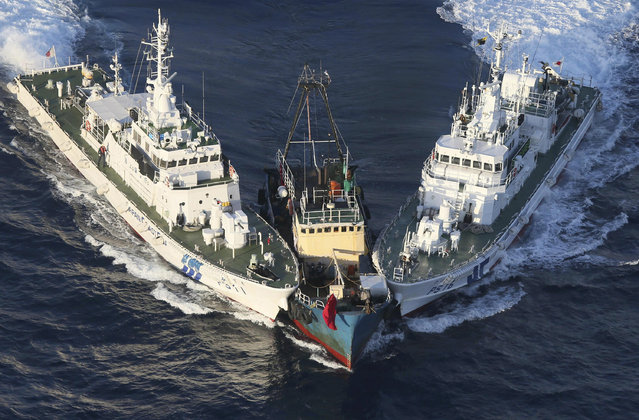
A boat, center, is surrounded by Japan Cost Guard's patrol boats after some activists descended from the boat on Uotsuri Island, one of the islands of Senkaku in Japanese and Diaoyu in Chinese, in East China Sea Wednesday, Aug. 15, 2012. (Photo by Yomiuri Shimbun/Masataka Morita/AP Photo)

A boat, center, is surrounded by Japan Cost Guard's patrol boats after some activists descended from the boat on Uotsuri Island, one of the islands of Senkaku in Japanese and Diaoyu in Chinese, in East China Sea Wednesday, Aug. 15, 2012. Regional tensions flared on the emotional anniversary of Japan's World War II surrender as activists from China and South Korea used Wednesday's occasion to press rival territorial claims, prompting 14 arrests by Japanese authorities. The 14 people had traveled by boat from Hong Kong to the disputed islands controlled by Japan but also claimed by China and Taiwan. (Photo by Yomiuri Shimbun/Masataka Morita/AP Photo)
Details
18 Sep 2012 09:02:00


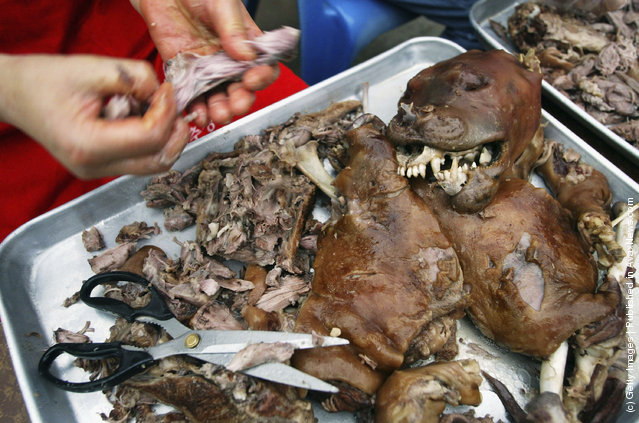
“Dog meat refers to edible parts and the flesh derived from (predominantly domestic) dogs. Human consumption of dog meat has been recorded in many parts of the world, including ancient China, ancient Mexico, and ancient Rome. According to contemporary reports, dog meat is consumed in a variety of countries such as Switzerland, China, Vietnam, the Philippines, and Korea. In addition, dog meat has also been used as survival food in times of war and/or other hardships”. – Wikipedia

Photo: A chef prepares dog meat at a restaurant on July 4, 2005 in Gwacheon, South Korea. Dog meat is a traditional dish in Korea dating back to the Samkuk period (period of the three kingdoms BC 57 – AD 668). Although many recipes existed historically for dog meat, now chefs only make soups, or dishes using boiled or roasted meat. Koreans traditionally eat dog meat on the hottest day of the summer, for it's reputed benefits of virility, invigoration and health. (Photo by Chung Sung-Jun/Getty Images)
Details
24 Jul 2011 13:21:00
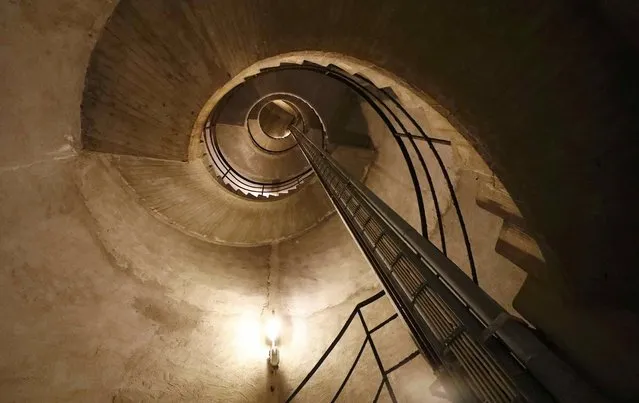
A 20 metre high spiral staircase in a tower used as an emergency exit, is seen inside a Federal Reserve bank (Bundesbank) bunker, prior to the bunker's official opening to the public in Cochem, Germany, March 18, 2016. (Photo by Kai Pfaffenbach/Reuters)

A 20 metre high spiral staircase in a tower used as an emergency exit, is seen inside a Federal Reserve bank (Bundesbank) bunker, prior to the bunker's official opening to the public in Cochem, Germany, March 18, 2016. West Germany's Central Bank (Deutsche Bundesbank) stored some 20 billion German marks of emergency notes in two underground bunkers, one in Frankfurt the other in Cochem, between 1964-1988 during the cold war. (Photo by Kai Pfaffenbach/Reuters)
Details
19 Mar 2016 12:36:00