Loading...
Done
Revellers perform during the “Salsodromo”, the kick-off of the music and cultural festival Feria de Cali (Cali Fair) in Cali, Colombia, on December 25, 2021. The “Salsodromo”, an event in which more than 2,500 revellers and salsa music dancers perform along a kilometre-long stripe, marks the start of the Feria de Cali festival every year. (Photo by Paola Mafla/AFP Photo)

Revellers perform during the “Salsodromo”, the kick-off of the music and cultural festival Feria de Cali (Cali Fair) in Cali, Colombia, on December 25, 2021. The “Salsodromo”, an event in which more than 2,500 revellers and salsa music dancers perform along a kilometre-long stripe, marks the start of the Feria de Cali festival every year. (Photo by Paola Mafla/AFP Photo)
Details
23 Oct 2022 04:38:00
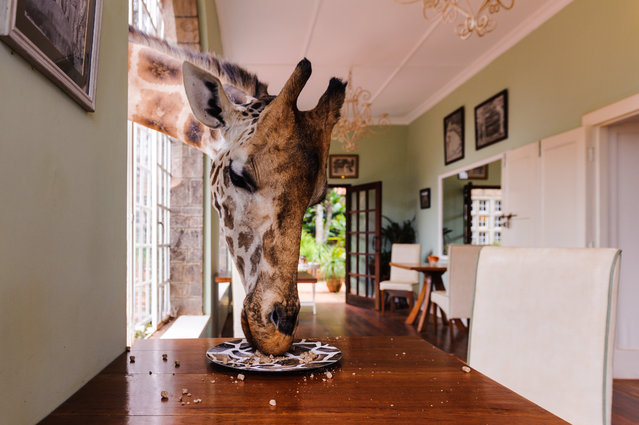
“Don't Leave Any Food On Your Plate”. The giraffes at Nairobi's Giraffe Manor are totally at home with humans. They will eat out of your hand, or even off your plate. Photo location: Giraffe Manor, Nairobi, Kenya. (Photo and caption by Gavin Werbeloff/National Geographic Photo Contest)

“Don't Leave Any Food On Your Plate”. The giraffes at Nairobi's Giraffe Manor are totally at home with humans. They will eat out of your hand, or even off your plate. Photo location: Giraffe Manor, Nairobi, Kenya. (Photo and caption by Gavin Werbeloff/National Geographic Photo Contest)
Details
20 Jun 2014 10:23:00
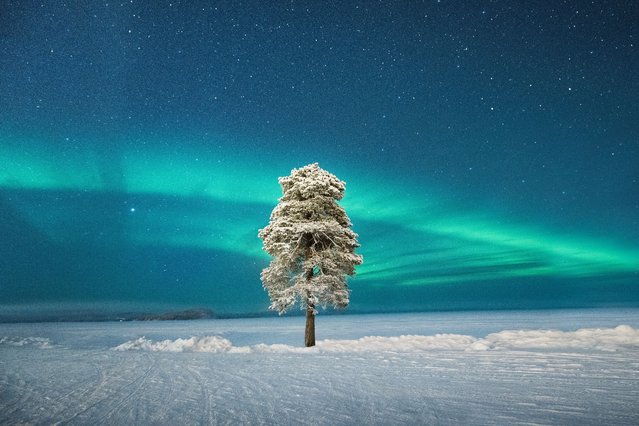
Aurorae category runner-up: Lone Tree under a Scandinavian Aurora by Tom Archer (UK). The photographer decided to explore the area around the hotel on a very crisp -35C evening in Finnish Lapland. When he found this tree, he decided to wait for the misty conditions to change and could not believe his luck when the sky cleared and the aurora came out in the perfect spot. Archer spent about an hour photographing it before his camera started to lock up because of the harsh conditions, but by then he was happy to call it a night. (Photo by Tom Archer/2020 Astronomy Photographer of the Year)

Aurorae category runner-up: Lone Tree under a Scandinavian Aurora by Tom Archer (UK). The photographer decided to explore the area around the hotel on a very crisp -35C evening in Finnish Lapland. When he found this tree, he decided to wait for the misty conditions to change and could not believe his luck when the sky cleared and the aurora came out in the perfect spot. Archer spent about an hour photographing it before his camera started to lock up because of the harsh conditions, but by then he was happy to call it a night. (Photo by Tom Archer/2020 Astronomy Photographer of the Year)
Details
17 Sep 2020 00:03:00
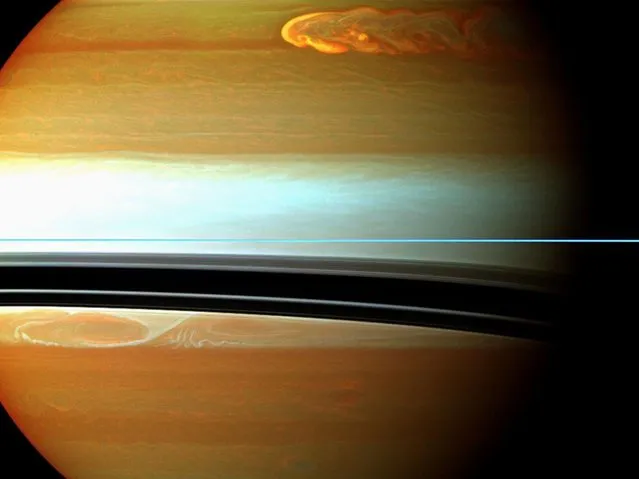
The huge storm which generated the lightning strike on Saturn can be seen in the top right of this image

An incredible view of daytime lightning on Saturn during one of the biggest storms the ringed planet has ever seen has been captured by a NASA spacecraft.

Photo: The huge storm which generated the lightning strike on Saturn can be seen in the top right of this image. (Photo by NASA)
Details
22 Jul 2012 08:43:00
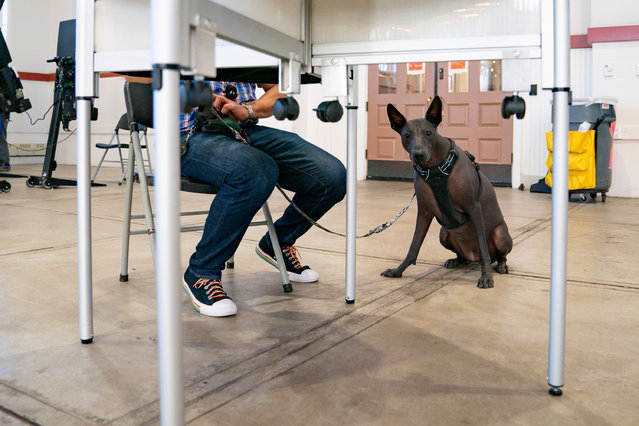
A dog waits as his companion fills out their ballot at Eastern Market in Washington, DC, on November 5, 2024. (Photo by Allison Robbert for The Washington Post)

A dog waits as his companion fills out their ballot at Eastern Market in Washington, DC, on November 5, 2024. (Photo by Allison Robbert for The Washington Post)
Details
14 Nov 2024 03:50:00
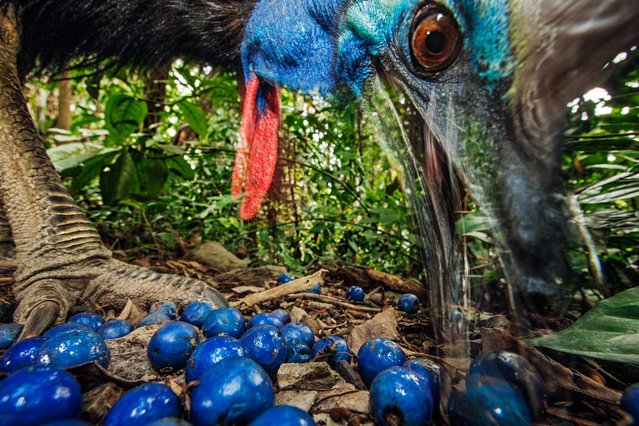
“Cassowaries are large, flightless birds related to emus and (more distantly) to ostriches, rheas, and kiwis”, writes Olivia Judson in the September issue of National Geographic magazine. (Photo by Christian Ziegler/National Geographic)

“Cassowaries are large, flightless birds related to emus and (more distantly) to ostriches, rheas, and kiwis”, writes Olivia Judson in the September issue of National Geographic magazine. How large? People-size: Adult males stand well over five foot five and top 110 pounds. Females are even taller, and can weigh more than 160 pounds. Dangerous when roused, they’re shy and peaceable when left alone. But even birds this big and tough are prey to habitat loss. The dense New Guinea and Australia rain forests where they live have dwindled. Today cassowaries might number 1,500 to 2,000. And because they help shape those same forests – by moving seeds from one place to another – “if they vanish”, Judson writes, “the structure of the forest would gradually change” too. (Photo by Christian Ziegler/National Geographic)
Details
06 Jan 2014 12:21:00
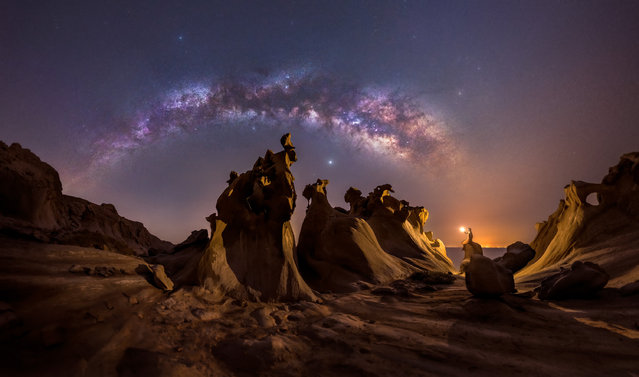
Night lovers; Hormozgan province, Iran. “In this picture, you can see the Milky Way rising on a fascinating spring night on the Persian Gulf coast. The stunning cliffs of this area make every viewer imagine and even talk to them! The light pollution from a faraway city was quite strong, so it was a challenging post-processing process. I’m a nightscaper who tries to achieve an artistic look in my images, and in this image, I tried to convey and capture the magic of this location”. (Photo by Mohammad Hayati/Milky Way Photographer of the Year)

Night lovers; Hormozgan province, Iran. “In this picture, you can see the Milky Way rising on a fascinating spring night on the Persian Gulf coast. The stunning cliffs of this area make every viewer imagine and even talk to them! The light pollution from a faraway city was quite strong, so it was a challenging post-processing process. I’m a nightscaper who tries to achieve an artistic look in my images, and in this image, I tried to convey and capture the magic of this location”. (Photo by Mohammad Hayati/Milky Way Photographer of the Year)
Details
01 Jun 2021 09:42:00
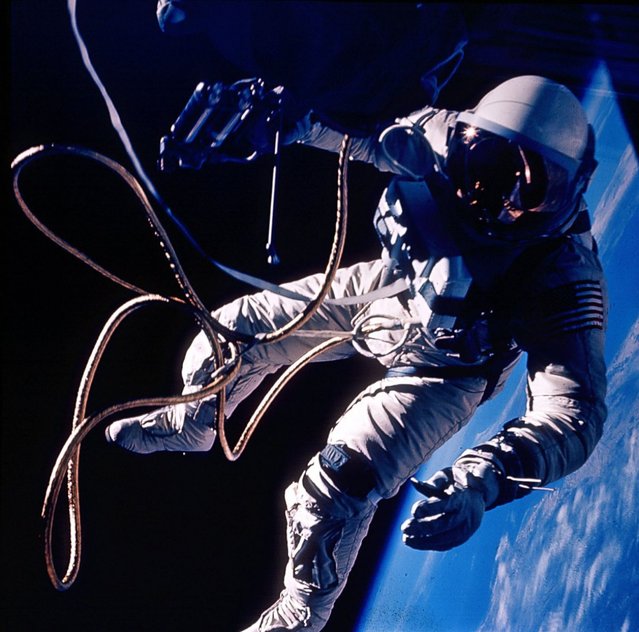
The First U.S. Spacewalk – Gemini 4 Ed White made the United States' first spacewalk on June 3, 1965 during the Gemini 4 mission. The extra-vehicular activity (EVA) started at 19:45 UT (3:45 p.m. EDT) on the third orbit when White opened his hatch and used the hand-held manuevering oxygen-jet gun to push himself out of the capsule. (Photo by NASA)

The First U.S. Spacewalk – Gemini 4 Ed White made the United States' first spacewalk on June 3, 1965 during the Gemini 4 mission. The extra-vehicular activity (EVA) started at 19:45 UT (3:45 p.m. EDT) on the third orbit when White opened his hatch and used the hand-held manuevering oxygen-jet gun to push himself out of the capsule. (Photo by NASA)
Details
11 Apr 2014 08:40:00