Loading...
Done
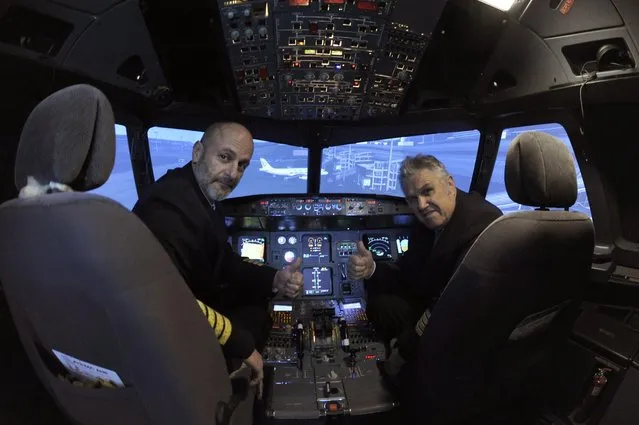
Igor Perne (L), 53, an electronic engineer and a member of the International Virtual Aviation Organisation (IVAO), and fellow virtual pilot Franc Lavric gesture for the camera before taking off on a virtual flight in a flight simulator in Nova Vas, Slovenia November 13, 2014. In 2011, Perne, a lifelong flying enthusiast, bought parts of a written-off Cyprus Airways airliner and then spent two and a half years turning the entire nose of the scrapped aircraft into an elaborate flight simulator. (Photo by Srdjan Zivulovic/Reuters)

Igor Perne (L), 53, an electronic engineer and a member of the International Virtual Aviation Organisation (IVAO), and fellow virtual pilot Franc Lavric gesture for the camera before taking off on a virtual flight in a flight simulator in Nova Vas, Slovenia November 13, 2014. In 2011, Perne, a lifelong flying enthusiast, bought parts of a written-off Cyprus Airways airliner and then spent two and a half years turning the entire nose of the scrapped aircraft into an elaborate flight simulator. (Photo by Srdjan Zivulovic/Reuters)
Details
16 Nov 2014 12:07:00
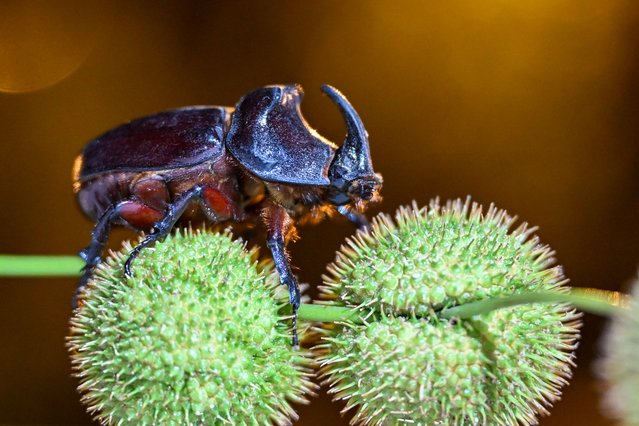
A “Rhino Beetle” (Oryctes nasicornis) is seen in Edremit, Van, Turkiye on August 2, 2024. Named “Rhino Beetle” due to the horn on its head, this beetle is commonly found in moist areas across Europe and Turkiye. (Photo by Ozkan Bilgin/Anadolu via Getty Images)

A “Rhino Beetle” (Oryctes nasicornis) is seen in Edremit, Van, Turkiye on August 2, 2024. Named “Rhino Beetle” due to the horn on its head, this beetle is commonly found in moist areas across Europe and Turkiye. (Photo by Ozkan Bilgin/Anadolu via Getty Images)
Details
24 Aug 2024 04:43:00
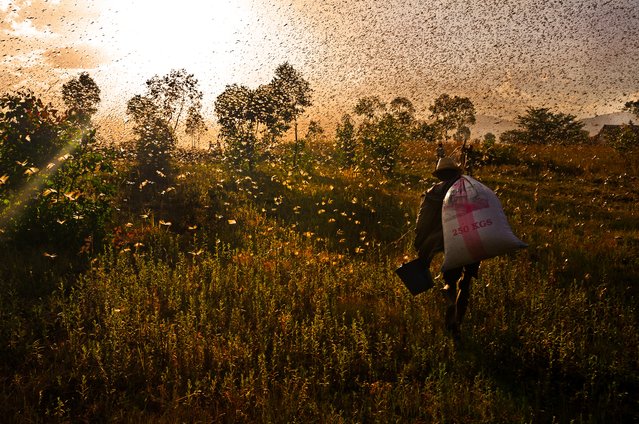
“Locusts & Men”. Oppression, interaction, collaboration. In the life cycle of nature nothing is lost, but the coexistence of different species is sometimes difficult. In Madagascar periodically returns the archaic antagonism between man and the migratory locust, in a circle of life where the two species are looking for space and food for their survival. Photo location: Madagascar, 2013. (Photo and caption by Michele Martinelli/National Geographic Photo Contest)

“Locusts & Men”. Oppression, interaction, collaboration. In the life cycle of nature nothing is lost, but the coexistence of different species is sometimes difficult. In Madagascar periodically returns the archaic antagonism between man and the migratory locust, in a circle of life where the two species are looking for space and food for their survival. At the end of the day a man walks home carrying on his shoulders the heavy bag which contains the locusts captured during the day. The insects provide nutritious meals for the man and his family. Photo location: Madagascar, 2013. (Photo and caption by Michele Martinelli/National Geographic Photo Contest)

ATTENTION! All pictures are presented in high resolution. To see Hi-Res images – just TWICE click on any picture. In other words, click small picture – opens the BIG picture. Click BIG picture – opens VERY BIG picture.
Details
03 Dec 2013 10:59:00
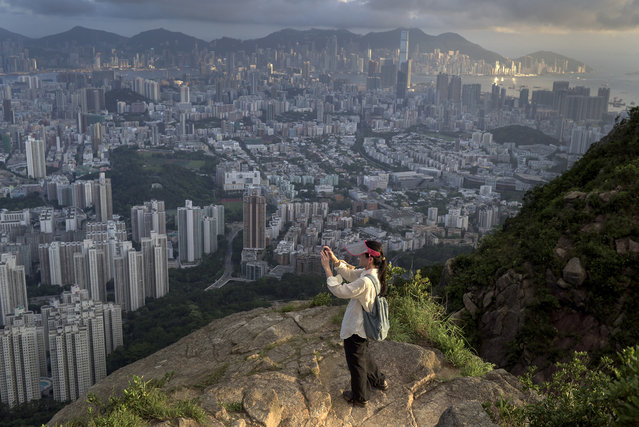
In this photograph taken on June 28, 2015, a hiker in Hong Kong takes a picture of the city from a walking trail. The southern Chinese territory is crisscrossed by more than 180 miles of designated hiking trails. (Photo by Alex Ogle/AFP Photo)

In this photograph taken on June 28, 2015, a hiker in Hong Kong takes a picture of the city from a walking trail. The southern Chinese territory is crisscrossed by more than 180 miles of designated hiking trails. (Photo by Alex Ogle/AFP Photo)
Details
30 Jun 2015 12:47:00
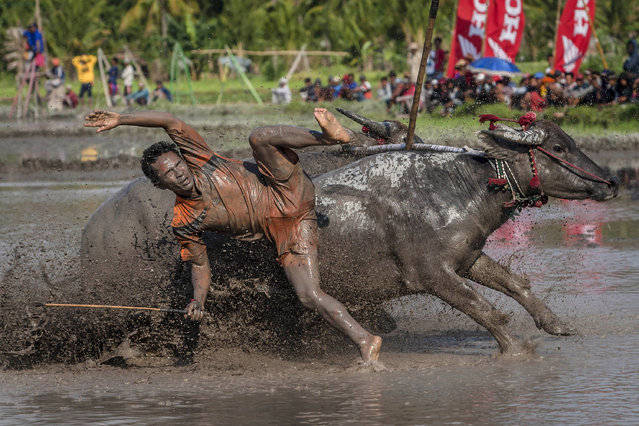
A jockey falls from his buffalos during Barapan Kebo or buffalo races as part of the Moyo festival on September 30, 2014 in Sumbawa Island, West Nusa Tenggara, Indonesia. (Photo by Ulet Ifansasti/Getty Images)

A jockey falls from his buffalos during Barapan Kebo or buffalo races as part of the Moyo festival on September 30, 2014 in Sumbawa Island, West Nusa Tenggara, Indonesia. The traditional Buffalo races, known as Barapan Kebo, are held by Samawa tribes in muddy rice fields to celebrate and provide entertainment ahead of the annual planting season. Jockeys secure themselves on a wooden structure attached to the buffalo, and maneuver across the mud in a race to the finish line. The jockeys weild long sticks, in a similar style to jousting, and direct them towards targets called “Saka”. (Photo by Ulet Ifansasti/Getty Images)
Details
04 Oct 2014 11:58:00
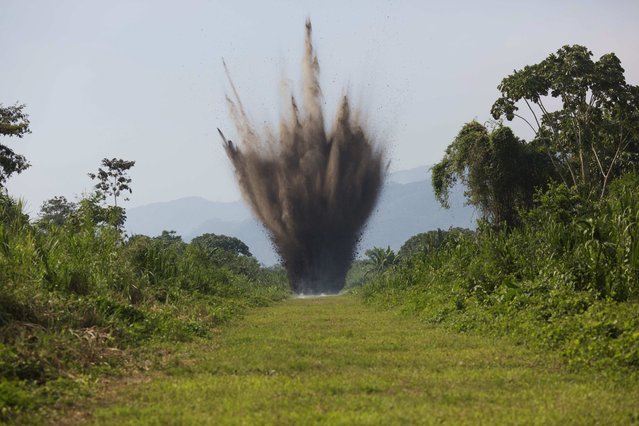
In this September 19, 2014 photo, explosives are detonate by Peruvian counternarcotics forces on a part of a clandestine grassy airstrip in the Apurimac, Ene and Mantaro River Valleys, or VRAEM, the world's No. 1 coca-growing region, in Ayacucho, Peru. The dynamiting of craters by Peruvian security forces into clandestine airstrips cuts into profits but hardly discourages cocaine traffickers who net tens of thousands of dollars with each flight flown from these airstrips. (Photo by Rodrigo Abd/AP Photo)

In this September 19, 2014 photo, explosives are detonate by Peruvian counternarcotics forces on a part of a clandestine grassy airstrip in the Apurimac, Ene and Mantaro River Valleys, or VRAEM, the world's No. 1 coca-growing region, in Ayacucho, Peru. The dynamiting of craters by Peruvian security forces into clandestine airstrips cuts into profits but hardly discourages cocaine traffickers who net tens of thousands of dollars with each flight flown from these airstrips. (Photo by Rodrigo Abd/AP Photo)
Details
23 Sep 2014 12:56:00
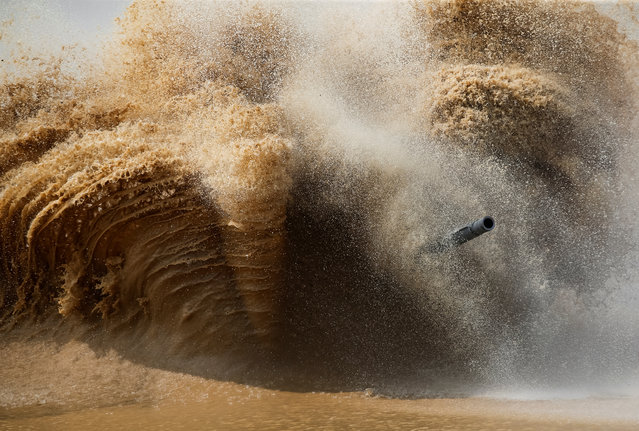
A tank's barrel is seen on the course of the Tank Biathlon competition during the International Army Games 2016 in Alabino, outside Moscow, Russia, July 30, 2016. (Photo by Maxim Zmeyev/Reuters)

A tank's barrel is seen on the course of the Tank Biathlon competition during the International Army Games 2016 in Alabino, outside Moscow, Russia, July 30, 2016. (Photo by Maxim Zmeyev/Reuters)
Details
01 Aug 2016 09:56:00
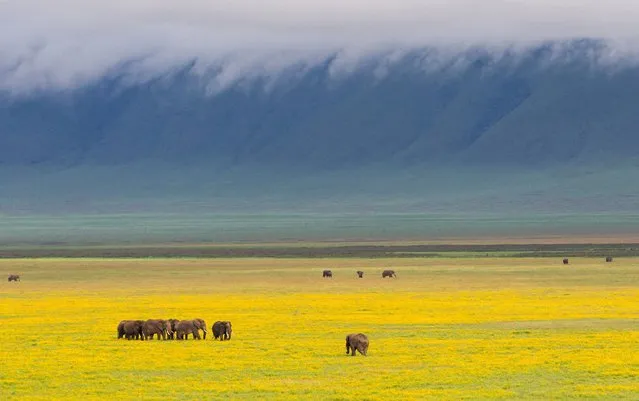
Ngorongoro Crater (Tanzania). At 610m deep and 260 sq km, this is the largest unflooded caldera in the world. A blue-green vision from above it's a haven for engangered wildlife and Maasai livestock. The crater was formed three million years ago when a giant volcano, which could have been as high as Kilimanjaro, exploded and collapsed. The caldera formed the concentric fractures in the crust cracked down to a magma reservoir deep underground. (Photo by John Bryant/Getty Images)

Ngorongoro Crater (Tanzania). At 610m deep and 260 sq km, this is the largest unflooded caldera in the world. A blue-green vision from above it's a haven for engangered wildlife and Maasai livestock. The crater was formed three million years ago when a giant volcano, which could have been as high as Kilimanjaro, exploded and collapsed. The caldera formed the concentric fractures in the crust cracked down to a magma reservoir deep underground. (Photo by John Bryant/Getty Images)
Details
28 Mar 2014 08:08:00