Loading...
Done
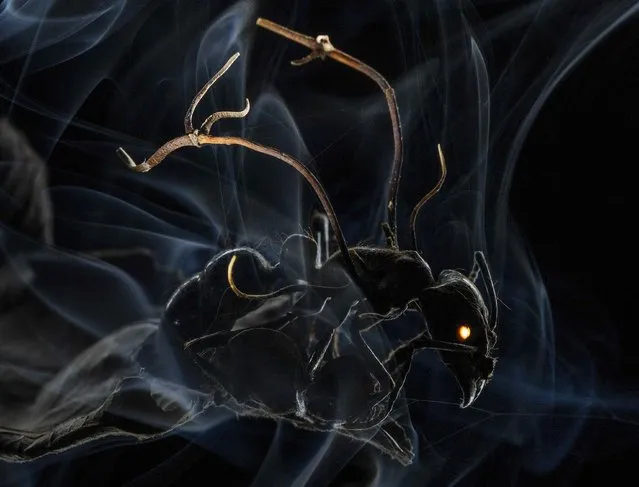
Anand Varma, a U.S. photographer working for the National Geographic, won the First Prize in the Nature Category, Stories, of the 2015 World Press Photo contest with his series of pictures, which includes this one of spores of a fungus landing on an ant, penetrating its exoskeleton and entering its brain, compelling the host to leave its normal habitat on the forest floor and scale a nearby tree, in this picture taken January 22, 2014 and released by the World Press Photo on February 12, 2015. (Photo by Anand Varma/Reuters/National Geographic/World Press Photo)

Anand Varma, a U.S. photographer working for the National Geographic, won the First Prize in the Nature Category, Stories, of the 2015 World Press Photo contest with his series of pictures, which includes this one of spores of a fungus landing on an ant, penetrating its exoskeleton and entering its brain, compelling the host to leave its normal habitat on the forest floor and scale a nearby tree, in this picture taken January 22, 2014 and released by the World Press Photo on February 12, 2015. (Photo by Anand Varma/Reuters/National Geographic/World Press Photo)
Details
15 Feb 2015 15:21:00
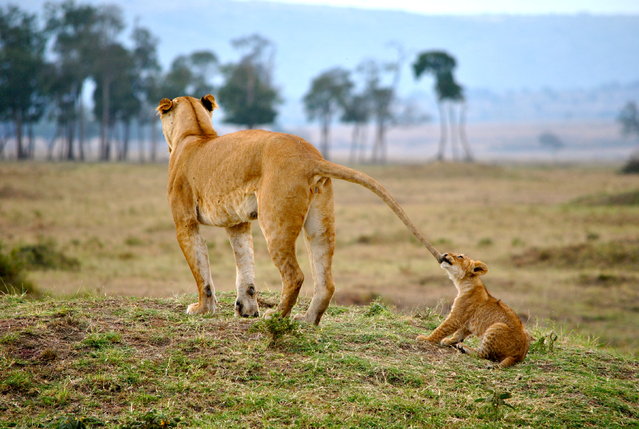
“A Mothers Tail”. A baby cub pulls on his mother's tail to get attention. Photo location: Masai Mara, Kenya. (Photo and caption by Tori Marsh/National Geographic Photo Contest)

“A Mothers Tail”. A baby cub pulls on his mother's tail to get attention. Photo location: Masai Mara, Kenya. (Photo and caption by Tori Marsh/National Geographic Photo Contest)
Details
21 Oct 2014 12:40:00
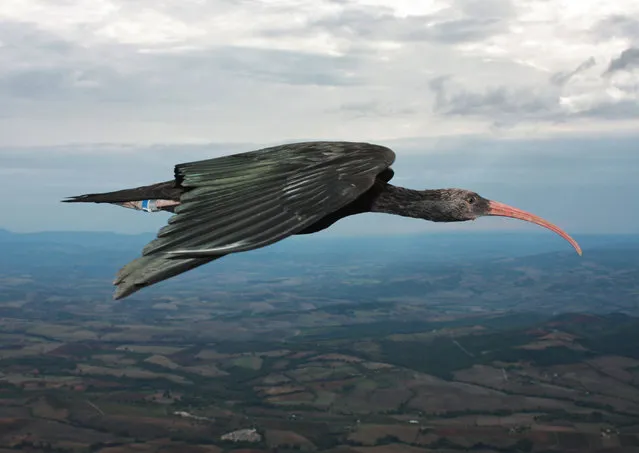
In this undated photo made available by journal Nature on January 15, 2014, a northern bald ibis (Geronticus eremita) flies in Tuscany, Italy. A new study released Wednesday, January 15, 2014 says the birds choreograph the flapping of their wings, getting a boost from an updraft of air in the wake of the flapping wings by flying behind the first bird and off to the side. When a flock of birds take advantage of these aerodynamics, they form a V. (Photo by Markus Unsöld/AP Photo)

In this undated photo made available by journal Nature on January 15, 2014, a northern bald ibis (Geronticus eremita) flies in Tuscany, Italy. A new study released Wednesday, January 15, 2014 says the birds choreograph the flapping of their wings, getting a boost from an updraft of air in the wake of the flapping wings by flying behind the first bird and off to the side. When a flock of birds take advantage of these aerodynamics, they form a V. (Photo by Markus Unsöld/AP Photo)
Details
18 Jan 2014 13:54:00
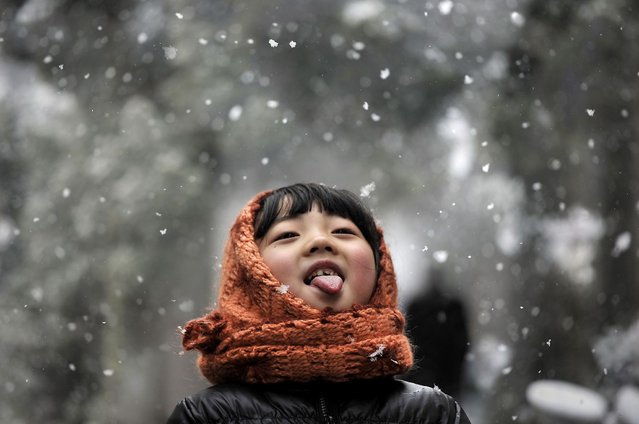
A girl sticks out her tongue during snowfalls on a street in Hefei, Anhui province February 13, 2014. (Photo by Reuters/Stringer)

A girl sticks out her tongue during snowfalls on a street in Hefei, Anhui province February 13, 2014. (Photo by Reuters/Stringer)
Details
15 Feb 2014 12:09:00
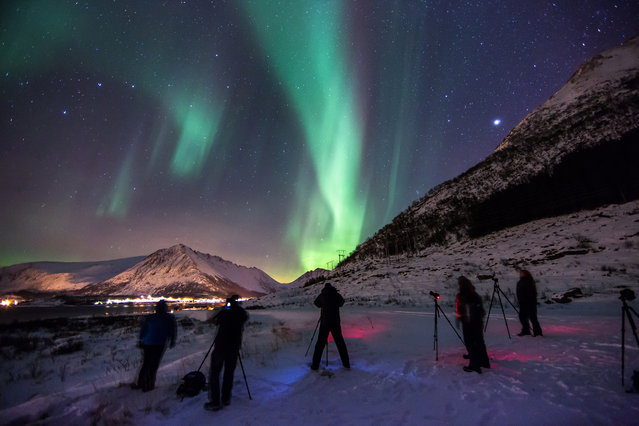
“Aurora Hunters”. Photographers taking part in a photography tour on the Lofoten Islands in Norway, pull over on the side of the road to take a photo of their first ever Aurora Borealis after spotting it from their tour bus. Photo location: Rystad, Lofoten Islands, Norway. (Photo and caption by Mark Gee/National Geographic Photo Contest)

“Aurora Hunters”. Photographers taking part in a photography tour on the Lofoten Islands in Norway, pull over on the side of the road to take a photo of their first ever Aurora Borealis after spotting it from their tour bus. Photo location: Rystad, Lofoten Islands, Norway. (Photo and caption by Mark Gee/National Geographic Photo Contest)
Details
17 Jun 2014 10:08:00
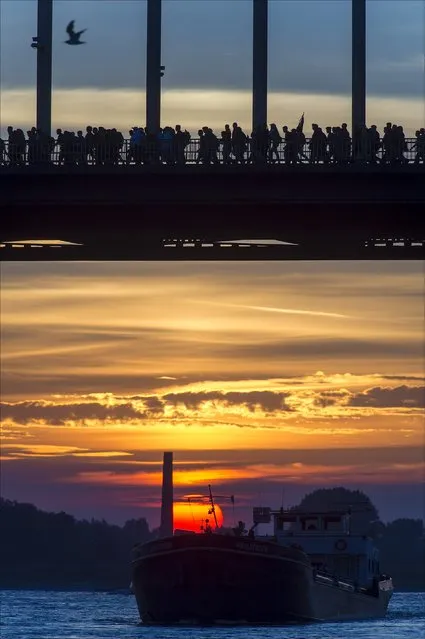
Walkers cross the river Waalbrug during the first day of the 98th annual four-days walking event, the “Vierdaagse” in Nijmegen, Netherlands, July 15, 2014. The “Nijmeegse Vierdaagse” is an annual public four-day field march which is held since 1909 in the third week of July. (Photo by Erik van 't Wout/EPA)

Walkers cross the river Waalbrug during the first day of the 98th annual four-days walking event, the “Vierdaagse” in Nijmegen, Netherlands, July 15, 2014. The “Nijmeegse Vierdaagse” is an annual public four-day field march which is held since 1909 in the third week of July. (Photo by Erik van 't Wout/EPA)
Details
27 Jul 2014 11:11:00
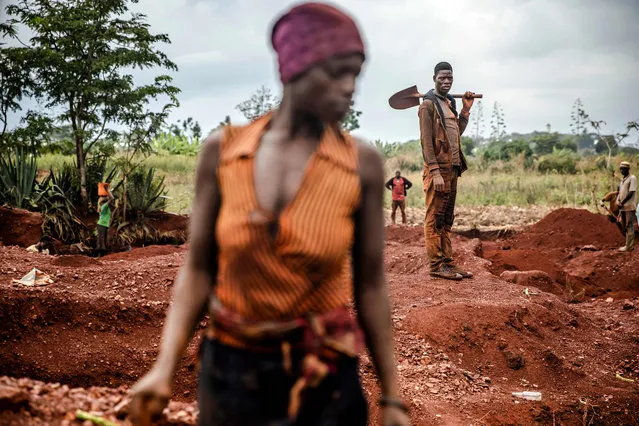
A gold miner observes from the distance how some women miners work at an open-pit gold mine in Nyarugusu, Geita Region, Tanzania on May 27, 2022. Tanzania is a land rich in minerals and one of the main gold producers in Africa, with gold representing more than 90% of the country's mineral exports. Artisanal and small-scale gold mining have culturally and historically relegated women's participation. The extractive sector in Tanzania has historically been a male-dominated industry with high levels of harassment, sеxual abuse, discrimination and misconceptions over women's involvement, and contributions following traditional beliefs. (Photo by Luis Tato/AFP Photo)

A gold miner observes from the distance how some women miners work at an open-pit gold mine in Nyarugusu, Geita Region, Tanzania on May 27, 2022. Tanzania is a land rich in minerals and one of the main gold producers in Africa, with gold representing more than 90% of the country's mineral exports. Artisanal and small-scale gold mining have culturally and historically relegated women's participation. The extractive sector in Tanzania has historically been a male-dominated industry with high levels of harassment, sеxual abuse, discrimination and misconceptions over women's involvement, and contributions following traditional beliefs. (Photo by Luis Tato/AFP Photo)
Details
13 Jun 2022 04:31:00
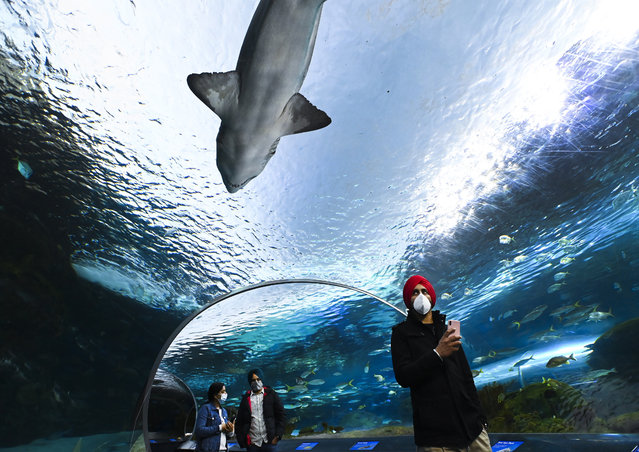
People wear face masks while watching the marine life at Ripley's Aquarium of Canada during the COVID-19 pandemic in Toronto, on Wednesday, October 28, 2020. (Photo by Nathan Denette/The Canadian Press via AP Photo)

People wear face masks while watching the marine life at Ripley's Aquarium of Canada during the COVID-19 pandemic in Toronto, on Wednesday, October 28, 2020. (Photo by Nathan Denette/The Canadian Press via AP Photo)
Details
30 Oct 2020 00:07:00