Loading...
Done
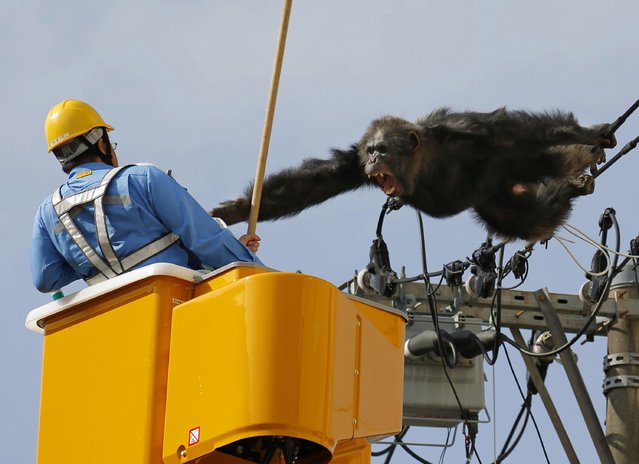
Chacha, the male chimp, screams at a worker in Sendai, northern Japan, Thursday, April 14, 2016 after fleeing from a zoo. The chimpangzee tried desperately to avoid being captured by climbing an electric pole. Chacha was on the loose nearly two hours Thursday after it disappeared from the Yagiyama Zoological Park in Sendai, the city that's hosting finance ministers from the Group of Seven industrialized nations in May. (Photo by Kyodo News via AP Photo)

Chacha, the male chimp, screams at a worker in Sendai, northern Japan, Thursday, April 14, 2016 after fleeing from a zoo. The chimpangzee tried desperately to avoid being captured by climbing an electric pole. Chacha was on the loose nearly two hours Thursday after it disappeared from the Yagiyama Zoological Park in Sendai, the city that's hosting finance ministers from the Group of Seven industrialized nations in May. (Photo by Kyodo News via AP Photo)
Details
15 Apr 2016 11:34:00
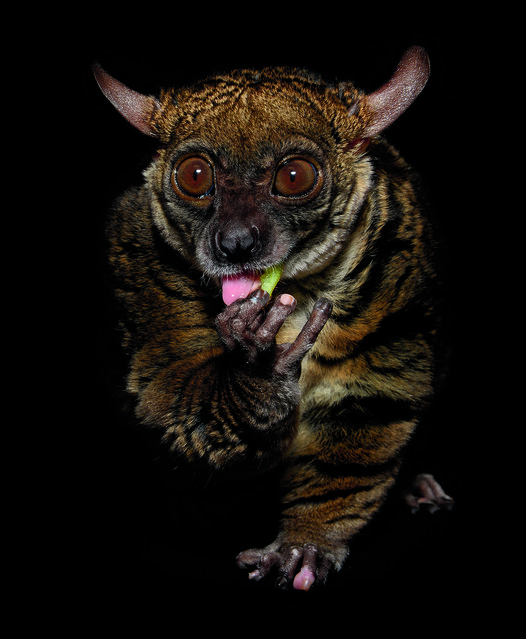
Galagos, more commonly known as bush babies, are tiny African primates with remarkable jumping abilities. Thanks to the elastic energy stored in the tendons of their lower legs, small-eared galagos can jump 6 feet straight up in the air. (Photo by Traer Scott/Chronicle Books)

Galagos, more commonly known as bush babies, are tiny African primates with remarkable jumping abilities. Thanks to the elastic energy stored in the tendons of their lower legs, small-eared galagos can jump 6 feet straight up in the air. (Photo by Traer Scott/Chronicle Books)
Details
07 Sep 2014 12:38:00
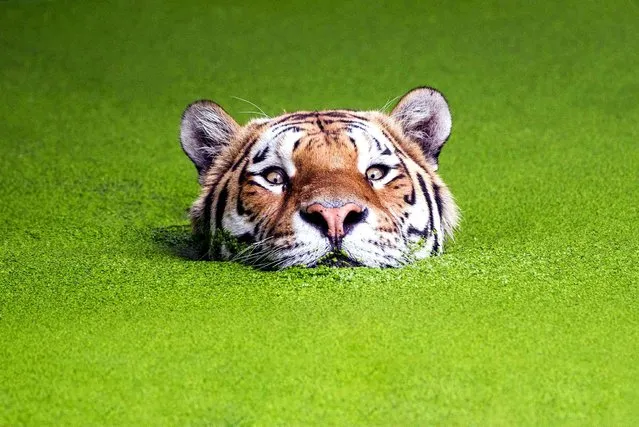
These stunning pictures show a normally vicious tiger calmly swimming in a pool of algae, on Jule 9, 2014. The powerful cat takes a refreshing break by taking a dip in the bright green algae. But it looks like this big cat is scared of getting his head wet as he strains to keep it above the water. After splashing around for a bit the tiger gets out and tries to air-dry with specks of the vegetation dripping off his fur. The striking pictures were taken at Copenhagen zoo by snapper Soren Lundgren Neilson. (Photo by Soren Nielsen/Caters News)

These stunning pictures show a normally vicious tiger calmly swimming in a pool of algae, on Jule 9, 2014. The powerful cat takes a refreshing break by taking a dip in the bright green algae. But it looks like this big cat is scared of getting his head wet as he strains to keep it above the water. After splashing around for a bit the tiger gets out and tries to air-dry with specks of the vegetation dripping off his fur. The striking pictures were taken at Copenhagen zoo by snapper Soren Lundgren Neilson. (Photo by Soren Nielsen/Caters News)
Details
12 Jul 2014 16:58:00
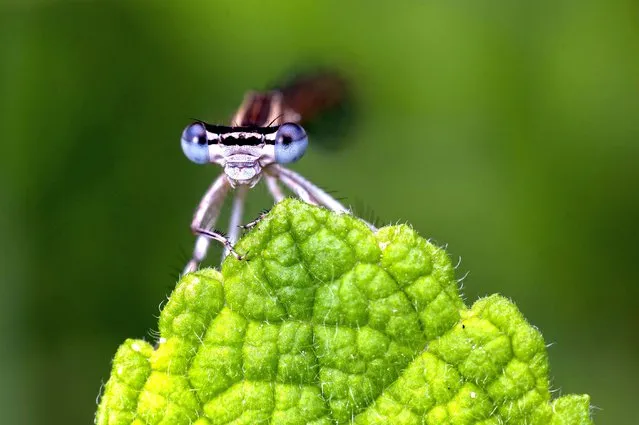
A dragonfly rests on a leaf in Hinojedo, Cantabria, northern Spain, 01 June 2023. (Photo by Pedro Puente Hoyos/EPA/EFE/Rex Features/Shutterstock)

A dragonfly rests on a leaf in Hinojedo, Cantabria, northern Spain, 01 June 2023. (Photo by Pedro Puente Hoyos/EPA/EFE/Rex Features/Shutterstock)
Details
26 Jul 2023 04:23:00
Imagine living in the sea where it is permanently dark, cold, and food is hard to find. For many animals at depth, it may be weeks to months between meals. If you find something to eat, you have to hang on to it

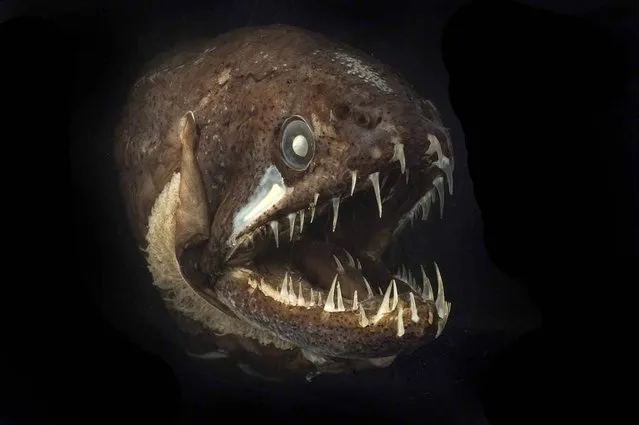
Imagine living in the sea where it is permanently dark, cold, and food is hard to find. For many animals at depth, it may be weeks to months between meals. If you find something to eat, you have to hang on to it. This is why so many deep-sea fishes have lots of big teeth. This dragonfish, spotted off the coast of Australia, even has teeth on its tongue. They would be terrifying animals ... if they weren’t the size of a banana. (Photo by Julian Finn/Museum Victoria)
Details
21 May 2012 12:14:00
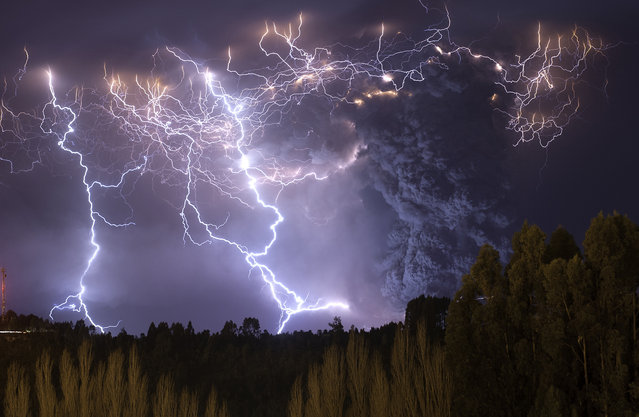
The eruption of Cordon Caulle began on June 4, 2011, located in the Region of Los Rios in Chile. For about 12 months, people and animals became accustomed to living with the daily fall of ash, which also caused problems in the air traffic in South America. The explosions and lightning during first days of the eruption could be seen from hundreds of miles around. This photograph was taken on the second night of eruption from the town of Lago Ranco. (Photo and caption by Francisco Negroni/National Geographic Traveler Photo Contest)

The eruption of Cordon Caulle began on June 4, 2011, located in the Region of Los Rios in Chile. For about 12 months, people and animals became accustomed to living with the daily fall of ash, which also caused problems in the air traffic in South America. The explosions and lightning during first days of the eruption could be seen from hundreds of miles around. This photograph was taken on the second night of eruption from the town of Lago Ranco. (Photo and caption by Francisco Negroni/National Geographic Traveler Photo Contest)

ATTENTION! All pictures are presented in high resolution. To see Hi-Res images – just TWICE click on any picture. In other words, click small picture – opens the BIG picture. Click BIG picture – opens VERY BIG picture.
Details
23 Jun 2013 11:24:00
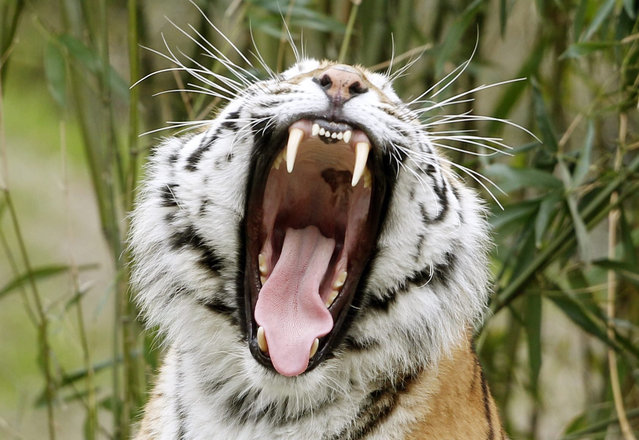
Female Siberian tiger Dasha yawns in the new enclosure at the zoo in Duisburg, Germany, 30 March 2016. The new facility is three times larger than the old one and will be opened to the public on the same day. (Photo by Roland Weihrauch/EPA)

Female Siberian tiger Dasha yawns in the new enclosure at the zoo in Duisburg, Germany, 30 March 2016. The new facility is three times larger than the old one and will be opened to the public on the same day. (Photo by Roland Weihrauch/EPA)
Details
03 Apr 2016 11:38:00
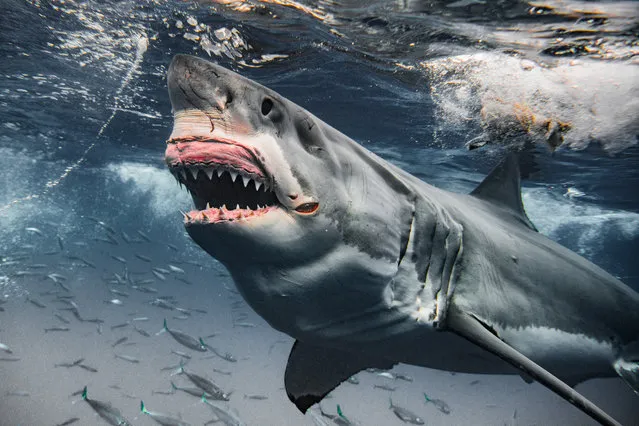
Weighing 1,500lb, Brutus the great white shark lunges at some bait off Guadalupe Island, Mexico in July 2022. (Photo by Euan Rannachan/Media Drum Images/The Times)

Weighing 1,500lb, Brutus the great white shark lunges at some bait off Guadalupe Island, Mexico in July 2022. (Photo by Euan Rannachan/Media Drum Images/The Times)
Details
18 Apr 2023 04:33:00