Loading...
Done
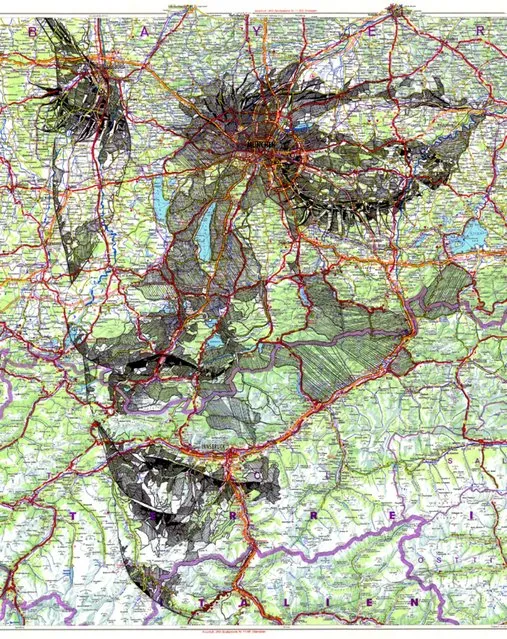
Ink on a 1977 road map of Germany. (Photo by Ed Fairburn/Rex Features)

A talented artist has created breathtaking intimate portraits by using detailed maps of the world as his canvas. Cardiff-based illustrator, Ed Fairburn, combines the patchwork of roads, terrains and rivers to for his unique sketches. Photo: Ink on a 1977 road map of Germany. (Photo by Ed Fairburn/Rex Features)
Details
07 Jun 2013 11:04:00
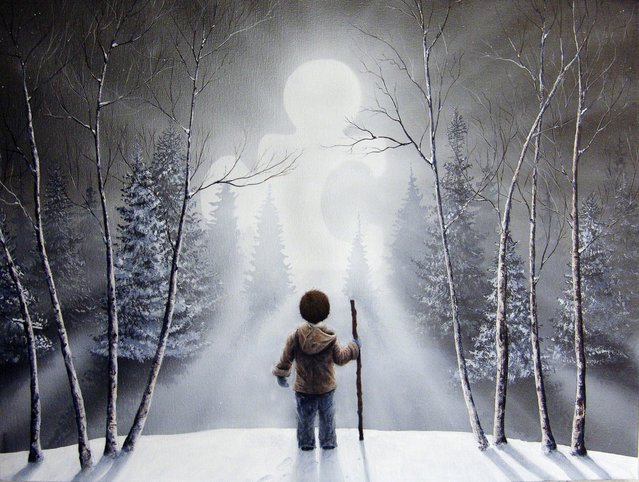
 Surreal Paintings by Robert Dowling Jr

Maine-based Robert Dowling Jr. creates wonderfully whimsical stories with a slightly surreal touch. The self-taught artist, who works primarily in acrylics and oils, often paints characters with their faces covered or turned away. Love art like this that both children and adults can enjoy in their own unique way.
Details
10 Jul 2013 13:37:00
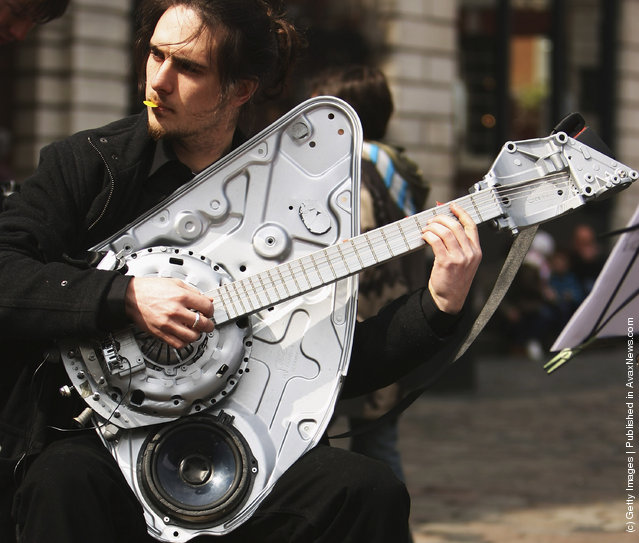
Music instruments made of car parts

Musicians from the Academy of Contemporary Music play using instruments made of car parts during a photocall on April 16, 2008 in London, England. Ford's unique orchestra made up entirely of Ford Focus car parts. (Photo by Daniel Berehulak/Getty Images)
Details
27 Sep 2011 14:35:00
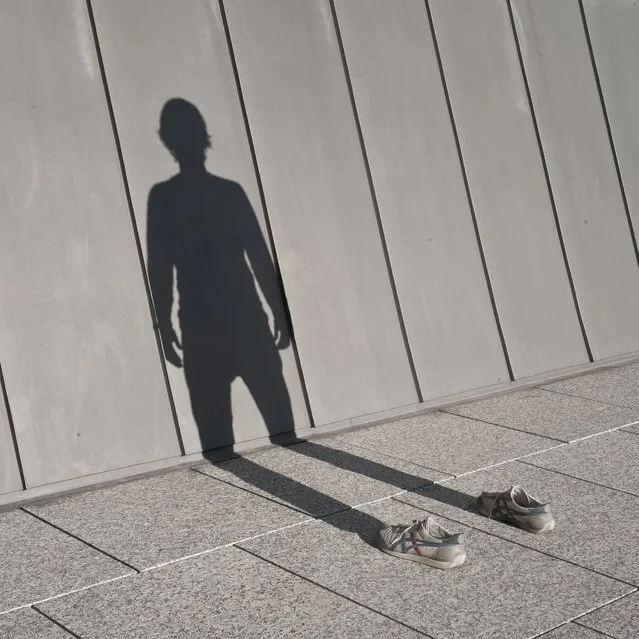
I’m Not There by Pol Ubeda Hervas

Photographer’s Pol Ubeda Hervas perspective in his “I’m not There” series, is going against the flow. While the focus of modern photography is set on the human interaction with his surroundings, Hervas changes thing up by capturing the human absence from said surroundings. The concept behind the series is deeply metaphorical, visual food for though reflecting the situations where the change is irreversible and we cannot even recognize ourselves.
Details
04 Oct 2013 11:58:00
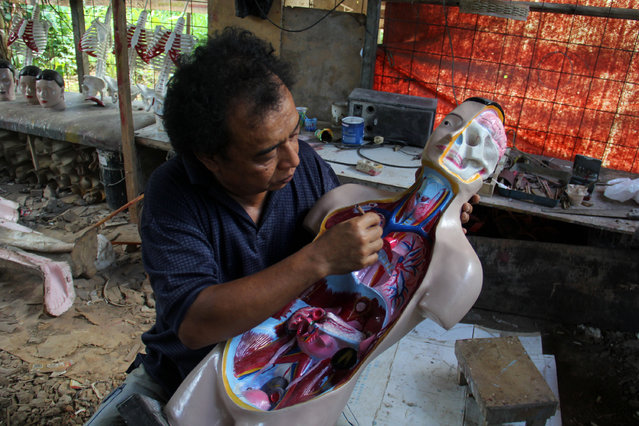
A craftsman works on making human anatomy mannequins on April 23, 2014 in Depok, West Java, Indonesia. The mannequins are made from fiberglass and will be used in schools, hospitals and laboratories. (Photo by Nurcholis Anhari Lubis/Getty Images)

A craftsman works on making human anatomy mannequins on April 23, 2014 in Depok, West Java, Indonesia. The mannequins are made from fiberglass and will be used in schools, hospitals and laboratories. (Photo by Nurcholis Anhari Lubis/Getty Images)
Details
24 Apr 2014 08:54:00
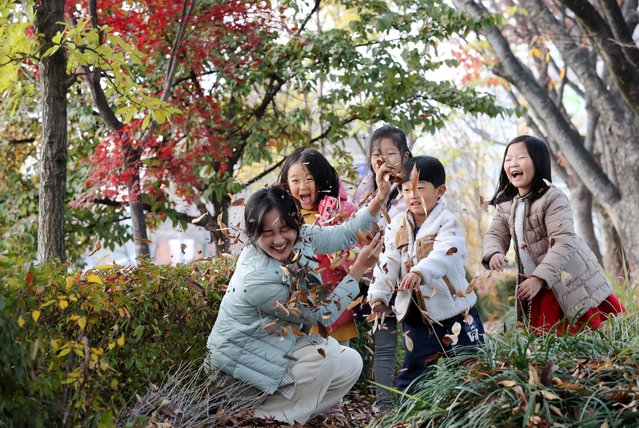
On the November 24, 2025, children are making human faces by collecting fallen leaves in the forest in front of the Yuseong-gu Office in Daejeon. (Photo by Shin Hyeon-jong)

On the November 24, 2025, children are making human faces by collecting fallen leaves in the forest in front of the Yuseong-gu Office in Daejeon. (Photo by Shin Hyeon-jong)
Details
19 Dec 2025 09:13:00
Shaolin boys practice kung fu in the sweltering heat during the zen shaolin music ceremony at shaolin temple, Dengfeng, Henan province, China on August 4, 2019. Shaolin unique skills include: shaolin arhat formation, three gun sashimi, shaolin stick, shaolin stone lock skill, iron hand splitting bricks, water training, fist and foot sparring. (Photo by Sipa Asia/Rex Features/Shutterstock)

Shaolin boys practice kung fu in the sweltering heat during the zen shaolin music ceremony at shaolin temple, Dengfeng, Henan province, China on August 4, 2019. Shaolin unique skills include: shaolin arhat formation, three gun sashimi, shaolin stick, shaolin stone lock skill, iron hand splitting bricks, water training, fist and foot sparring. (Photo by Sipa Asia/Rex Features/Shutterstock)
Details
07 Aug 2019 00:05:00
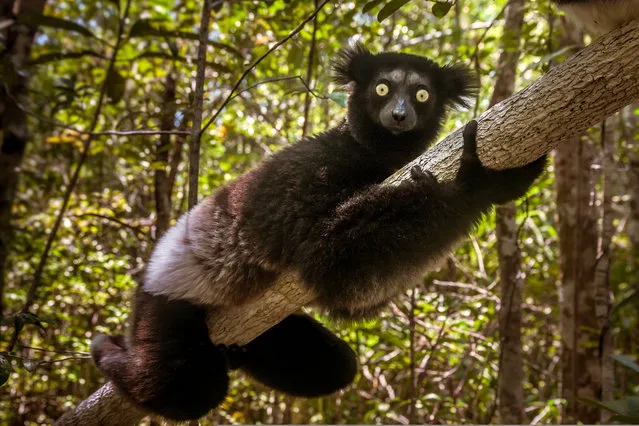
The secretive indri (Indri indri) of Madagascar, the largest living lemur. It is also critically endangered and highly evolutionarily distinct with no close relatives, which makes its branch one of most precarious on the mammal evolutionary tree. In the likely event that the indri goes extinct, we will lose 19m years of unique evolutionary history from the mammal tree of life. (Photo by Pierre-Yves Babelon/Aarhus University)

The secretive indri (Indri indri) of Madagascar, the largest living lemur. It is also critically endangered and highly evolutionarily distinct with no close relatives, which makes its branch one of most precarious on the mammal evolutionary tree. In the likely event that the indri goes extinct, we will lose 19m years of unique evolutionary history from the mammal tree of life. (Photo by Pierre-Yves Babelon/Aarhus University)
Details
18 Nov 2018 00:02:00