France fan before the Russia 2018 World Cup Group C football match between Denmark and France at the Luzhniki Stadium in Moscow on June 26, 2018. (Photo by Axel Schmidt/Reuters)
Cosplayers dressed as a Battle Sister and an Ultramarine from Warhammer 40,000 pose during Los Angeles Comic Con at Los Angeles Convention Center on December 03, 2023 in Los Angeles, California. (Photo by Chelsea Guglielmino/Getty Images)
Members of Uganda Soft Ground Wrestling perform for attendees during the third day of Nyege Nyege Festival in Jinja, on November 16, 2024. The four-day popular Nyege Nyege Festival in Jinja, Uganda, gathers over 10,000 revelers and artists from across Africa for a celebration of music and culture, though it has faced criticism from some religious leaders who view it as morally controversial. (Photo by Badru Katumba/AFP Photo)
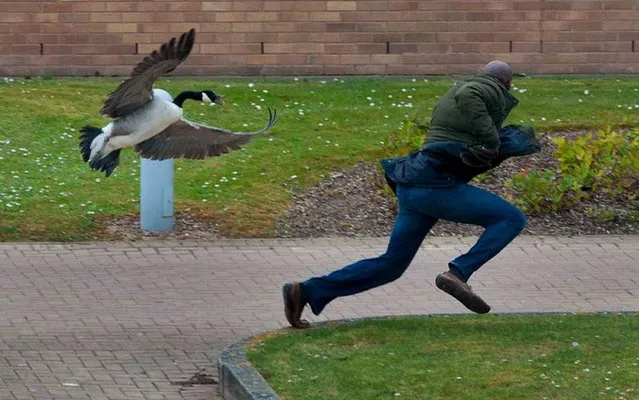
A goose has terrorized students at the University of Warwick, Coventry, UK, on May 22, 2013. The bird built its nest near a block of student apartments and attacks anyone who goes near the nest. (Photo by Caters News/The Grosby Group)
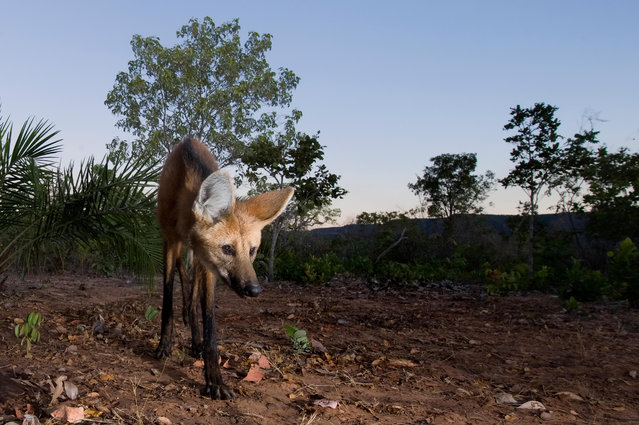
Global wildlife populations will decline by 67% by 2020 unless urgent action is taken to reduce human impact on species and ecosystems, warns the biennial Living Planet Index report from WWF (World Wide Fund for Nature) and ZSL (Zoological Society of London). From elephants to eels, here are some of the wildlife populations most affected by human activity. Here: The maned wolf is among the large mammals in the Brazilian Cerrado that are threatened by the increasing conversion of grasslands into farmland for grazing and growing crops. (Photo by Ben Cranke/Nature Picture Library/Alamy Stock Photo)
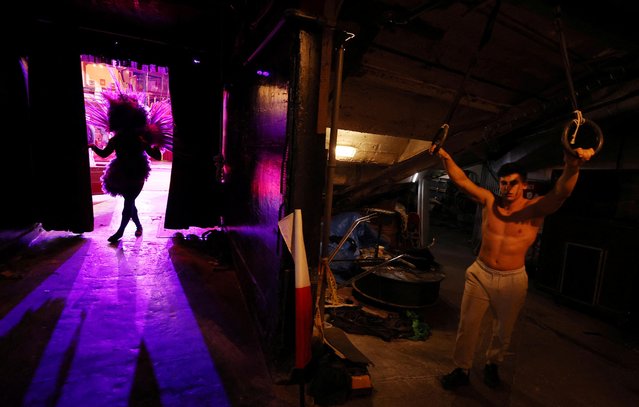
Acrobat Indira Avila leaves the ring as performer Glenn Falco warms up backstage ahead of a dress rehearsal at the newly renovated Blackpool Tower Circus, in Blackpool, Britain, March 28, 2022. (Photo by Phil Noble/Reuters)