Loading...
Done
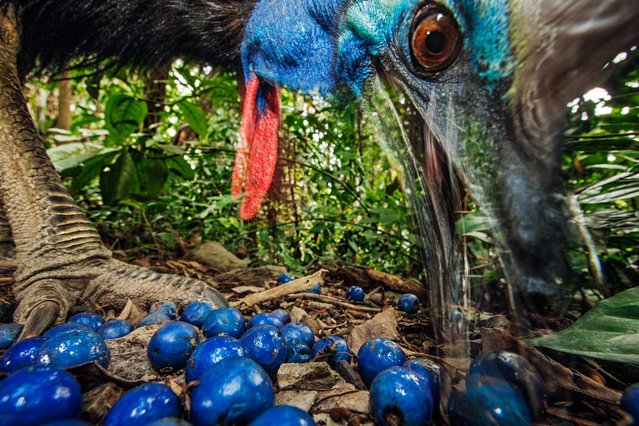
“Cassowaries are large, flightless birds related to emus and (more distantly) to ostriches, rheas, and kiwis”, writes Olivia Judson in the September issue of National Geographic magazine. (Photo by Christian Ziegler/National Geographic)

“Cassowaries are large, flightless birds related to emus and (more distantly) to ostriches, rheas, and kiwis”, writes Olivia Judson in the September issue of National Geographic magazine. How large? People-size: Adult males stand well over five foot five and top 110 pounds. Females are even taller, and can weigh more than 160 pounds. Dangerous when roused, they’re shy and peaceable when left alone. But even birds this big and tough are prey to habitat loss. The dense New Guinea and Australia rain forests where they live have dwindled. Today cassowaries might number 1,500 to 2,000. And because they help shape those same forests – by moving seeds from one place to another – “if they vanish”, Judson writes, “the structure of the forest would gradually change” too. (Photo by Christian Ziegler/National Geographic)
Details
06 Jan 2014 12:21:00
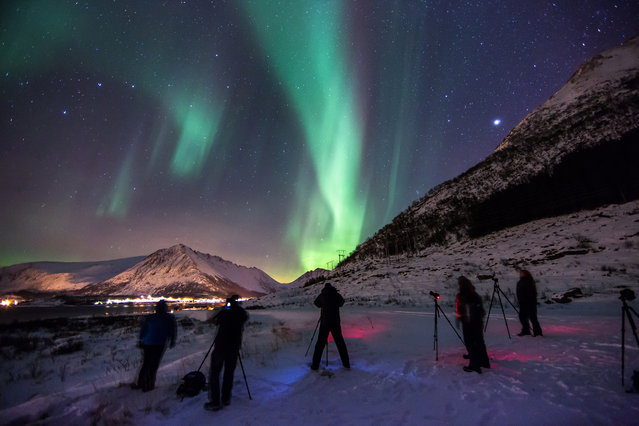
“Aurora Hunters”. Photographers taking part in a photography tour on the Lofoten Islands in Norway, pull over on the side of the road to take a photo of their first ever Aurora Borealis after spotting it from their tour bus. Photo location: Rystad, Lofoten Islands, Norway. (Photo and caption by Mark Gee/National Geographic Photo Contest)

“Aurora Hunters”. Photographers taking part in a photography tour on the Lofoten Islands in Norway, pull over on the side of the road to take a photo of their first ever Aurora Borealis after spotting it from their tour bus. Photo location: Rystad, Lofoten Islands, Norway. (Photo and caption by Mark Gee/National Geographic Photo Contest)
Details
17 Jun 2014 10:08:00
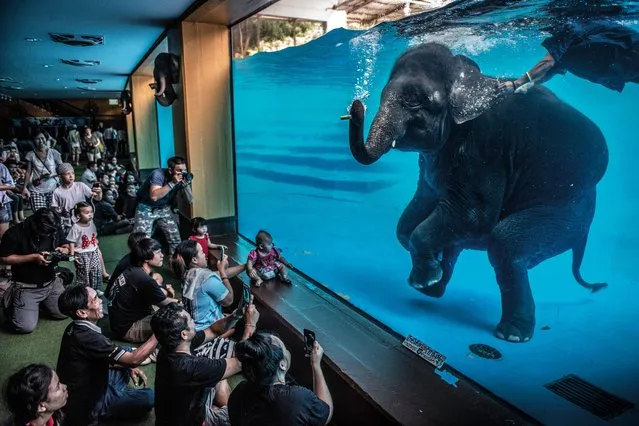
Winner, photojournalism. Elephant in the room, by Adam Oswell, Australia Zoo. Visitors watch a young elephant performing underwater. Oswell was disturbed by this scene, and organisations concerned with the welfare of captive elephants say performances like this encourage unnatural behaviour. In Thailand, there are now more elephants in captivity than in the wild. With the Covid pandemic causing tourism to collapse, elephant sanctuaries are becoming overwhelmed with animals that can no longer be looked after by their owners. (Photo by Adam Oswell/Wildlife Photographer of the Year 2021)

Winner, photojournalism. Elephant in the room, by Adam Oswell, Australia Zoo. Visitors watch a young elephant performing underwater. Oswell was disturbed by this scene, and organisations concerned with the welfare of captive elephants say performances like this encourage unnatural behaviour. In Thailand, there are now more elephants in captivity than in the wild. With the Covid pandemic causing tourism to collapse, elephant sanctuaries are becoming overwhelmed with animals that can no longer be looked after by their owners. (Photo by Adam Oswell/Wildlife Photographer of the Year 2021)
Details
30 Oct 2021 08:40:00
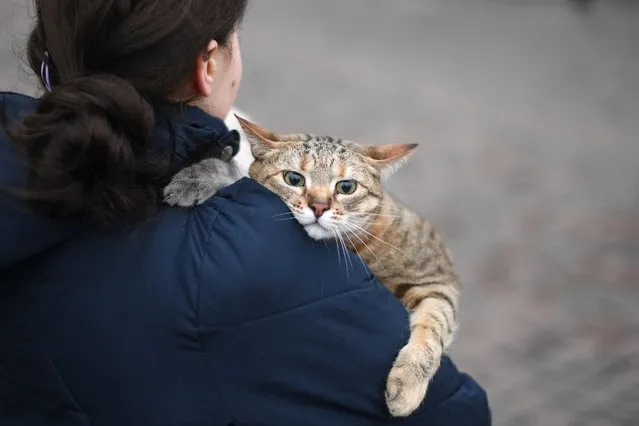
A woman carries her cat as she walks near Kyiv-Pasazhyrskyi railway station in Kyiv in the morning of February 24, 2022. Air raid sirens rang out in downtown Kyiv today as cities across Ukraine were hit with what Ukrainian officials said were Russian missile strikes and artillery. (Photo by Daniel Leal/AFP Photo)

A woman carries her cat as she walks near Kyiv-Pasazhyrskyi railway station in Kyiv in the morning of February 24, 2022. Air raid sirens rang out in downtown Kyiv today as cities across Ukraine were hit with what Ukrainian officials said were Russian missile strikes and artillery. (Photo by Daniel Leal/AFP Photo)
Details
25 Feb 2022 05:46:00
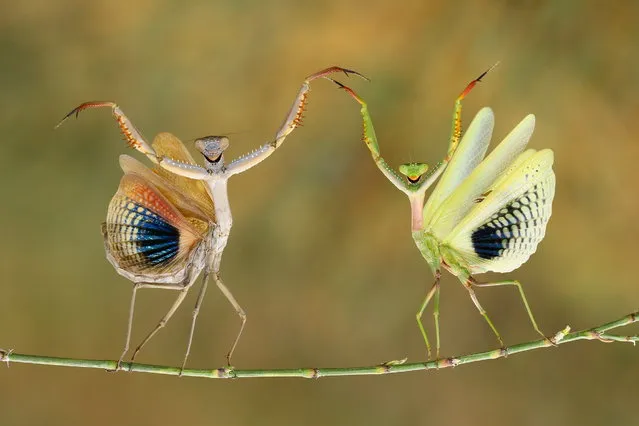
“Show Time”. It's a normal behavior of mantis. They're doing defence. When they're afraid of; raising their arms and spreading their wings. They looks like smiling dancer. Photo location: Nicosia, Cyprus. (Photo and caption by Hasan Baglar/National Geographic Photo Contest)

“Show Time”. It's a normal behavior of mantis. They're doing defence. When they're afraid of; raising their arms and spreading their wings. They looks like smiling dancer. Photo location: Nicosia, Cyprus. (Photo and caption by Hasan Baglar/National Geographic Photo Contest)
Details
28 Oct 2014 13:01:00
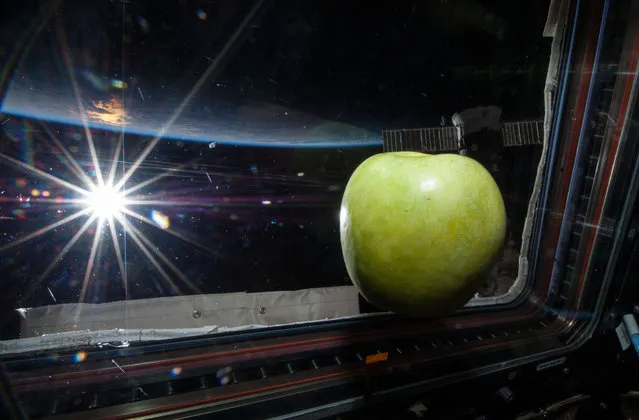
Viewing The Earth From Space

Despite any political differences between the United States and Russia, the space agencies of the two countries continue their cooperative work in Earth's orbit, aboard the International Space Station. Apart from the research being done in microgravity, ISS crew members continue to send back amazing images of our home world, photographed from low Earth orbit. Gathered here are recent images of Earth from aboard the ISS, and from a handful of other NASA satellites.
Details
01 Jun 2014 12:36:00
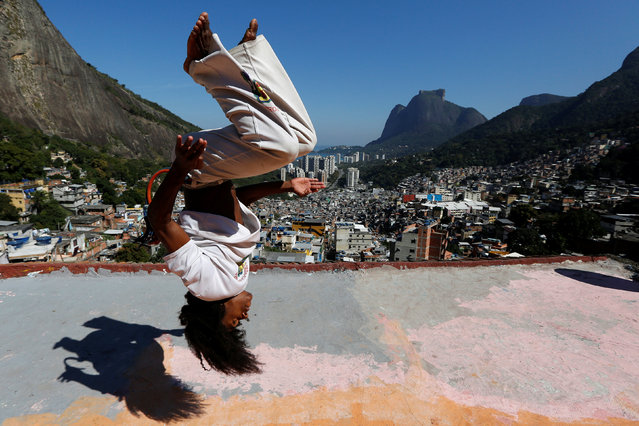
A member of the Acorda Capoeira (Awaken Capoeira) group performs on a rooftop in the Rocinha favela in Rio de Janeiro, Brazil, July 24, 2016. (Photo by Bruno Kelly/Reuters)

A member of the Acorda Capoeira (Awaken Capoeira) group performs on a rooftop in the Rocinha favela in Rio de Janeiro, Brazil, July 24, 2016. In a favela with a history of violence between police and drug gangs, or armed battles between traffickers themselves, capoeira is an outlet that gives kids a sense of community – its practice a collective exercise blending characteristics of drum circles, sparring and tag-team gymnastics. (Photo by Bruno Kelly/Reuters)
Details
30 Jul 2016 11:11:00
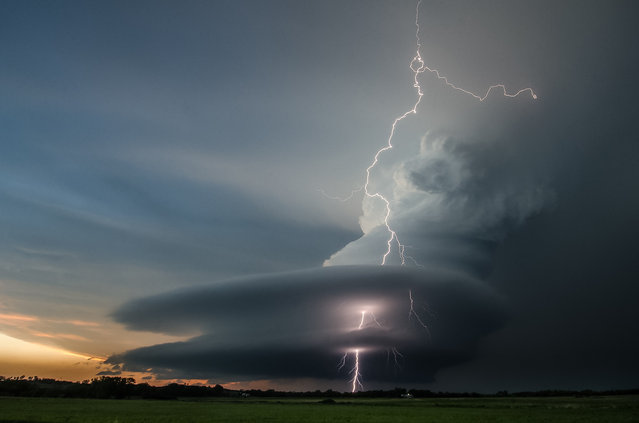
“Strike Through The Mothership”. Every May for the last 3 years I have driven down to Tornado Alley to capture some amazing storms. This supercell held so much promise to drop a tornado but one small shift in the atmosphere and all that it produced was an extreme lightning show. Photo location: Broken Bow, Nebraska. (Photo and caption by Vanessa Neufeld/National Geographic Photo Contest)

“Strike Through The Mothership”. Every May for the last 3 years I have driven down to Tornado Alley to capture some amazing storms. This supercell held so much promise to drop a tornado but one small shift in the atmosphere and all that it produced was an extreme lightning show. Photo location: Broken Bow, Nebraska. (Photo and caption by Vanessa Neufeld/National Geographic Photo Contest)
Details
06 May 2014 09:37:00