Loading...
Done
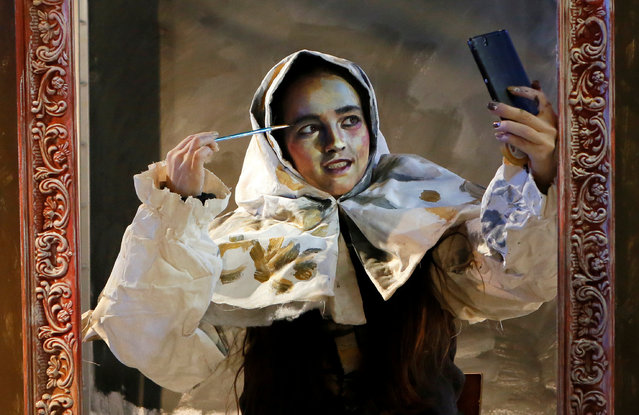
Russian artist Maria Gasanova adjusts her make-up as she finishes “The Siberian Beauty” body art work from her “The Alive Painting” series before the opening ceremony of the Cultural Universiade as part of preparation for the 2019 Winter Universiade Krasnoyarsk, in the Siberian city of Krasnoyarsk, Russia, December 9, 2016. (Photo by Ilya Naymushin/Reuters)

Russian artist Maria Gasanova adjusts her make-up as she finishes “The Siberian Beauty” body art work from her “The Alive Painting” series before the opening ceremony of the Cultural Universiade as part of preparation for the 2019 Winter Universiade Krasnoyarsk, in the Siberian city of Krasnoyarsk, Russia, December 9, 2016. (Photo by Ilya Naymushin/Reuters)
Details
10 Dec 2016 09:06:00
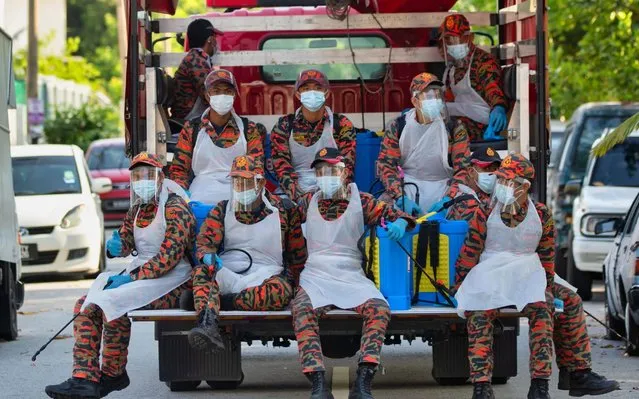
Malaysian firemen make their way to a designated area to spray disinfectant, in an effort to combat coronavirus and COVID-19, at the entrance to a school in Kuala Lumpur, Malaysia, 14 April 2020. According to media reports, Malaysia has confirmed over 4,000 cases of coronavirus and COVID-19. (Photo by Ahmad Yusni/EPA/EFE/Rex Features/Shutterstock)

Malaysian firemen make their way to a designated area to spray disinfectant, in an effort to combat coronavirus and COVID-19, at the entrance to a school in Kuala Lumpur, Malaysia, 14 April 2020. According to media reports, Malaysia has confirmed over 4,000 cases of coronavirus and COVID-19. (Photo by Ahmad Yusni/EPA/EFE/Rex Features/Shutterstock)
Details
16 Apr 2020 00:07:00
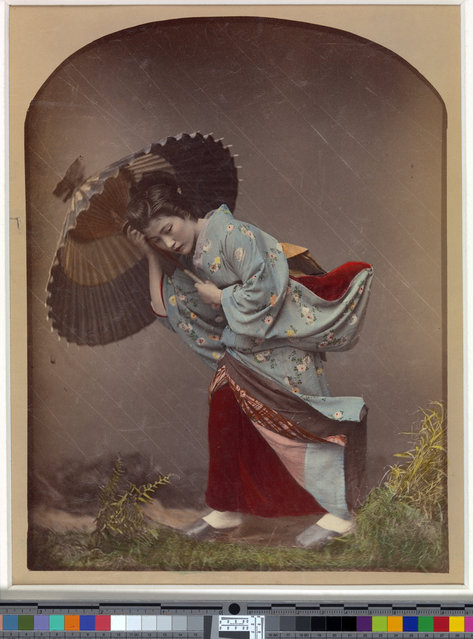
“Woman with Umbrella in Rain” by Raimund von Stillfried. Artist: Kusakabe Kimbei (Japanese, 1841–1934), 1870s. (Photo courtesy of The Metropolitan Museum of Art)

“Woman with Umbrella in Rain” by Raimund von Stillfried. Artist: Kusakabe Kimbei (Japanese, 1841–1934), 1870s. Commercial photography studios in Meiji-era Japan were renowned for the subtlety and refinement of their coloring techniques. This hand-tinted image of a young woman caught in a heavy rainstorm achieved its naturalistic effect by knitting together multiple strands of artifice: the greenery in the foreground was a studio prop; the flaps of the kimono were suspended by thin wires to create the impression of a strong wind; and long, diagonal marks were made on the negative to suggest streaks of rain. (Photo courtesy of The Metropolitan Museum of Art)
Details
12 May 2013 10:13:00
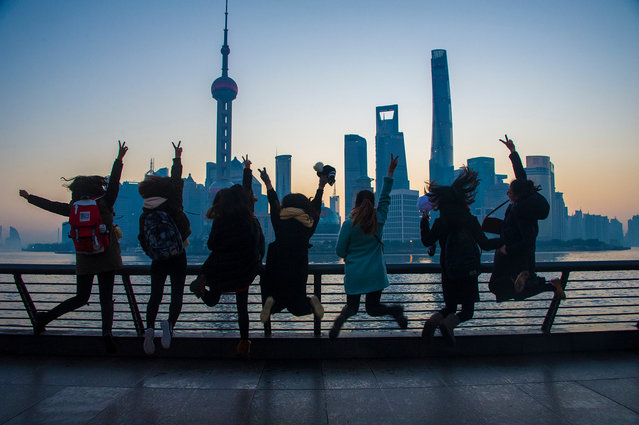
People view the sunrise scene at the Bund in Shanghai, east China, January 1, 2017. (Photo by Wang Hechun/Xinhua/Barcroft Images)

People view the sunrise scene at the Bund in Shanghai, east China, January 1, 2017. (Photo by Wang Hechun/Xinhua/Barcroft Images)
Details
02 Jan 2017 13:21:00
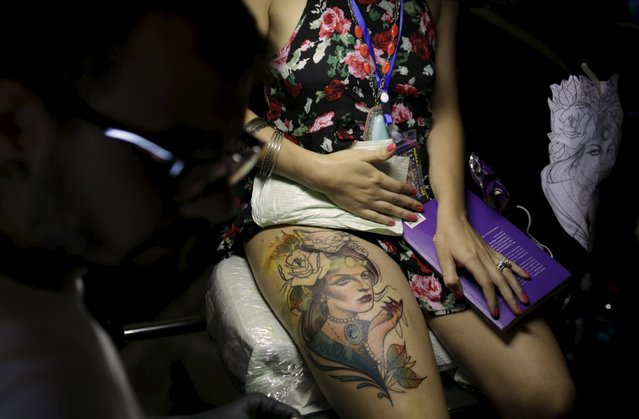
A woman sits as she gets a tattoo on her leg during the annual Panama City Ink Fest in Panama City August 16, 2015. (Photo by Carlos Jasso/Reuters)

A woman sits as she gets a tattoo on her leg during the annual Panama City Ink Fest in Panama City August 16, 2015. (Photo by Carlos Jasso/Reuters)
Details
18 Aug 2015 14:40:00
A Ukrainian woman begs Ukrainian President Petro Poroshenko to stop the bombing in Donetsk after shell hit the residential area where she lives, killing two civilians in Donetsk's Kyibishevsky district, on January 29, 2015. (Photo by Manu Brabo/AFP Photo)

A Ukrainian woman begs Ukrainian President Petro Poroshenko to stop the bombing in Donetsk after shell hit the residential area where she lives, killing two civilians in Donetsk's Kyibishevsky district, on January 29, 2015. (Photo by Manu Brabo/AFP Photo)
Details
01 Feb 2015 10:57:00
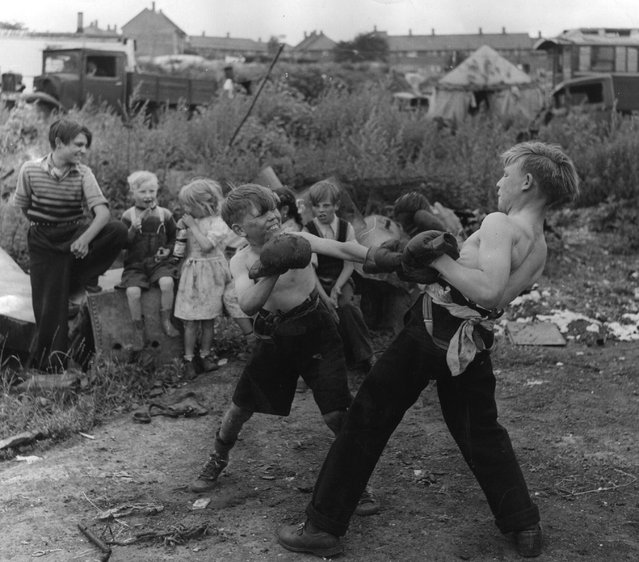
The unromantic gypsies. Children boxing in a gypsy camp in Kent, England on July 1, 1951. Like all boys these gypsy lads like to try their hand at boxing. Encouraged by their friends they fight it out on Corke's Meadow. Few Romanies now live a life of wandering romance. Most are like the three hundred squatters of Corke's Meadow, Kent, which is part of a “gypsy problem” that involves about 100,000 today. Of those about 25,000 can be rightly called gypsies, the rest are Mumpers and Posh-rats and Hobos. Corke's Meadow has both kinds. “Picture Post” cameraman Bert Hardy photographs the Corke's Meadow gypsies in their encampment. (Photo by Hulton-Deutsch Collection/Corbis via Getty Images)

The unromantic gypsies. Children boxing in a gypsy camp in Kent, England on July 1, 1951. Like all boys these gypsy lads like to try their hand at boxing. Encouraged by their friends they fight it out on Corke's Meadow. Few Romanies now live a life of wandering romance. Most are like the three hundred squatters of Corke's Meadow, Kent, which is part of a “gypsy problem” that involves about 100,000 today. Of those about 25,000 can be rightly called gypsies, the rest are Mumpers and Posh-rats and Hobos. Corke's Meadow has both kinds. “Picture Post” cameraman Bert Hardy photographs the Corke's Meadow gypsies in their encampment. (Photo by Hulton-Deutsch Collection/Corbis via Getty Images)
Details
12 Mar 2017 00:01:00
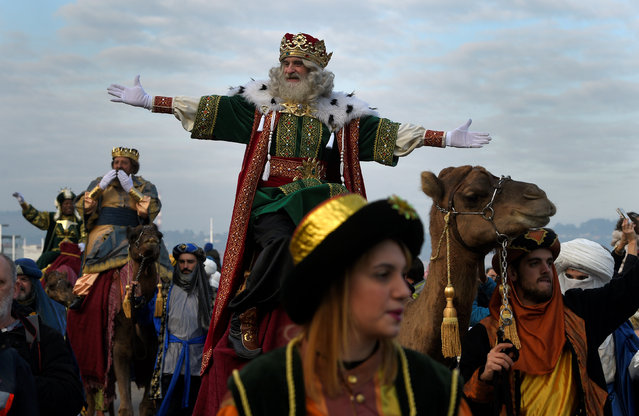
A man dressed as one of the Three Kings greets people during the Epiphany parade in Gijon, Spain January 5, 2017. (Photo by Eloy Alonso/Reuters)

A man dressed as one of the Three Kings greets people during the Epiphany parade in Gijon, Spain January 5, 2017. (Photo by Eloy Alonso/Reuters)
Details
06 Jan 2017 13:33:00