Vanessa Low of Team Australia makes a jump in the women's long-jump T63 final at Stade de France, during the 2024 Paralympics, on September 5, 2024. (Photo by Umit Bektas/Reuters)
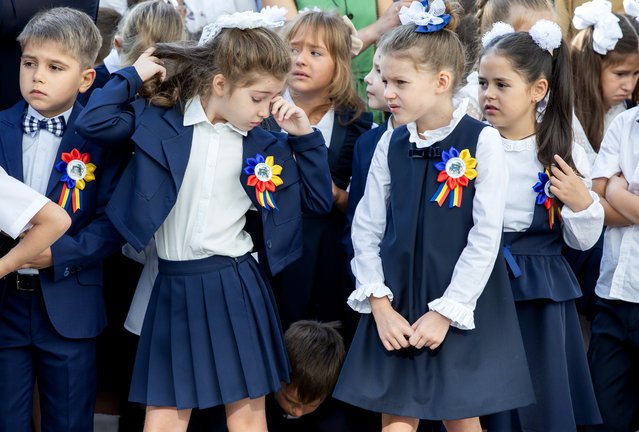
A little girl rubs her tired eyes during the first day at the lyceum named after Moldovan writer Gheorghe Asachi in Chisinau on September 2, 2024. (Photo by Dumitru Doru/Radio Free Europe/Radio Liberty)
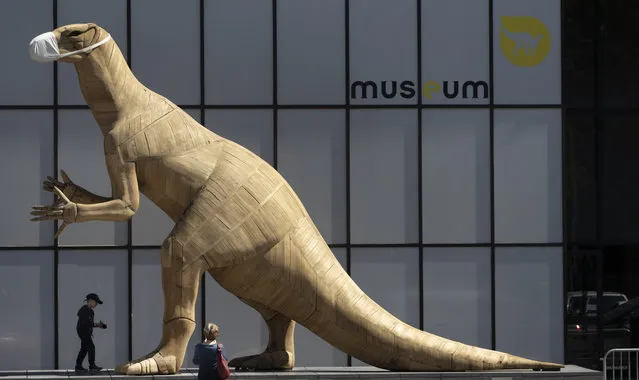
A boy walks by a model of a dinosaur wearing a face mask, during a partial lockdown to prevent the spread of the coronavirus, at the Museum of Natural History in Brussels, Tuesday, May 19, 2020. Museums are hesitantly starting to reopen as the coronavirus lockdown measures are relaxed, yet experts say that one in eight in the world could potentially face permanent closure because of the pandemic. (Photo by Virginia Mayo/AP Photo)
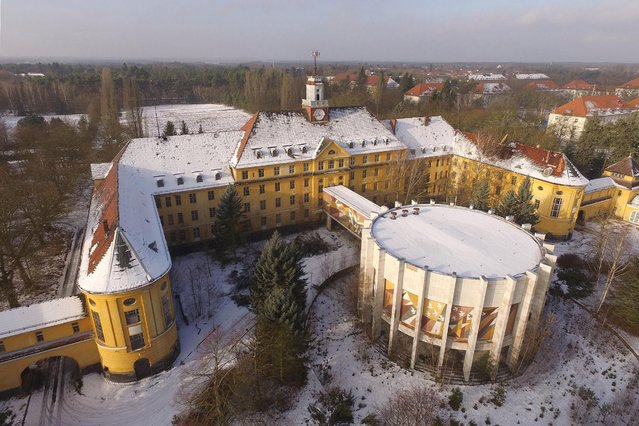
In this aerial view the officers' building and an auditorium stand at the former Soviet military base on January 26, 2017 in Wuensdorf, Germany. Wuensdorf, once called “The Forbidden City”, was the biggest base for the Soviet armed forces in communist East Germany from 1945 until the last Soviet troops left in the early 1990s following the end of the Cold War and the reunification of Germany. (Photo by Sean Gallup/Getty Images)
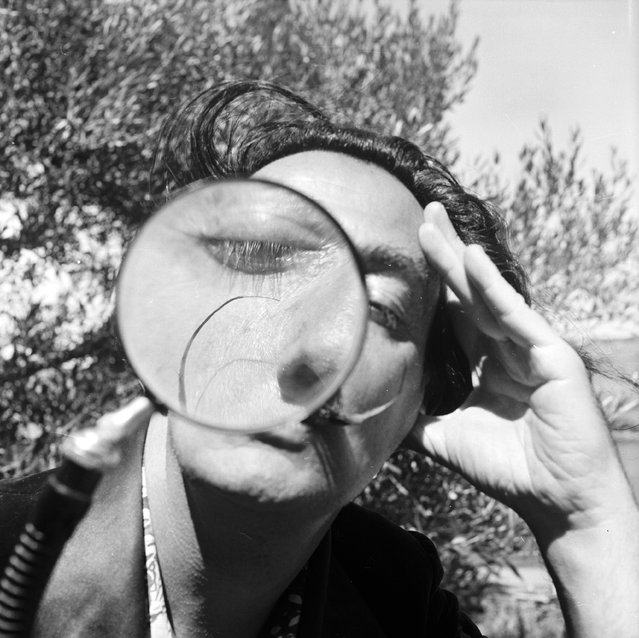
Spanish surrealist artist Salvador Dali (1904–1989) viewing the camera through a magnifying glass at his home in Cadaques on the Spanish Costa Brava, 1955. (Photo by Charles Hewitt). P.S. All pictures are presented in high resolution.
American rapper Saweetie and Quavo seen leaving Boa Steakhouse in West Hollywood, CA. on July 19, 2020. The couple appeared to enjoy dinner and posted a pda filled Instagram story at the restaurant. Saweetie and Quavo looked stylish as they made their way to their car. (Photo by Backgrid USA)
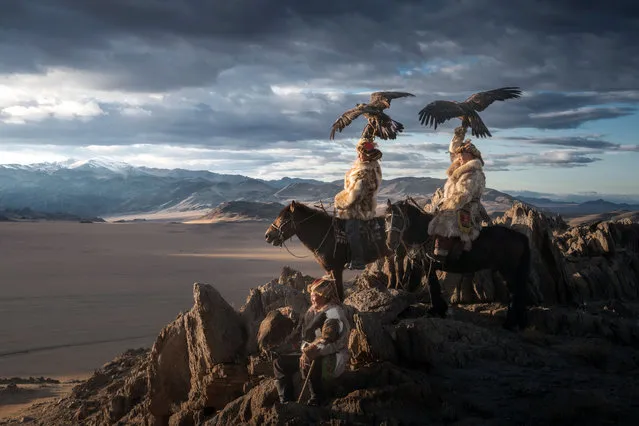
These stunning photographs of the world’s last remaining Mongolian eagle keepers show the incredible bond between man and bird. The images were taken by photography tour guide Daniel Kordan, 29, in September 2018. (Photo by Daniel Kordan/Caters News Agency)
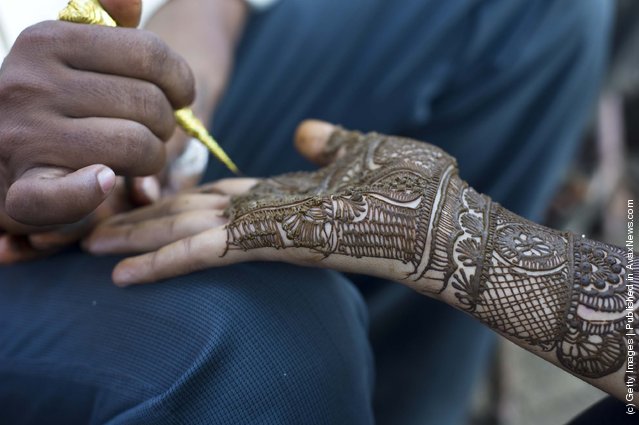
“Mehndi or menhdi is the application of henna as a temporary form of skin decoration in India, as well as by expatriate communities from the country. The word mehndi is derived from the Sanskrit word mendhikā. The use of mehndi and turmeric is described in the earliest Vedic ritual books. Haldi (Staining oneself with turmeric paste) as well as mehndi are important Vedic customs as a symbolic representation of the Outer and the Inner Sun. Vedic customs are meant to awaken the “inner light” and so the gold of the inner Sun has an important symbolic function”. – Wikipedia
Photo: Application of henna or “Mehndi” to a girls hand in a market on October 18, 2010 in Jaipur, India. (Photo by Simon de Trey-White/Getty Images)