Loading...
Done
Drill art by Fabian Oefner

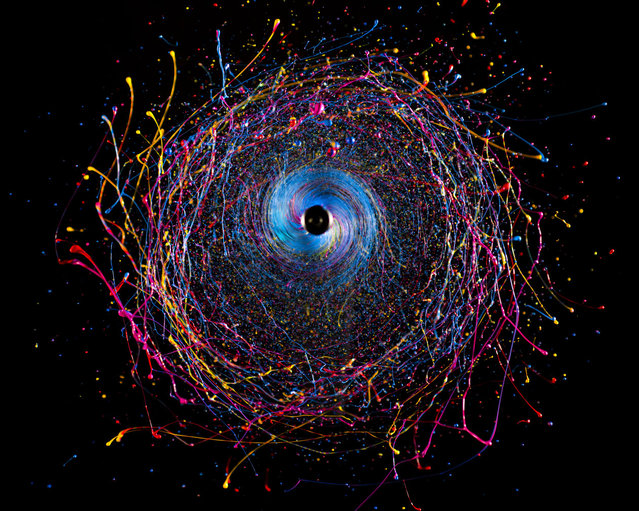
This artwork created using the end of a drill is the work of Swiss photographer Fabian Oefner who captures the flight of paint in just one 40,000th of a second. His latest Black Hole series celebrates the physics of centripetal force and the effects it has on simple paint and a an ordinary drill with a metal rod connected on the end. The incredible result of Fabians work comes out looking like a picture taken on the Hubble Telescope of some cosmic event. (Photo by Fabian Oefner/Caters News)
Details
04 Jul 2013 11:12:00
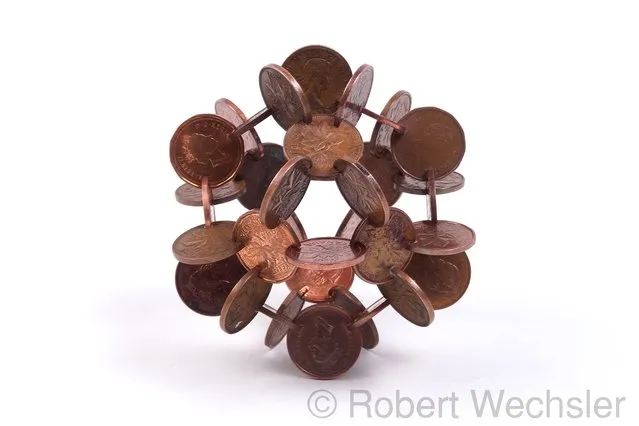
Mendicant By Robert Wechsler

American artist Robert Wechsler has realized a series of sculptural cubes made from thousands of pennies titled “The Mendicant“. Cubes achieved by notching and joining pennies in perfect orientation to one another. Joined at perpendicular angles, the coins create a lattice structure allowing tunnel like passages of light from certain angles. As one moves around them, the cubes seem to fluctuate from material to ethereal. The number of pennies increases exponentially with the size of the cube. Pictured here are three cubes differentiated with subtitles indicating the exact quantity used.
Details
21 Oct 2013 11:18:00
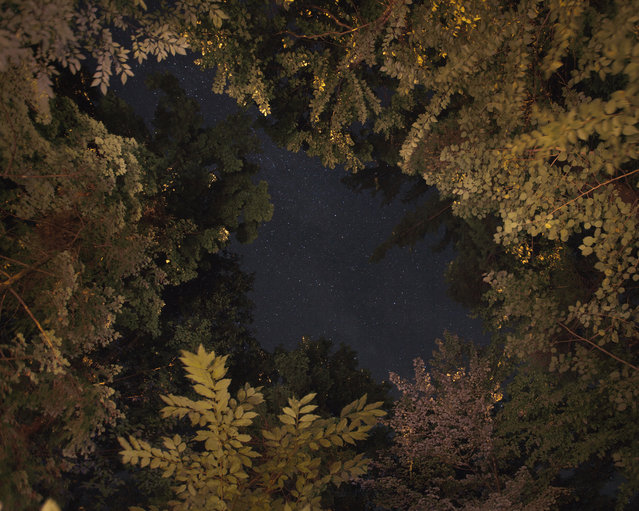
LSD

“After taking LSD. I lighting up a candle in the middle of the wood and during the 30 secondes of exposure, i make a meditation about the holism of nature surrounding me. Feeling the crystal vibration irradiating from the center of the Gaia mother earth. So in this picture i try to show you the magic, sacred metaphysical quality of the nature and new age bullshiting you”. – Benoit Paillé. (Photo by Benoit Paillé)
Details
27 Mar 2015 10:26:00
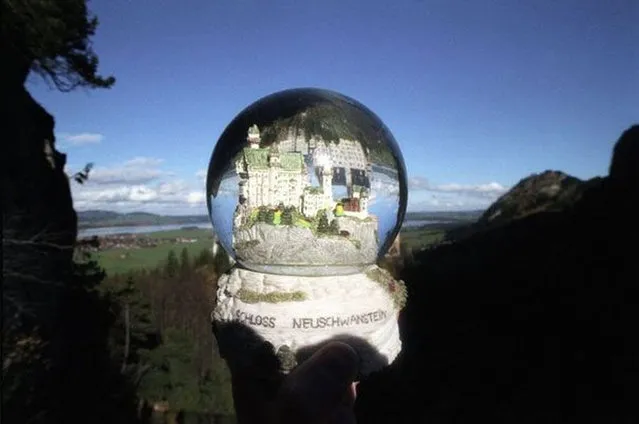
Optical Illusions By Michael Hughes

Michael Hughes creates cool optical illusions by placing cheap souvenirs in front of famous landmarks. Michael has discovered the technique back in 1998 when he held up a postcard he bought for his daughter on the tourist platform at the Lorelei cliffs next to the river Rhine. “I was amazed because it just seemed to fill a massive grey hole that was in the sky and it was the exact position the photographer had taken the picture from,” said Michael to Daily Mail.
Details
14 Dec 2013 11:35:00
Mercedes-Benz Unimog Concept

How much do things change in 60 years? Sometimes the best answer to that kind of question is a picture. Here you can see an original Unimog (right), built sometime between the start of production in 1948 and 1951, when Mercedes bought the operation in order to expand it enough to keep up with demand. On the left is a “60th Anniversary” Unimog design concept, celebrating not the actual birth of the Unimog, but its purchase by Mercedes. Needless to say, the contrast between the two is… breathtaking. And if you’re curious about the evolution of this hugely influential vehicle, if you can’t help wondering how it grew from a (relatively) tiny, spartan utility vehicle to a garish, Mercedes-starred behemoth.
Details
31 Oct 2012 11:24:00
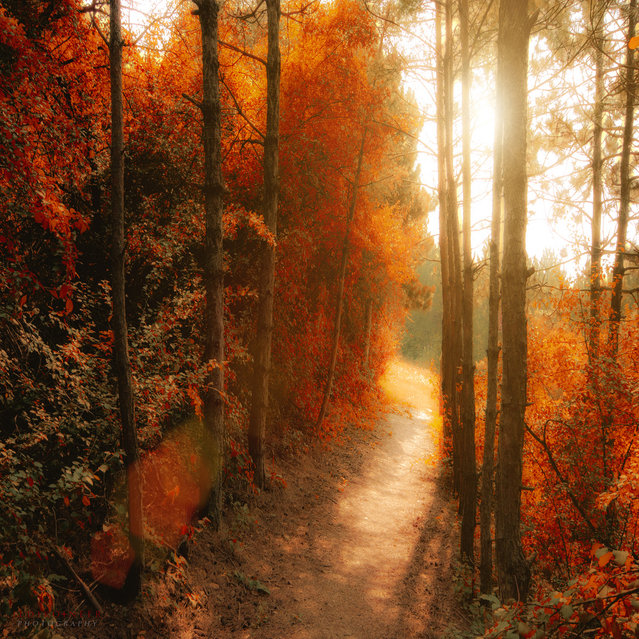
Path to the shine. (Ildiko Neer)

“I bought my first dlsr camera in 2009 may. The first part of my life is gone but the other i dedicate to photography. If i try to imagine myself, i saw someone on the road, who walking straight to the light. This kind of light is the photography and the post-processing in my life. My pictures express the feelings, moods what i felt under my trip in the last few years”. – Ildiko Neer

Photo: “Path to the shine”, 2011. (Photo by Ildiko Neer)


Details
12 Dec 2012 06:39:00


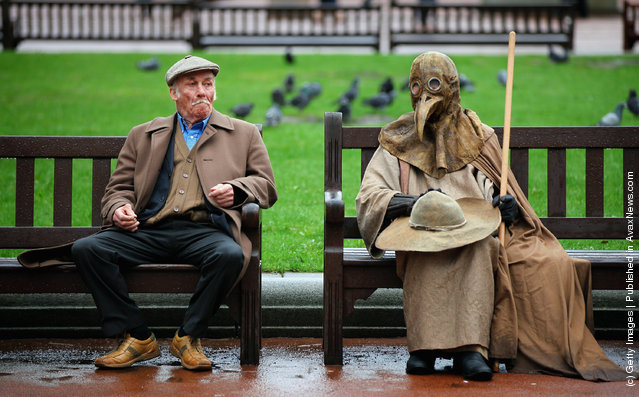
Glasgow based artist dressed Frank To dressed in a medieval Plague Doctor costume sits beside 72-year-old Willie Kennedy from Glasgow on March 31, 2011 in Glasgow, Scotland. The artist is promoting his first major exhibition in two years, “The Human Condition”, which opens tomorrow at the Leith Gallery in Edinburgh. The artist is showing a series of pictures which depict Mediaeval Plague Doctors, which have fascinated the artist for the last three years. (Photo by Jeff J Mitchell/Getty Images)
Details
01 Apr 2011 13:37:00


In this artist's impression supplied by the ESO (European Southern Observatory) on April 25, 2007, the planetary system around the red dwarf, Gliese 581, is pictured showing what astronomers believe is the most earth like planet found outside our solar system to date. Using the ESO 3.6-m telescope in Chile, astronomers have uncovered the planet which could have water running on its surface. The planet orbits the faint star Gliese 581, which is 20.5 light-years away in the constellation Libra. (Photo by ESO via Getty Images)
Details
12 Apr 2011 11:00:00