Loading...
Done
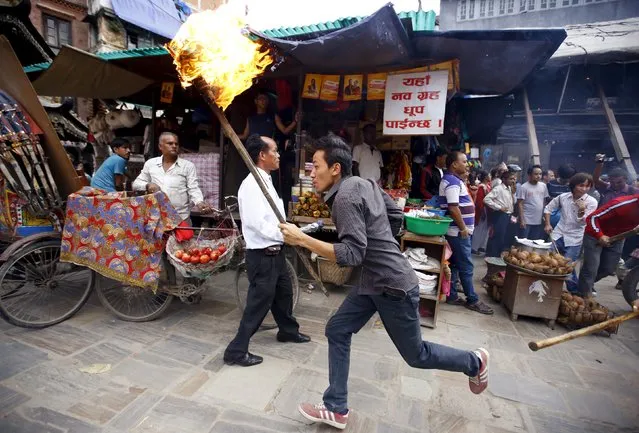
A protester holding a torch runs past police (not pictured) trying to stop the protesters from marching in a rally organised by a 30-party alliance led by a hardline faction of former Maoist rebels, who are protesting against the draft of the new constitution, in Kathmandu August 15, 2015. (Photo by Navesh Chitrakar/Reuters)

A protester holding a torch runs past police (not pictured) trying to stop the protesters from marching in a rally organised by a 30-party alliance led by a hardline faction of former Maoist rebels, who are protesting against the draft of the new constitution, in Kathmandu August 15, 2015. The group says that the draft is not inclusive and does not protect the rights of the marginalised and underprivileged groups in the country. (Photo by Navesh Chitrakar/Reuters)

Details
16 Aug 2015 13:24:00
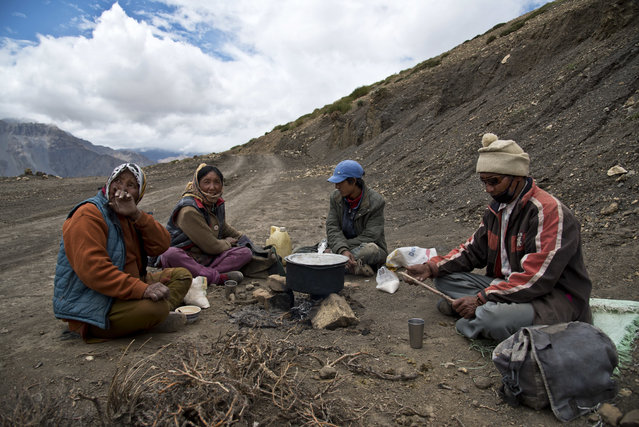
In this August 17, 2016, photo, from left to right, Chhering Chodom, 60, Tashi Yangzom, 50, Lobsang Chhering, 27, and Dorje Tandup, 58, drink milk tea on the side of the road. For centuries, the sleepy valley nestled in the Indian Himalayas remained a hidden Buddhist enclave forbidden to outsiders. Enduring the harsh year-round conditions of the high mountain desert, the people of Spiti Valley lived by a simple communal code – share the Earth's bounty, be hospitable to neighbors, and eschew greed and temptation at all turns. That's all starting to change, for better or worse. Since India began allowing its own citizens as well as outsiders to visit the valley in the early 1990s, tourism and trade have boomed. And the marks of modernization, such as solar panels, asphalt roads and concrete buildings, have begun to appear around some of the villages that dot the remote landscape at altitudes above 4,000 meters (13,000 feet). (Photo by Thomas Cytrynowicz/AP Photo)

In this August 17, 2016, photo, from left to right, Chhering Chodom, 60, Tashi Yangzom, 50, Lobsang Chhering, 27, and Dorje Tandup, 58, drink milk tea on the side of the road. For centuries, the sleepy valley nestled in the Indian Himalayas remained a hidden Buddhist enclave forbidden to outsiders. Enduring the harsh year-round conditions of the high mountain desert, the people of Spiti Valley lived by a simple communal code – share the Earth's bounty, be hospitable to neighbors, and eschew greed and temptation at all turns. That's all starting to change, for better or worse. (Photo by Thomas Cytrynowicz/AP Photo)
Details
15 Sep 2016 09:22:00
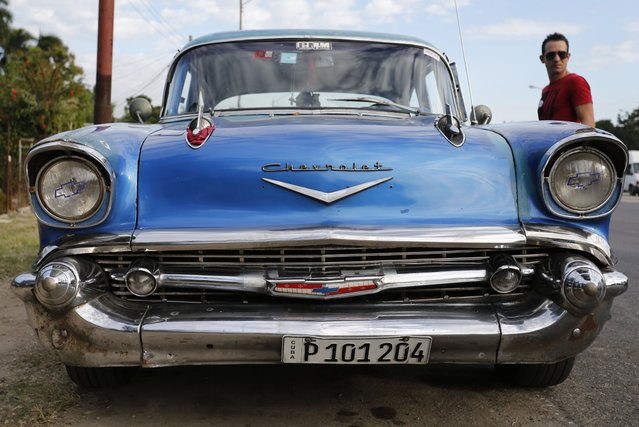
In this December 19, 2014 photo, a man stands beside his 1957 Chevrolet Bel-Air car in Havana, Cuba.  U.S. car sales have been banned in Cuba since 1959. Cubans have been have been forced to patch together Fords, Chevrolets and Chryslers that date back to before Fidel Castro's revolution which can make it appear like the country is stuck in a 1950s time warp. (Photo by Desmond Boylan/AP Photo)

In this December 19, 2014 photo, a man stands beside his 1957 Chevrolet Bel-Air car in Havana, Cuba. U.S. car sales have been banned in Cuba since 1959. Cubans have been have been forced to patch together Fords, Chevrolets and Chryslers that date back to before Fidel Castro's revolution which can make it appear like the country is stuck in a 1950s time warp. Since the Communist economic system isn't likely to change soon, many of those cars will have to stay on the road for years. (Photo by Desmond Boylan/AP Photo)
Details
26 Dec 2014 15:35:00
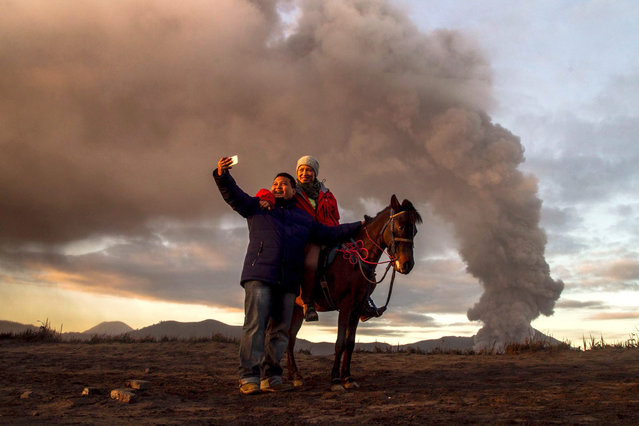
Indonesian tourists take a selfie as Mount Bromo spews volcanic material and ash into the air during an eruption in Probolinggo, East Java, Indonesia, 31 December 2015. Indonesia's Mount Bromo is on the second highest alert level as its activity has increased in the last two months. (Photo by Fully Handoko/EPA)

Indonesian tourists take a selfie as Mount Bromo spews volcanic material and ash into the air during an eruption in Probolinggo, East Java, Indonesia, 31 December 2015. Indonesia's Mount Bromo is on the second highest alert level as its activity has increased in the last two months. (Photo by Fully Handoko/EPA)
Details
13 Jan 2016 08:06:00
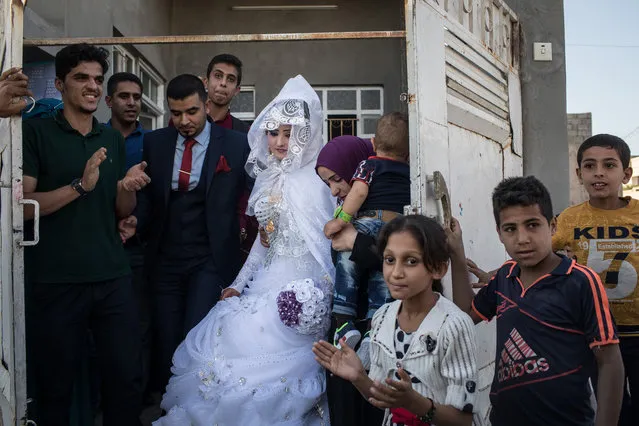
Family members watch on as a bride and groom leave their house to be married in West Mosul on November 3, 2017 in Mosul, Iraq. (Photo by Chris McGrath/Getty Images)

Family members watch on as a bride and groom leave their house to be married in West Mosul on November 3, 2017 in Mosul, Iraq. Five months after Mosul, Iraq's second-largest city was liberated from ISIL in a nine-month long battle, residents have returned to the destroyed city to rebuild their lives. (Photo by Chris McGrath/Getty Images)
Details
23 Nov 2017 08:22:00
A woman looks at head of bluefin tuna on display in front of a store at Tsukiji fish market in Tokyo, Monday, February 19, 2018.  The large bluefin are particularly valuable in Japan, where they are considered a premium sushi and sashimi fish. A single fish sold for more than $1.75 million at an auction in Japan in 2013. (Photo by Koji Sasahara/AP Photo)

A woman looks at head of bluefin tuna on display in front of a store at Tsukiji fish market in Tokyo, Monday, February 19, 2018. The large bluefin are particularly valuable in Japan, where they are considered a premium sushi and sashimi fish. A single fish sold for more than $1.75 million at an auction in Japan in 2013. (Photo by Koji Sasahara/AP Photo)
Details
06 Mar 2018 00:05:00
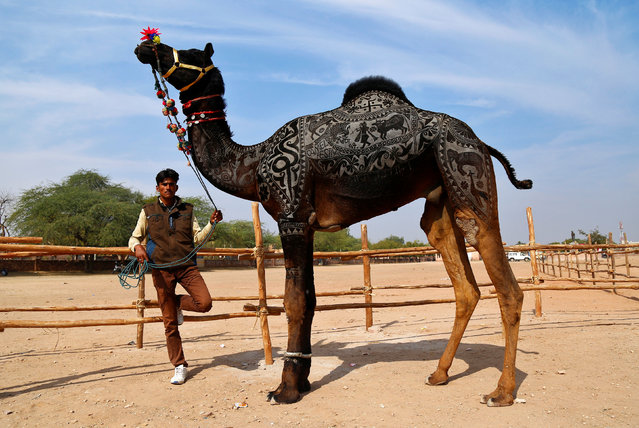
A man waits with his camel to take part in a camel decoration competition at the Nagaur Cattle Fair, where animals like camels, cows, horses, and bulls are brought to be sold or traded, in Nagaur, in the desert state of Rajasthan, India February 2, 2017. (Photo by Himanshu Sharma/Reuters)

A man waits with his camel to take part in a camel decoration competition at the Nagaur Cattle Fair, where animals like camels, cows, horses, and bulls are brought to be sold or traded, in Nagaur, in the desert state of Rajasthan, India February 2, 2017. (Photo by Himanshu Sharma/Reuters)
Details
08 Feb 2017 00:06:00
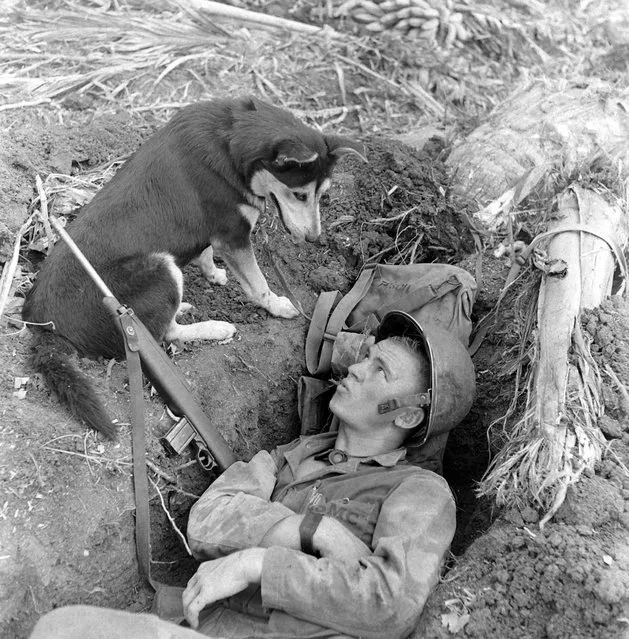
View of an American marine as he lies in a foxhole and whistles at a husky, one of the scouting dogs used during the landing on Guam, August 1944. (Photo by W. Eugene Smith/Time & Life Pictures/Getty Images)

View of an American marine as he lies in a foxhole and whistles at a husky, one of the scouting dogs used during the landing on Guam, August 1944. (Photo by W. Eugene Smith/Time & Life Pictures/Getty Images)
Details
25 Feb 2017 00:04:00