Loading...
Done


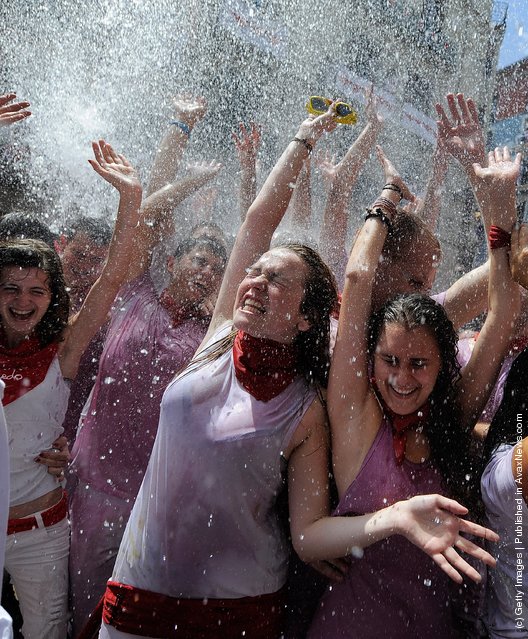
Festival goers celebrate during the Chupinazo, marking the beginning of the San Fermin festival on July 6, 2011 in Pamplona, Spain. Pamplona's famous Fiesta de San Fermin, which involves the running of the bulls through the historic heart of Pamplona for eight days starting July 7th, was made famous by the 1926 novel of U.S. writer Ernest Hemmingway called “The Sun Also Rises”. (Photo by Denis Doyle/Getty Images)
Details
07 Jul 2011 11:57:00


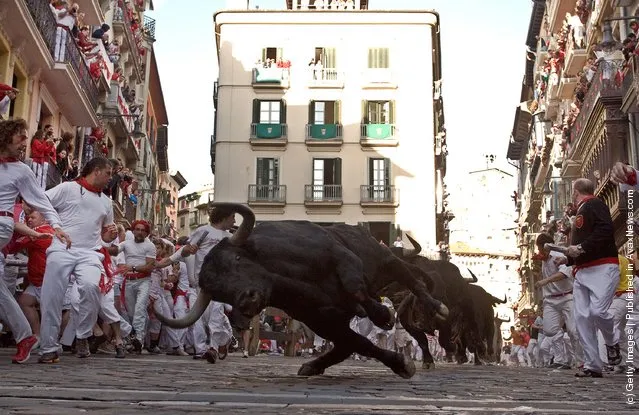
A fighting bull loses its balance during the third day of the San Fermin running-of-the-bulls on July 8, 2011 in Pamplona, Spain. Pamplona's famous Fiesta de San Fermin, which involves the running of the bulls through the historic heart of Pamplona for eight days starting July 7th, was made famous by the 1926 novel of U.S. writer Ernest Hemmingway called “The Sun Also Rises”. (Photo by Denis Doyle/Getty Images)
Details
08 Jul 2011 10:45:00
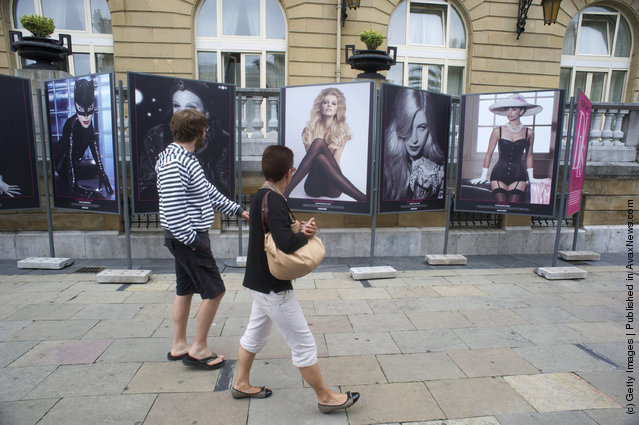
Marie Claire Magazine Film Exhibition at Oquendo street during 59th San Sebastian Film Festival

General view of “Marie Claire” Magazine Film Exhibition at Oquendo street during 59th San Sebastian Film Festival on September 22, 2011 in San Sebastian, Spain. (Photo by Carlos Alvarez/Getty Images)
Details
24 Sep 2011 10:46:00
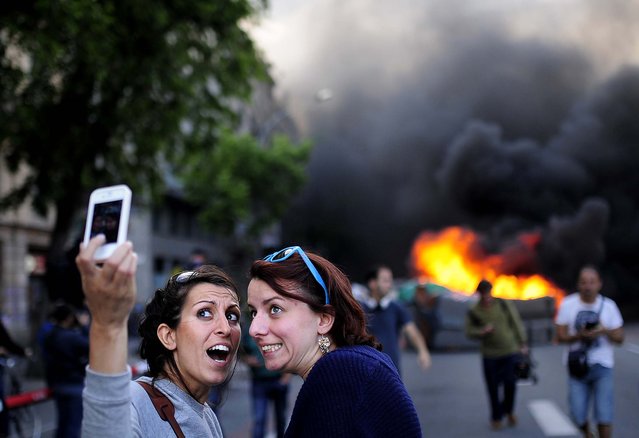
Tourists take a “selfie” as demonstrators burn a trash container during a May Day rally in Barcelona, Spain, on May 1, 2014. Tens of thousands of workers marked May Day in European cities with a mix of anger and gloom over austerity measures imposed by leaders trying to contain the eurozone's intractable debt crisis. (Photo by Manu Fernandez/Associated Press)

Tourists take a “selfie” as demonstrators burn a trash container during a May Day rally in Barcelona, Spain, on May 1, 2014. Tens of thousands of workers marked May Day in European cities with a mix of anger and gloom over austerity measures imposed by leaders trying to contain the eurozone's intractable debt crisis. (Photo by Manu Fernandez/Associated Press)
Details
03 May 2014 16:00:00
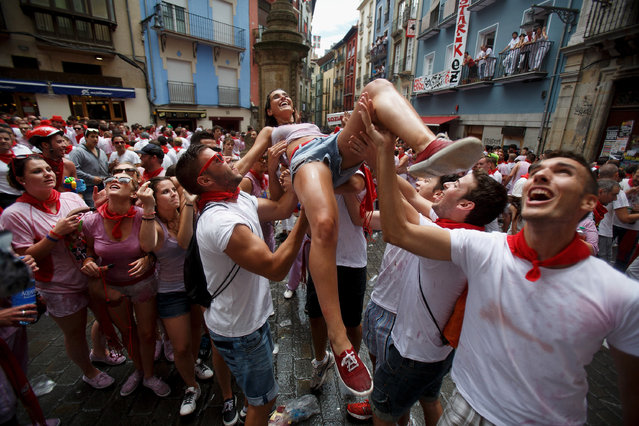
Revelers throw a woman to the air during the opening and the firing of the “Chupinazo” rocket which starts the 2014 Festival of the San Fermin Running of the Bulls on July 6, 2014 in Pamplona, Spain. The annual Fiesta de San Fermin, made famous by the 1926 novel of US writer Ernest Hemmingway entitled “The Sun Also Rises”, involves the daily running of the bulls through the historic heart of Pamplona to the bull ring. (Photo by Pablo Blazquez Dominguez/Getty Images)

Revelers throw a woman to the air during the opening and the firing of the “Chupinazo” rocket which starts the 2014 Festival of the San Fermin Running of the Bulls on July 6, 2014 in Pamplona, Spain. The annual Fiesta de San Fermin, made famous by the 1926 novel of US writer Ernest Hemmingway entitled “The Sun Also Rises”, involves the daily running of the bulls through the historic heart of Pamplona to the bull ring. (Photo by Pablo Blazquez Dominguez/Getty Images)
Details
12 Jul 2014 16:00:00
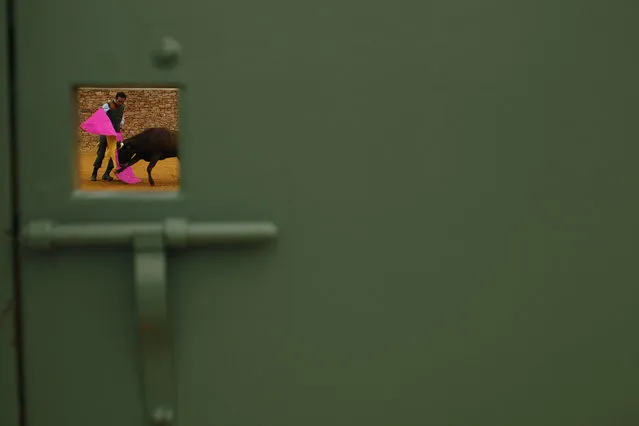
Spanish bullfighter Manuel Jesus “El Cid” is seen through a small window of a door as he performs a pass to a heifer during a “tentadero” (a small bullfight to check the bravery of calves and heifers which are not killed) during the first International Biennial of bullfighting at Reservatauro Ronda cattle ranch in Ronda, near Malaga February 17, 2013. Spain's parliament voted last Tuesday to consider protecting bullfighting as a national pastime, angering animal rights campaigners and politicians in two regions where the sport is banned. (Photo by Jon Nazca/Reuters)

Spanish bullfighter Manuel Jesus “El Cid” is seen through a small window of a door as he performs a pass to a heifer during a “tentadero” (a small bullfight to check the bravery of calves and heifers which are not killed) during the first International Biennial of bullfighting at Reservatauro Ronda cattle ranch in Ronda, near Malaga February 17, 2013. Spain's parliament voted last Tuesday to consider protecting bullfighting as a national pastime, angering animal rights campaigners and politicians in two regions where the sport is banned. (Photo by Jon Nazca/Reuters)
Details
22 Feb 2013 11:15:00
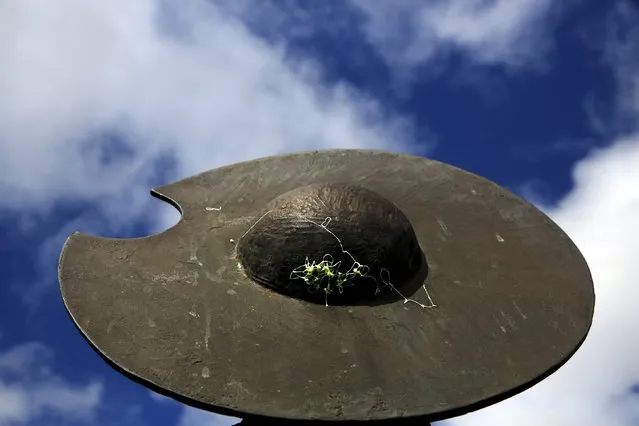
A sculpture of Don Quixote shows him wearing the basin he mistook for the enchanted helmet of the fictional Moorish king Mambrino in Alcazar de San Juan, Spain, April 5, 2016. (Photo by Susana Vera/Reuters)

A sculpture of Don Quixote shows him wearing the basin he mistook for the enchanted helmet of the fictional Moorish king Mambrino in Alcazar de San Juan, Spain, April 5, 2016. The arid central Spanish region of La Mancha is the setting for “Don Quixote”, the seventeenth-century novel by Miguel de Cervantes. Four hundred years after his death, references to the characters of Don Quixote, his loyal squire Sancho Panza and his beautiful lady Dulcinea abound in the surrounding villages from sweet treats to theatre productions involving livestock. Cervantes did not give away the name of the birthplace of Don Quixote, a middle-aged gentleman who becomes obsessed with chivalrous ideals. But many identify the village of Argamasilla de Alba as his hometown. The anniversary of Cervantes’ death is marked on the 23 April. (Photo by Susana Vera/Reuters)
Details
21 Apr 2016 12:32:00
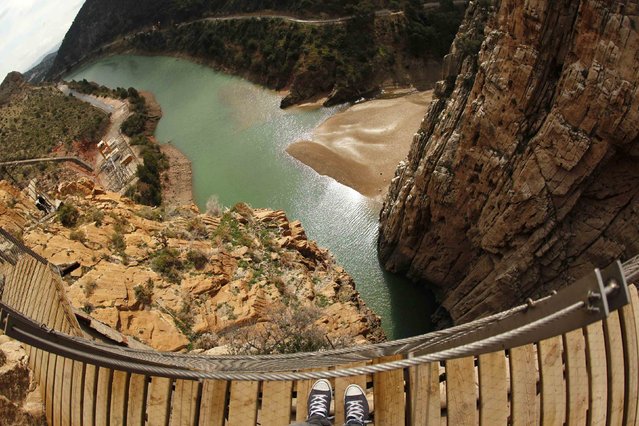
Journalists (L) walk along the new Caminito del Rey (The King's Little Pathway) in El Chorro-Alora, near Malaga, southern Spain March 15, 2015. (Photo by Jon Nazca/Reuters)

Journalists (L) walk along the new Caminito del Rey (The King's Little Pathway) in El Chorro-Alora, near Malaga, southern Spain March 15, 2015. Dubbed by many media outlets as the world's scariest pathway, the three-kilometre long pathway, which was built at about 100 metres (330 ft) above the gorge of Los Gaitanes between the years of 1901 and 1905, was closed in 2001 after five people died. A new walkway has then been built over the old walkway and will open to the public on March 28, 2015. (Photo by Jon Nazca/Reuters)
Details
16 Mar 2015 09:56:00