Loading...
Done
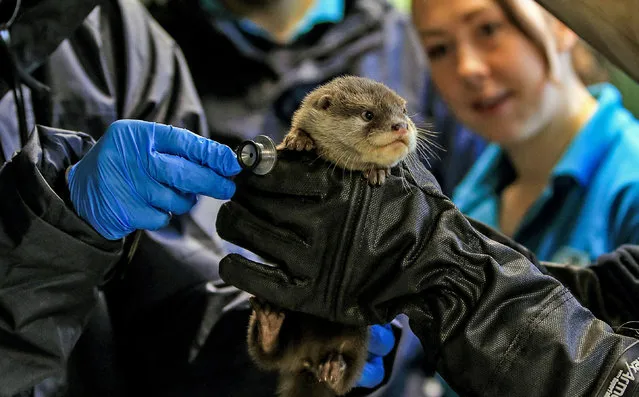
A baby otter has its first health checkup at Chester zoo, England on May 2, 2018. It was among five pups being weighed and microchipped. (Photo by Peter Byrne/PA Wire)

A baby otter has its first health checkup at Chester zoo, England on May 2, 2018. It was among five pups being weighed and microchipped. (Photo by Peter Byrne/PA Wire)
Details
06 May 2018 00:03:00
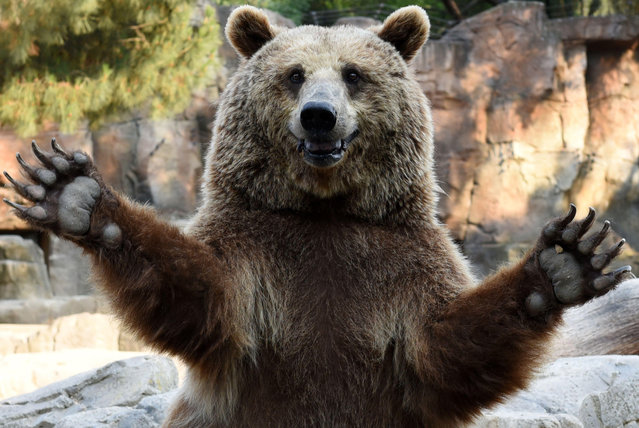
A brown bear waits for food at the zoo in Madrid, Spain on July 30, 2016. (Photo by Jorge Sanz/Pacific Press/SIPA Press/Rex Features/Shutterstock)

A brown bear waits for food at the zoo in Madrid, Spain on July 30, 2016. (Photo by Jorge Sanz/Pacific Press/SIPA Press/Rex Features/Shutterstock)
Details
31 Jul 2016 10:57:00
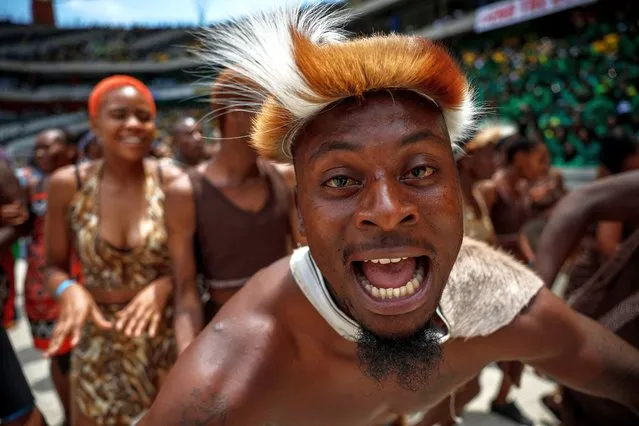
Performers wearing traditional Zulu attire take part in the parade during the 112th African National Congress (ANC) Anniversary rally in Mbombela on January 13, 2024. (Photo by Phill Magakoe/AFP Photo)

Performers wearing traditional Zulu attire take part in the parade during the 112th African National Congress (ANC) Anniversary rally in Mbombela on January 13, 2024. (Photo by Phill Magakoe/AFP Photo)
Details
19 Jan 2024 17:34:00
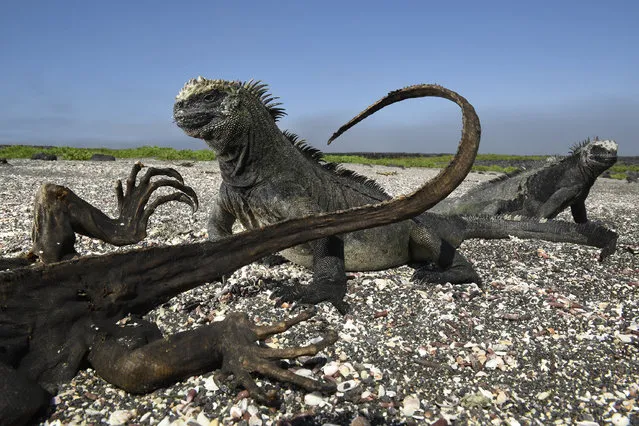
Galapagos – Rocking the Cradle: Four major ocean currents converge along the Galapagos archipelago, creating the conditions for an extraordinary diversity of animal life, April 25, 2016. The islands are home to at least 7,000 flora and fauna species, of which 97 percent of the reptiles, 80 percent of the land birds, 50 percent of the insects and 30 percent of the plants are endemic. The local ecosystem is highly sensitive to the changes in temperature, rainfall and ocean currents that characterize the climatic events known as El Niño and La Niña. These changes cause marked fluctuations in weather and food availability. Many scientists expect the frequency of El Niño and La Niña to increase as a result of climate change, making the Galapagos a possible early-warning location for its effects. (Photo by Thomas P. Peschak for National Geographic/World Press Photo)

Galapagos – Rocking the Cradle: Four major ocean currents converge along the Galapagos archipelago, creating the conditions for an extraordinary diversity of animal life, April 25, 2016. The islands are home to at least 7,000 flora and fauna species, of which 97 percent of the reptiles, 80 percent of the land birds, 50 percent of the insects and 30 percent of the plants are endemic. (Photo by Thomas P. Peschak for National Geographic/World Press Photo)
Details
16 Apr 2018 00:01:00
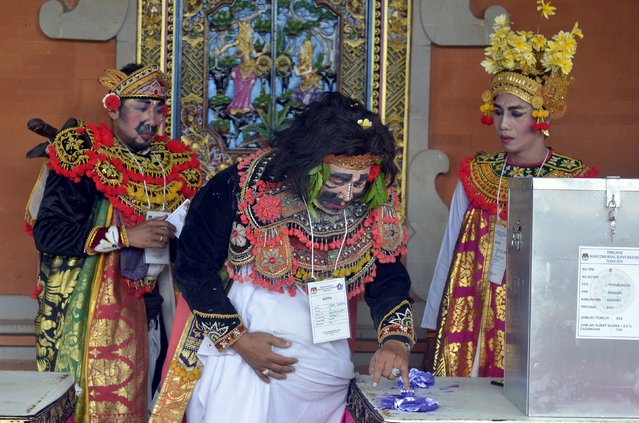
Polling station officials dressed as traditional Balinese performers vote in Badung regency on the Indonesian island of  Bali December 9, 2015 in this photo taken by Antara Foto. Around 100 million Indonesians were expected to go to the polls on Wednesday in many parts of the country to elect heads of local government. (Photo by Wira Suryantala/Reuters/Antara Foto)

Polling station officials dressed as traditional Balinese performers vote in Badung regency on the Indonesian island of Bali December 9, 2015 in this photo taken by Antara Foto. Around 100 million Indonesians were expected to go to the polls on Wednesday in many parts of the country to elect heads of local government. (Photo by Wira Suryantala/Reuters/Antara Foto)
Details
10 Dec 2015 11:12:00
Models present creations during the PARIA/FARZANEH catwalk at London Fashion Week Men's in London, Britain June 10, 2019. (Photo by Henry Nicholls/Reuters)

Models present creations during the PARIA/FARZANEH catwalk at London Fashion Week Men's in London, Britain June 10, 2019. (Photo by Henry Nicholls/Reuters)
Details
13 Jun 2019 00:03:00
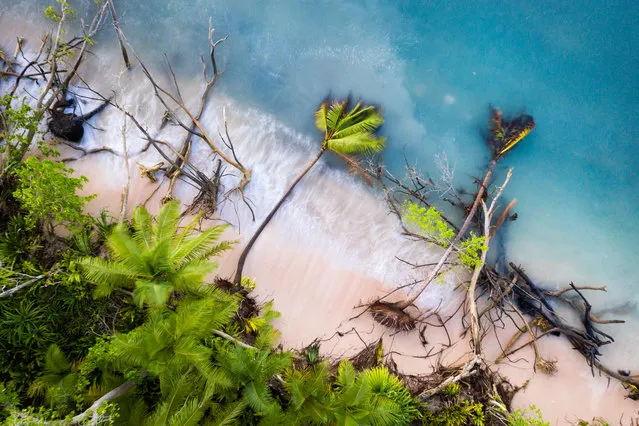
Tuvalu Beneath the Rising Tide by Sean Gallagher, Tuvalu. Changing environments prize: Fallen trees lie on a beach as the waves from the Funafuti lagoon in Tuvalu lap around them. Land erosion has always been a problem for the South Pacific country but problems are intensifying as sea levels rise. Rising seas are on the verge of completely submerging the tiny archipelago’s islands. (Photo by Sean Gallagher/CIWEM Environmental Photographer of the Year 2019)

Tuvalu Beneath the Rising Tide by Sean Gallagher, Tuvalu. Changing environments prize: Fallen trees lie on a beach as the waves from the Funafuti lagoon in Tuvalu lap around them. Land erosion has always been a problem for the South Pacific country but problems are intensifying as sea levels rise. Rising seas are on the verge of completely submerging the tiny archipelago’s islands. (Photo by Sean Gallagher/CIWEM Environmental Photographer of the Year 2019)
Details
26 Sep 2019 00:03:00
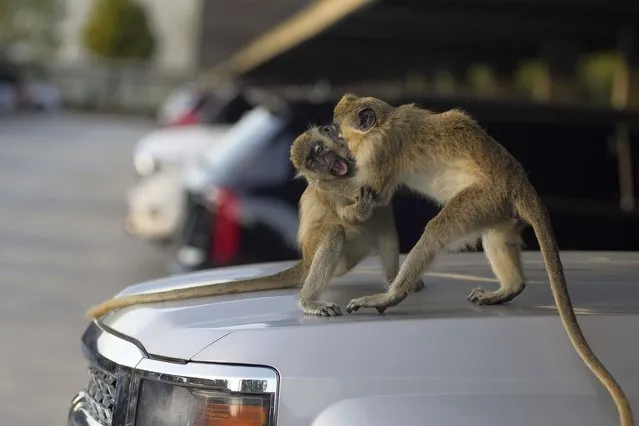
Vervet monkeys Higgins, left, and Andor fight playfully atop a car in the Park 'N Fly parking lot which lies adjacent to the swampy mangrove preserve where the monkey colony lives, Tuesday, March 1, 2022, in Dania Beach, Fla. For 70 years, a group of non-native monkeys has made their home next to a South Florida airport runway, delighting visitors and becoming local celebrities. (Photo by Rebecca Blackwell/AP Photo)

Vervet monkeys Higgins, left, and Andor fight playfully atop a car in the Park 'N Fly parking lot which lies adjacent to the swampy mangrove preserve where the monkey colony lives, Tuesday, March 1, 2022, in Dania Beach, Fla. For 70 years, a group of non-native monkeys has made their home next to a South Florida airport runway, delighting visitors and becoming local celebrities. (Photo by Rebecca Blackwell/AP Photo)
Details
10 May 2023 03:05:00