Loading...
Done


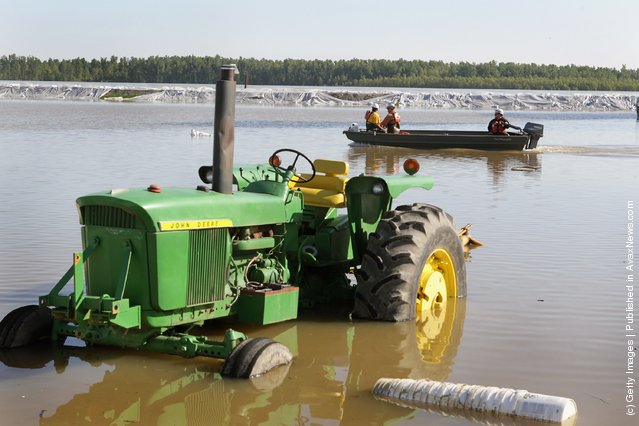
Workers use a boat to recover supplies from a flooded grain elevator May 4, 2011 in Caruthersville, Missouri. Heavy rains have left the ground saturated, rivers swollen, and has caused widespread flooding in Missouri, Illinois, Kentucky and Arkansas. (Photo by Scott Olson/Getty Images)
Details
05 May 2011 07:34:00


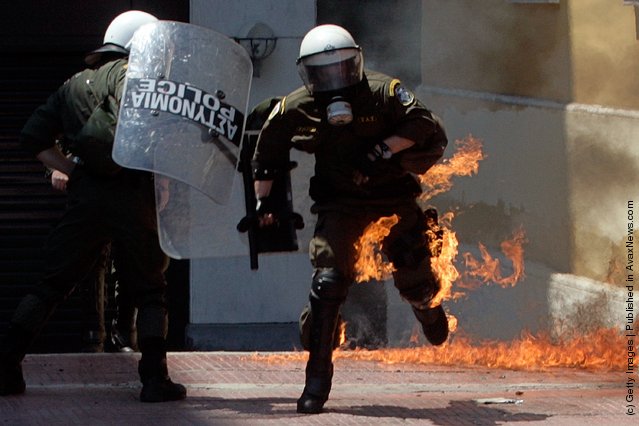
A protester uses molotov cocktails against riot police during May Day protests on May 1, 2010 in Athens, Greece. (Photo by Milos Bicanski /Getty Images)
Details
16 Jun 2011 11:02:00


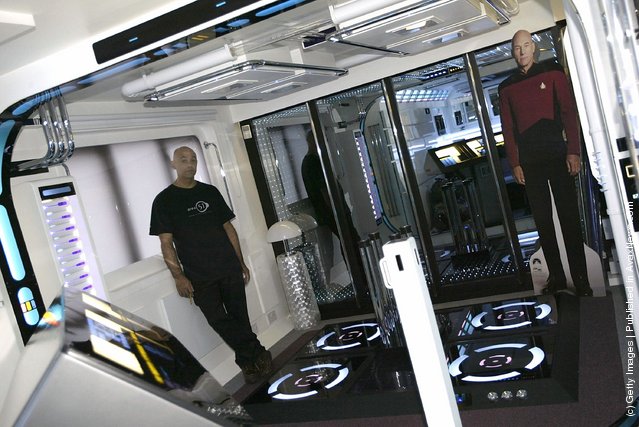
Interior designer Tony Alleyne stands in his «Star Trek» theme studio apartment May 16, 2003 in Hinckley, Leicestershire, England. The apartment took nearly 10 years to redesign in the style of the «Star Trek» Starship Enterprise on approximately US$1.7 million. (Photo by Ross Kinnaird/Getty Images)
Details
01 Jul 2011 12:01:00
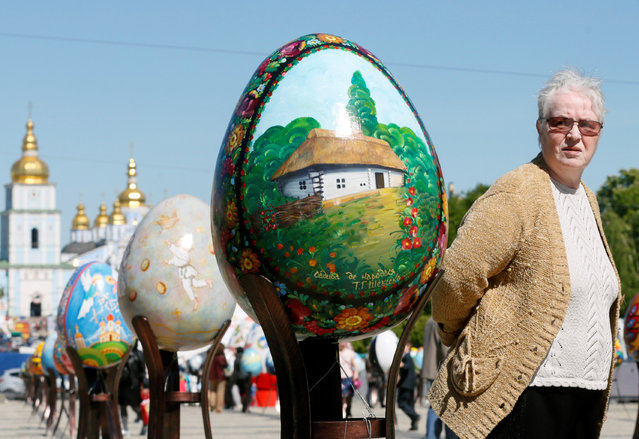
A woman looks at traditional Ukrainian Easter eggs “Pysanka”, installed as part of the upcoming celebrations of Easter, in central Kiev, Ukraine, April 29, 2016. A pysanka is a Ukrainian Easter egg, decorated with traditional Ukrainian folk designs using a wax-resist (batik) method. The word pysanka comes from the verb pysaty, “to write”, as the designs are not painted on, but written with beeswax. Many other eastern European ethnic groups decorate eggs using wax resist for Easter. These include the Belarusians, Bulgarians, Croats, Czechs, Hungarians, Lithuanians, Poles, Romanians, Serbs, Slovaks, Slovenes and Sorbs. (Photo by Valentyn Ogirenko/Reuters)

A woman looks at traditional Ukrainian Easter eggs “Pysanka”, installed as part of the upcoming celebrations of Easter, in central Kiev, Ukraine, April 29, 2016. A pysanka is a Ukrainian Easter egg, decorated with traditional Ukrainian folk designs using a wax-resist (batik) method. The word pysanka comes from the verb pysaty, “to write”, as the designs are not painted on, but written with beeswax. Many other eastern European ethnic groups decorate eggs using wax resist for Easter. These include the Belarusians, Bulgarians, Croats, Czechs, Hungarians, Lithuanians, Poles, Romanians, Serbs, Slovaks, Slovenes and Sorbs. (Photo by Valentyn Ogirenko/Reuters)
Details
30 Apr 2016 09:00:00
Using body paint and a woodland like location, Gesine appears to have created a model to look just like a red panda, Dortmund, Germany, October, 2016. An artist brings animals to life using body paint and contorted models. At first glance, these images could be mistaken for portraits of wildlife in their natural habitat were created with paper and paint. However, they are actually the incredible works of illusion by talented body painter Gesine Marwedel, who paints models to creates realistic animals. Marwedel, 29, from Dortmund, Germany has always been fascinated by the concept of transferring her designs to human bodies and her latest project features models posing in contorted positions. One image appears to show an elegant swan in a park pond, whilst another picture shows a mother penguin and its chick in a snowy landscape. (Photo by Gesine Marwedel/Barcroft Images)

Using body paint and a woodland like location, Gesine appears to have created a model to look just like a red panda, Dortmund, Germany, October, 2016. An artist brings animals to life using body paint and contorted models. At first glance, these images could be mistaken for portraits of wildlife in their natural habitat were created with paper and paint. However, they are actually the incredible works of illusion by talented body painter Gesine Marwedel, who paints models to creates realistic animals. (Photo by Gesine Marwedel/Barcroft Images)
Details
20 Dec 2016 12:53:00
Digital Art by Hong Kuang

Kuang Hong is a great artist from Shanghai. The oriental style is felt in his drawings and you can just like it. The weapons he uses are Wacom Intuos2, Painter and Photoshop CS2
Details
19 Aug 2013 10:09:00
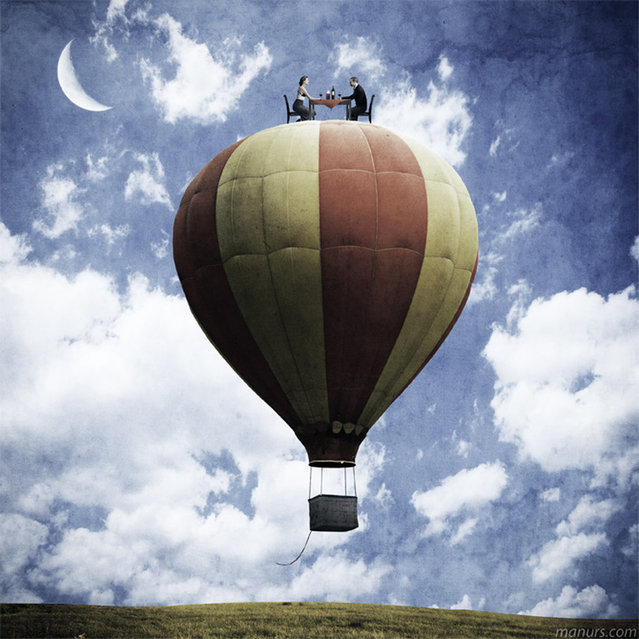
Surreal Art by Manuel Rodriguez Sanchez

Discover fabulous use of photomanipulation in these illustrations when you dive into the surreal world of Manuel Rodríguez Sánchez.
Details
03 Sep 2013 10:48:00


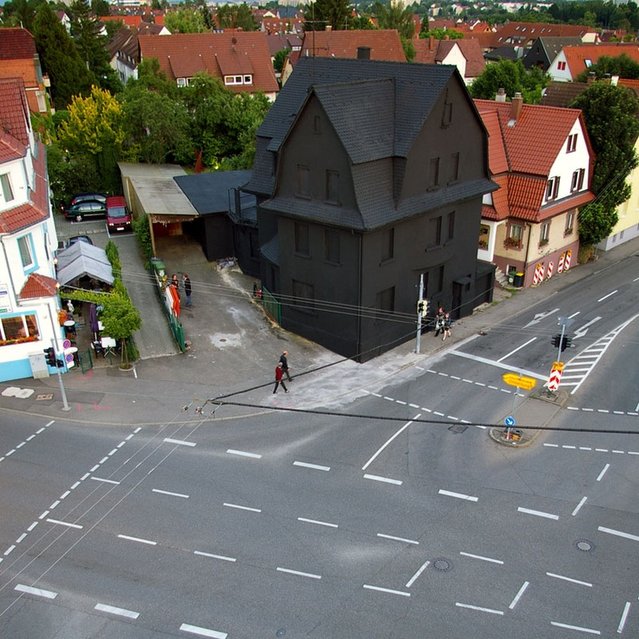
Haus in Schwarz (House in Black) was a 2008 public art piece by artists Erik Sturm and Simon Jung (previously) in the city center of Möhringen, Germany. The piece was meant as a farewell to the building which was slated for demolition, with the matte black paint acting as a sort of final curtain to an exterior that had recently been used by numerous street artists, shown bellow.
Details
10 Oct 2013 11:47:00