Loading...
Done
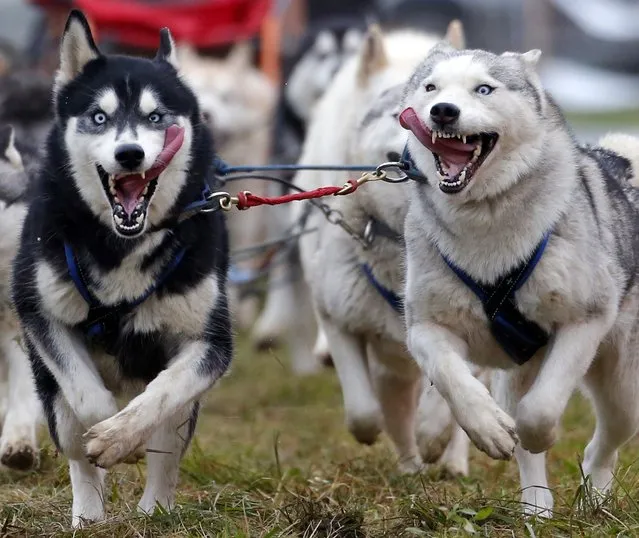
A musher races with his dogs during a sled dog European Championship in Venek November 22, 2014. (Photo by Laszlo Balogh/Reuters)

A musher races with his dogs during a sled dog European Championship in Venek November 22, 2014. (Photo by Laszlo Balogh/Reuters)
Details
23 Nov 2014 11:57:00
A general view of the sunrise over Hawes, Wensleydale, UK on November 24, 2014. (Photo by Neil Squires/PA Wire)

A general view of the sunrise over Hawes, Wensleydale, UK on November 24, 2014. (Photo by Neil Squires/PA Wire)
Details
11 Dec 2014 13:50:00
A child working at Ship breaking yard in Chittagong, Bangladesh on November 14, 2014. (Photo by  Pascal Mannaerts/Alamy Stock Photo)

A child working at Ship breaking yard in Chittagong, Bangladesh on November 14, 2014. (Photo by Pascal Mannaerts/Alamy Stock Photo)
Details
18 Dec 2020 00:03:00
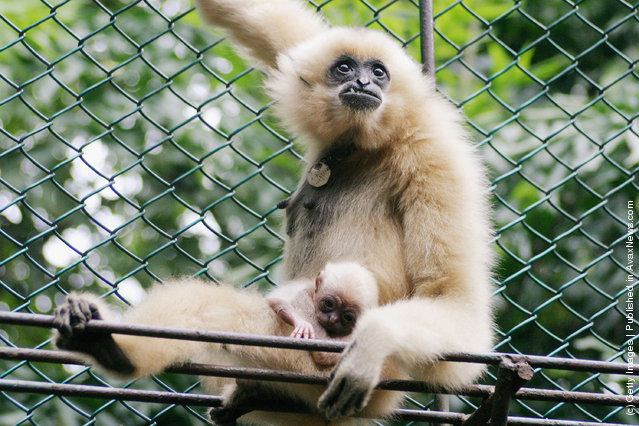
Newborn White-Cheeked Gibbon Nomascus

“Nomascus is the second most speciose genus of gibbons (family Hylobatidae). Originally this genus was a subgenus of Hylobates, and all individuals were considered one species, Hylobates concolor. Species within Nomascus are characterized by 52 chromosomes. Some species are all black, some light with a distinct black tuft of crown fur, and some by distinct, light-colored cheek patches. Nomascus is found from southern China (Yunnan) to southern Vietnam, and also on Hainan Island. One of the genus' species, Nomascus nasutus, has been deemed “the most critically endangered ape species in the world”. All of the species in this genus are endangered or critically endangered”. – Wikipedia

Photo: A newborn White-Cheeked Gibbon clings to its mother in the Nanning Zoo on April 12, 2004 in Nanning, Guangxi province, China. The White-Cheeked Gibbon's natural habitat is Southern China as well as Vietnam and Laos. They are classified as highly endangered and are on the brink of extinction due to poaching and reduction of natural rainforests. (Photo by Getty Images)
Details
12 Aug 2011 11:51:00
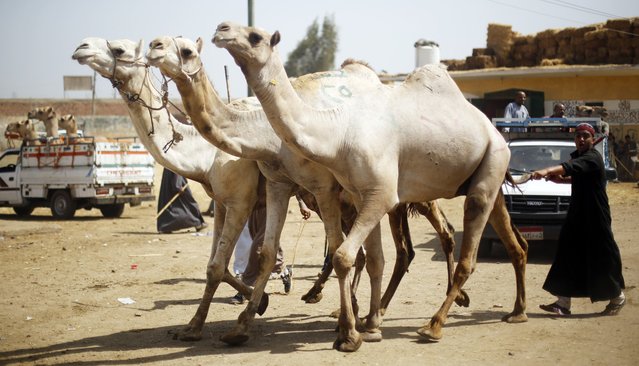
A man walks behind camels at the Birqash Camel Market, ahead of Eid al-Adha or Festival of Sacrifice, on the outskirts of Cairo September 29, 2014. (Photo by Amr Abdallah Dalsh/Reuters)

A man walks behind camels at the Birqash Camel Market, ahead of Eid al-Adha or Festival of Sacrifice, on the outskirts of Cairo September 29, 2014. Birqash Camel Market, one of the biggest markets for camel meat in Africa, draws sellers from Libya, Sudan, Somalia and other regions in Egypt. The camels sold at the market are also used in tourism. Traders say that the selling rate for a camel in 2014 is anywhere between 5,000 and 20,000 Egyptian pounds (700 – 2800 USD). (Photo by Amr Abdallah Dalsh/Reuters)
Details
02 Oct 2014 10:20:00
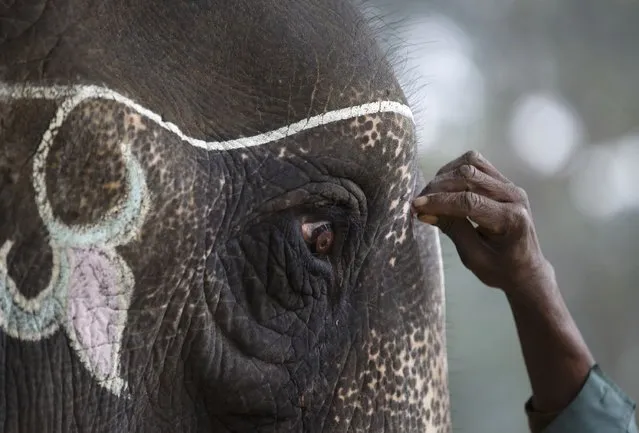
A mahout decorates his elephant using chalk while preparing for the Elephant Festival at Sauraha in Chitwan, south of Kathmandu, December 26, 2014. (Photo by Navesh Chitrakar/Reuters)

A mahout (a person who rides an elephant) decorates his elephant using chalk while preparing for the Elephant Festival at Sauraha in Chitwan, south of Kathmandu, December 26, 2014. Elephants and mahouts from Chitwan will participate in the Elephant festival, which involves elephant races, elephants playing an exhibition soccer match and taking part in various other sporting activities. The event will start from 26 December and will end on 30 December, 2014. (Photo by Navesh Chitrakar/Reuters)
Details
28 Dec 2014 11:38:00
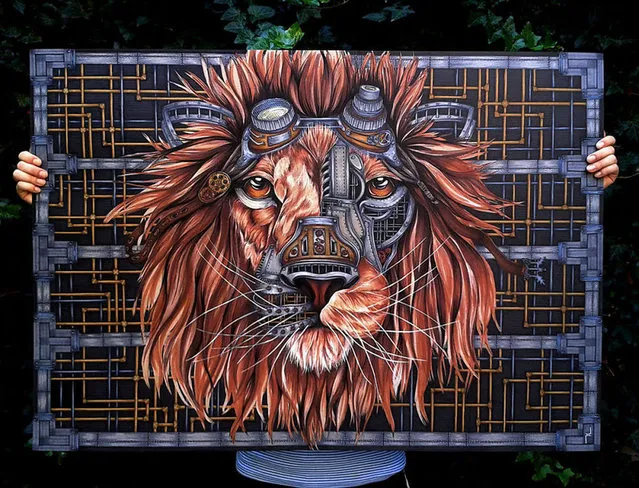
Steampunk Lion By Paula Duta

Paula Duta is a Romanian illustrator who loves creating her artworks using pens, markers, and watercolors. This set of pictures shows the process through which she went to draw her most beloved creation – The Steampunk Lion. The picture came alive piece by piece, starting with the eyes, goggles, nose, and then the mane. All the little details of the lion were drawn with outmost precision, which clearly shows that Paula has poured all her soul into this piece of art. (Photo by Paula Duta)
Details
14 Dec 2014 11:20:00
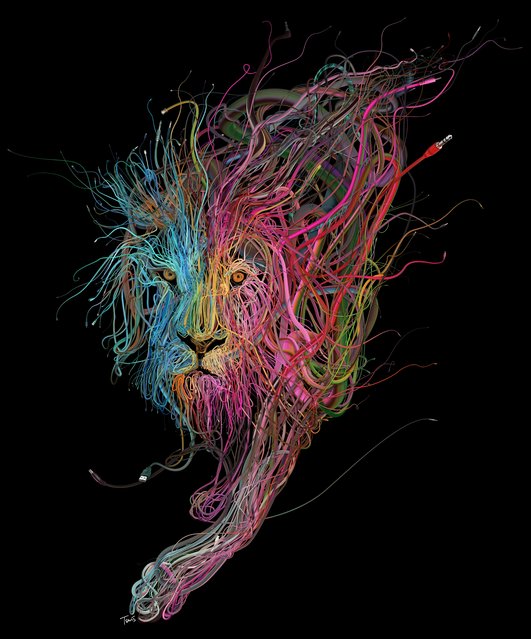
“The Conquering Lion: Plug into the power of Reggae”. (Photo by Charis Tsevis)

Greece-based illustrator, Charis Tsevis took his fascination with our wired world to develop his series of colorful and detailed wire illustrations. He uses all types of wires, including USB cords and phone cables, and creates form figures, faces and animals by tangling them together. Tsevis says, “All of them have to do with the relationship between the network and the human body and spirit”. Photo: “The Conquering Lion: Plug into the power of Reggae”. (Photo by Charis Tsevis)
Details
02 Apr 2014 10:01:00