Loading...
Done
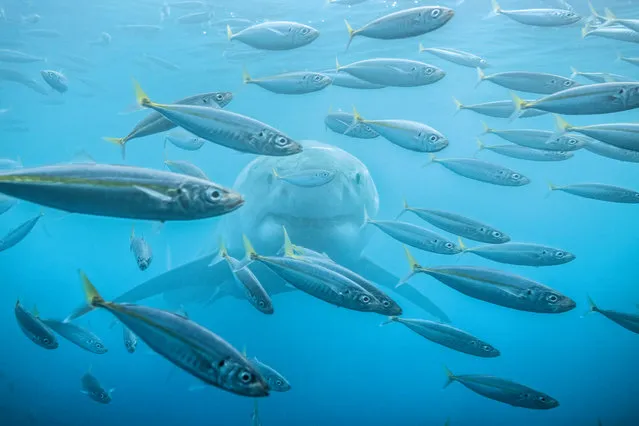
Under Exposed: Pekka Tuuri (Finland) – Great white shark, Isla Guadalupe, Mexico. Isla Guadalupe is the world capital when it comes to observing great white sharks, but cage diving seriously limits the possibilities to take ‘fresh’ pictures. When I took this, the water close to the surface was quite milky, making photography very challenging. From out of the ‘mist’, I saw this great white shark lurking behind a school of fusiliers. I quickly focused on the shark and set a wide aperture to get focus blur on the fish, along with a fast shutter to avoid excessive motion blur. (Photo by Pekka Tuuri/The Outdoor Photographer of the Year/The Guardian)

Under Exposed: Pekka Tuuri (Finland) – Great white shark, Isla Guadalupe, Mexico. “Isla Guadalupe is the world capital when it comes to observing great white sharks, but cage diving seriously limits the possibilities to take ‘fresh’ pictures. When I took this, the water close to the surface was quite milky, making photography very challenging. From out of the “mist”, I saw this great white shark lurking behind a school of fusiliers. I quickly focused on the shark and set a wide aperture to get focus blur on the fish, along with a fast shutter to avoid excessive motion blur”. (Photo by Pekka Tuuri/The Outdoor Photographer of the Year/The Guardian)
Details
25 Jan 2018 07:37:00
Two young women, having enjoyed a drink at a party, dance together in Tehran, Iran. Although unrelated men and women are forbidden to socialise together many people ignore these strictures in the privacy of their own homes. (Photo by Hossein Fatemi/Reuters/Panos Pictures/Courtesy of World Press Photo Foundation)

Two young women, having enjoyed a drink at a party, dance together in Tehran, Iran. Although unrelated men and women are forbidden to socialise together many people ignore these strictures in the privacy of their own homes. (Photo by Hossein Fatemi/Reuters/Panos Pictures/Courtesy of World Press Photo Foundation)
Details
15 Feb 2017 00:04:00
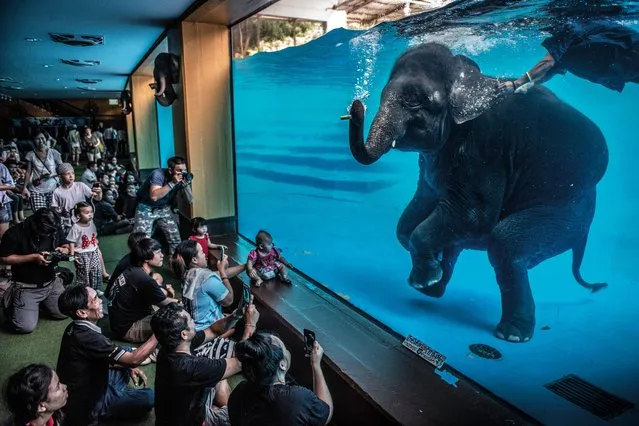
Winner, photojournalism. Elephant in the room, by Adam Oswell, Australia Zoo. Visitors watch a young elephant performing underwater. Oswell was disturbed by this scene, and organisations concerned with the welfare of captive elephants say performances like this encourage unnatural behaviour. In Thailand, there are now more elephants in captivity than in the wild. With the Covid pandemic causing tourism to collapse, elephant sanctuaries are becoming overwhelmed with animals that can no longer be looked after by their owners. (Photo by Adam Oswell/Wildlife Photographer of the Year 2021)

Winner, photojournalism. Elephant in the room, by Adam Oswell, Australia Zoo. Visitors watch a young elephant performing underwater. Oswell was disturbed by this scene, and organisations concerned with the welfare of captive elephants say performances like this encourage unnatural behaviour. In Thailand, there are now more elephants in captivity than in the wild. With the Covid pandemic causing tourism to collapse, elephant sanctuaries are becoming overwhelmed with animals that can no longer be looked after by their owners. (Photo by Adam Oswell/Wildlife Photographer of the Year 2021)
Details
30 Oct 2021 08:40:00
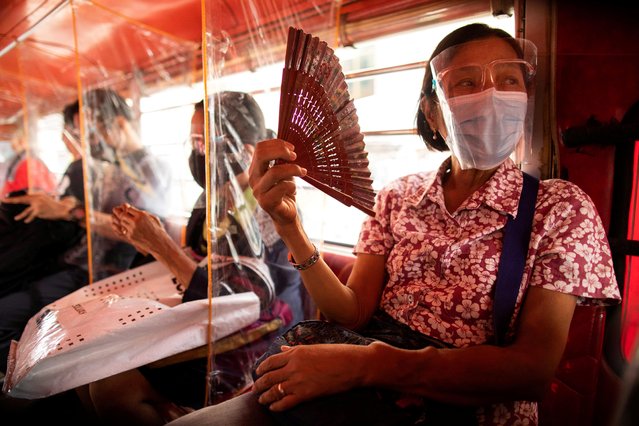
Jeepney passengers are seated in between plastic barriers, wearing face masks and face shields mandatory in public transportation, in Quezon City, Metro Manila, Philippines, August 19, 2020. (Photo by Eloisa Lopez/Reuters)

Jeepney passengers are seated in between plastic barriers, wearing face masks and face shields mandatory in public transportation, in Quezon City, Metro Manila, Philippines, August 19, 2020. (Photo by Eloisa Lopez/Reuters)
Details
02 Oct 2020 00:05:00
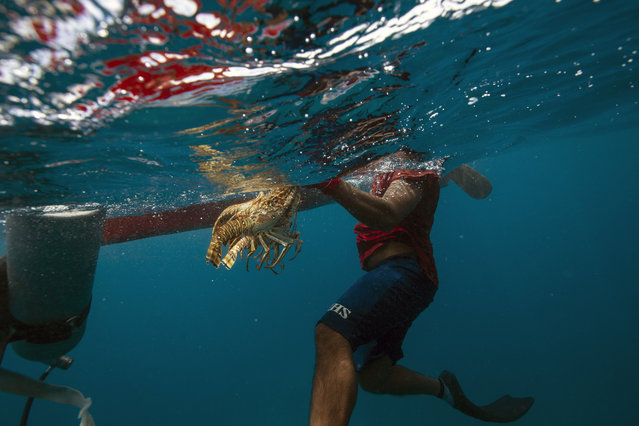
In this September 9, 2018 photo, a diver holds onto his catch of lobsters during a fishing journey in the Miskito coast near Cay Savannah, Honduras. A diver makes 75 lempiras ($3) per pound of lobster. An average 10-pound daily haul of lobster is a windfall for people in one of the most impoverished regions of the Americas, so many take the risk, and many suffer for it. (Photo by Rodrigo Abd/AP Photo)

In this September 9, 2018 photo, a diver holds onto his catch of lobsters during a fishing journey in the Miskito coast near Cay Savannah, Honduras. A diver makes 75 lempiras ($3) per pound of lobster. An average 10-pound daily haul of lobster is a windfall for people in one of the most impoverished regions of the Americas, so many take the risk, and many suffer for it. (Photo by Rodrigo Abd/AP Photo)
Details
23 Jan 2019 00:01:00
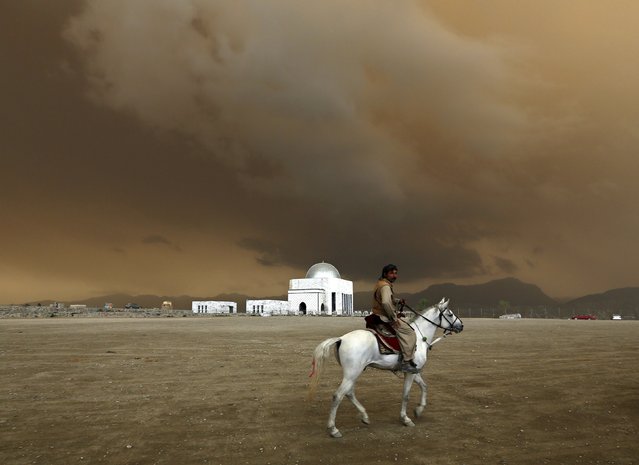
A man rides a horse at a playground on a hill in Kabul April 19, 2015. (Photo by Mohammad Ismail/Reuters)

A man rides a horse at a playground on a hill in Kabul April 19, 2015. (Photo by Mohammad Ismail/Reuters)
Details
21 Apr 2015 10:46:00
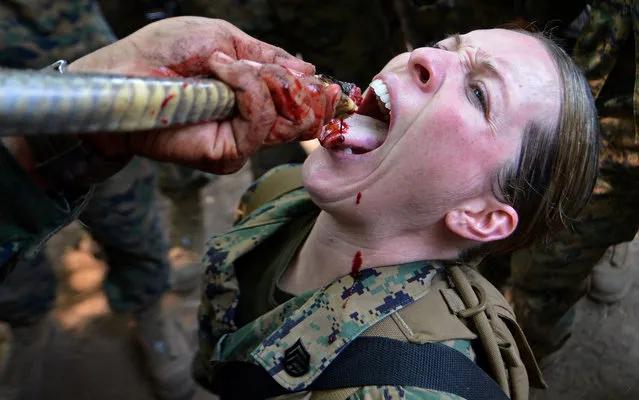
In a military base in the Thai province of Chon Buri February 20 U.S. Marines Navy with Thailand began their studies in jungle survival. The event is held in joint military exercises “Cobra Gold 2013”. During a jungle survival program February 20, 2013 taught by Royal Thai Special Forces in Sannapit, Thailand, U.S. Marines learned to catch cobras and drink their fresh blood, not to mention eat forest insects and pull the heads off of chicken. The training was part of Operation Cobra Gold 13, the 32nd edition of international military exercises hosted by the Thai. According to a U.S. Marines press release, Cobra Gold is the largest exercise of its kind in Asia and incorporates troops from five other nations in addition to the U.S. and Thailand. The Daily Mail reports that the Marines were invited to experience the local custom of drinking cobra blood after being taught to catch and kill cobras in the wild. As CNN notes, Cobra blood is believed to be a panacea and aphrodiasic in parts of Southeast Asia. In Jakarta, vendors can earn over $100 a night selling shots of cobra blood mixed with liquor. (Photo by Pornchai Kittiwongsakul/AFP Photo)

During a jungle survival program February 20, 2013 taught by Royal Thai Special Forces in Sannapit, Thailand, U.S. Marines learned to catch cobras and drink their fresh blood, not to mention eat forest insects and pull the heads off of chicken. The training was part of Operation Cobra Gold 13, the 32nd edition of international military exercises hosted by the Thai. According to a U.S. Marines press release, Cobra Gold is the largest exercise of its kind in Asia and incorporates troops from five other nations in addition to the U.S. and Thailand. The Daily Mail reports that the Marines were invited to experience the local custom of drinking cobra blood after being taught to catch and kill cobras in the wild. As CNN notes, Cobra blood is believed to be a panacea and aphrodiasic in parts of Southeast Asia. In Jakarta, vendors can earn over $100 a night selling shots of cobra blood mixed with liquor. (Photo by Pornchai Kittiwongsakul/AFP Photo)
Details
23 Feb 2013 11:52:00
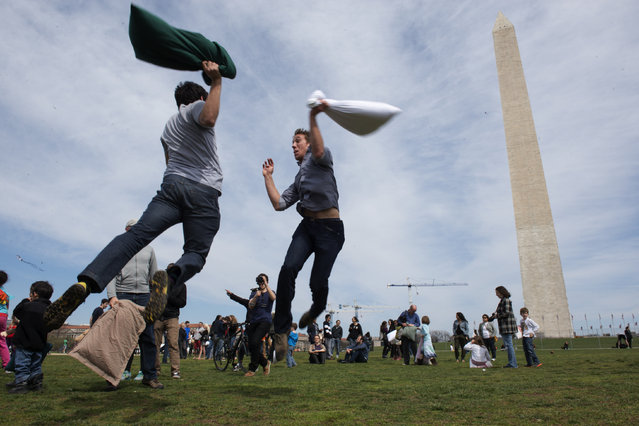
Alex Plunkett, left, and Sean Hart, both of Arlington, Va., join hundreds participating in the annual International Pillow Fight Day on April 5. Massive pillow fights broke out on the Mall in Washington and in cities around the world. (Photo by Marvin Joseph/The Washington Post)

Alex Plunkett, left, and Sean Hart, both of Arlington, Va., join hundreds participating in the annual International Pillow Fight Day on April 5. Massive pillow fights broke out on the Mall in Washington and in cities around the world. (Photo by Marvin Joseph/The Washington Post)
Details
28 Dec 2014 10:39:00