Loading...
Done
A worker unloads fish from a taxi boot at a fish market in Kolkata, India on February 5, 2018. (Photo by Rupak De Chowdhuri/Reuters)

A worker unloads fish from a taxi boot at a fish market in Kolkata, India on February 5, 2018. (Photo by Rupak De Chowdhuri/Reuters)
Details
06 Feb 2018 07:03:00
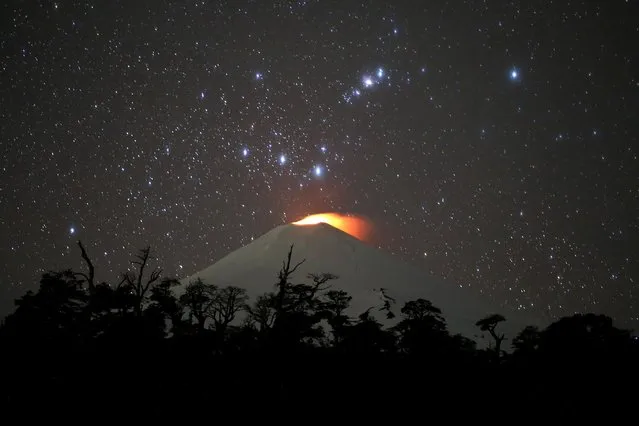
The Villarrica Volcano is seen at night from Villarrica area, Chile on November 16, 2022. (Photo by Cristobal Saavedra Escobar/Reuters)

The Villarrica Volcano is seen at night from Villarrica area, Chile on November 16, 2022. (Photo by Cristobal Saavedra Escobar/Reuters)
Details
01 Dec 2022 03:59:00
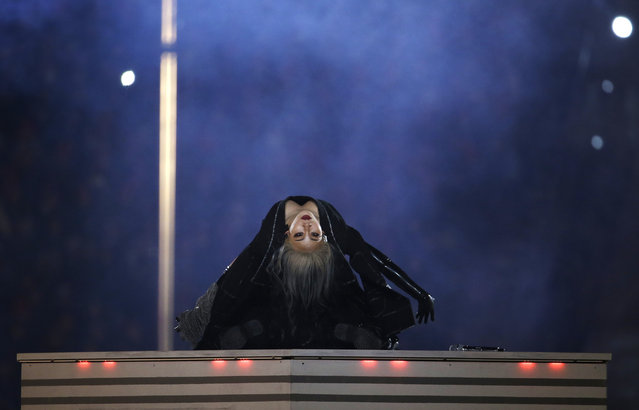
Singer CL performs during the closing ceremony of the 2018 Winter Olympics in Pyeongchang, South Korea, Sunday, February 25, 2018. (Photo by Natacha Pisarenko/AP Photo)

South Korean singer CL performs during the closing ceremony of the 2018 Winter Olympics in Pyeongchang, South Korea, Sunday, February 25, 2018, after 17 days of hard- fought competition. Olympic fire went out. (Photo by Natacha Pisarenko/AP Photo)
Details
27 Feb 2018 00:01:00
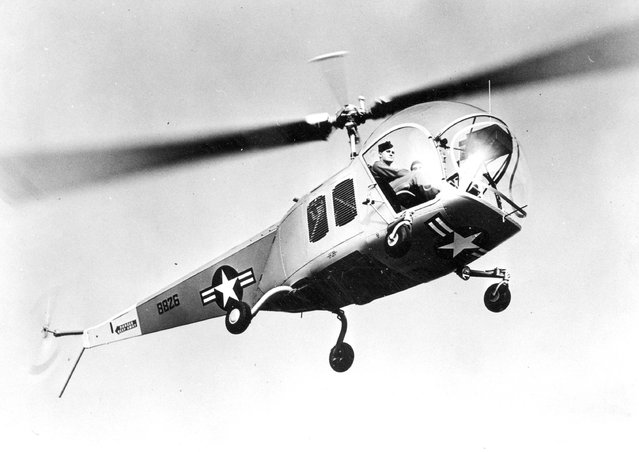
Number 10. BELL H-13 SIOUX was a two-bladed, single engine, light helicopter built by Bell Helicopter. Westland Aircraft manufactured the Sioux under license for the British military as the Sioux AH.1 and HT. (Photo by AP Photo)

Number 10. BELL H-13 SIOUX was a two-bladed, single engine, light helicopter built by Bell Helicopter. Westland Aircraft manufactured the Sioux under license for the British military as the Sioux AH.1 and HT. In 1947, the United States Air Force ordered the improved Bell Model 47A. Most were designated YR-13 and three winterized versions were designated YR-13A. The United States Army first ordered Bell 47s in 1948 under the designation H-13. These would later receive the name Sioux. The Bell-built H-13 B is seen airborne in this April 29, 1951 photo. The helicopter is equipped with a 173 horsepower engine, cruises at 85 miles per hour, climbs 900 feet in a minute and has a service ceiling of 11,500 feet. (Photo by AP Photo)

Details
08 Aug 2014 11:59:00
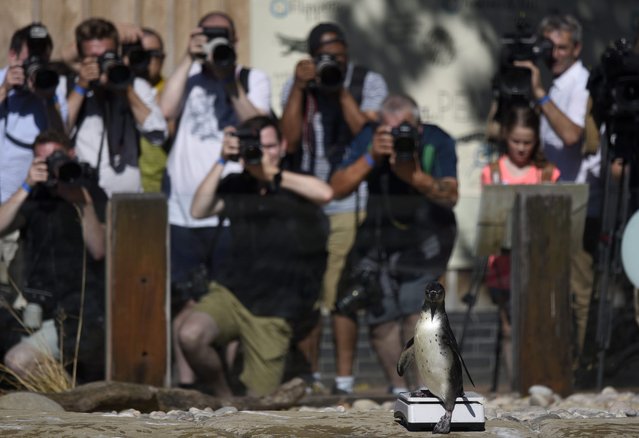
A Humboldt penguin stands on weighing scales whilst being photographed by members of the press during a photocall at the annual weigh-in at London Zoo in London, Britain, 24 August 2016. Every animal that is in the zoo is weighed and measured and the statistics recorded so the data can be shared with zoos across the world. (Photo by Hannah McKay/EPA)

A Humboldt penguin stands on weighing scales whilst being photographed by members of the press during a photocall at the annual weigh-in at London Zoo in London, Britain, 24 August 2016. Every animal that is in the zoo is weighed and measured and the statistics recorded so the data can be shared with zoos across the world. (Photo by Hannah McKay/EPA)
Details
25 Aug 2016 10:06:00
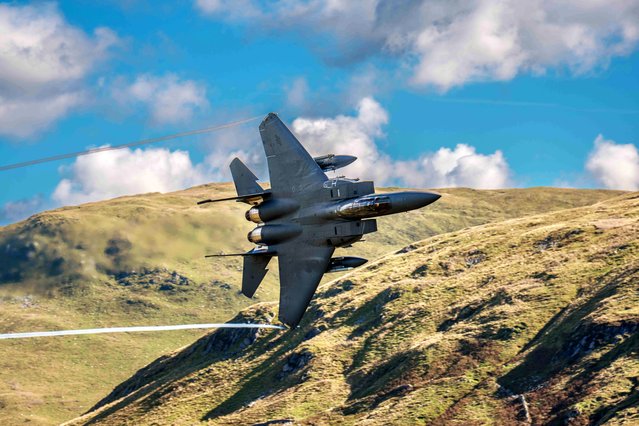
A military aircraft flies low through the Mach Loop in west-central Wales on September 25, 2025 during Cobra Warrior 25-2, one of Nato’s largest multinational air exercises. The operation, running across the UK until October 3, brings together air forces from the UK, US, Canada, Italy and Germany for three weeks of high-intensity training in challenging low-level environments. (Photo by Tony Marsh)

A military aircraft flies low through the Mach Loop in west-central Wales on September 25, 2025 during Cobra Warrior 25-2, one of Nato’s largest multinational air exercises. The operation, running across the UK until October 3, brings together air forces from the UK, US, Canada, Italy and Germany for three weeks of high-intensity training in challenging low-level environments. (Photo by Tony Marsh)
Details
15 Nov 2025 03:07:00
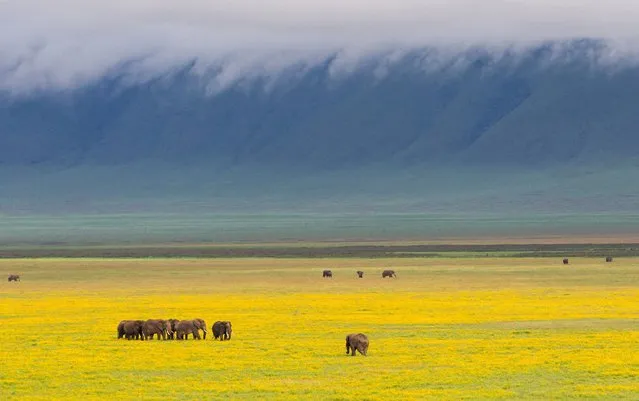
Ngorongoro Crater (Tanzania). At 610m deep and 260 sq km, this is the largest unflooded caldera in the world. A blue-green vision from above it's a haven for engangered wildlife and Maasai livestock. The crater was formed three million years ago when a giant volcano, which could have been as high as Kilimanjaro, exploded and collapsed. The caldera formed the concentric fractures in the crust cracked down to a magma reservoir deep underground. (Photo by John Bryant/Getty Images)

Ngorongoro Crater (Tanzania). At 610m deep and 260 sq km, this is the largest unflooded caldera in the world. A blue-green vision from above it's a haven for engangered wildlife and Maasai livestock. The crater was formed three million years ago when a giant volcano, which could have been as high as Kilimanjaro, exploded and collapsed. The caldera formed the concentric fractures in the crust cracked down to a magma reservoir deep underground. (Photo by John Bryant/Getty Images)
Details
28 Mar 2014 08:08:00
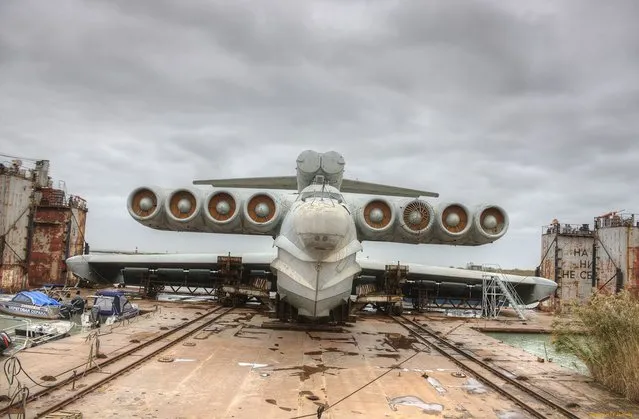
The Lun-class Ekranoplane was used by the Soviet Navy starting in 1987, and wasn't retired until the late 1990s, after the Soviet Union's fall. (Igor113)

“The Lun-class ekranoplan (NATO reporting name Duck) was a ground effect vehicle (GEV) designed by Rostislav Evgenievich Alexeev and used by the Soviet and Russian navies from 1987 until sometime in the late 1990s. It “flew” using the lift generated by the ground effect of its large wings when close to the surface of the water – about four metres or less. Although they might look similar and/or have related technical characteristics, ekranoplans like the Lun are not aircraft, seaplanes, hovercraft, or hydrofoils – ground effect is a separate technology altogether. The International Maritime Organization classifies these vehicles as maritime ships. The name Lun comes from the Russian for harrier”. – Wikipedia (Photo by Igor113)
Details
08 Aug 2014 10:51:00