Loading...
Done
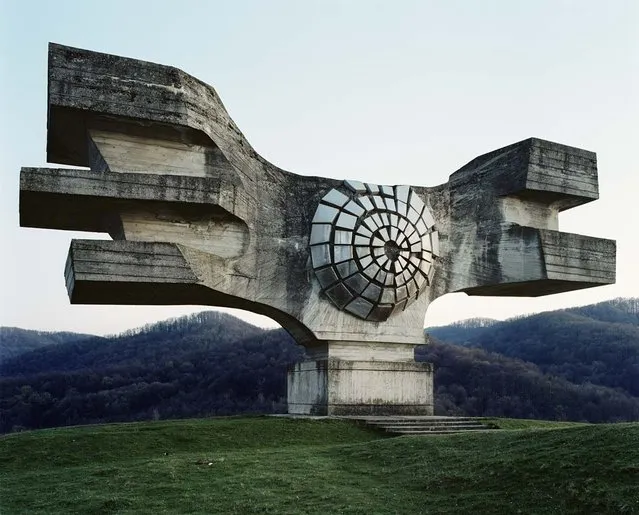
The monument of Ilirska Bistrica was designed by Janez Lenassi and built in 1965. It is dedicated to Slovenian soldiers that fell in World War II. (Photo by Jan Kempenaers)

The brutalist war memorials found throughout the former Yugoslavia were weird enough when they were built in the 1960s and 70s. Today, separated by the end of an architectural movement and the disintegration of the country, they seem almost alien. Belgian photographer Jan Kempenaers treats them purely as artistic objects in his book, “Spomenik”, named for the Serb-Croat word for monument. Known for photographing geographical oddities, Kempenaers was captivated by the spomenik after seeing them in an art encyclopedia. After hearing that many had been destroyed or abandoned, he set out to record what was left. (Photo by Jan Kempenaers)
Details
18 Aug 2014 09:07:00
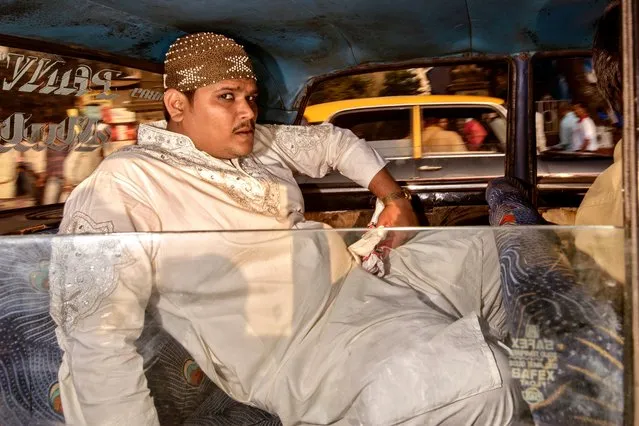
“I’m not scared of breaking the fourth wall”, Wallace has said of the photos where the subject is clearly aware of him taking the shot. “If they are looking at you in a photograph most photographers will think, oh, that’s not a good image. (But) people like to be involved and in the picture. You can see what they are thinking, see them talking”. (Photo by Dougie Wallace/The Guardian)

In Dougie Wallace’s photos of Mumbai taxis, the chatter, yelling, and constant horns of the city are almost audible. A selection of his images is on show at Gayfield Creative Spaces, Edinburgh, as part of the Retina photography festival until 30 July. For four years, the Glasgow-born Wallace focused his photos on one kind of taxi in particular: the Premier Padmini, a 1960s workhorse painted in black and yellow. Locally known as “Kaali-Peeli”, there were once more than 60,000 of them in the Indian city. But thanks to laws restricting pollution, the cars now are fast disappearing from Mumbai’s streets. (Photo by Dougie Wallace/The Guardian)
Details
13 Jul 2016 13:50:00
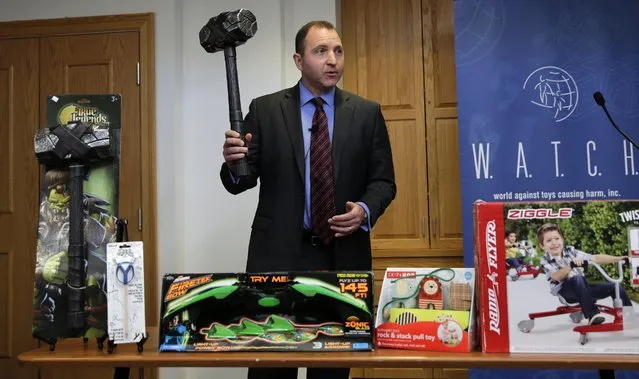
James Swartz, director of World Against Toys Causing Harm Inc., holds up toy battle hammer at Children's Franciscan Hospital in Boston, Wednesday, November 19, 2014. The consumer watchdog group has released its annual list of what it considers to be the 10 most unsafe toys as the holiday season approaches. (Photo by Charles Krupa/AP Photo)

A light-up bow whose arrows are advertised as flying up to 145 feet and the “Catapencil” – a pencil with a miniature slingshot-style launcher on its end – are on an annual list of unsafe toys released Wednesday by a Massachusetts-based consumer watchdog group. World Against Toys Causing Harm, or W.A.T.C.H., issued the “10 Worst Toys” list to remind parents and consumers of the potential hazards in some toys as the holiday shopping season gets underway. (Photo by Charles Krupa/AP Photo)
Details
21 Nov 2014 12:41:00
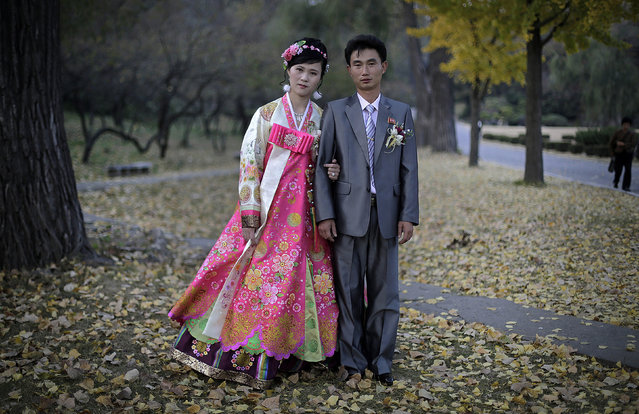
In this October 25, 2014, file photo, North Korean bride Ri Ok Ran, 28, and groom Kang Sung Jin, 32, pose for a portrait at the Moran Hill where they went to take wedding pictures, in Pyongyang, North Korea. The couple were married after dating for about two years. Their motto: “To have many children so that they can serve in the army and defend and uphold our leader and country, for many years into the future”. (Photo by Wong Maye-E/AP Photo)

Associated Press photographer Wong Maye-E tries to get her North Korean subjects to open up as much as is possible in an authoritarian country with no tolerance for dissent and great distrust of foreigners. She has taken dozens of portraits of North Koreans over the past three years, often after breaking the ice by taking photos with an instant camera and sharing them. Her question for everyone she photographs: What is your motto? Their answers reflect both their varied lives and the government that looms incessantly over all of them. (Photo by Wong Maye-E/AP Photo)
Details
16 Jun 2017 06:28:00
Alexei Gruk, 45, mechanic and supporter of presidential candidate Pavel Grudinin, poses for a picture in St. Petersburg, Russia, January 31, 2018. “The most important thing for me is that our foreign policy stays the same”, said Gruk. “To hell with the sanctions… So what if they don’t bring foreign stuff here anymore? As if that means we have to give up. I don't care”. (Photo by Anton Vaganov/Reuters)

Most Russians intending to vote for Vladimir Putin in Sunday's election say stability is at the root of their faith in their candidate – though many young voters believe it's time for a change of leader. Putin, 65, is expected to win a fourth term in office with 69 percent of the vote, according to the latest survey by a state-run pollster. Reuters correspondents and photographers who travelled around the country talking to voters ahead of the March 18 election found nothing to contradict expectation of an emphatic Putin victory. (Photo by Anton Vaganov/Reuters)
Details
15 Mar 2018 00:01:00
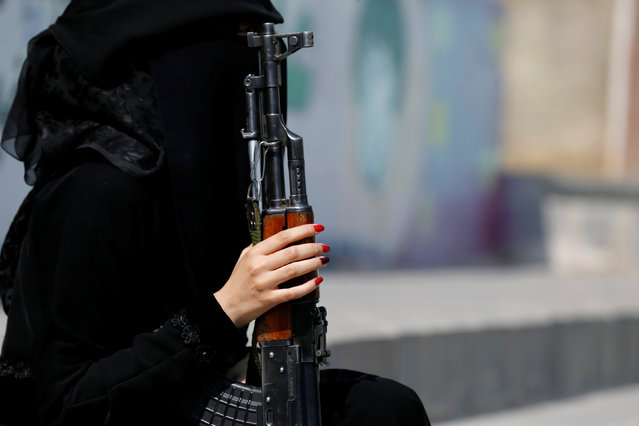
A woman loyal to the Houthi movement holds a rifle as she takes part in a parade to show support to the movement in Sanaa, Yemen September 6, 2016. Dressed in the head to toe garments which obscured their faces, the female fighters brandished machine guns, rocket launchers and grenades. The women also wore hats as they showed support for the Shiite Houthi rebels. The Saudi-led Arab coalition launched a military campaign against the Houthis and their allies in March 2015. It was after the rebels closed in on Gulf-backed President Abedrabbo Mansour Hadi in his southern refuge of Aden, forcing him into exile. The female protesters have pledged to remain supportive and do whatever they can to back the ongoing resistance against the kingdom. Yemen is in the grip of its most severe crisis in years, and is on the brink of civil war. (Photo by Khaled Abdullah/Reuters)

A woman loyal to the Houthi movement holds a rifle as she takes part in a parade to show support to the movement in Sanaa, Yemen September 6, 2016. The Saudi-led Arab coalition launched a military campaign against the Huthis and their allies in March 2015, after the rebels closed in on Gulf-backed President Abedrabbo Mansour Hadi in his southern refuge of Aden, forcing him into exile. (Photo by Khaled Abdullah/Reuters)
Details
07 Sep 2016 10:24:00
Ocean voyage

Do you think that history is a science? Well, not exactly. First, and foremost, history is the state's “legend of wars”, it’s official regalia. Of course, public historians are not interested in scientific truth – quite the opposite. In this respect, any attempt to present a state’s history as altruistic and benevolent as possible is welcomed and encouraged – as opposed to any revisionism attempts that may be more accurate. In this matter, Chinese have surpassed us all – they revised in highly creative manner (but rather shamelessly) the technology already invented by Europeans, a process that resulted in oldest state on the planet. Here is an interesting paradox: ask any sinologist about the Middle Kingdom during second century B.C., and he will describe it to you in such a vivid manner as if he has been living there all his life – but as soon as you will ask him to describe Chinese history in the 19-20th centuries… let's say, his eagerness will be greatly diminished. However, we will discuss China in a different article, and in the meantime we will try to understand how exactly historic “legend of wars” is formed and functions – based on a specific and well-known example. A great example is Ferdinand Magellan's first voyage around the world.
Details
14 Nov 2011 09:11:00
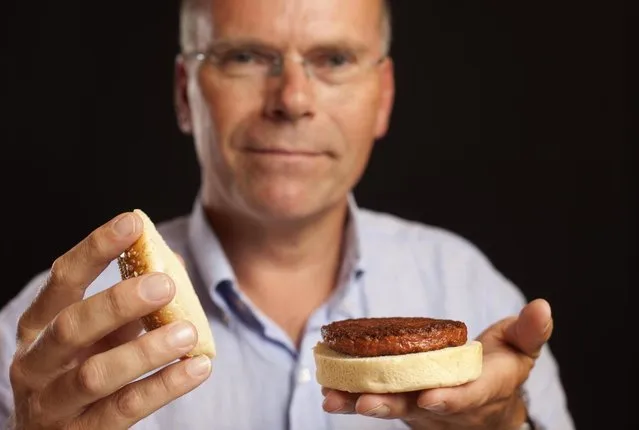
In this handout image provided by Ogilvy, a burger made from cultured beef, which has been developed by Professor Mark Post of Maastricht University in the Netherlands (pictured) is shown to the media during a press conference on August 5, 2013 in London, England. Cultured Beef could help solve the coming food crisis and combat climate change with commercial production of Cultured Beef beginning within ten to twenty years. (Photo by David Parry via Getty Images)

In this handout image provided by Ogilvy, a burger made from cultured beef, which has been developed by Professor Mark Post of Maastricht University in the Netherlands (pictured) is shown to the media during a press conference on August 5, 2013 in London, England. The in-vitro burger, cultured from cattle stem cells, the first example of what its creator says could provide an answer to global food shortages and help combat climate change, was fried in a pan and tasted by two volunteers. The burger is the result of years of research by Dutch scientist Mark Post, a vascular biologist at the University of Maastricht, who is working to show how meat grown in petri dishes might one day be a true alternative to meat from livestock.The meat in the burger has been made by knitting together around 20,000 strands of protein that has been cultured from cattle stem cells in Post's lab. (Photo by David Parry)
Details
06 Aug 2013 08:48:00