Loading...
Done
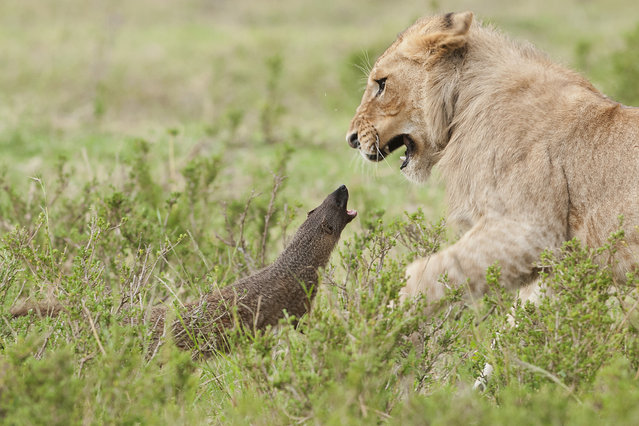
A mongoose growls at a startled lion on September 10, 2011 in Maasai Mara, Kenya. Four lions were left with their tails between their legs when a mongoose bravely took on the predators. Despite being under two feet tall, the aggressive mongoose growled at the felines and even bit one on the nose. (Photo by Jerome Guillaumot/Barcroft Media)

A mongoose growls at a startled lion on September 10, 2011 in Maasai Mara, Kenya. Four lions were left with their tails between their legs when a mongoose bravely took on the predators. Despite being under two feet tall, the aggressive mongoose growled at the felines and even bit one on the nose. The shocking fight, which was photographed in 2011 but has just been released, began in the Masaai Mara National Park, Kenya, when photographer Jerome Guillaumot came across four young lions surrounding the terrified marsh mongoose. The lions chased the mongoose into a hole in the ground but the small animal reemerged to fight the predators once again before running for cover. (Photo by Jerome Guillaumot/Barcroft Media)
Details
03 Sep 2014 10:33:00
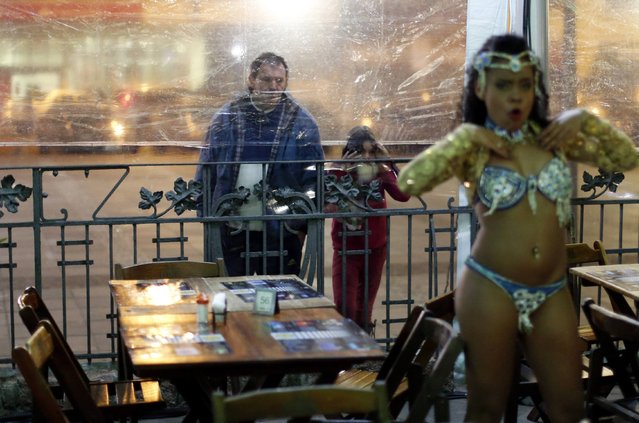
People watch from outside as a dancer performs inside a bar in Porto Alegre June 21, 2014. In a project called “On The Sidelines” Reuters photographers share pictures showing their own quirky and creative view of the 2014 World Cup in Brazil. (Photo by Marko Djurica/Reuters)

As national soccer teams and the photographers who have been covering them start to trickle home from the Brazil World Cup, it’s time to revisit the “On the Sidelines” project. This Reuters Pictures project was billed as a chance for photographers to share “their own quirky and creative view of the World Cup”. Photo: People watch from outside as a dancer performs inside a bar in Porto Alegre June 21, 2014. In a project called “On The Sidelines” Reuters photographers share pictures showing their own quirky and creative view of the 2014 World Cup in Brazil. (Photo by Marko Djurica/Reuters)
Details
09 Jul 2014 13:04:00
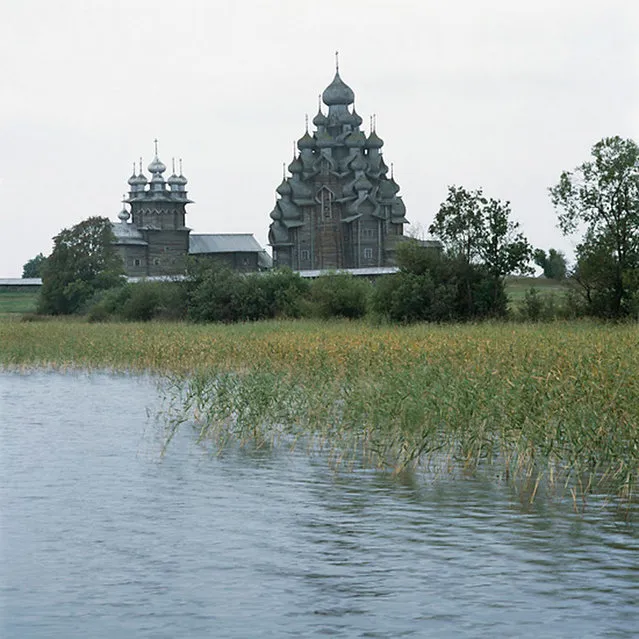
Wooden Churches - Travelling In The Russian North By Richard Davies Part 1

While communism, collectivism, worms, dry rot and casual looting failed to destroy the majestic wooden churches of Russia, it may be ordinary neglect that finally does them in. Dwindled now to several hundred remaining examples, these glories of vernacular architecture lie scattered amid the vastness of the world’s largest country. Just over a decade ago, Richard Davies, a British architectural photographer, struck out on a mission to record the fragile and poetic structures. Austerely beautiful and haunting, “Wooden Churches: Traveling in the Russian North” (White Sea Publishing; $132) is the result. Covering thousands of miles, Mr. Davies described how he and the writer Matilda Moreton tracked down the survivors from among the thousands of onion-domed structures built after Prince Vladimir converted to Christianity in 988.
Details
25 Nov 2013 12:47:00
Meerim Momunova wrestles with her fellow Kyrgyz teammate Anara Ryskulova during a performance of a traditional style of wrestling called “Alysh”. Momunova is a champion in Asia and has been competing since 2015, after a background in judo. According to Momunova, one of the advantages of “Alysh” is the ease of the uniform for women – even Muslim women who cover their faces can compete. Momunova holds a degree in sports coaching and hopes to see more women come into this sport. (Photo by Eleanor Moseman/The Guardian)

This year’s World Nomad Games, a celebration of nomadic heritage, took place in the Issyk-Kul province of Kyrgyzstan. Eleanor Moseman photographed female competitors who had travelled from all over central Asia and eastern Europe, and explored the difficulties and challenges they face as competitors. (Photo by Eleanor Moseman/The Guardian)
Details
20 Sep 2018 00:05:00
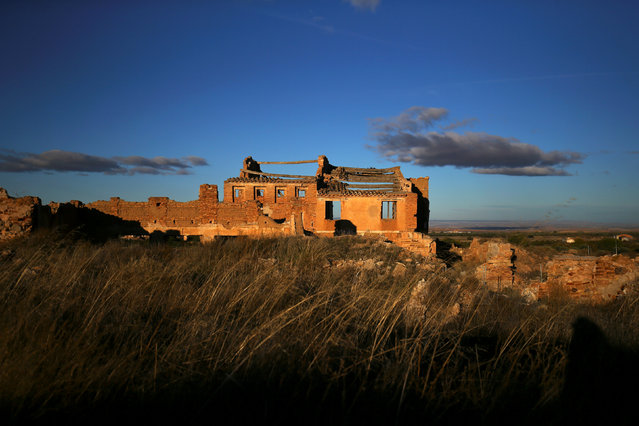
Ruins of a building are seen in the old village of Belchite, in northern Spain, November 13, 2016. (Photo by Andrea Comas/Reuters)

Ruins of a building are seen in the old village of Belchite, in northern Spain, November 13, 2016. Almost 80 years ago Tomas Ortin fled under the cover of night from his home in the small town of Belchite on Spain's northern plains to escape with hundreds of others from one of the bloodiest battles of the country's civil war. At 94 years old, Ortin now lives just across the road from Belchite, which has lain in ruins since Republican forces attacked it, a symbol of the destruction caused by the 1936-1939 war in which an estimated 500,000 people died. (Photo by Andrea Comas/Reuters)
Details
30 Nov 2016 12:31:00
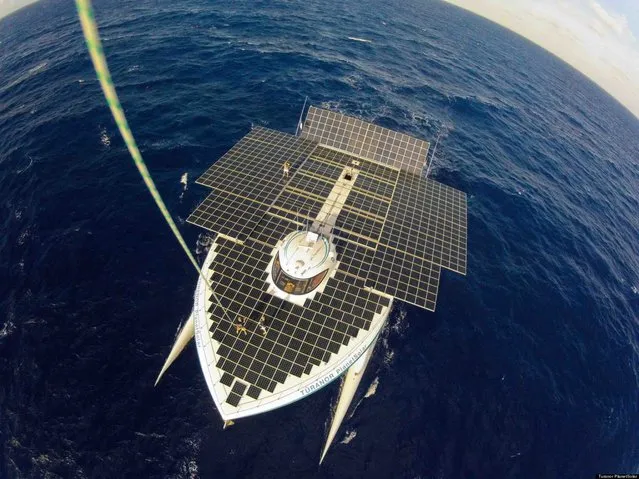
Turanor PlanetSolar

MS Tûranor PlanetSolar, known under the project name PlanetSolar, is the largest solar-powered boat in the world The vessel was designed by LOMOcean Design, built by Knierim Yachtbau in Kiel, Germany, and launched on 31 March 2010. In May 2012, it became the first ever solar electric vehicle to circumnavigate the globe. The 31-meter boat is covered in over 500 square meters of solar panels rated 93 kW, which in turn connect to one of the two electric motors in each hull. There are 8.5 tons of lithium-ion batteries in the ship's two hulls. The boat's shape allows it to reach speeds of up to 14 knots. The hull was model tested in wind tunnels and was tank tested to determine its hydrodynamics and aerodynamics. The boat has been designed to be used as a luxury yacht after the record attempt is finished.
Details
30 Oct 2013 09:06:00
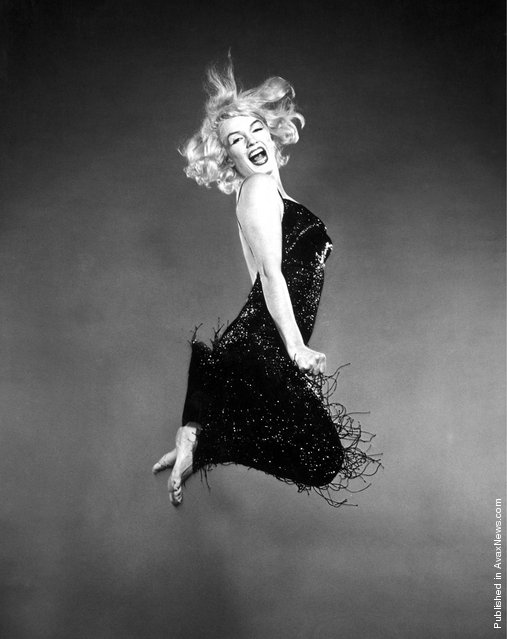
Marilyn Monroe, 'Jumpology', 1959. Photo by Philippe Halsman

“Philippe Halsman (2 May 1906 Riga, Russian Empire – 25 June 1979 New York City) was a Latvian-born American portrait photographer. Many celebrities photographed by Halsman include Alfred Hitchcock, Judy Garland, Winston Churchill, Marilyn Monroe, Dorothy Dandridge, and Pablo Picasso. Many of those photographs appeared on the cover of Life. In such photos, he utilizes a variety of his rules of photography. For example, in one of his photos of Winston Churchill, the omission of his face makes Halsman's photo even more powerful at making Churchill more human”. – Wikipedia

Photo: Marilyn Monroe, “Jumpology”, 1959. Photo by Philippe Halsman
Details
12 Apr 2012 13:18:00
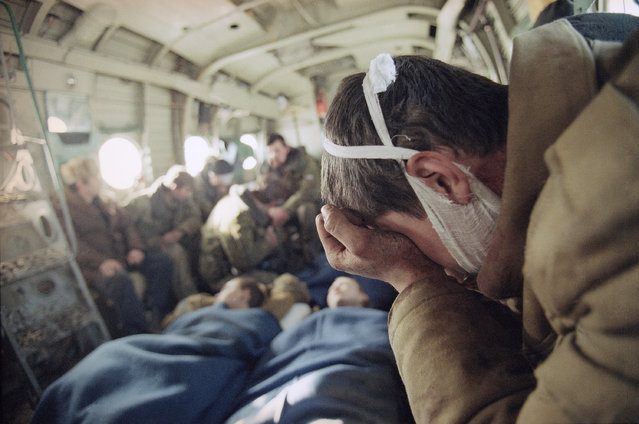
A wounded Russian soldier, who has been evacuated with his comrades, weeps in a helicopter on his way out of Grozny on Friday, February 3, 1995, as the fighting in the Chechen capital continues. The massive Russian force that invaded Chechnya has taken very heavy losses against a small but determined guerrilla force. (Photo by Karsten Thielker/AP Photo/File)

Karsten Thielker, a Pulitzer Prize-winning German photographer with The Associated Press who covered human suffering in conflict zones around the globe, has died at the age of 54. Thielker died on October 3 in Berlin of esophageal cancer, his wife Janna Ressel said. Here: A wounded Russian soldier, who has been evacuated with his comrades, weeps in a helicopter on his way out of Grozny on Friday, February 3, 1995, as the fighting in the Chechen capital continues. The massive Russian force that invaded Chechnya has taken very heavy losses against a small but determined guerrilla force. (Photo by Karsten Thielker/AP Photo/File)
Details
11 Oct 2020 00:05:00