Loading...
Done
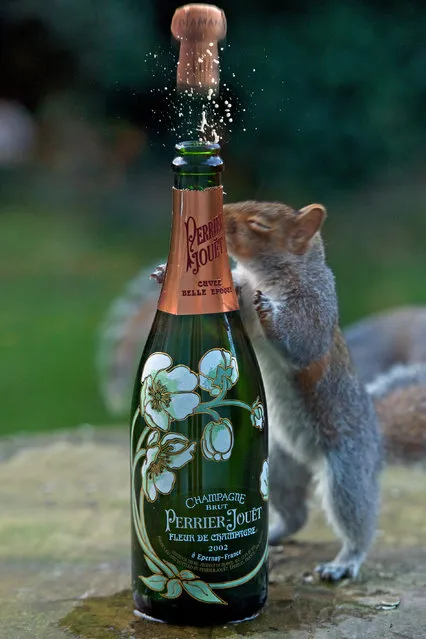
“The champage encounter”. (Photo by Max Ellis/Caters News)

“Photographer Max Ellis has become an internet star – after posting wacky photos of squirrels in hilarious situations, from being sent flying through the air in fear by a Buckaroo to lifting weights. Max places his self-made creations in his garden in Teddington, London, and then painstakingly waits hours – and sometimes days – for his subjects to get into the exact position to capture his shot. In another scene an inquisitive squirrel is sent backwards in surprise as a bottle of champagne pops its cork and in others a squirrel appears to saw his friend in half just like the famous magic trick”. – Caters News
Details
09 May 2014 11:03:00
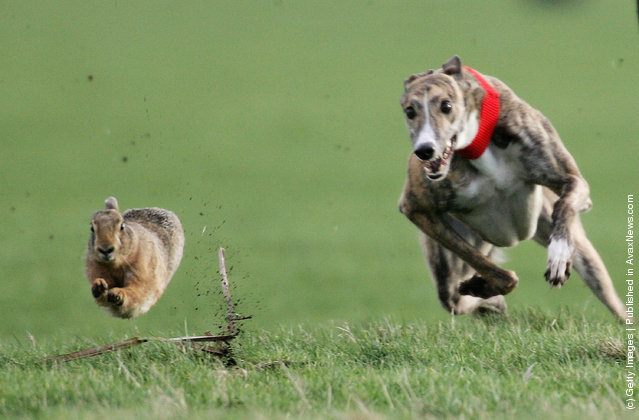
Greyhounds race after a Hare at the last Waterloo Cup Hare coursing event

“The Waterloo Cup was a coursing event. The three day event was run annually at Great Altcar in Lancashire, England from 1836 to 2005 and it used to attract tens of thousands of spectators to watch and gamble on the coursing matches. It was founded by William Philip Molyneux, 2nd Earl of Sefton, and, originally, was supported by his patronage”. – Wikipedia

Photo: A Greyhound races after Hare at the last Waterloo Cup Hare coursing event, February 14, 2005, near Liverpool, England. (Photo by Christopher Furlong/Getty Images)
Details
18 Feb 2012 11:26:00


“NTV (Cyrillic: НТВ) is a Russian television channel. As a subsidiary of Vladimir Gusinsky's company Media-Most, it was a pioneer in the post-Soviet independent television media, but was later taken over by state-owned Gazprom”. – Wikipedia

Photo: A woman with “I love NTV” painted on here face cheers in support of the independent Russian NTV television station April 7, 2001 during a rally in Moscow. Thousands of people gathered in the rain to show their support for Russia's only national independent television station in its fight against new owners. (Photo by Oleg Nikishin/Newsmakers)
Details
15 Apr 2011 10:53:00


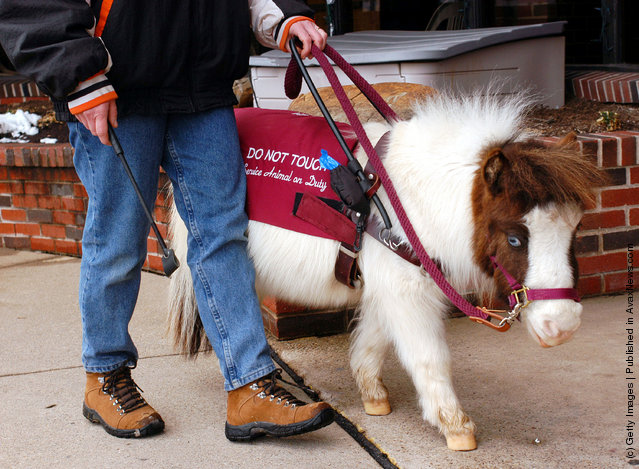
“A guide horse is an experimental mobility option for blind people who do not wish to or cannot use a guide dog. They are provided by The Guide Horse Foundation, founded in 1999 to provide miniature horses as assistance animals to blind users living in rural environments”. – Wikipedia

Photo: Shari Bernstiel, of Lansdale, Pennsylvania is helped along the sidewalk by Tonto, her guide horse March 19, 2004 in Lansdale, Pennsylvania. Tonto, a minature horse who went through one year of training, acts as Sheri's seeing eye dog and is one of three working guide horses in the United States. (Photo by William Thomas Cain/Getty Images)
Details
20 Jun 2011 14:05:00


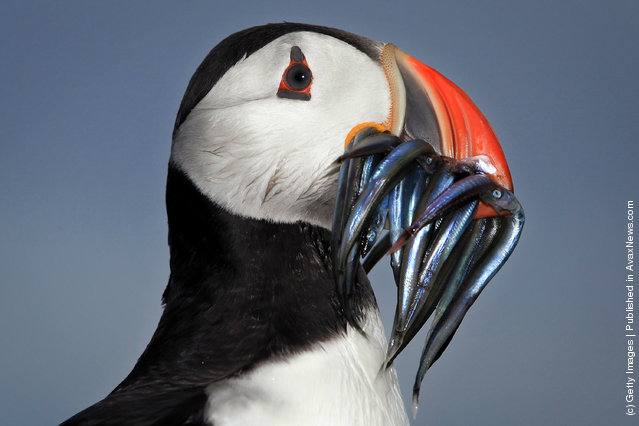
A Puffin returns to it's nest with a beak full of sand eels on June 25, 2011 on Inner Farne, England. The Farne Islands, which are run by the National Trust, are situated two to three miles off the Northumberland coastline. The archipeligo of 16-28 separate islands (depending on the tide) make the summer home to approximately 100,000 pairs of breeding seabirds including around 36,000 Puffins, 32,000 Guillemots and 2,000 pairs of Arctic Terns. The species of birds which nest in internationally important numbers include Shag, Sandwich Tern and Arctic Tern. The coastline around The Farnes are also the breeding ground to one of Europe's largest Grey Seal colonies with around 4,000 adults giving birth to 1500 pups every year. (Photo by Dan Kitwood/Getty Images)
Details
27 Jun 2011 12:58:00
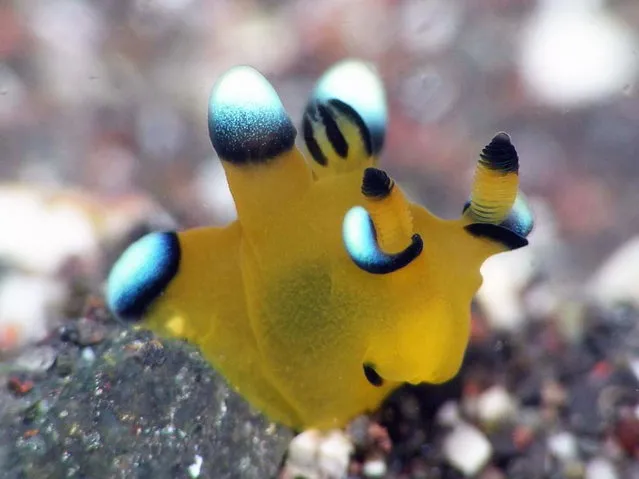
Thecacera Pacifica AKA Pikachu

If you ever wanted to meet a live Pikachu, you might have a hard time finding one. However, there is a creature on this Earth that kind of looks like one. That creature’s name is Thecacera pacifica and it is a species of a sea slug. These little critters can be found in the Indian Ocean from African coast to Indonesia and Vanuatu. Their vibrant orange and blue colors look gorgeous, making it look like some sort of anemone. Also, as you might have guessed from the striking colors of the sea slug, just like most of anemones, this creature is very toxic. Thus, keeping it as a pet isn’t an option.

Details
19 Dec 2014 12:51:00
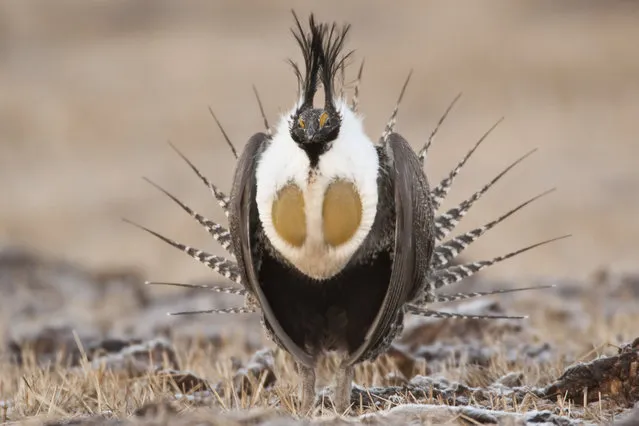
Greater Sage-Grouse

The Greater Sage-Grouse is certainly a formidable-looking bird. Being the largest grouse in North America and having tail feathers, which look like giant spikes, make for a ferocious sight. These birds are well known for their complicated courtship rituals, in which the males perform a special “strutting display” to attract the females. Another distinct feature of the Greater Sage-Grouse is two large yellow throat sacs (gular sacs), which are inflated by the males during the courtship display. Unlike pelicans, whose gular sacs are used to store fish while hunting, the throat sacks of the Greater Sage-Grouse are merely for display.
Details
21 Nov 2014 12:25:00
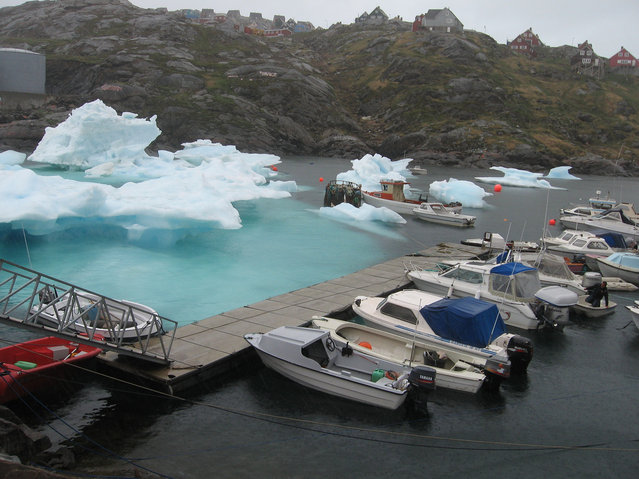
Tasiilaq Greenland

Tasiilaq, formerly Ammassalik and Angmagssalik, is a town in the Sermersooq municipality in southeastern Greenland. With 1,930 inhabitants as of 2010, it is the most populous community on the eastern coast, and the seventh-largest town in Greenland. The Sermilik Station, dedicated to the research of the nearby Mittivakkat Glacier, is located near the town.
Details
09 Mar 2015 11:33:00