Loading...
Done
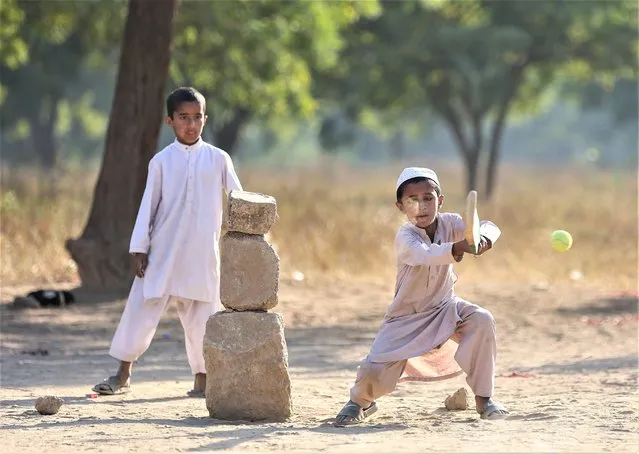
Boys play cricket close to Karachi airport on December 15, 2022 in Karachi, Pakistan. (Photo by Matthew Lewis/Getty Images)

Boys play cricket close to Karachi airport on December 15, 2022 in Karachi, Pakistan. (Photo by Matthew Lewis/Getty Images)
Details
14 Jan 2023 00:59:00
Italian-American actress and model Julia Fox is seen on February 15, 2023 in New York City. (Photo by Rachpoot/Bauer-Griffin/GC Images)

Italian-American actress and model Julia Fox is seen on February 15, 2023 in New York City. (Photo by Rachpoot/Bauer-Griffin/GC Images)
Details
26 Feb 2023 04:09:00
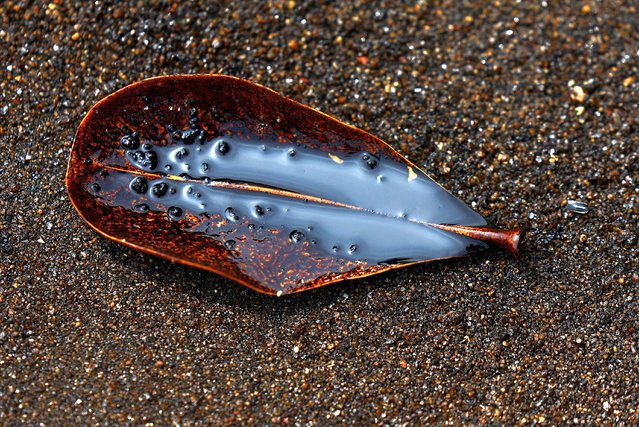
Oil pools in a leaf on the beach following an oil slick at Tanjong Beach in Sentosa, Singapore on June 15, 2024. (Photo by Edgar Su/Reuters)

Oil pools in a leaf on the beach following an oil slick at Tanjong Beach in Sentosa, Singapore on June 15, 2024. (Photo by Edgar Su/Reuters)
Details
06 Jan 2025 04:14:00
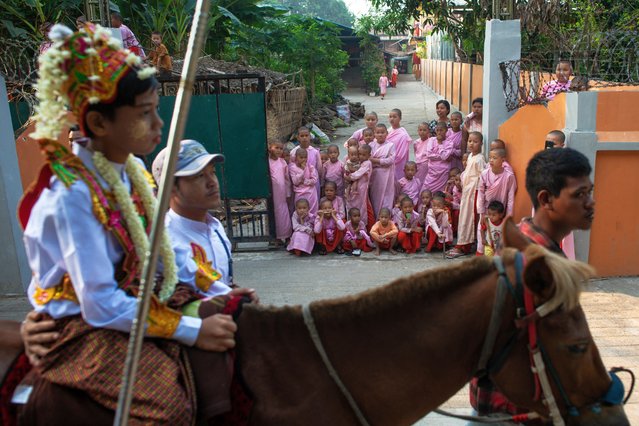
Buddhist nuns watch a parade during a Novitiation Ceremony at the Hlegu Township in Yangon on March 15, 2025. (Photo by Sai Aung Main/AFP Photo)

Buddhist nuns watch a parade during a Novitiation Ceremony at the Hlegu Township in Yangon on March 15, 2025. (Photo by Sai Aung Main/AFP Photo)
Details
31 Mar 2025 04:02:00


“Snowflake (c. 1964 – November 24, 2003) was an albino gorilla. He was the only known albino gorilla so far, and the most popular resident of the Barcelona Zoo in Catalonia, Spain. Originally named Nfumu Ngui in Fang language ("white gorilla") by his captor, he was then nicknamed Floquet de Neu (Catalan for little snowflake) by his keeper Jordi Sabater Pi. On his arrival to Barcelona where he was given an official reception by the then Mayor of Barcelona, Josep Maria de Porcioles, in November 1966, he was called Blancanieves (“Snow White”) in the newspaper Tele/Exprés. But he became famous with the name given to him by Sabater when National Geographic Magazine featured him on the main page in March 1967, with the English name Snowflake. This name spread among the press (Stern, Life, Paris-Match) and was later translated to Spanish as Copito de Nieve. Sabater himself called the gorilla Floquet or Copi, and in the later years Nfumu. The asteroid 95962 Copito, discovered by Catalan astronomer J. Manteca, is named in his honour”.
Details
07 Mar 2011 15:50:00
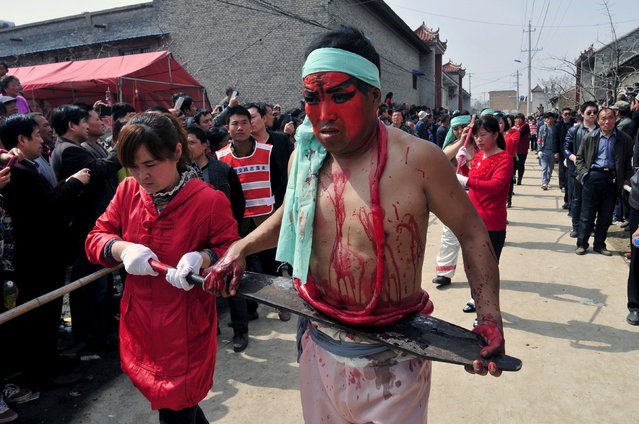
A folk performer (front R) with make-up and props takes part in a “Blood Shehuo” parade, during a performance in Linyi county, Shanxi province March 21, 2015. “Shehuo” is the common name of Chinese traditional activities consisting of folk performances in northern China. The "Blood Shehuo" performers use make-up and props to re-enact scenes of horror in classic Chinese novels like Water Margin. (Photo by Reuters/Stringer)

A folk performer (front R) with make-up and props takes part in a “Blood Shehuo” parade, during a performance in Linyi county, Shanxi province March 21, 2015. “Shehuo” is the common name of Chinese traditional activities consisting of folk performances in northern China. The “Blood Shehuo” performers use make-up and props to re-enact scenes of horror in classic Chinese novels like Water Margin. (Photo by Reuters/Stringer)
Details
23 Mar 2015 10:33:00
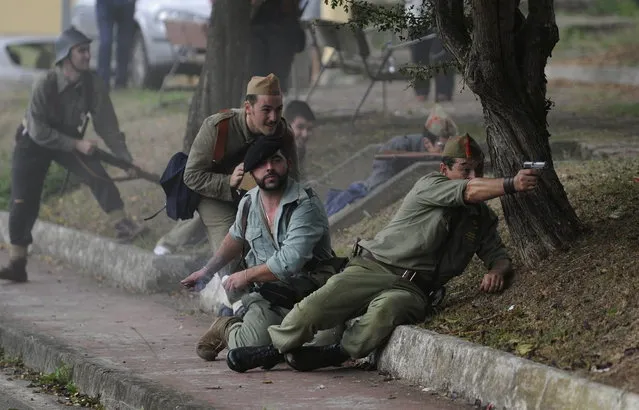
Actors take part in a re-enactment of the "Battle of Areces" that took place during the Spanish Civil War, in Grullos, north of Spain, September 14, 2013. The re-enactment of the historic 1937 battle was organised by the Frente del Nalon Association. (Photo by Eloy Alonso/Reuters)

“The Spanish Civil War (The Crusade among Nationalists, Fourth Carlist War among Carlists, The Rebellion or Uprising among Republicans) was a major conflict fought in Spain from 17 July 1936 to 1 April 1939. An estimated total of 500,000 people lost their lives as a consequence of the War”. – Wikipedia. Photo: Actors take part in a re-enactment of the “Battle of Areces” that took place during the Spanish Civil War, in Grullos, north of Spain, September 14, 2013. The re-enactment of the historic 1937 battle was organised by the Frente del Nalon Association. (Photo by Eloy Alonso/Reuters)
Details
17 Sep 2013 09:06:00
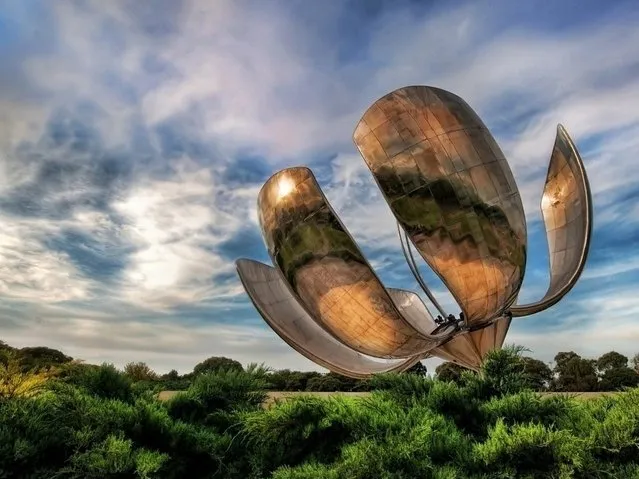
Floralis Generica - Buenos Aires

Floralis Genérica is a sculpture made of steel and aluminum located in Plaza de las Naciones Unidas, Avenida Figueroa Alcorta, Buenos Aires, a gift to the city by the Argentine architect Eduardo Catalano. Catalano once said that the flower "is a synthesis of all the flowers and is both a hope that is reborn every day to open." It was created in 2002. The sculpture moves closing its petals in the evening and opening them in the morning, although this mechanism is currently disabled. The sculpture is located in the center of a park of four acres of wooded boundaries, surrounded by paths that get closer and provide different perspectives of the monument, and placed above a reflecting pool, which apart from fulfilling its aesthetic function, protects it. It represents a large flower made of stainless steel with aluminum skeleton and reinforced concrete, which looks at the sky, extending to it its six petals. Weighs eighteen tons and is 23 meters high.
Details
20 Oct 2013 18:32:00