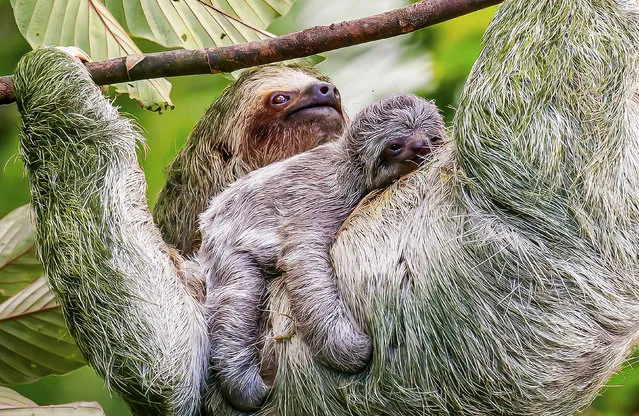
A baby sloth uses his mother as a hammock while she feasts on papayas in Heredia province in Costa Rica in April 2023. (Photo by William Steele/Solent News)
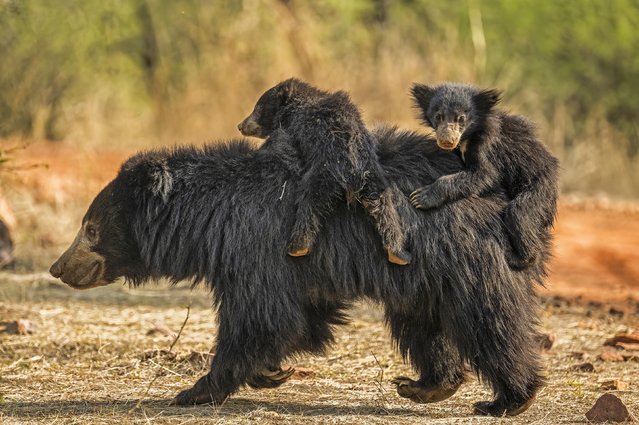
These young sloth bears hitch a ride on their mother's back as she forages for food in the Ranthambhore Tiger Reserve in the Indian state of Rajasthan in May 2023. (Photo by Aditya Singh/Solent News)
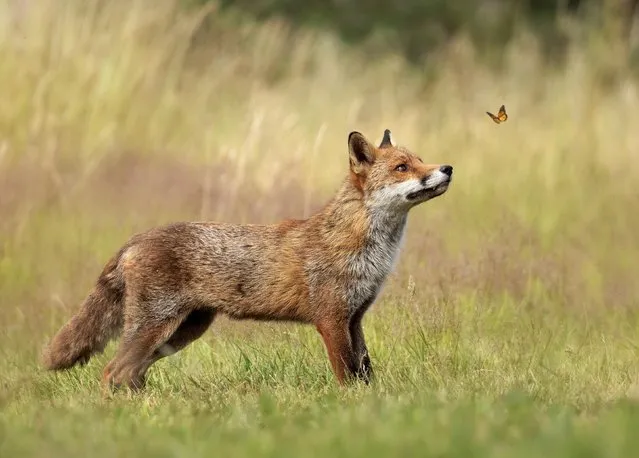
As if pulled from a Disney film, a fox is mesmerised by a butterfly hovering in front of its nose in a field in Taplow, Berkshire, South East England in the second decade of July 2023. (Photo by Ann Aveyard/Animal News Agency)
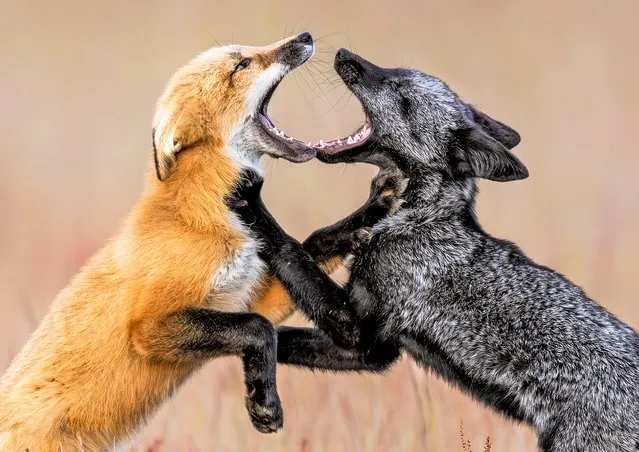
The rabbit population of San Juan Island, brought in to feed lighthouse keepers, got so big that in the 1930s foxes were introduced to kill them. Although they are red foxes, their coats can be orange, silver, black or multi-coloured. Picture date: September 2023. (Photo by Jun Zuo/Solent News)
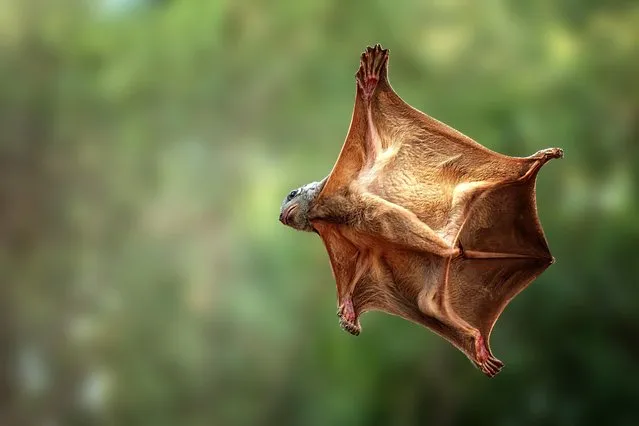
A flying lemur glides through the air in West Java, Indonesia in the first decade of October 2023. The photographer said the animal veered away from him at the last minute. (Photo by Dzul Dzulfikri/Animal News Agency)
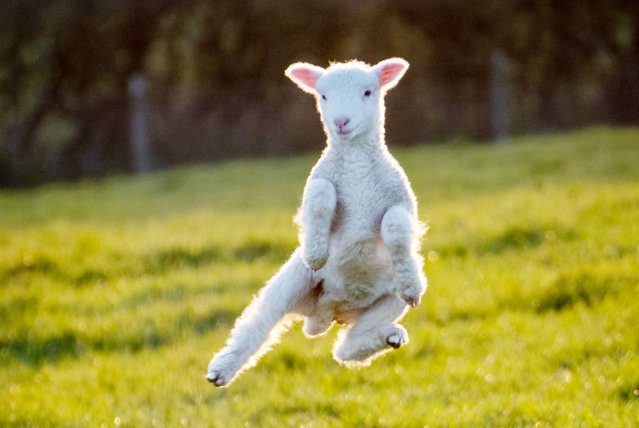
This is the moment a lamb appears to be doing kung fu as it plays with its friends in a field overlooking Kimmeridge Bay in Dorset on April 11, 2022. (Photo by Donna White/Bournemouth News)
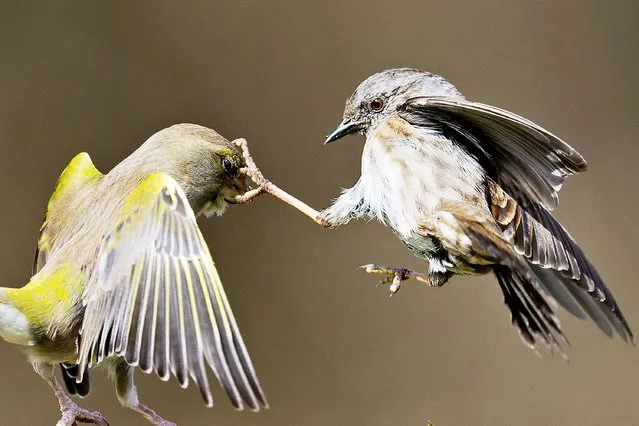
A bully greenfinch (left) got its comeuppance when a small but fiery dunnock (right) defended itself with its talons in Suffolk, United Kingdom on April 18, 2022. The smaller bird was perched peacefully before the finch burst onto the scene and aggressively squared up to the dunnock. But as the finch tried to peck at the dunnock, the small brown bird expertly used its foot to slam its mouth shut. (Photo by Paul Sawer/Solent News & Photo Agency)
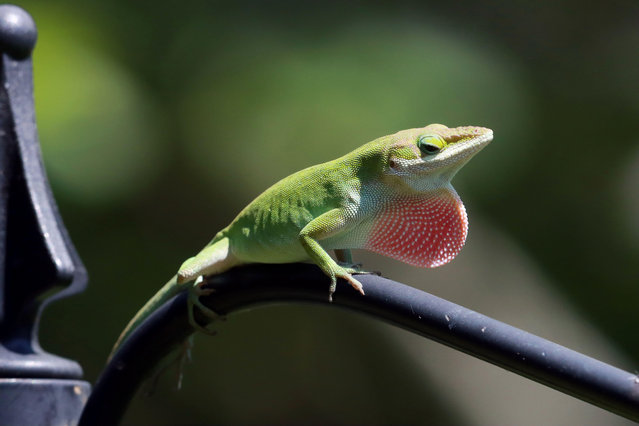
A male green anole lizard flares his throat fan in a backyard in Cary, North Carolina on April 27, 2021. This pink section is actually a thin flap of skin that hangs down below the green anole's throat. Anoles are renowned for their displays in which they do pushups, bob their heads up and down, and unfurl their colorful dewlaps. The male anole uses it for two primary purposes: to protect his territory and attract a mate. (Photo by Bob Karp/ZUMA Press Wire/Alamy Live News)