Loading...
Done
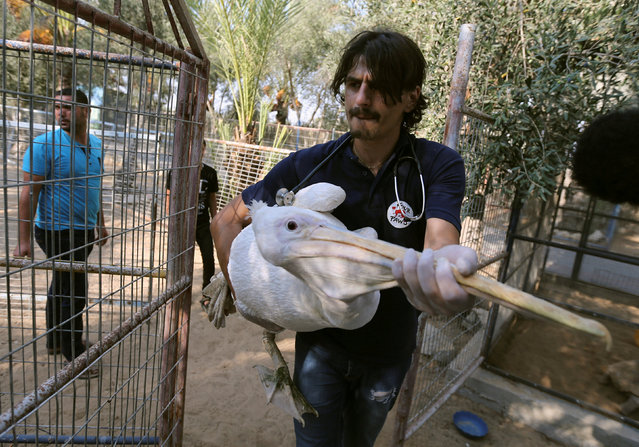
A member of Four Paws International team carries a pelican to be taken out of Gaza, at a zoo in Khan Younis in the southern Gaza Strip August 23, 2016. Fifteen animals including a bengal tiger were removed from “the world’s worst zoo” in the Gaza town of Khan Younis as it was finally closed down. Animal welfare group, Four Paws International, will help bring most of the refugees to a zoo in Jordan, but the tiger will be taken to a refuge in South Africa. Five monkeys, a porcupine, an emu and the tiger, among others, crossed from the occupied territory into Israel after the zoo suffered from years of difficulty. With lack of awareness of animal welfare in Gaza, the densely-populated territory has previously made headlines after another zoo painted donkeys with stripes to resemble zebras in 2009. (Photo by Ibraheem Abu Mustafa/Reuters)

A member of Four Paws International team carries a pelican to be taken out of Gaza, at a zoo in Khan Younis in the southern Gaza Strip August 23, 2016. Fifteen animals including a bengal tiger were removed from “the world’s worst zoo” in the Gaza town of Khan Younis as it was finally closed down. Animal welfare group, Four Paws International, will help bring most of the refugees to a zoo in Jordan, but the tiger will be taken to a refuge in South Africa. (Photo by Ibraheem Abu Mustafa/Reuters)
Details
26 Aug 2016 10:22:00
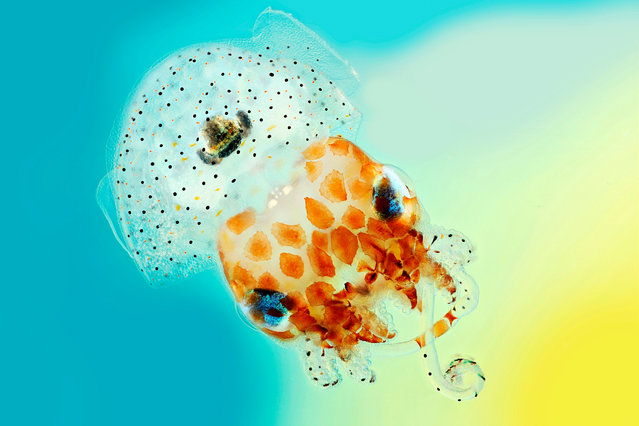
With its huge eyes, comical name and diminutive size, Mark R. Smith’s image of a baby Hawaiian bobtail squid can’t help but raise a smile. A curiously endearing creature, the cephalopod is just 1.5cm across, its mantle cavity bearing more than a passing resemblance to a rather natty shower cap. But it is also a beautiful example of symbiosis – nature’s version of “I’ll scratch your back if you scratch mine” – for on the underside of the squid is a light organ which houses bioluminescent bacteria. The squid offers the bacteria protection and food, while the bacteria emit a glow – a handy trait that the squid uses to offset its silhouette, helping it to evade predators in the depths below. Mark R. Smith’s entry combines several images of a Hawaiian bobtail squid with different focus lengths to create a final picture with greater depth of field than normal. (Photo by Mark R. Smith/Wellcome Images/Macroscopic Solutions)

With its huge eyes, comical name and diminutive size, Mark R. Smith’s image of a baby Hawaiian bobtail squid can’t help but raise a smile. A curiously endearing creature, the cephalopod is just 1.5cm across, its mantle cavity bearing more than a passing resemblance to a rather natty shower cap. But it is also a beautiful example of symbiosis – nature’s version of “I’ll scratch your back if you scratch mine” – for on the underside of the squid is a light organ which houses bioluminescent bacteria. The squid offers the bacteria protection and food, while the bacteria emit a glow – a handy trait that the squid uses to offset its silhouette, helping it to evade predators in the depths below. Mark R. Smith’s entry combines several images of a Hawaiian bobtail squid with different focus lengths to create a final picture with greater depth of field than normal. (Photo by Mark R. Smith/Wellcome Images/Macroscopic Solutions)
Details
08 Mar 2017 00:05:00
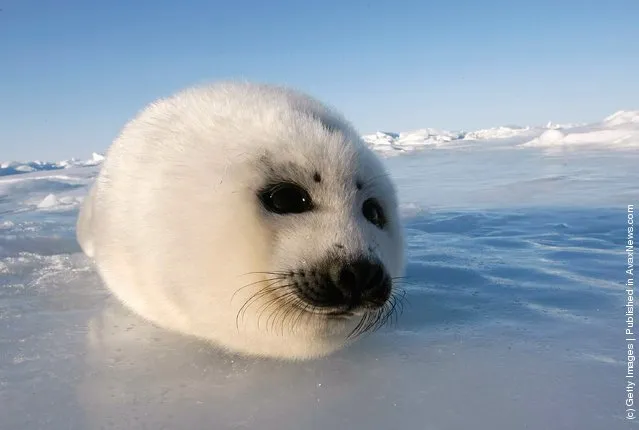
A harp seal pup

“The harp seal or saddleback seal is a species of earless seal native to the northernmost Atlantic Ocean and adjacent parts of the Arctic Ocean. Newborn pups weigh around 11 kilograms (24 lb) and are 80–85 centimetres (31–33 in) long. After birth, the mother only feeds that pup. During the 12 day nursing period, the mother does not eat, losing up to 3 kilograms (7 lb) per day. Harp seal milk contains up to 48% fat, so pups gain over 2.2 kilograms (4.9 lb) per day. During this time, the juvenile's “greycoat” grows in beneath the white neonatal coat, and it weighs 80 pounds (36 kg)”. – Wikipedia

Photo: A harp seal pup lies on an ice floe in the Gulf of Saint Lawrence March 24, 2008 in Charlottetown, Canada. (Photo by Joe Raedle/Getty Images)
Details
19 Sep 2011 15:49:00
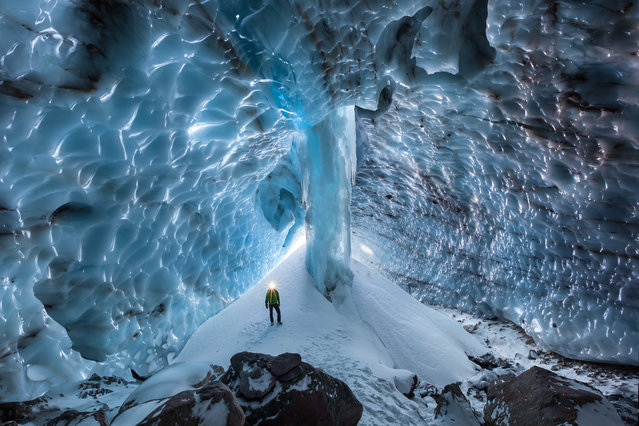
On the western side of Mount Hood lies the longest glacier cave system in the contiguous United States. In 2012, these caves were mapped to a combined length of 7,166.8 feet by cave explorers Brent McGregor and Eddy Cartaya. Currently, the total passage length is hundreds of feet less. Glaciers are frozen rivers; they are always moving and changing. In the past five years, we have seen the caves melt, shrink and collapse in a dramatic way. The caves are formed by water carving away at the ice. (Photo and caption by Josh Hydeman)

On the western side of Mount Hood lies the longest glacier cave system in the contiguous United States. In 2012, these caves were mapped to a combined length of 7,166.8 feet by cave explorers Brent McGregor and Eddy Cartaya. Currently, the total passage length is hundreds of feet less. Glaciers are frozen rivers; they are always moving and changing... (Photo and caption by Josh Hydeman)
Details
22 Mar 2015 11:05:00
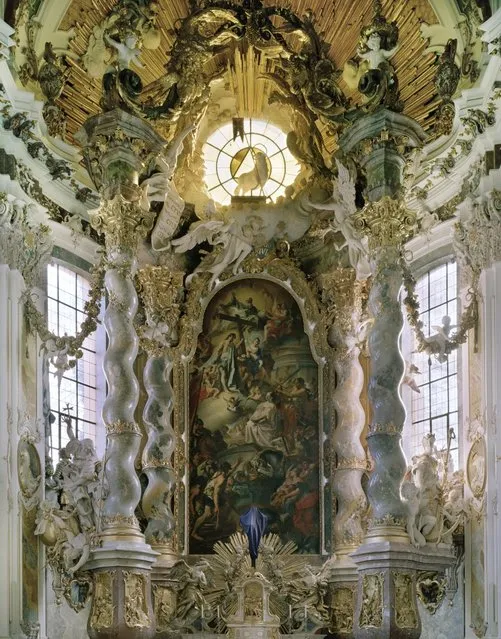
Church Altars By Cyril Porchet

Young Swiss photographer Cyril Porchet’s final year show included this awesome series of the most opulent Baroque church altars he could find in Spain, Austria and Germany. His intention was to explore the seductive power of display. What is extraordinary is how much you lose all sense of perspective and depth, such is the overabundance of detail. I like how the odd feature confuses all the more; like the red rope of the ornamental light in the image below for instance which neatly splices the image in half. I could pore over these for hours and hours.
Details
04 Jul 2014 12:46:00
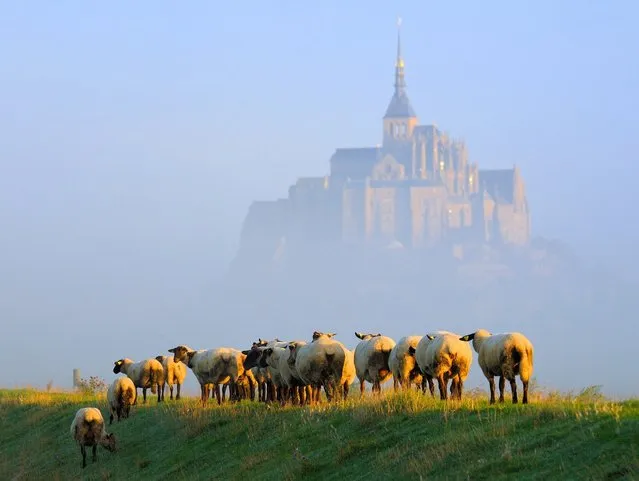
Mont St-Michel In Normandy, France

During the feudal times, the society was very structured where everyone knew their place. Fishermen knew that they would always have to bend their knee for highborn ladies and gentlemen, while the latter considered themselves to be far too superior to even look at the common folk. Mont Saint-Michel is a living memorial of those times. Its structural composition clearly reflects the structure of feudal society: The monastery and abbey were built on the highest point; housing and stores were built some distance below; finally, fishermen’s and farmer’s houses were constructed, not even being within the city walls, making them the most vulnerable to the possible attack.
Details
03 Mar 2015 10:20:00
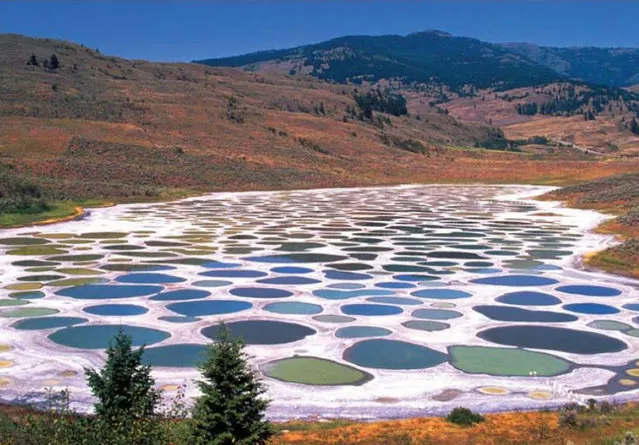
Kliluk, the Spotted Lake, Canada

Originally known to the First Nations of the Okanagan Valley as Khiluk, which was- and remains today revered as a sacred site producing therapeutic waters. During World War I the minerals of Spotted Lake were used in manufacturing ammunition. Later the area came under the control of the Ernest Smith Family, for a term of about 40 years. In 1979 Smith attempted to create interest in a spa at the lake. The First Nations responded with an effort to buy the lake; in October 2001 they finally struck a deal. First Nations arranged the purchase of 22 hectares of land for a total of $720,000, and contributed about 20% of the cost. The Indian Affairs Department paid the remainder.
Details
06 Mar 2015 12:59:00
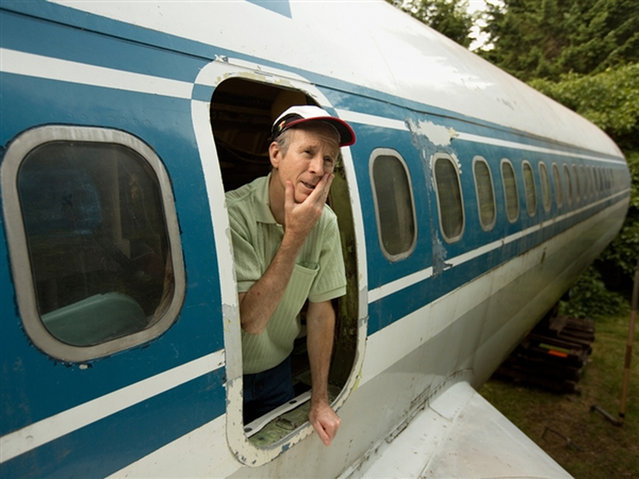
Bruce Campbell's 727 Home Project

Bruce Campbell doesn't just love planes, he lives inside of one. After purchasing a a Boeing 727-200 for $100,000, he placed it in his backyard, otherwise known as the middle of the woods in Oregon.
Campbell's startup costs were actually quite considerable. He paid $17,000 to move the plane from an airport to a staging site, $20,000 to rent the staging site for four months, $21,600 to remove the wings and tail, and $25,000 to finally move it to his house.
Details
15 Aug 2012 10:00:00