Loading...
Done
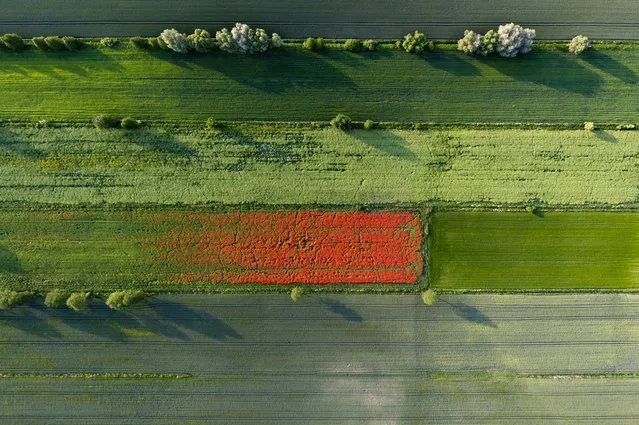
A view over fields of grain in Spring white chamomile, blue cornflower and other weeds growing amongst the grain sprouts. (Photo by Kacper Kowalski/Panos Pictures)

In his book “Side Effects”, aerial photographer Kacper Kowalski took to the skies to paint a portrait of the complex relationship between humans and nature. From the sky, he captured where nature and civilization collide into aesthetic, abstract colors and shapes. Photo: A view over fields of grain in Spring chamomile, cornflower and other weeds growing amongst the grain sprouts. (Photo by Kacper Kowalski/Panos Pictures)
Details
04 Sep 2014 08:19:00
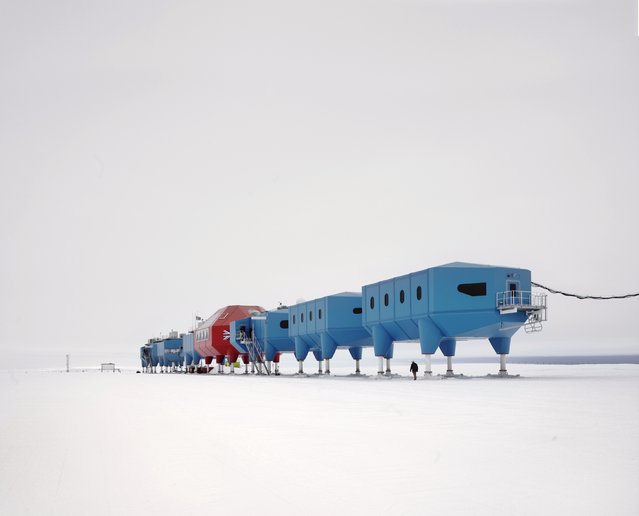
Undated handout photo issued by World Architecture Festival 2013 of The Halley VI centre designed by British architects Hugh Broughton in Antarctica which is a dismantlable research station created in the icy wastes for the British Antarctic Survey and has been shortlisted for a global architecture award. (Photo by World Architecture Festival 2013/PA Wire)

Undated handout photo issued by World Architecture Festival 2013 of The Halley VI centre designed by British architects Hugh Broughton in Antarctica which is a dismantlable research station created in the icy wastes for the British Antarctic Survey and has been shortlisted for a global architecture award. (Photo by World Architecture Festival 2013/PA Wire)
Details
01 Sep 2013 06:45:00
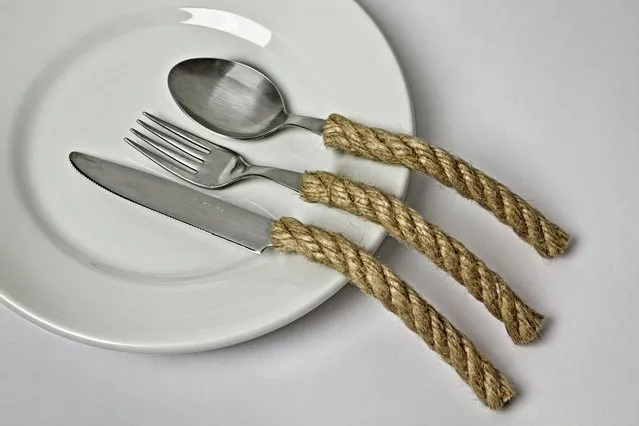
Cuttlery with rope handles. (Photo by Giuseppe Colarusso/Caters News)

An artist has created series of wacky images turning everyday items into hilarious and all but impossible to use objects. Giuseppe Colarusso, 49, fashioned the unique work to make people question the functionality of the likes of cutlery, garden tools and office equipment. The set of playful pictures, entitled “Improbabilita”, makes some items impossible to use, others improbable and some given a completely new function altogether. From a dice with no spots, to a ping pong paddle with a hole in it, the items have all been given a quirky twist. Photo: Cuttlery with rope handles. (Photo by Giuseppe Colarusso/Caters News)
Details
27 Jun 2013 07:37:00
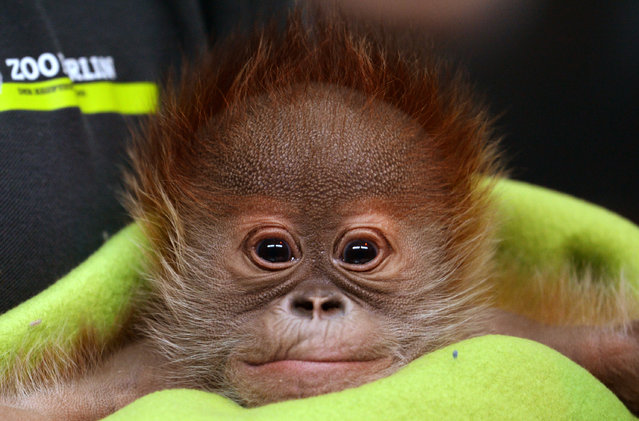
Newborn orangutan Rieke is presented during a press conference at Berlin Zoo, in Berlin, Germany, February 6, 2015. The baby was born on January 12, 2015 weighing 2,290 grams and is bottle-fed by keepers. (Photo by Ralf Hirschberger/EPA)

Newborn orangutan Rieke is presented during a press conference at Berlin Zoo, in Berlin, Germany, February 6, 2015. The baby was born on January 12, 2015 weighing 2,290 grams and is bottle-fed by keepers. (Photo by Ralf Hirschberger/EPA)
Details
08 Feb 2015 12:00:00
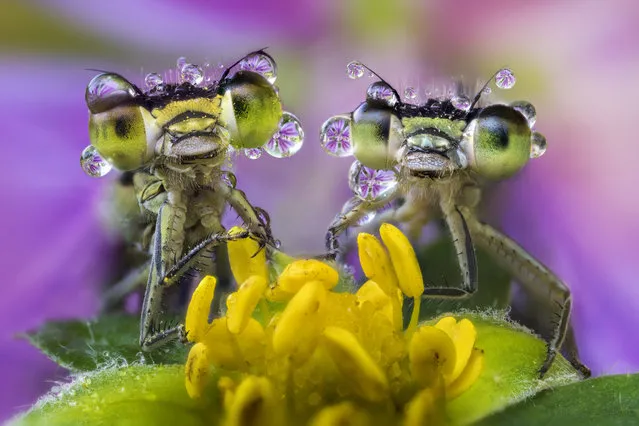
Damselflies covered in dew rest on a wild flower by the Po River, northern Italy on August 15, 2016. (Photo by Alberto Ghizzi Panizza/Barcroft Images)

Damselflies covered in dew rest on a wild flower by the Po River, northern Italy on August 15, 2016. (Photo by Alberto Ghizzi Panizza/Barcroft Images)
Details
03 Dec 2016 11:50:00
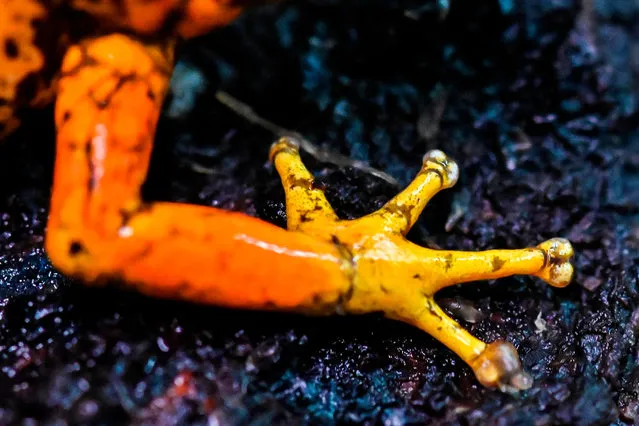
A leg of a “diablito” frog (Oophaga sylvatica) is photographed in a laboratory at a laboratory in the zoo of Cali, Colombia, on July 19, 2019. Colombia is the second country with the largest number of amphibians in the world after Brazil. More than 40% of amphibian species worldwide are in danger of extinction. (Photo by Luis Robayo/AFP Photo)

A leg of a “diablito” frog (Oophaga sylvatica) is photographed in a laboratory at a laboratory in the zoo of Cali, Colombia, on July 19, 2019. Colombia is the second country with the largest number of amphibians in the world after Brazil. More than 40% of amphibian species worldwide are in danger of extinction. (Photo by Luis Robayo/AFP Photo)
Details
28 Nov 2020 00:03:00
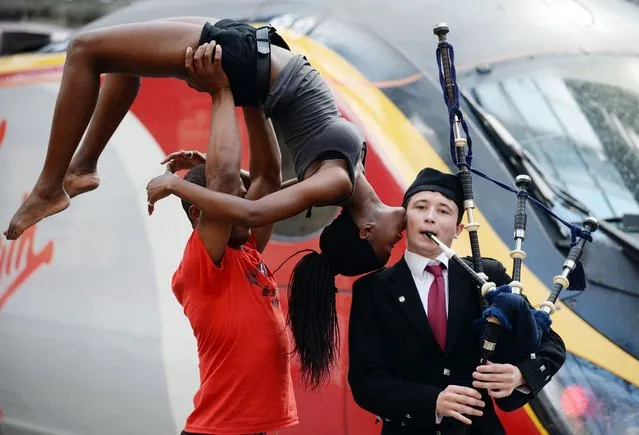
Commonwealth dance group on the right track with Virgin Trains – Photo call at Glasgow Central Station. (Photo by Daily Record)

Commonwealth dance group on the right track with Virgin Trains – Photo call at Glasgow Central Station. (Photo by Daily Record)
Details
14 Jul 2014 13:09:00
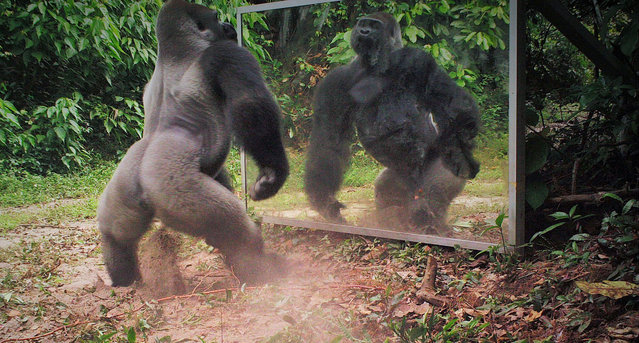
Camera trapper Xavier Hubert-Brierre put this large mirror on the side of a road through the jungle in Gabon and left a camera there to record how the animals would respond to their own reflections. A silverback gorilla thought it was seeing another silverback and responded by trying to scare off the potential challenger… (Photo by Xavier Hubert-Brierre/Johns Hopkins University Press)

Camera trapper Xavier Hubert-Brierre put this large mirror on the side of a road through the jungle in Gabon and left a camera there to record how the animals would respond to their own reflections. A silverback gorilla thought it was seeing another silverback and responded by trying to scare off the potential challenger… (Photo by Xavier Hubert-Brierre/Johns Hopkins University Press)
Details
03 May 2016 13:04:00