Loading...
Done
Mimi Pineda, 15, whose parents are from El Salvador, rides to church in a limousine with her friend Christian Flores, 17, during her quinceanera in Santa Clarita, California August 23, 2014. Quinceanera is a rite of passage celebrated on the fifteenth birthday of many female Latino teenagers. (Photo by Lucy Nicholson/Reuters)

Reuters photographer Lucy Nicholson documented some of the migrant communities that live in Los Angeles. Los Angeles is a culturally thriving city and one of the most ethnically diverse in the United States, with a population that is 48.5 percent Latino and 11.3 percent Asian, according to a 2010 census. Immigration has become a hot button issue ahead of U.S. midterm elections on November 4, and despite arguments from the White House that legal migration benefits businesses, a recent opinion poll found most Americans believe migrants place a burden on the economy. (Photo by Lucy Nicholson/Reuters)
Details
02 Nov 2014 11:03:00
Super Hero Minimalist Posters By Michael Turner Part 1

Have you ever heard of a psychological phenomenon which lets us easily understand words, even if the order of letters is mixed up, as long as the first and last letters remain in their rightful place? Similarly, the art works of Michael Turner use only two colors to highlight the main futures of well-recognized superheroes, allowing our imagination to create the rest of the picture. The colors used in the pictures weren’t chosen at random. They perfectly reflect the key characteristics of the superheroes that they depict. For example, the picture of Flash uses red and yellow colors, which are exactly the colors of his costume. While the picture of Green Lantern is, you’ve guessed it, green and black. (Photo by Michael Turner)
Details
10 Dec 2014 11:38:00
A view of traditional bolinhos de bacalhau (fried codfish balls) in Rio de Janeiro, Brazil, May 7, 2016. (Photo by Sergio Moraes/Reuters)

If the most popular foods of Rio de Janeiro have one thing in common, it is their informality. You can find fine restaurants in the city, but they do not set Rio apart from other places. What does set it apart, and what invariably brings its residents, known as "Cariocas," together is the unpretentious food they eat in bright, loud, crowded bars and restaurants, on busy street corners, or after a day at the beach. Here: A view of traditional bolinhos de bacalhau (fried codfish balls) in Rio de Janeiro, Brazil, May 7, 2016. (Photo by Sergio Moraes/Reuters)
Details
05 Aug 2016 13:20:00
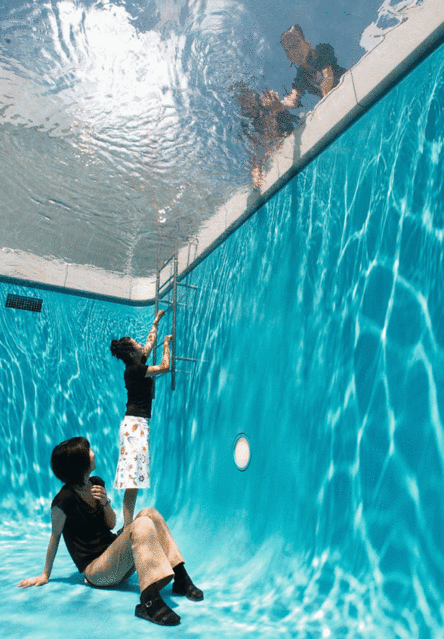
Swimming Pool Art Installation by Leandro Erlich

In one of the Museum’s courtyards is a swimming pool framed by a limestone deck. When seen from the deck, the pool appears to be filled with deep, shimmering water. In fact, however, a layer of water only some 10 centimeters deep is suspended over transparent glass. Below the glass is an empty space with aquamarine walls that viewers can enter. The work sets up an unfolding sequence of experiences—we view the pool through the glass wall enclosing the courtyard; from the deck, looking down into the pool; and from the interior of the pool, looking up. The Swimming Pool might hence be considered a place where, slowly, with time, different perspectives and perceptions of self and others all come to intersect.
Details
25 Aug 2012 07:31:00


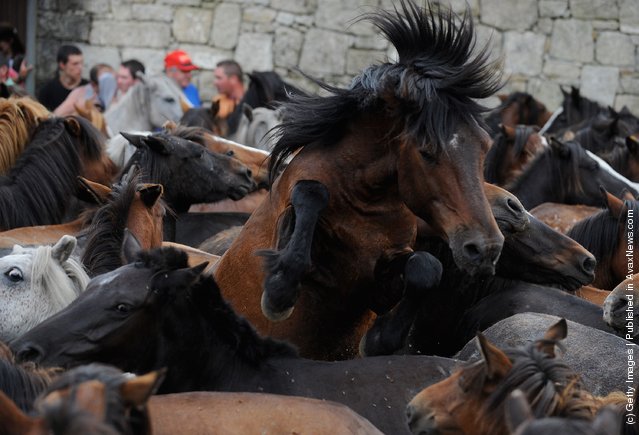
“Rapa das Bestas is the name of an operation that involves cutting the manes of the horses that are performed in the curros (enclosed which retain the horses) held in various locations in Galicia (Spain).

The best known is the Rapa das Bestas of Sabucedo, in the city hall of A Estrada, which lasts three days: the First Saturday, Sunday and Monday in July. In fact, the name given to the celebration (Rapa das Bestas of Sabucedo), while in most places speaking about curros, including curros de Valga, etc”. – Wikipedia

Photo: A wild horse leaps up during the Rapa das Bestas (shearing of the beasts) festival on July 2, 2011 in Sabucedo, Spain. Hundreds of wild horses are rounded up from the mountains and trimmed and marked in the corral. (Photo by Denis Doyle/Getty Images)
Details
03 Jul 2011 12:30:00


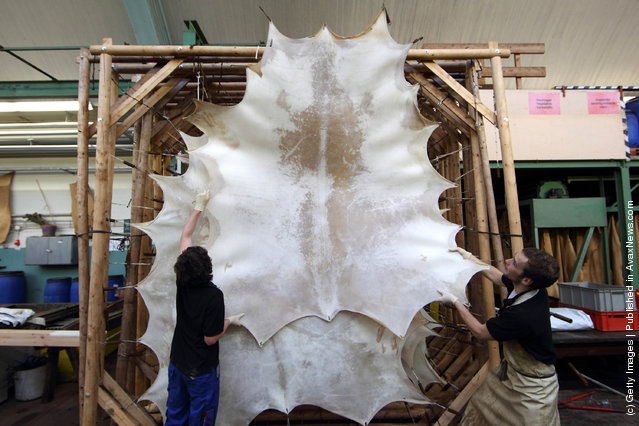
REUTLINGEN, GERMANY - NOVEMBER 17: Students hang out finished parchment leather at the LGR (Lederinstitut Gerberschule Reutlingen) tannery school on November 17, 2010 in Reutlingen, Germany. Even in early antiquity and up their hair or dried goat and sheep skins were used as material for documents. In the small Asian city Pergamon these skins were processed in large quantities for this purpose, so they formed the main trading arm of the city, of which the name is parchment is derived. In medieval times, reached the parchment is of great importance, it was such as France's production under the supervision of the University of Paris. Even now, important documents, placed on their unlimited shelf life as possible large value (eg diplomas, addresses, memory, writings, documents for primary and keystones) written on parchment...
Details
20 Nov 2011 18:17:00
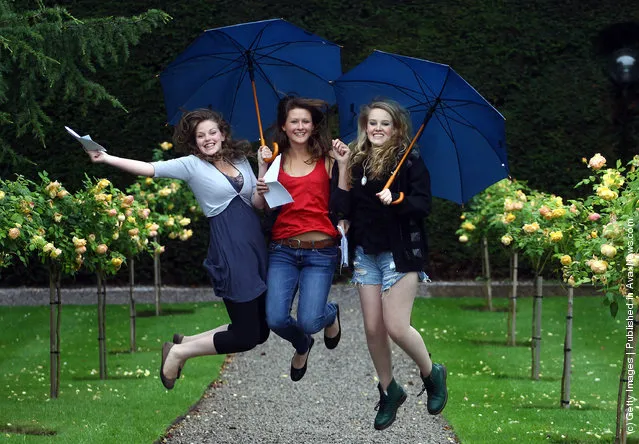
Students Throughout The UK Receive Their A Level Results

Badminton School sixth form pupils (L-R) Lucy Warden, who got 3 A* and is off to study English at Durham, Sam Crumpton, who got 1 A* and 2 A's and is off to study to be a vet at Cambridge and Madeline Sunter, who got 2 A* and 1 B, and is off to study fashion at St. Martins, celebrate their A-level results on August 18, 2011 in Bristol, England. With another record year for A-level results, sixth-form students face a scramble for university places in the final year before tuition fees rise. According to the examination bodies the pass rate rose for the 29th successive year to hit 97.8 percent, while around one in 12 exams achieved the top A* grade. (Photo by Matt Cardy/Getty Images)
Details
19 Aug 2011 09:00:00
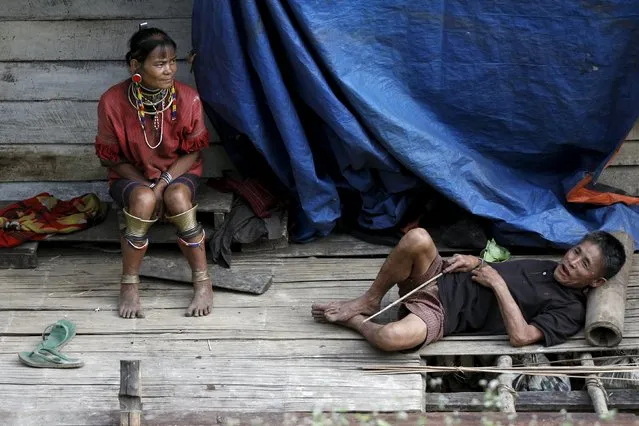
An ethnic Kayaw couple Mu Htoo and her husband Htaw Eili rest at their home at Htaykho village in the Kayah state, Myanmar September 12, 2015. (Photo by Soe Zeya Tun/Reuters)

An ethnic Kayaw couple Mu Htoo and her husband Htaw Eili rest at their home at Htaykho village in the Kayah state, Myanmar September 12, 2015. With about 30,000 members, the Kayaw are one of the smallest ethnic minorities among Myanmar's 135 groups. Their village has for decades been off-limits, as armed rebels fought the military before a recent ceasefire stopped the bloody conflict here. The rebels in the area have put down their guns and taken to the hills to grow rice and corn, but slash-and-burn cultivation methods mean they struggle to find new places to farm. (Photo by Soe Zeya Tun/Reuters)
Details
21 Oct 2015 08:03:00