Loading...
Done
Tridacna Gigas, or Giant Clams

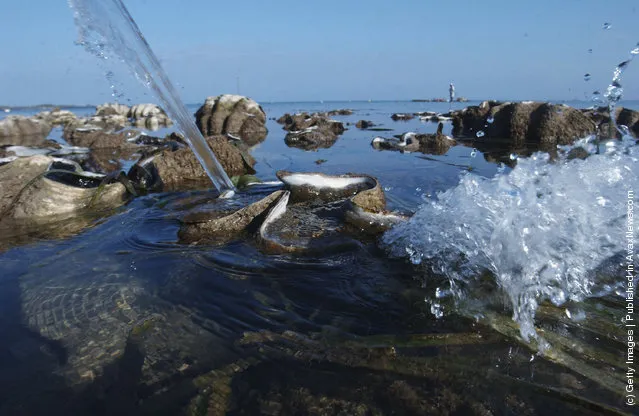
“The giant clam, Tridacna gigas (known as pā’ua in Cook Islands Māori), is the largest living bivalve mollusc. T. gigas is one of the most endangered clam species. It was mentioned as early as 1825 in scientific reports. One of a number of large clam species native to the shallow coral reefs of the South Pacific and Indian oceans, they can weigh more than 200 kilograms (440 lb) measure as much as 120 cm (47 in) across, and have an average lifespan in the wild of 100 years or more”. – Wikipedia

Photo: Tridacna Gigas, or Giant Clams spew water as a traditional fisherman passes by a small sanctuary on January 23, 2004 near Bolinao in the Northern Philippines. The clams, prime builders for coral reefs and providing shelter for spawning fish and other marine life, are exposed by low tides in the sanctuary. Overfishing and pollution throughout the country are not only threatening food security, but are also starting to choke one of the few working clam sanctuaries in the world. (Photo by David Greedy/Getty Images)
Details
01 Oct 2011 13:10:00
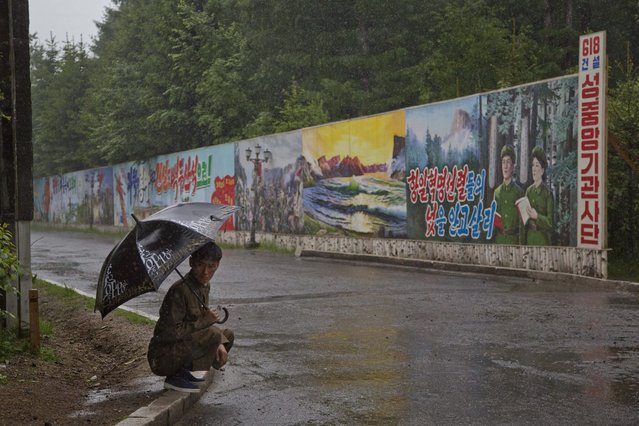
In this June 17, 2014 photo, a North Korean man takes shelter in the rain next to long propaganda billboards in the town of Samjiyon in North Korea's Ryanggang province. (Photo by David Guttenfelder/AP Photo)

In this June 17, 2014 photo, a North Korean man takes shelter in the rain next to long propaganda billboards in the town of Samjiyon in North Korea's Ryanggang province. The Associated Press was granted to embark on a weeklong road trip across North Korea to the country’s spiritual summit Mount Paektu. The trip was on North Korea's terms. An AP reporter and photographer couldn't interview ordinary people or wander off course, and government “minders” accompanied them the entire way. (Photo by David Guttenfelder/AP Photo)
Details
23 Oct 2014 11:51:00
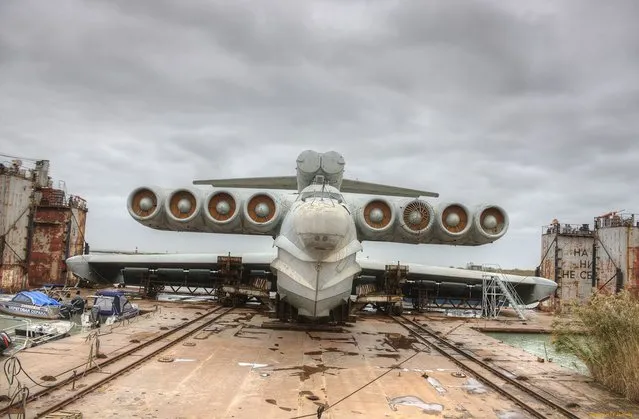
The Lun-class Ekranoplane was used by the Soviet Navy starting in 1987, and wasn't retired until the late 1990s, after the Soviet Union's fall. (Igor113)

“The Lun-class ekranoplan (NATO reporting name Duck) was a ground effect vehicle (GEV) designed by Rostislav Evgenievich Alexeev and used by the Soviet and Russian navies from 1987 until sometime in the late 1990s. It “flew” using the lift generated by the ground effect of its large wings when close to the surface of the water – about four metres or less. Although they might look similar and/or have related technical characteristics, ekranoplans like the Lun are not aircraft, seaplanes, hovercraft, or hydrofoils – ground effect is a separate technology altogether. The International Maritime Organization classifies these vehicles as maritime ships. The name Lun comes from the Russian for harrier”. – Wikipedia (Photo by Igor113)
Details
08 Aug 2014 10:51:00
“At the height of the Korean war, I was moving across the front lines as a soldier experiencing this tragedy, witnessing countless scenes that enraged me”. Here: Seoul, Korea. (Photo by Han Youngsoo/The Guardian)

Photographer Han Youngsoo captured the ordinary people of Korea as the country emerged from war into an age of prosperity. Han Youngsoo: Photographs of Seoul 1956–63 is at the International Center of Photography (ICP), Jersey City, New Jersey, until June 9, 2017. Here: Seoul, Korea. (Photo by Han Youngsoo/The Guardian)
Details
01 Mar 2017 00:05:00
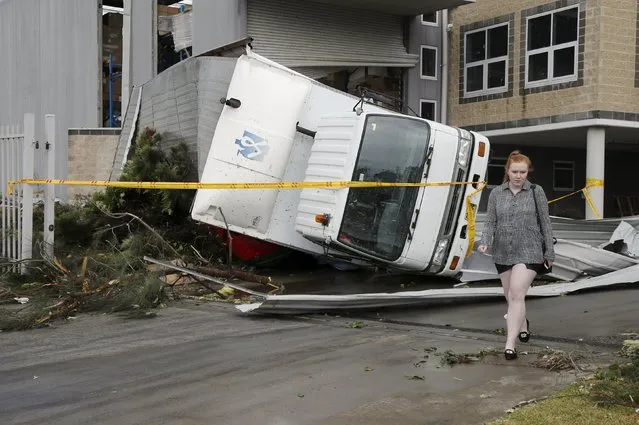
A truck lays overturned onto a car following strong winds at a Kurnell industrial park after a rare tornado hit the Sydney suburb December 16, 2015. (Photo by Jason Reed/Reuters)

A truck lays overturned onto a car following strong winds at a Kurnell industrial park after a rare tornado hit the Sydney suburb December 16, 2015. The tornado hit Sydney on Wednesday with destructive winds above 200 km an hour (125 mph) and cricket ball-sized hail, bringing down trees and power lines, tearing off roofs, overturning vehicles and causing flash flooding. (Photo by Jason Reed/Reuters)
Details
18 Dec 2015 08:06:00
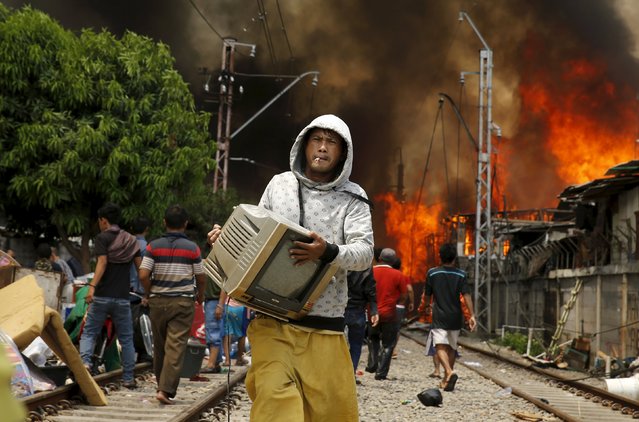
A man carries a television away from a fire in a slum area next to railway tracks in Kampung Bandan, North Jakarta, Indonesia January 26, 2016. (Photo by Reuters/Beawiharta)

A man carries a television away from a fire in a slum area next to railway tracks in Kampung Bandan, North Jakarta, Indonesia January 26, 2016. According to local media, the fire destroyed approximately 100 wooden dwellings, built along a busy railway line. No casualties were reported. (Photo by Reuters/Beawiharta)
Details
27 Jan 2016 13:33:00
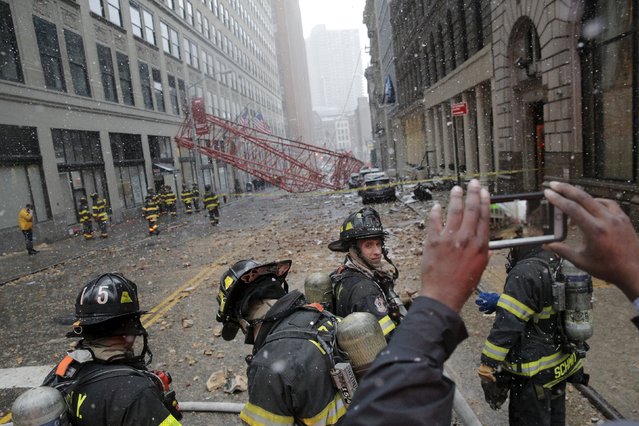
Emergency responders respond to the scene of a 565-foot-tall crane that toppled and flipped upside down, stretching along nearly two city blocks in downtown Manhattan in New York, February 5, 2016. (Photo by Brendan McDermid/Reuters)

Emergency responders respond to the scene of a 565-foot-tall crane that toppled and flipped upside down, stretching along nearly two city blocks in downtown Manhattan in New York, February 5, 2016. The massive construction crane collapsed in lower Manhattan during a swirling snowstorm on Friday, killing one person and crushing a line of parked cars in the first accident of its kind in New York City since 2008. (Photo by Brendan McDermid/Reuters)
Details
06 Feb 2016 13:22:00
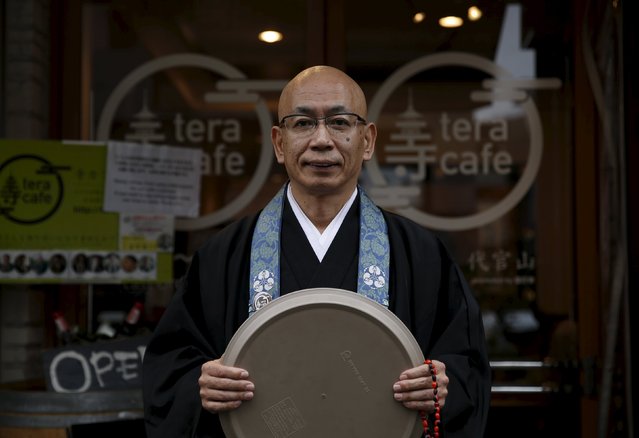
Shokyo Miura, a Buddhist monk and one of the on-site priests, poses for pictures outside Tera Cafe in Tokyo, Japan, April 1, 2016. (Photo by Yuya Shino/Reuters)

Shokyo Miura, a Buddhist monk and one of the on-site priests, poses for pictures outside Tera Cafe in Tokyo, Japan, April 1, 2016. At first glance, the cafe, which also serves alcohol, looks like any other except for an altar next to the countertop bar with a Buddha statue set against a gold backdrop. The menu confirms this is something different. It lists classes for 1,500 yen ($14) in weaving prayer beads, calligraphy with sutras, or lines of scripture, and consultations with a Buddhist priest. (Photo by Yuya Shino/Reuters)
Details
09 Apr 2016 13:21:00