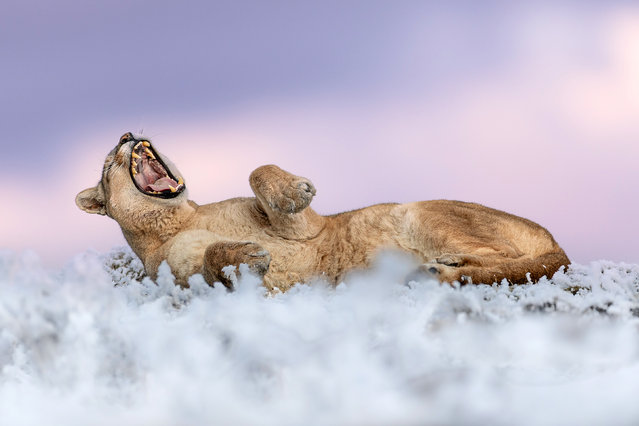
A puma rolls and yawns on frost-covered ground in Laguna Amarga, Torres del Paine, Chile in the first decade of December 2025, pausing briefly after several hours of rest before continuing on her way. (Photo by Sara Jenner/Solent News & Photo Agency)
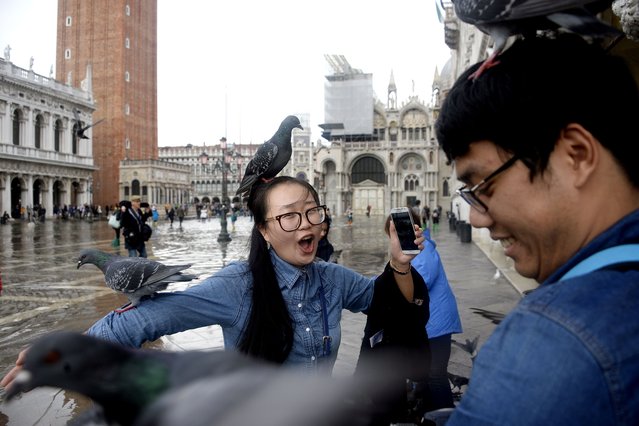
Tourists pose with pigeons in the flooded St. Mark's Square in Venice, on November 7, 2014. The high water, a combination of high tides and a strong Scirocco wind in the Adriatic Sea, stood at 110 centimeters early on November 7. The city has for years been wrestling with the problems posed by the threat of rising sea levels. (Photo by Olivier Morin/AFP Photo)
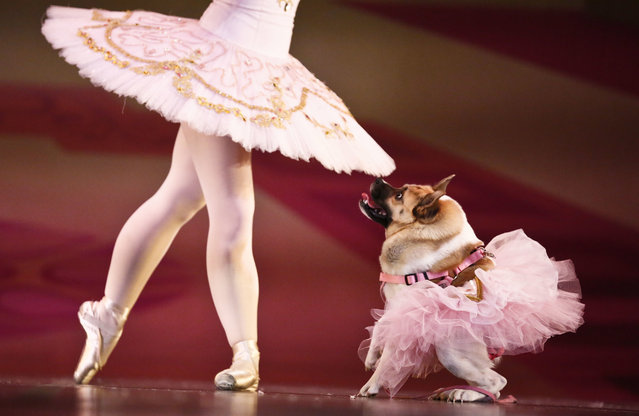
The Sugar Plum Fairy, Katherine Free, left, dances with the dog, Pig, during the Birmingham's Ballet “Mutt-cracker”, a rendition of the famous ballet “The Nutcracker”, in Birmingham, Alabama, December 8, 2016. (Photo by Brynn Anderson/AP Photo)
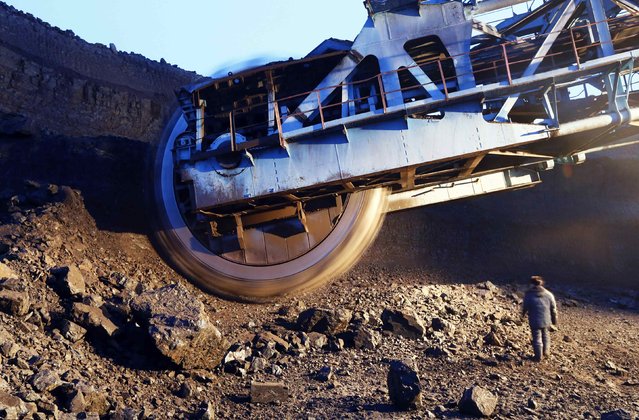
An employee walks near a rotary dredge which works on the coal face of the Borodinsky opencast colliery, near the Siberian town of Borodino, east of Krasnoyarsk, December 9, 2014. The Borodinsky colliery, 9 km (5.6 miles) long and more than 100 meters (328 feet) deep, annually produces more than 20 million tons of coal and is considered to be the biggest opencast coal mine in Russia, according to official representatives. (Photo by Ilya Naymushin/Reuters)
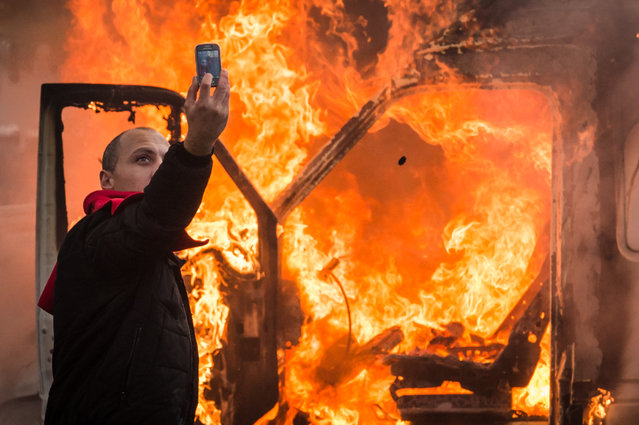
A protestor makes a selfie in front of a burning car during a national trade union demonstration in Brussels, Thursday November 6, 2014. Tens of thousands of demonstrators are converging on the Belgian capital to protest government policies that will extend the pension age, contain wages and cut into public services. (Photo by Geert Vanden Wijngaert/AP Photo)
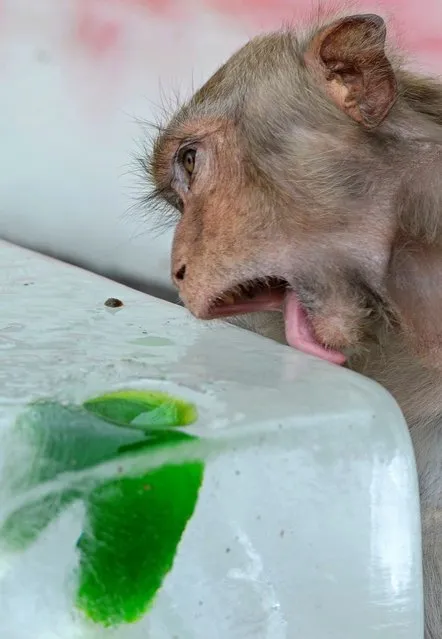
A monkey licks ice during the annual “monkey buffet” in Lopburi province, some 150 kms north of Bangkok on November 24, 2013. More than 2,000 kilos of fruits and vegetables were offered to the monkeys during the annual festival to help promote tourism in the area. (Photo by Pornchai Kittiwongsakul/AFP Photo)
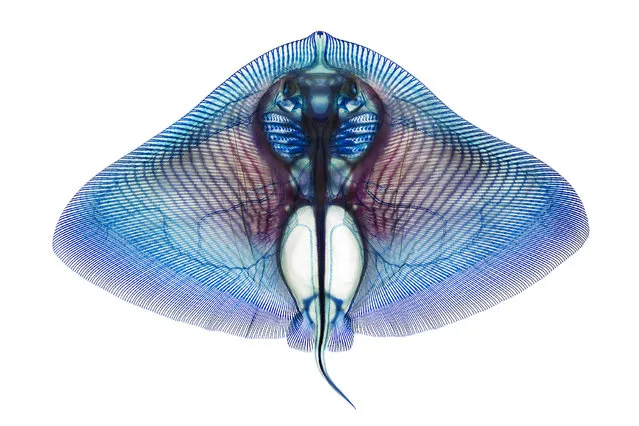
The photographs feature fish that have been specially treated to make the stained skeletal tissues visible through the skin and flesh. The technique, developed by Dr. Adam Summers, uses dyes, hydrogen peroxide, a digestive enzyme and glycerin to make the flesh seem to disappear. Photo: This image of the butterfly ray (Gymnura crebripunctata) helped scientists study the joints in its wings. (Photo by Adam Summers)